11 markeasy
Ethene reacts with steam in the presence of sulfuric acid.
C2H4 + H2O CH3CH2OH
What type of reaction is this?
Choose your answer
Acid / Base
Addition
Hydrolysis
Substitution
18 questions · 18 marks · ≈ 18 min
Ethene reacts with steam in the presence of sulfuric acid.
C2H4 + H2O CH3CH2OH
What type of reaction is this?
Choose your answer
Acid / Base
Addition
Hydrolysis
Substitution
What is the mechanism for the reaction between propene and bromine in an organic solvent?
Choose your answer
Electrophilic addition
Electrophilic substitution
Nucleophilic addition
Nucleophilic substitution
A molecule of a polymer contained the sequence shown.
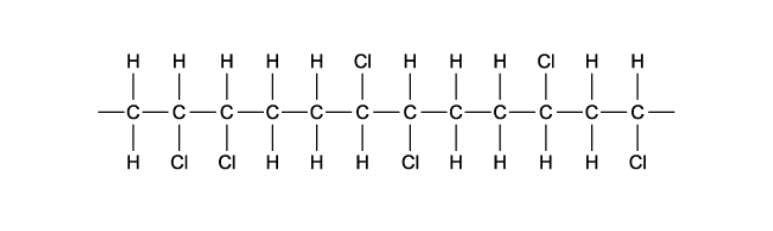
Which monomer could produce this polymer by addition polymerisation?
Choose your answer
CH2=CHCl
CHCl=CHCl
CH3CCl=CH2
CH3CCl=CHCl
Which reaction would not give propene?
Choose your answer
Adding excess hot concentrated sulfuric acid to propan-1-ol.
Adding warm aqueous sodium hydroxide to 2-bromopropane.
Adding warm ethanolic sodium hydroxide to 1-bromopropane.
Passing propan-2-ol vapour over heated aluminium oxide.
Ethene reacts with aqueous bromine to give two products, CH2BrCH2Br and CH2BrCH2OH.
Which statement about these products is correct?
Choose your answer
Both products are obtained in this reaction by electrophilic substitution.
Both products are obtained in this reaction by nucleophilic addition.
Both products can be hydrolysed to form the same organic compound.
Both products can form hydrogen bonds with water.
Pent-2-ene, CH3CH2CH=CHCH3, reacts in a similar way to ethene.
Pent-2-ene is reacted with cold, dilute, acidified manganate (VII) ions.
What will be produced in the greatest amount?
Choose your answer
CH3CH2CH(OH)CH(OH)CH3
CH3CH2COCOCH3
a mixture of CH3CH2CH(OH)CH2CH3 and CH3CH2CH2CH(OH)CH3
CH3CH2COOH and CH3COOH
Isomers X and Y both react with HBr.
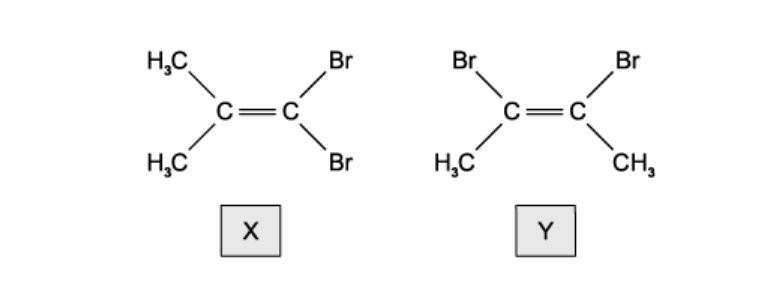
A mixture of X and Y is reacted with HBr.
Which three structures represent three different possible products of this reaction?
| A | (CH3)2CHCBr3 | (CH3)2CBrCHBr2 | CH3CHBrCHBrCH3 |
|---|---|---|---|
| B | (CH3)2CHCBr3 | (CH3)2CBrCHBr2 | CH3CBr2CHBrCH3 |
| C | (CH3)2CBrCBr3 | (CH3)2CHCBr3 | CH3CBr2CHBrCH3 |
| D | (CH3)2CBrCHBr2 | CHBr2CBr(CH3)CH3 | CH3CHBrCBr2CH3 |
Choose your answer
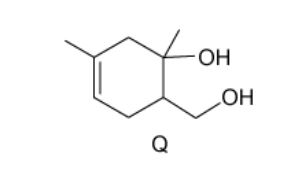
What is the major product formed when compound Q is warmed with excess HBr?
Choose your answer
The oxidative cleavage of an alkene using hot, concentrated, acidified potassium manganate(VII) results in the complete rupture of the carbon–carbon double bond.
Which row correctly identifies the final products formed from the specified structural groups?
| Structural group in alkene | Final products formed | |
|---|---|---|
| A | R–CH=CH–R′ | Two different aldehydes |
| B | CH₂=C(R)₂ | Carbon dioxide and a ketone |
| C | R–CH=CH₂ | A carboxylic acid and methanoic acid |
| D | R–CH=C(R)₂ | A carboxylic acid and an alcohol |
Choose your answer
A polymer has the repeating unit

Which monomer would produce this polymer by addition polymerisation?
Choose your answer
CH2=CH2
CH2=CH–CH3
CH3–CH2–CH2–CH3
CH3–CH=CH–CH3
Limonene is an oil formed in the peel of citrus fruits.
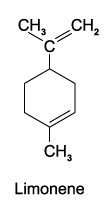
Which product is formed when an excess of bromine, Br2 (l), reacts with limonene at room temperature in the dark?
Choose your answer
Which isomer of C6H13OH gives the greatest number of different alkenes when it is dehydrated?
Choose your answer
Acrylic acid is produced from propene, a gaseous product of oil refineries.
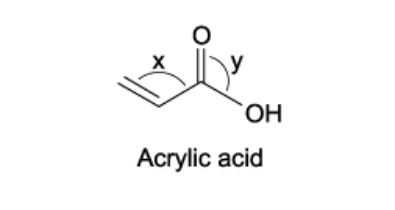
Which statement about acrylic acid is not correct?
Choose your answer
Both bond angles x and y are approximately 120°.
It decolourises aqueous bromine.
It gives an orange precipitate with 2,4-dinitrophenylhydrazine reagent.
It reacts with an alcohol to give an ester.
Which compound has an Mr of 84 and will react with HBr to give a product with an Mr of 164.9?
Choose your answer
Alkane X has molecular formula C4H10.
X reacts with Cl2 (g) in the presence of ultraviolet light to produce only two different monochloroalkanes, C4H9Cl. Both of these monochloroalkanes produce the same alkene Y, and no other organic products, when they are treated with hot ethanolic KOH.
What is produced when Y is treated with hot concentrated acidified KMnO4?
Choose your answer
CO2 and CH3CH2CO2H
CO2 and CH3COCH3
HCO2H and CH3COCH3
CH3CO2H only
The following diagram represents the structure of a possible polymer.
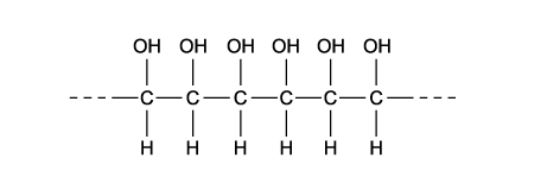
Which sequence of reactions could be used to produce this polymer?
Choose your answer
Polymerise ethene followed by hydration.
Polymerise ethene followed by oxidation with cold acidified KMnO4.
Polymerise 1,2-dichloroethene followed by hydrolysis.
Polymerise 1,2-dichloroethene followed by oxidation with cold acidified KMnO4.
Oxidation of an alkene Y gives a diol; further oxidation gives a diketone.
What could be Y?
Choose your answer
CH3CH=C(CH3)2
(CH3)2CHCH=CH2
C6H5CH=CHC6H5
(C6H5)2C=CHCH3
Ethene is prepared by adding ethanol dropwise to heated reagent Y. To purify the ethene, it is bubbled through solution Z and then collected.
Which row identifies reagent Y and solution Z?
| Reagent Y | Solution Z | |
|---|---|---|
| A | Acidified K2Cr2O7 | Dilute NaOH |
| B | Concentrated H2SO4 | Dilute H2SO4 |
| C | Concentrated H2SO4 | Dilute NaOH |
| D | Ethanolic NaOH | Concentrated H2SO4 |
Choose your answer