The Universal Genetic Code (Cambridge International AS Biology)
Spec point — describe the principle of the universal genetic code in which different triplets of DNA bases either code for specific amino acids or correspond to start and stop codons
The universal genetic code
-
A gene is a sequence of nucleotide bases in a DNA molecule that codes for the production of a specific sequence of amino acids
- These amino acids in turn make up a specific polypeptide (protein)
-
The DNA nucleotide base code found within a gene is a three-letter, or triplet, code
-
Each sequence of three bases (in other words each triplet of bases) codes for one amino acid
- There are 20 different amino acids that cells use to make up different proteins
-
For example, on the template (transcribed) strand of DNA:
- CAG codes for the amino acid valine
- TTC codes for the amino acid lysine
- GAC codes for the amino acid leucine
- CCG codes for the amino acid glycine
-
Some of these triplets of bases code for start and stop signals
-
These signals tell the cell where individual genes start and stop
-
This ensures the cell:
- Reads the DNA correctly (the code is non-overlapping)
- Can produce the correct sequences of amino acids (and therefore the correct protein molecules) that it requires to function properly
-
-
The genetic code is universal, meaning that almost every organism uses the same code
-
This means that the same triplets code for the same amino acids in all living things
- This means that genetic information is transferable between species
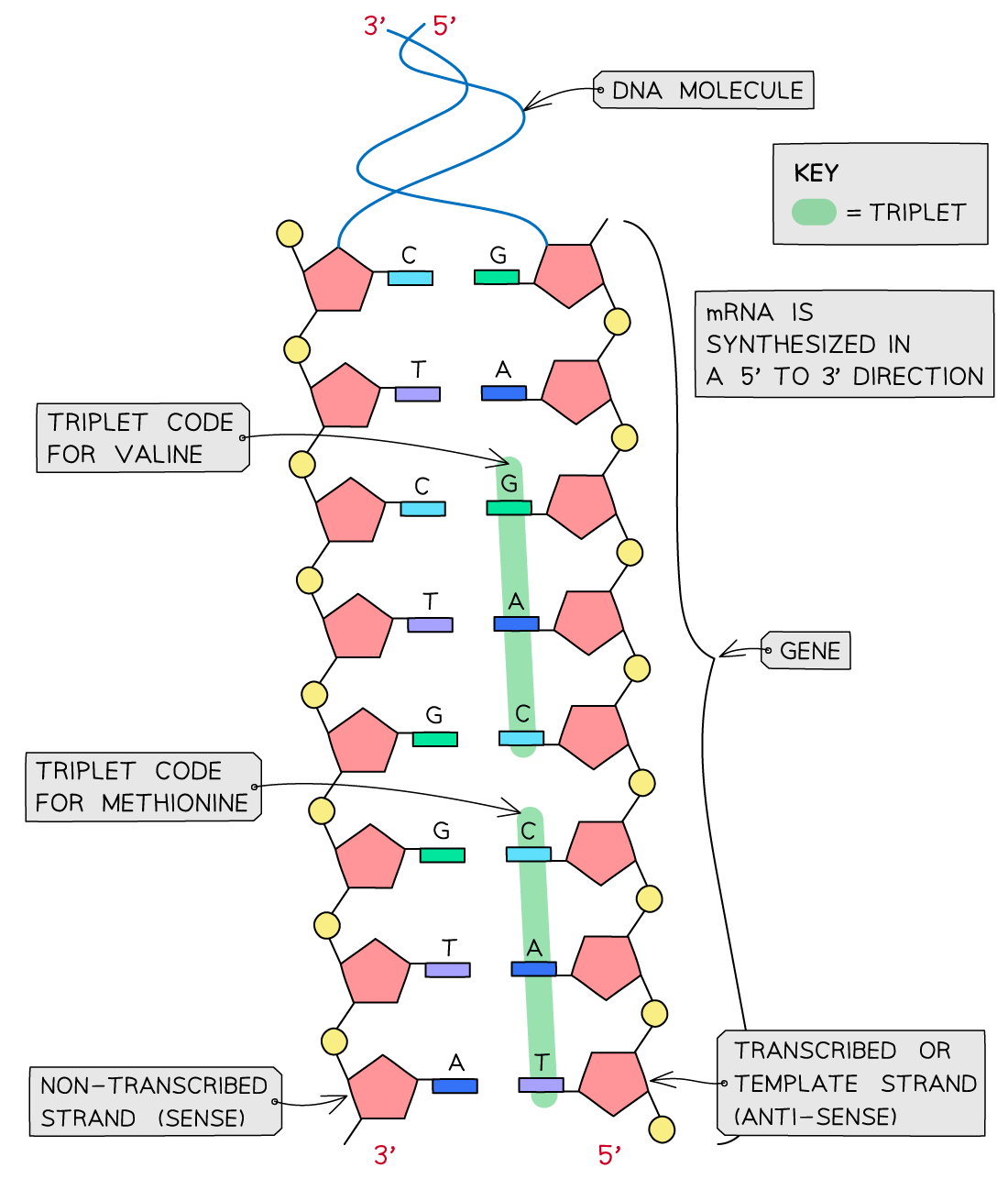
A DNA molecule with the triplet codes for two amino acids (methionine and valine)
Was this revision note helpful?
Build on this topic