Parametric Differentiation (Cambridge International A-Level Mathematics)
Exam board Cambridge International · A-LevelUpdated 2026-07-02
Parametric differentiation
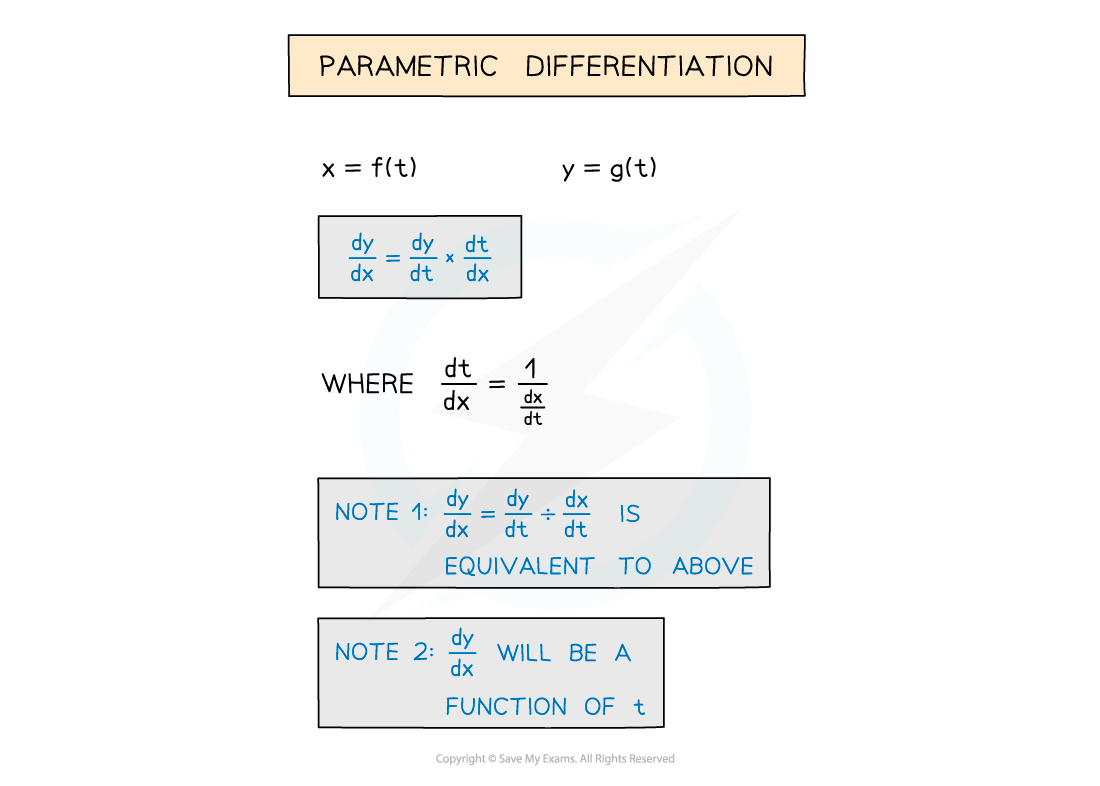
How do I find dy/dx from parametric equations?
- Ensure you are familiar with Parametric Equations – Basics first
-
This method uses the chain rule and the reciprocal property of derivatives
-
Equivalently,
-
will be in terms of t – this is fine
- Questions usually involve finding gradients, tangents and normals
-
The chain rule is always needed when there are three variables or more – see Connected Rates of Change
How do I find gradients, tangents and normals from parametric equations?
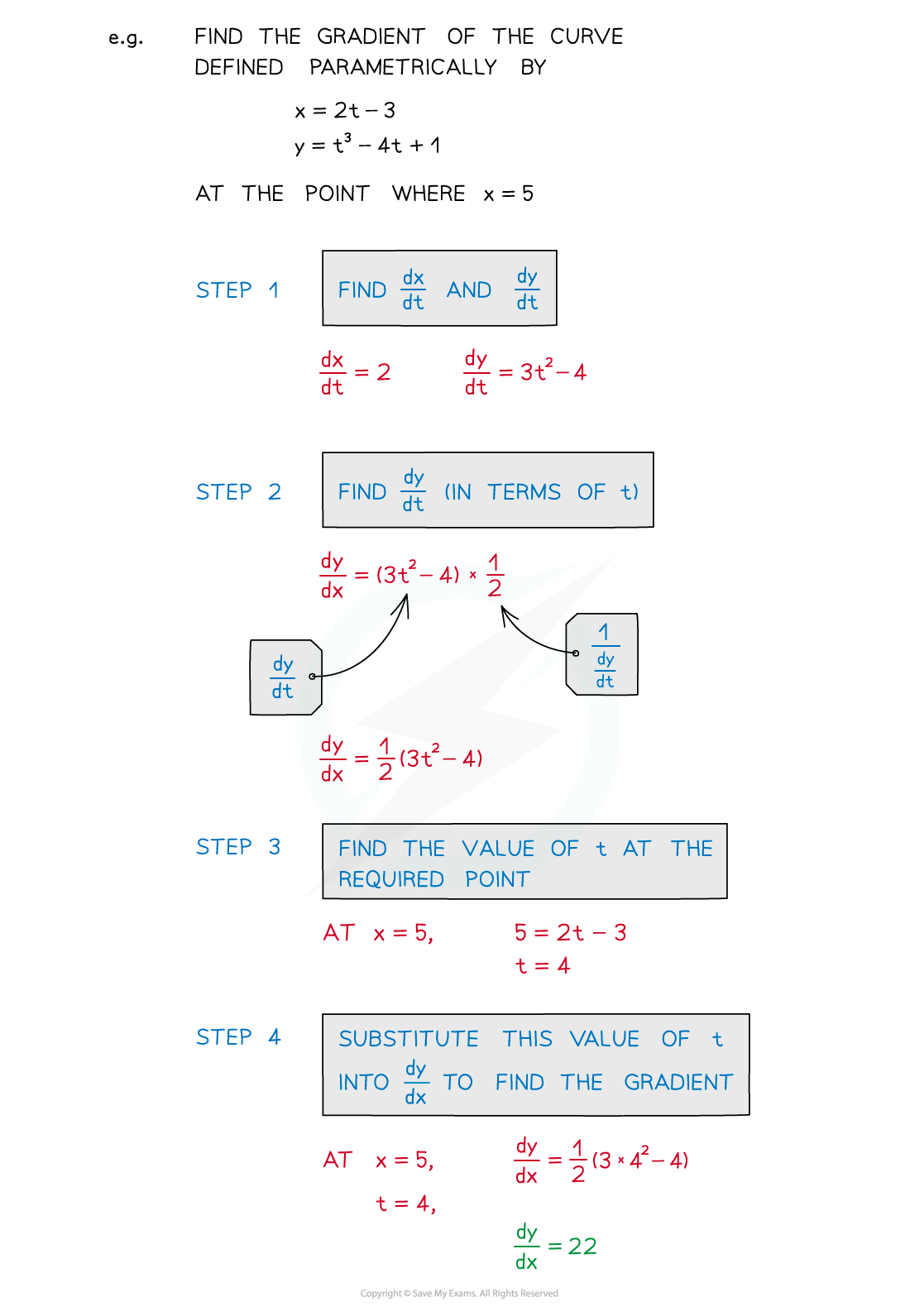
To find a gradient
-
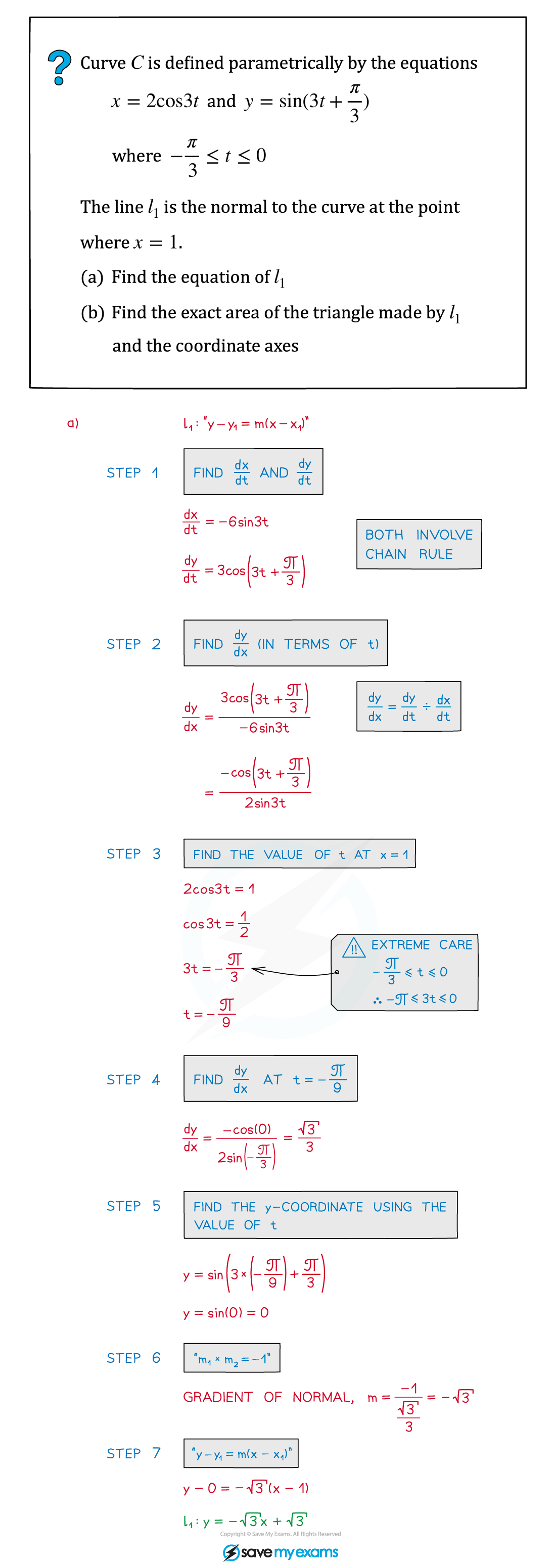
STEP 1 Find dx/dt and dy/dt
-
STEP 2 Find dy/dx in terms of t
- Using either dy/dx = dy/dt ÷ dx/dt or dy/dx = dy/dt × dt/dx where dt/dx = 1 ÷ dx/dt
-
STEP 3 Find the value of t at the required point
-
STEP 4 Substitute this value of t into dy/dx to find the gradient
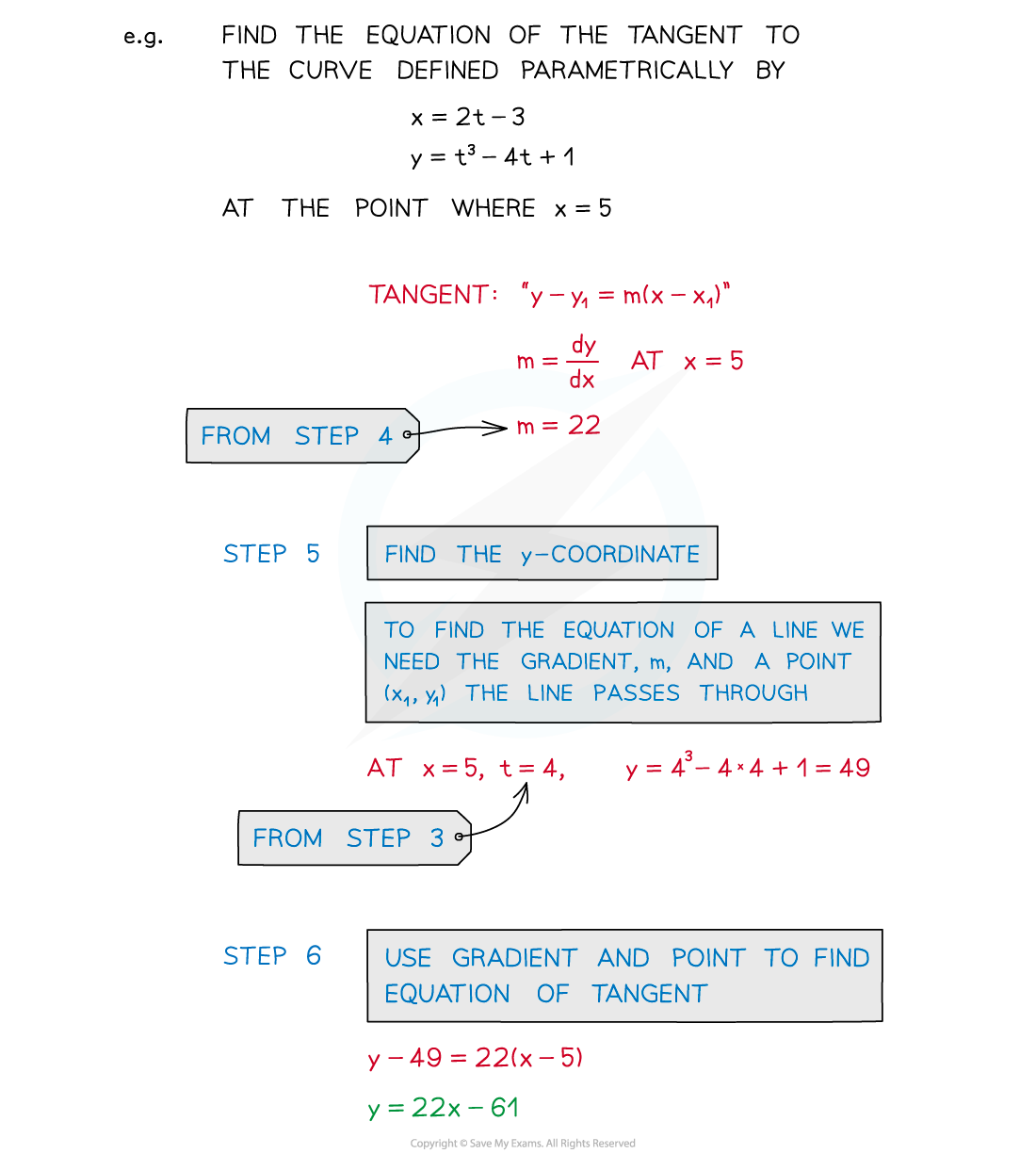
To then go on to find the equation of a tangent
- STEP 5 Find the y coordinate
- STEP 6 Use the gradient and point to find the equation of the tangent
To find a normal...
- STEP 7 Use perpendicular lines property to find the gradient of the normal m1× m2= -1
- STEP 8 Use gradient and point to find the equation of the normal y - y1= m(x - x1)
How do I solve problems using parametric differentiation?
-
Questions may require use of tangents and normals as per the coordinate geometry sections
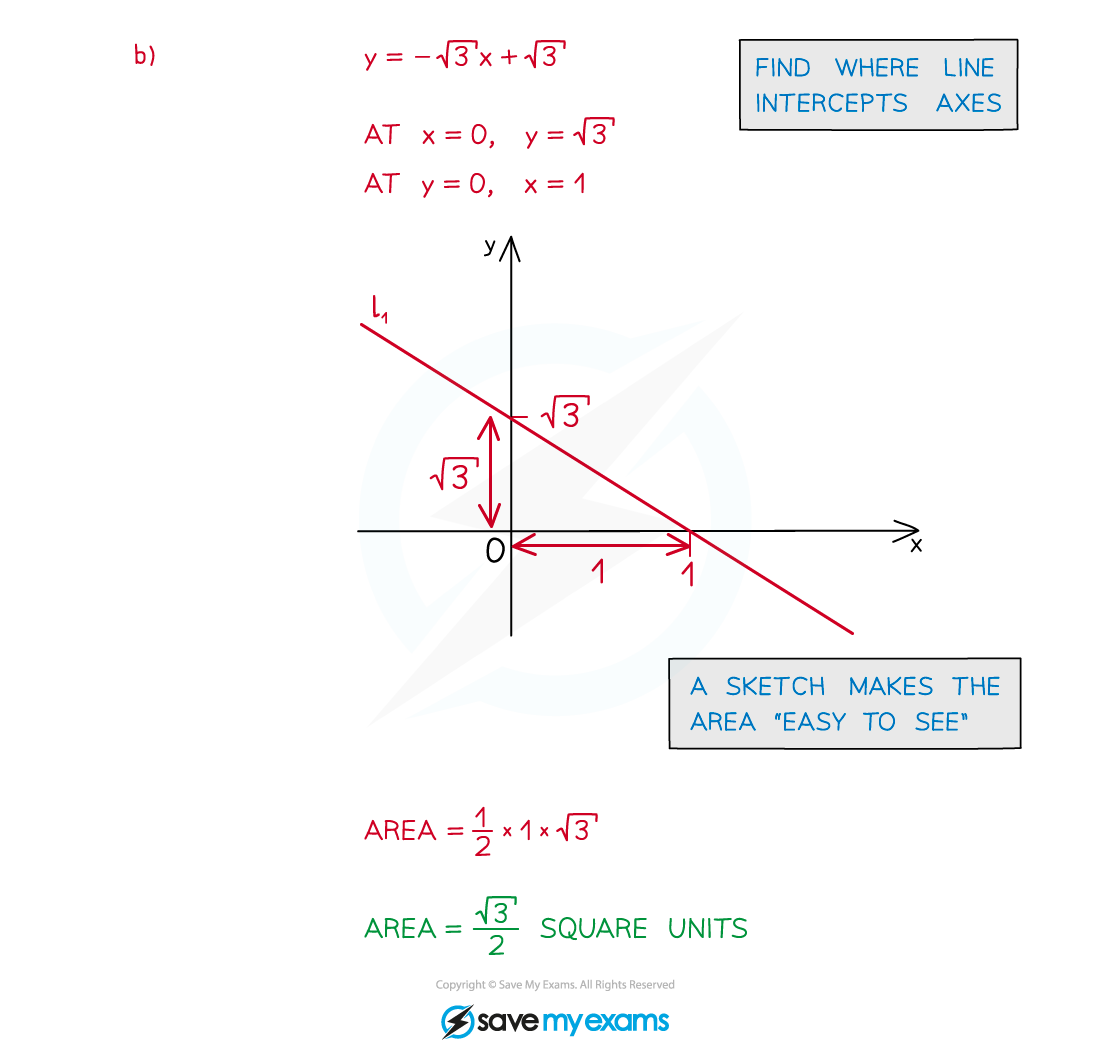
- Find points of intersection between a tangent/normal and x/y axes
- Find areas of basic shapes enclosed by axes and/or tangents/normals
-
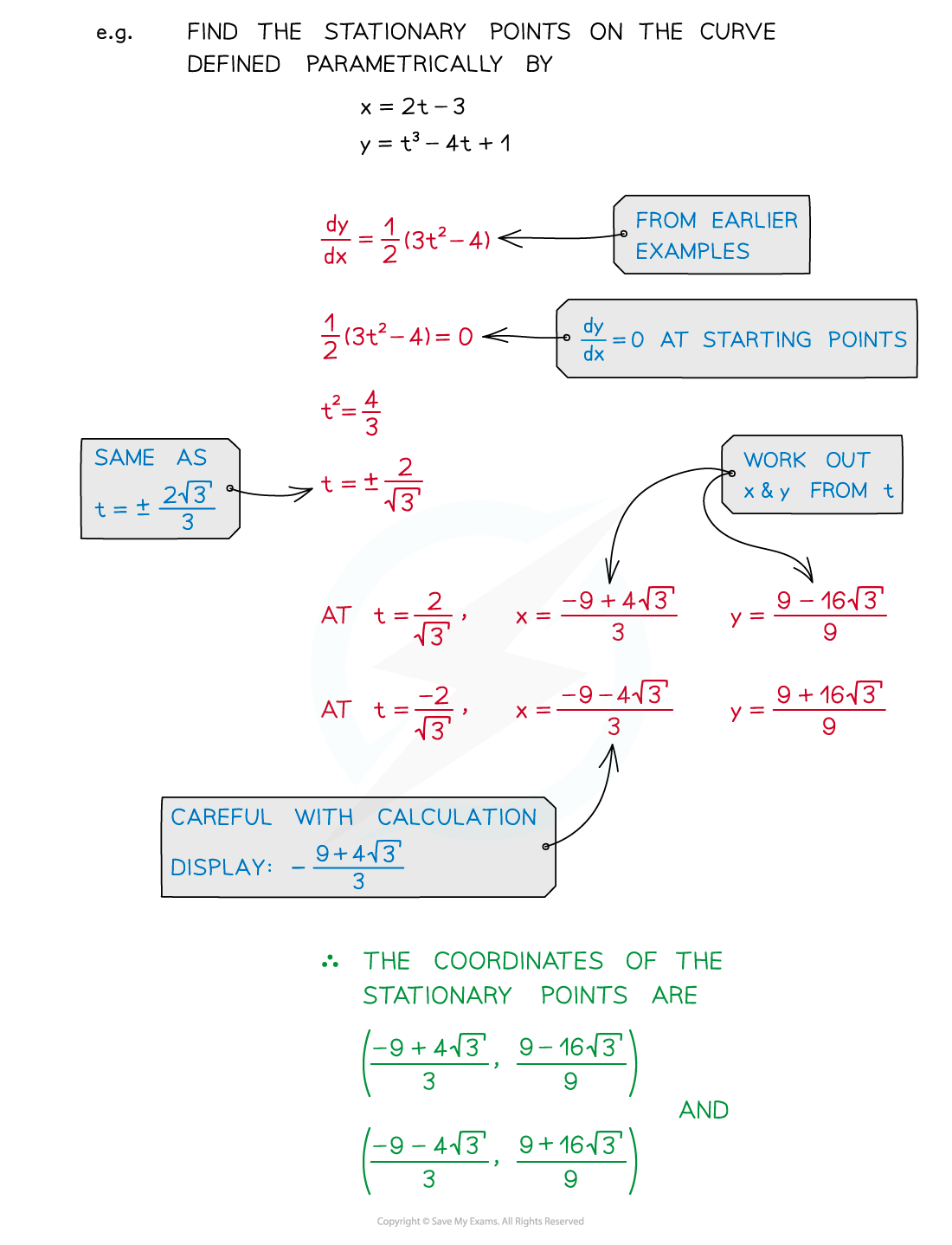
Find stationary points (dy/dx = 0)
-
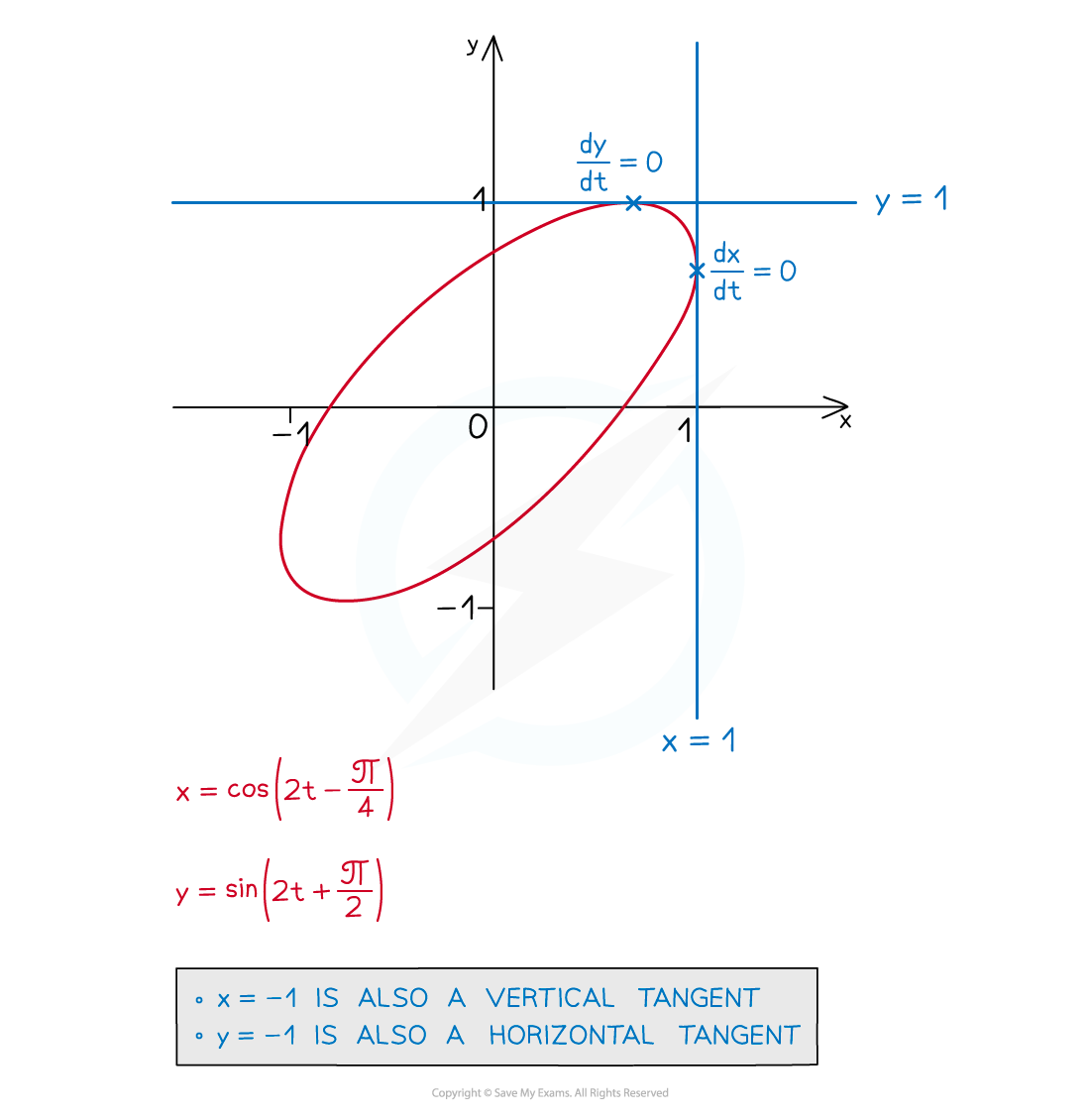
You may also be asked about horizontal and vertical tangents
- At horizontal (parallel to the x-axis) tangents, dy/dt = 0
- At vertical (parallel to y-axis) tangents, dx/dt = 0
Worked Example
Was this revision note helpful?
Build on this topic