Character Encoding (Cambridge International A-Level Computer Science)
Character sets
What is a character set?
-
A character set is all the characters and symbols that can be represented by a computer system
-
Each character is given a **unique **binary code
-
Character sets are ordered logically, the code for ‘B’ is one more than the code for ‘A’
-
A character set provides a standard for computers to communicate and send/receive information
-
Without a character set, one system might interpret 01000001 differently from another
-
The number of characters that can be represented is determined by the** number of bits used** by the character set
-
Two common character sets are:
- American Standard Code for Information Interchange (ASCII)
- Universal Character Encoding (UNICODE)
ASCII
What is ASCII?
-
ASCII is a character set and was an accepted standard for information interchange
-
ASCII uses 7 bits, providing 27 unique codes (128) or a maximum of 128 characters it can represent
-
This is enough to represent the letters, numbers, and symbols from a standard keyboard
-
The sixth bit changes from 1 to 0 when comparing uppercase and lowercase characters
- a 0110 0001
- A 0100 0001
- b 0110 0010
- B 0100 0010*
-
This made conversion between the two much easier
-
This speeds up the overall usability of the character set
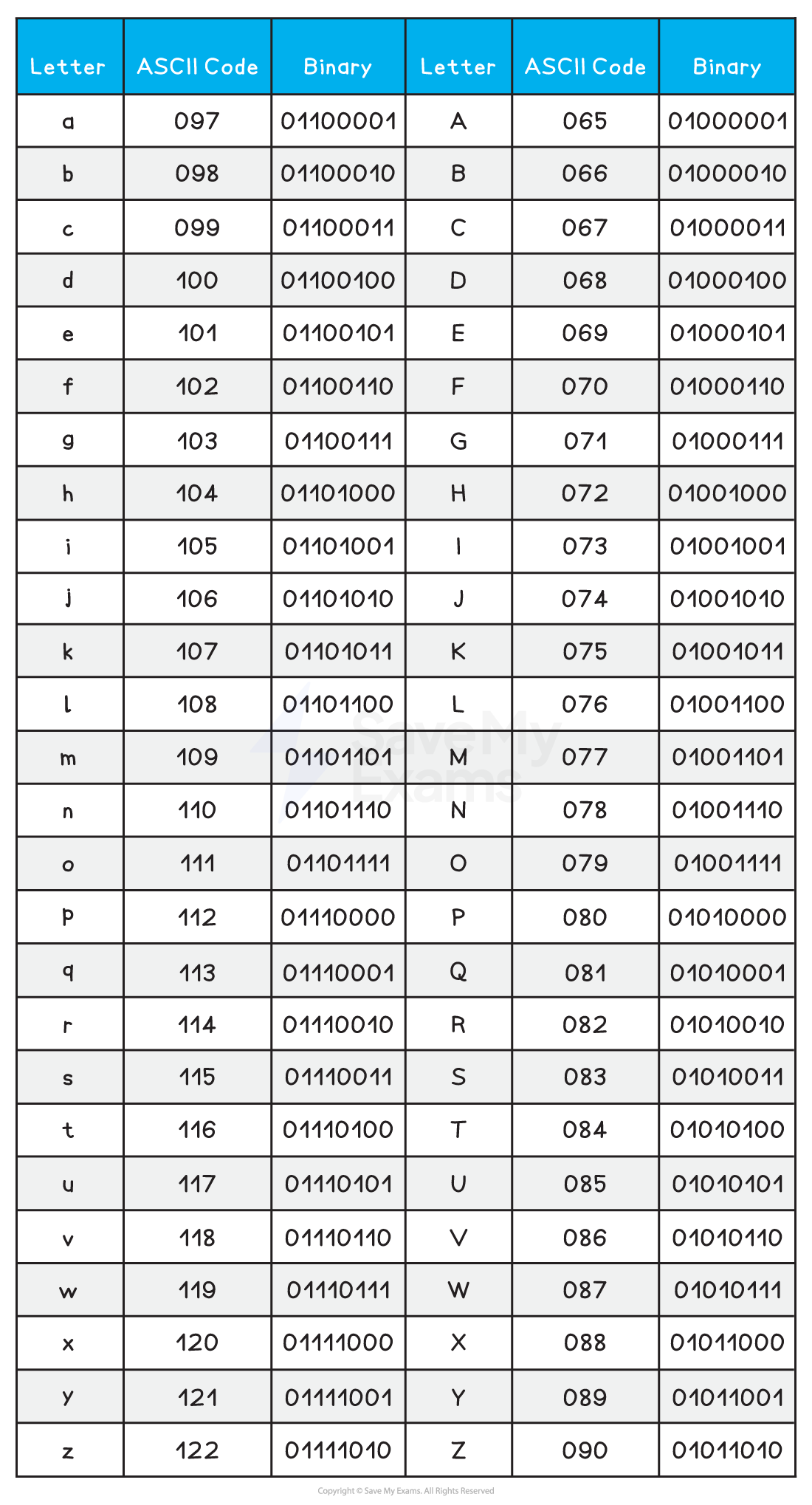
Part of the ASCII code table
- ASCII only represents basic characters needed for English, limiting its use for other languages
Extended ASCII
What is extended ASCII?
- Extended ASCII uses an 8th bit, providing 256 unique codes (28 = 256) or a maximum of **256 characters **it can represent
- Extended ASCII provides** essential characters** such as mathematical operators and more recent symbols such as ©
- This allows for non-English characters and for drawing characters to be included
UNICODE
What is UNICODE?
- UNICODE is a character set and was created as a solution to the limitations of ASCII
- UNICODE uses a minimum of 16 bits, providing 216 unique codes (65,536) or a minimum of 65,536 characters it can represent
- UNICODE can represent characters from all the major languages around the world
- UNICODE was designed to create a universal standard that covered all languages and all writing systems
- The first 128 characters in the UNICODE character set are the same as ASCII
ASCII vs UNICODE
| ASCII | UNICODE | |
|---|---|---|
| Number of bits | 7-bits | 16-bits |
| Number of characters | 128 characters | 65,536 characters |
| Uses | Used to represent characters in the English language. | Used to represent characters across the world. |
| Benefits | It uses a lot less storage space than UNICODE. | It can represent more characters than ASCII. It can support all common characters across the world. It can represent special characters such as emoji's. |
| Drawbacks | It can only represent 128 characters. It cannot store special characters such as emoji's. | It uses a lot more storage space than ASCII. |
Was this revision note helpful?
Build on this topic