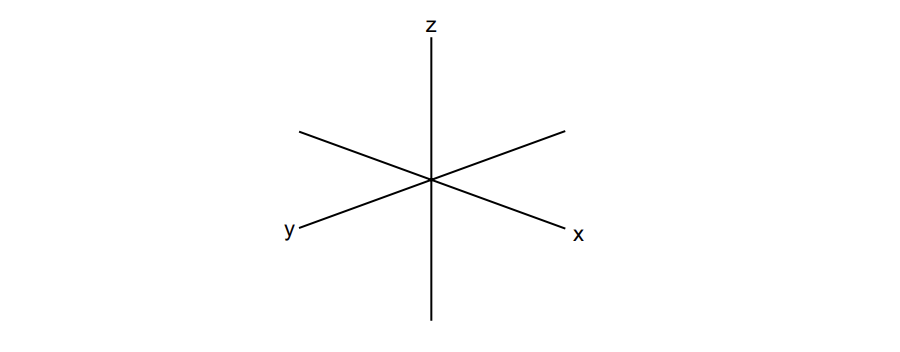
Sketch the shape of a 3dxy orbital.
i) Some transition elements and their compounds behave as catalysts. Explain why transition elements behave as catalysts.
(2 marks)
ii) Catalysis can be classified as heterogeneous or homogeneous. Complete Table 1.1 by placing one tick (✓) in each row to indicate the type of catalysis in each reaction.
Table 1.1
| type of catalysis | ||
|---|---|---|
| reaction | heterogeneous | homogeneous |
| Fe in the Haber process | ||
| Fe2+ in the I– / S2O82– reaction | ||
| NO2 in the oxidation of SO2 |
(1 mark)
A solution containing a mixture of Sn2+ (aq) and Sn4+ (aq) is added to a solution containing a mixture of Fe2+ (aq) and Fe3+ (aq).
Table 2.2 lists electrode potentials for some electrode reactions of these ions.
Table 2.2
| electrode reaction | Eɵ/ V |
|---|---|
| Fe2+ + 2e– ⇌ Fe | –0.44 |
| Fe3+ + 3e– ⇌ Fe | –0.04 |
| Fe3+ + e– ⇌ Fe2+ | +0.77 |
| Sn2+ + 2e– ⇌ Sn | –0.14 |
| Sn4+ + 2e– ⇌ Sn2+ | +0.15 |
Eɵ data from the table can be used to predict the reaction that takes place when the two solutions are mixed.
i) Construct an equation for this reaction.
(1 mark)
ii) Calculate Eɵcell for this reaction.
(1 mark)
Hexaaquairon(III) ions are pale violet. They form a colourless complex with fluoride ions, F–, as shown in equilibrium 1, and a deep-red complex with thiocyanate ions, SCN–, as shown in equilibrium 2.
equilibrium 1:
[Fe(H2O)6]3+ + F– ⇌ [Fe(H2O)5F]2+ + H2O
violet ⇌ colourless
Kstab = 2.0 × 10⁵ mol–1 dm3
equilibrium 2:
[Fe(H2O)6]3+ + SCN– ⇌ [Fe(H2O)5SCN]2+ + H2O
violet ⇌ deep-red
Kstab = 1.0 × 10³ mol–1 dm3
The following two experiments are carried out.
Experiment 1: A few drops of KSCN (aq) are added to 5 cm3 of Fe3+ (aq), followed by a few drops of KF (aq).
Experiment 2: A few drops of KF (aq) are added to 5 cm3 of Fe3+ (aq), followed by a few drops of KSCN (aq).
i) State and explain the sequence of colour changes you would observe in each of Experiment 1 and Experiment 2.
(4 marks)
ii) State the type of reaction occurring during the experiments in (d)(i).
(1 mark)
Solutions of iron(III) salts are acidic due to the equilibrium shown.
[Fe(H2O)6]3+ (aq) ⇌ [Fe(H2O)5(OH)]2+ (aq) + H+ (aq)
Ka = 8.9 × 10⁻⁴ mol dm–3
Calculate the pH of a 0.25 mol dm–3 FeCl3 solution. Show your working.
pH = ..........................................................