Rate: Inhibitor Concentration (Cambridge International A-Level Biology)
Spec point — investigate and explain the effects of the following factors on the rate of enzyme-catalysed reactions: • inhibitor concentration
Rate: inhibitor concentration
-
There are two types of inhibitors:
-
Competitive inhibitors have a similar shape to that of the substrate molecules
- This means they compete with the substrate for the active site
-
Non-competitive inhibitors bind to the enzyme at an alternative site, altering the shape of the active site
- This prevents the substrate from binding to it
-
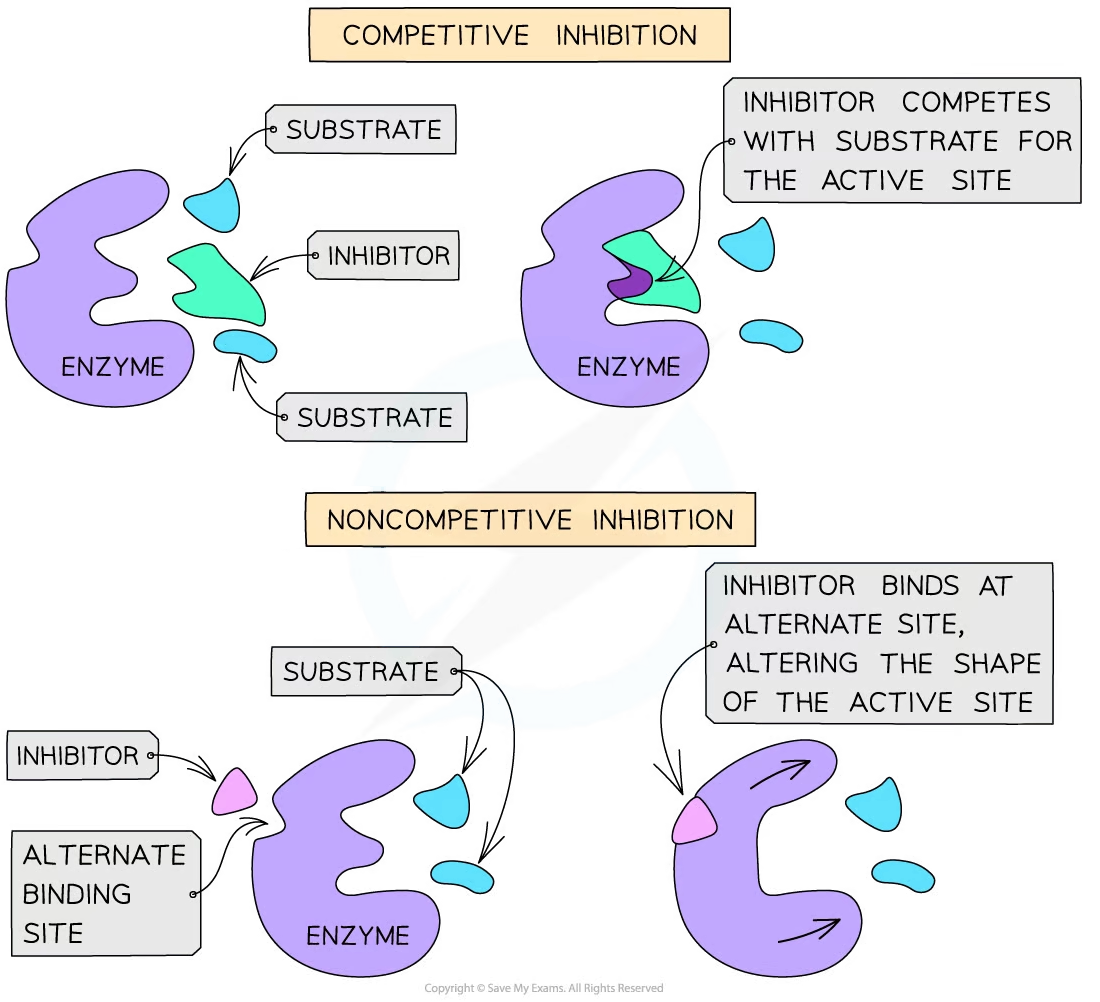
The two types of inhibitors, competitive and non-competitive, can affect the formation of enzyme-substrate complexes
-
Both types of inhibitors slow down or stop enzyme activity
-
Increasing the concentration of an inhibitor reduces the rate of reaction
- Eventually, if inhibitor concentration continues to be increased, the reaction will stop completely
-
For competitive inhibitors, countering the increase in inhibitor concentration by increasing the substrate concentration can increase the rate of reaction once more
- This is because more substrate molecules mean they are more likely to collide with enzymes and form enzyme-substrate complexes before the inhibitor can bind
-
For non-competitive inhibitors, increasing the substrate concentration cannot increase the rate of reaction once more
- This is because the shape of the active site of the enzyme remains changed, so enzyme-substrate complexes are still unable to form despite the high number of substrate molecules present
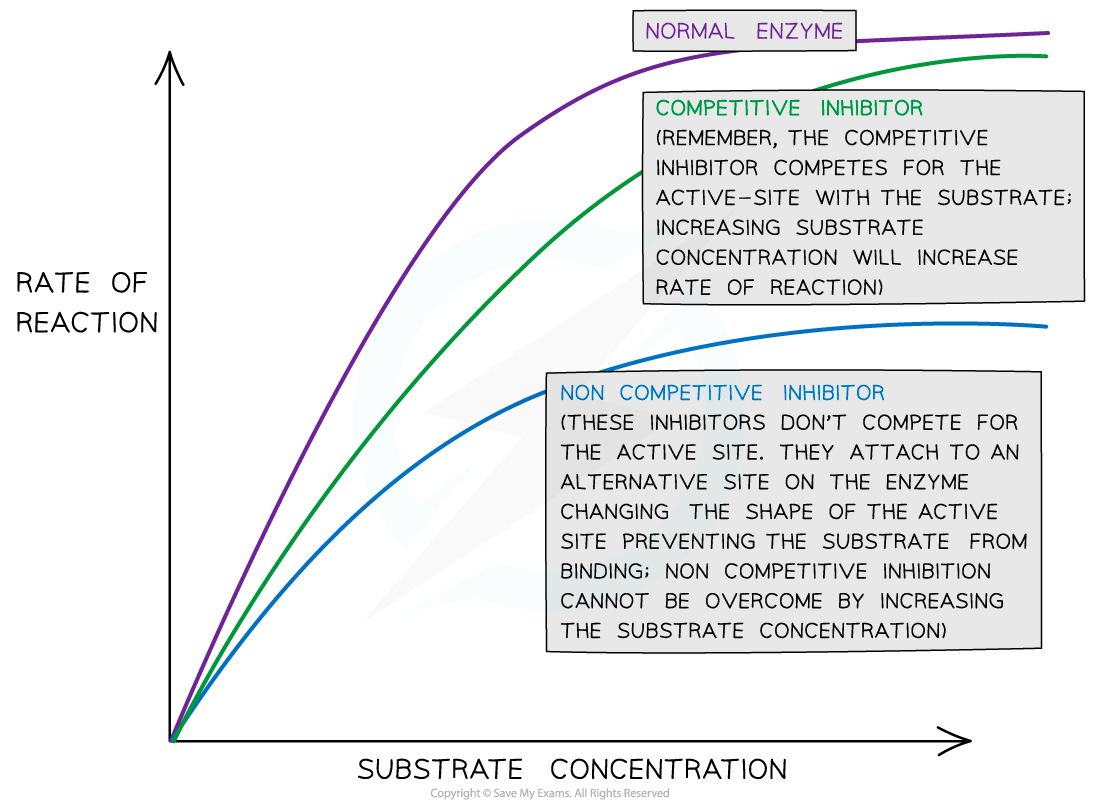
The effect of inhibitor concentration on the rate of an enzyme-catalysed reaction
Exam Hint While a competitive inhibitor will lower the initial rate of reaction (by occupying some of the available active sites), eventually the same amount of product will be produced as would have been produced without the competitive inhibitor (the maximal rate is not affected).
Non-competitive inhibitors lower the initial rate of reaction and the maximal rate of reaction (a lower amount of product is produced than would normally be produced).
Was this revision note helpful?
Build on this topic