Homologous Chromosomes (Cambridge International A-Level Biology)
Spec point —
16.1.2· explain what is meant by homologous pairs of chromosomes
Homologous chromosomes
-
In diploid cells there are two complete sets of chromosomes in the nucleus
-
Chromosomes have a characteristic shape
- They have a fixed length
- The position of the centromere is in a particular location
-
These characteristic features allow for each chromosome to be identified in a photomicrograph
-
In photomicrographs chromosomes are often grouped into their homologous pairs
-
Homologous chromosomes:
- Carry the same genes in the same positions(locus)
- Are the same shape
-
During fertilisation a diploid zygote is formed
- In a zygote one chromosome of each homologous pair comes from the female gamete and the other comes from the male gamete
-
Having the same genes in the same order helps homologous chromosomes line up alongside each other during meiosis
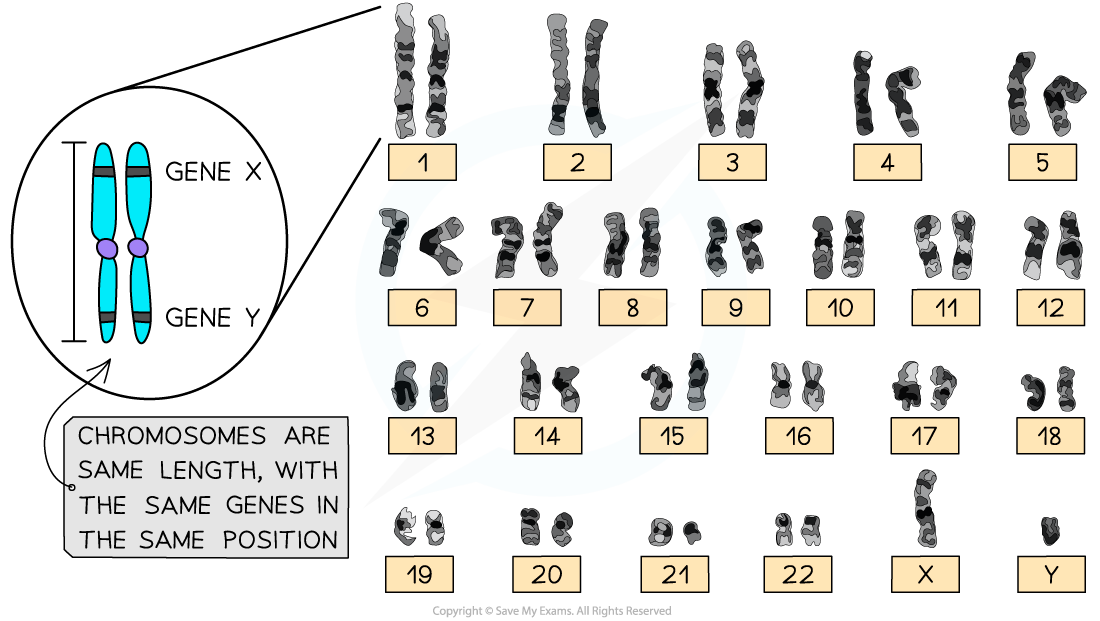
Human karyogram showing homologous chromosomes
Exam Hint Although homologous pairs of chromosomes contain the same genes in the same order they don’t necessarily carry the same alleles (form) of each gene! i.e. We all have the genes to create eyes, some have the allele to create blue eyes and others the allele for brown eyes, for example.
(A karyogram, as seen in the image, is an organised picture of an organism’s chromosomes arranged in pairs by size and shape.)
Was this revision note helpful?
Build on this topic