Vaccination to Control Disease (Cambridge International A-Level Biology)
Exam board Cambridge International · A-LevelUpdated 2025-10-01
Spec point —
11.2.6· explain how vaccination programmes can help to control the spread of infectious diseases
Vaccination to control disease
-
There are many safe and effective vaccines that exist against many pathogens
-
These vaccines have managed to push a number of childhood diseases to the verge of extinction
- Vaccines against such diseases as mumps, chicken pox and whooping cough are administered to children as part of an immunisation schedule and they successfully result in immunity
-
As a result, many childhood diseases are kept at low levels within populations due to herd immunity
- Herd immunity arises when a sufficiently large proportion of the population has been vaccinated (and are therefore immune)
- This makes it difficult for a pathogen to spread within that population, as those not immunised are protected and unlikely to contract it as the levels of the disease are so low
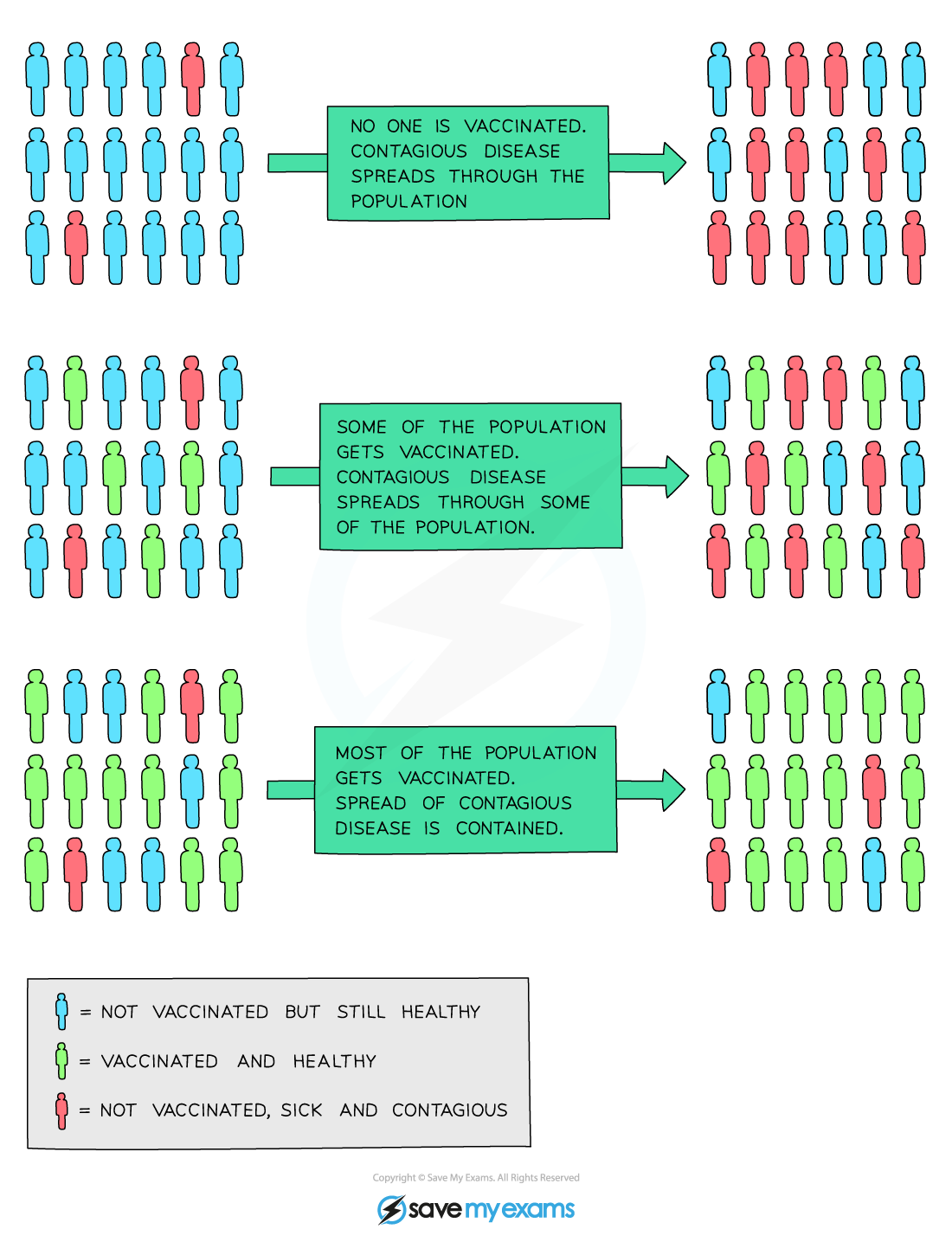
The process of herd immunity to protect populations from communicable disease through vaccination
Was this revision note helpful?
Build on this topic