Ionic Compounds: Bonds, Structure & Properties (Edexcel IGCSE Science)
Ionic bonding
Spec point —
5.5
- Ionic compounds consists of a regular arrangement of alternating positive and negative ions in which the ions are tightly packed together
- Between positive and negative ions are strong electrostatic forces of attraction which act in all directions
- These are what hold the ionic compound together
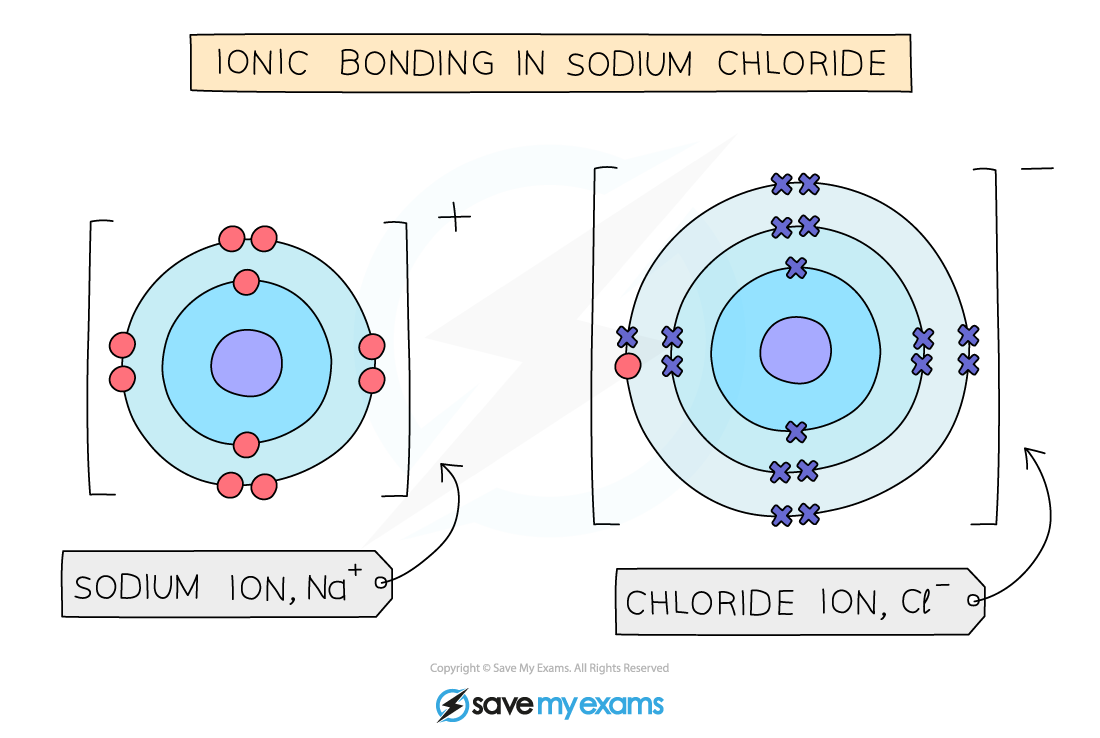
Electrostatic forces of attraction exist between the oppositely charged ions
Giant Ionic Lattices
Spec point —
5.6
Ionic lattices
- Thousands of positive and negative ions in an ionic compound form a giant lattice structure
- Compounds with giant ionic lattice have high melting points
Giant ionic lattice of sodium chloride
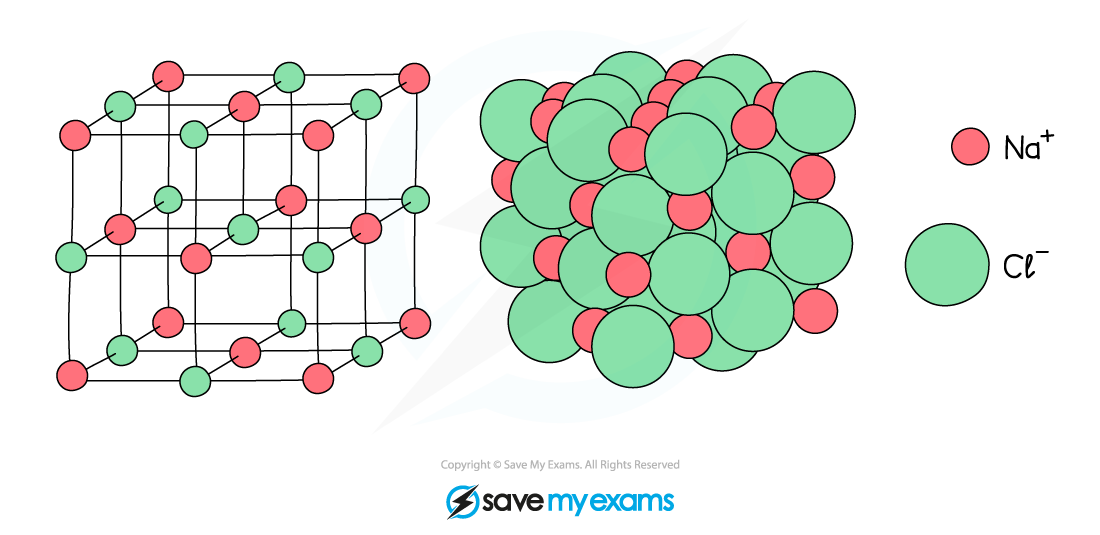
Strong electrostatic forces act in all directions in an ionic solid such as sodium chloride
-
Ionic compounds have high melting and boiling points because:
- They have **giant **ionic lattices
- There are strong electrostatic forces of attraction between oppositely charged ions in all directions
- The forces need lots of** energy** to overcome them
-
The greater the charge on the ions, the stronger the electrostatic forces and the higher the melting point will be
- For example, magnesium oxide consists of Mg2+ and O2- so will have a higher melting point than sodium chloride which contains the ions, Na+ and Cl-
Conductivity & Ionic Compounds
Conductivity of ionic compounds
-
For electrical current to flow there must be freely moving charged particles such as electrons or ions present
-
Ionic compounds are poor conductors in the solid state
- The ions are in fixed positions in the lattice
- They are therefore unable to move and carry a charge
-
Ionic compounds are good conductors of electricity in the molten state or in solution
- When the ionic compound is melted or dissolved in water, the ions are able to move and carry a charge
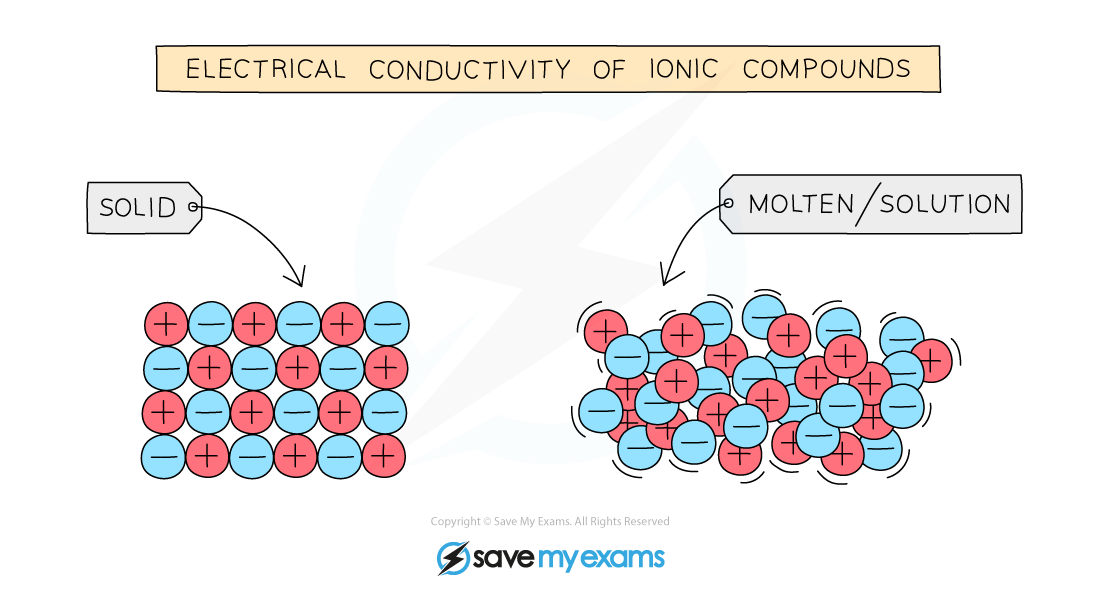
Molten or aqueous particles move and conduct electricity but cannot in the solid state
Exam Hint A common mistake students make in exams is to say that ionic compounds conduct electricity because 'electrons' move and carry a charge, when they should say the ions can move and carry a charge. Don't make that mistake!
Was this revision note helpful?
Build on this topic