How to Carry Out a Flame Test (Edexcel IGCSE Science)
Exam board Pearson Edexcel · IGCSEUpdated 2026-02-10
Flame Tests
Spec point —
6.17
-
The flame test is used to identify the positive metal ion (cations) by the colour of the flame they produce
- Ions from different metals produce different colours
-
To carry out a flame test:
- Dip the loop of an unreactive metal wire such as nichrome or platinum in dilute acid
- Hold it in the blue flame of a Bunsen burner until there is no colour change
- Dip the loop into the solid sample / solution and place it in the edge of the blue Bunsen flame
-
It is important to place the wire into acid first to prevent contamination
- Not doing this might result in two or more ions being present on the wire meaning the colours will mix
- One colour could mask another colour and you will not be able to identify the ion
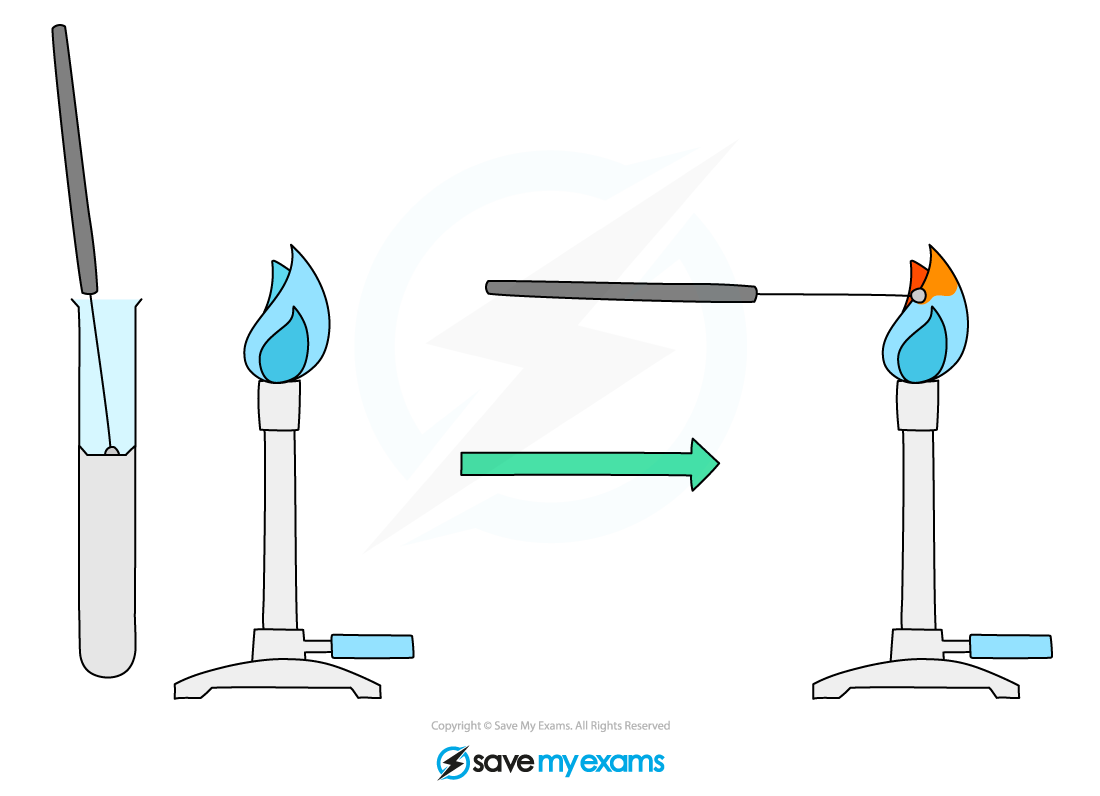
Diagram showing the technique for carrying out a flame test
- The colour of the flame is observed and used to identify the metal ion present
| Cation | Flame Colour |
|---|---|
| Li+ | Red |
| Na+ | Yellow |
| K+ | Lilac |
| Ca2+ | Orange-red |
| Cu2+ | Blue-green |
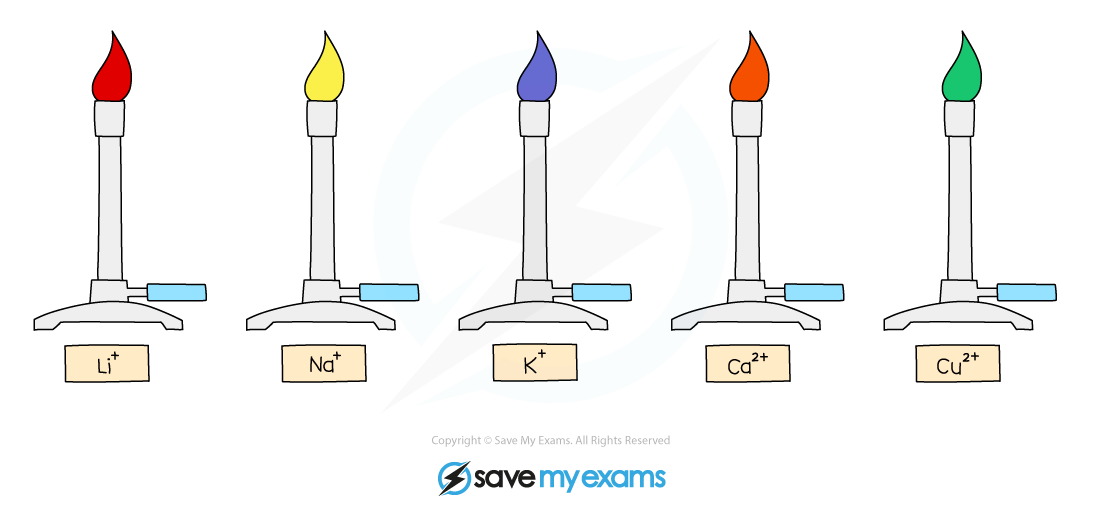
Diagram showing the colours formed in the flame test for metal ions
Exam Hint The sample needs to be heated strongly, so the Bunsen burner flame should be on a blue flame.
Was this revision note helpful?
Build on this topic