Characteristics of Living Organisms (Edexcel IGCSE Science)
The Unifying Characteristics of Living Organisms
Spec point — "understand how living organisms share the following characteristics they require nutrition, they respire, they excrete their waste, they respond to their surroundings, they move, they control their internal conditions, they reproduce, they grow and develop"
The Unifying Characteristics of Living Organisms
-
In order for something to be considered 'living', it must fulfil specific criteria that are true of all living organisms
-
These criteria can be remembered using the acronym MRS C GREN, which stands for:
- Movement
- Respiration
- Sensitivity
- Control
- Growth
- Reproduction
- Excretion
- Nutrition
-
If something does not carry out all of these life processes, it is either dead or non-living
-
Viruses are a good example of non-living particles/agents
Nutrition
Spec point — "understand how living organisms share the following characteristics they require nutrition, they respire, they excrete their waste, they respond to their surroundings, they move, they control their internal conditions, they reproduce, they grow and develop"
Nutrition
-
Organisms must obtain food to provide energy and the materials they require to grow and develop
- Energy is necessary to carry out life processes e.g. movement and excretion
Nutrition in plants
- Plants use sunlight, carbon dioxide and water to produce oxygen and glucose in the process of photosynthesis to produce food
Nutrition in animals
- Animals consume other living organisms as food in order to obtain energy and the nutrients they require to live, grow and develop
- Animals break down larger complex molecules into simpler molecules through the process of digestion
- The simpler molecules are then absorbed into the bloodstream to transport to cells which use them for processes like respiration for energy and growth and repair
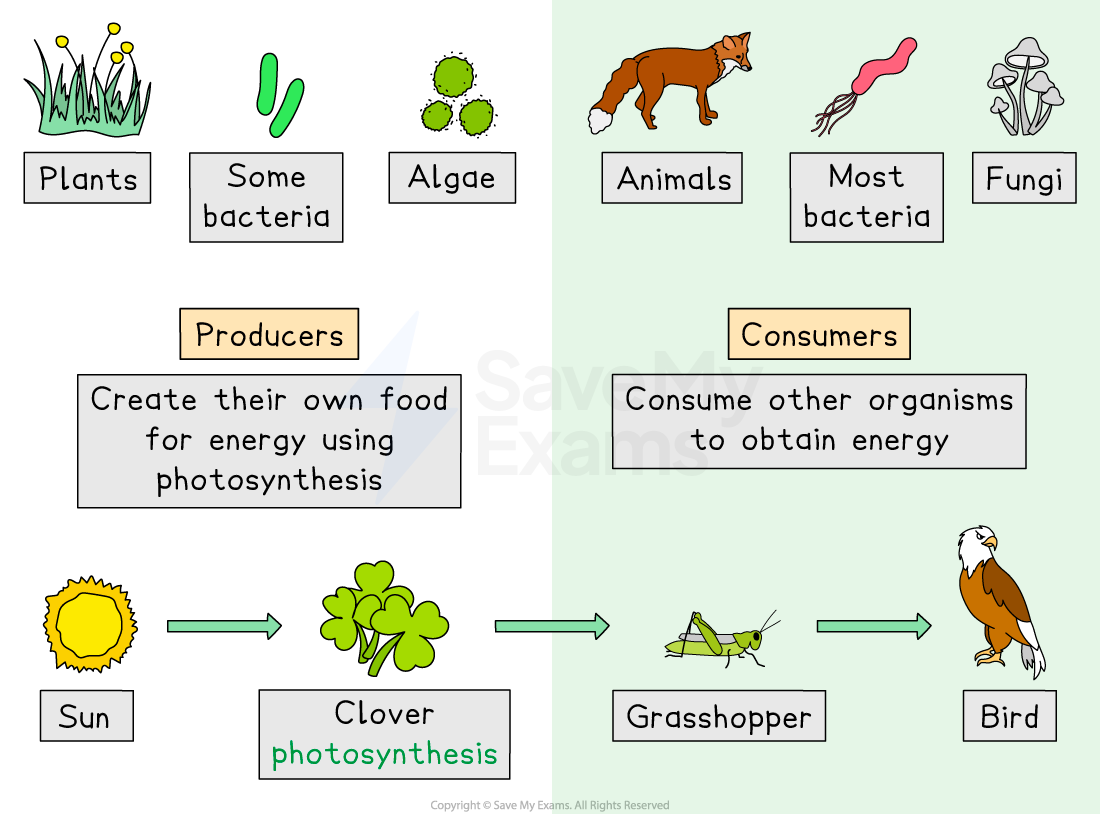
Animals obtain nutrients by eating plants and other animals, whereas plants make their own food by photosynthesising
Use this image
Exam Hint Remember all living organisms require nutrition. Some organisms, like plants, make their own food, while others, like animals and fungi, must consume (take in) food to obtain nutrients.
Respiration
Spec point — "understand how living organisms share the following characteristics they require nutrition, they respire, they excrete their waste, they respond to their surroundings, they move, they control their internal conditions, they reproduce, they grow and develop"
Respiration
- Respiration is a chemical process carried out in all living organisms
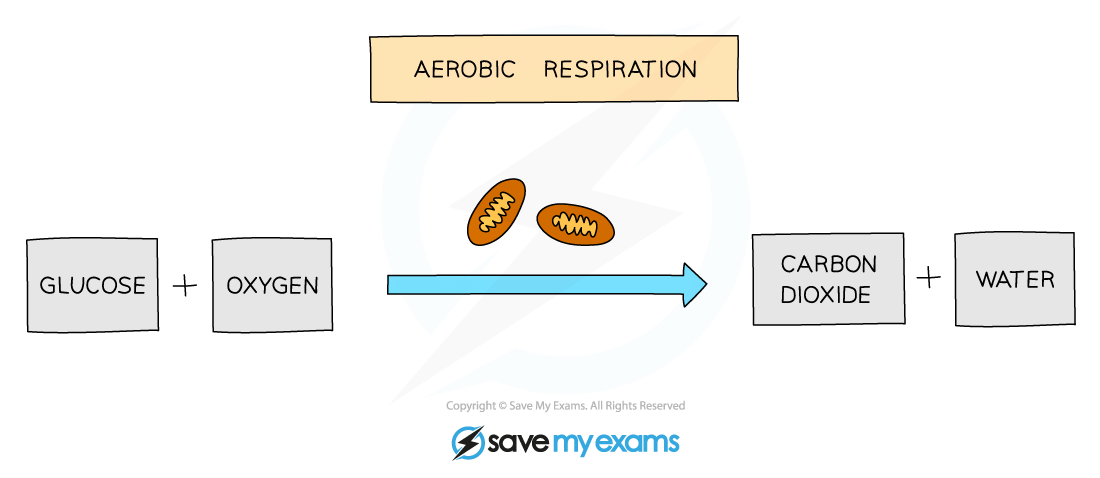
- Energy is released from glucose either in the presence of oxygen (aerobic respiration) or the absence of oxygen (anaerobic respiration)
- The reactions ultimately result in the production of carbon dioxide and water as waste products
- Energy is transferred in the form of ATP
Use this image
The equation for aerobic respiration
Exam Hint Make sure not to confuse respiration with gas exchange. Gas exchange involves getting oxygen into the cells and carbon dioxide out. Respiration uses the oxygen supplied from gas exchange to release energy in the form of ATP.
Excretion
Spec point — "understand how living organisms share the following characteristics they require nutrition, they respire, they excrete their waste, they respond to their surroundings, they move, they control their internal conditions, they reproduce, they grow and develop"
Excretion
- Chemical reactions that take place inside living cells are described as metabolic reactions
- Metabolic reactions produce waste products, some of which may be toxic
- These toxic products must be eliminated from the body
- Excretion is the removal of toxic materials and substances from organisms
Excretion in animals
-
Waste products excreted by animals include:
- Carbon dioxide from aerobic respiration
- Water from aerobic respiration and other chemical reactions
- Urea which contains nitrogen resulting from the breakdown of proteins
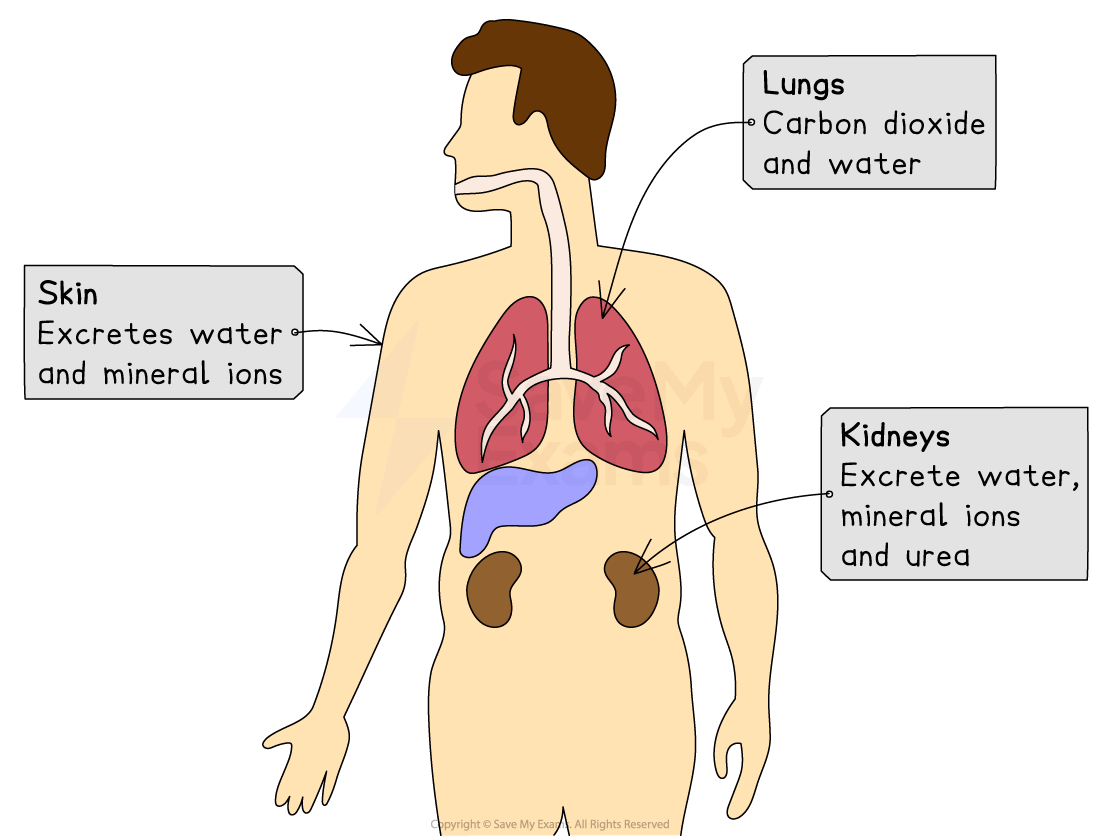
Excretion in humans, the waste products and organs involved.
Use this image
Excretion in plants
-
Waste products excreted by plants include:
- Oxygen from photosynthesis
- Carbon dioxide from respiration
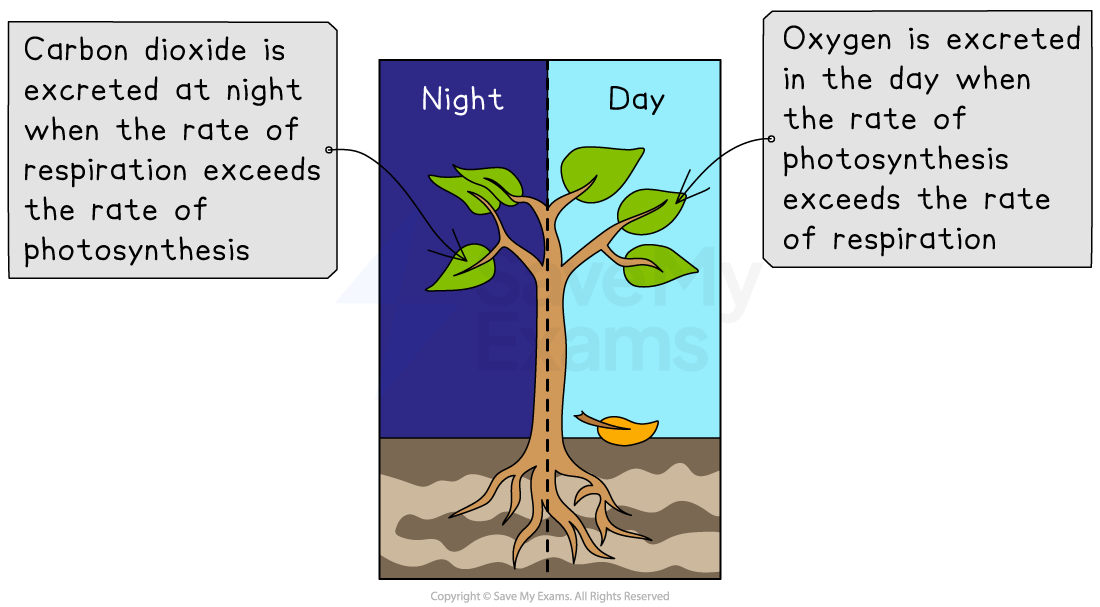
Excretion in plants, the waste products and the difference between day and night.
Use this image
Exam Hint Excretion is often confused with egestion. Remember that the waste products removed through excretion have originated from chemical reactions in the cells. However, the waste products produced in egestion are in the form of faeces and originate from the remains of the substances not absorbed during digestion.
Response to Surroundings
Spec point — "understand how living organisms share the following characteristics they require nutrition, they respire, they excrete their waste, they respond to their surroundings, they move, they control their internal conditions, they reproduce, they grow and develop"
Response to Surroundings
- The sensitivity of an organism refers to its ability to detect and respond to stimuli in its surroundings
- Responding to the environment around them gives an organism the best chances of survival
Sensitivity responses in animals
- In humans, the nervous system provides a complex system of receptors, neurones and effectors which detect and respond to different stimuli using electrical impulses
- The endocrine system also allows a response to stimuli using chemical messengers, which travel in the blood, called hormones
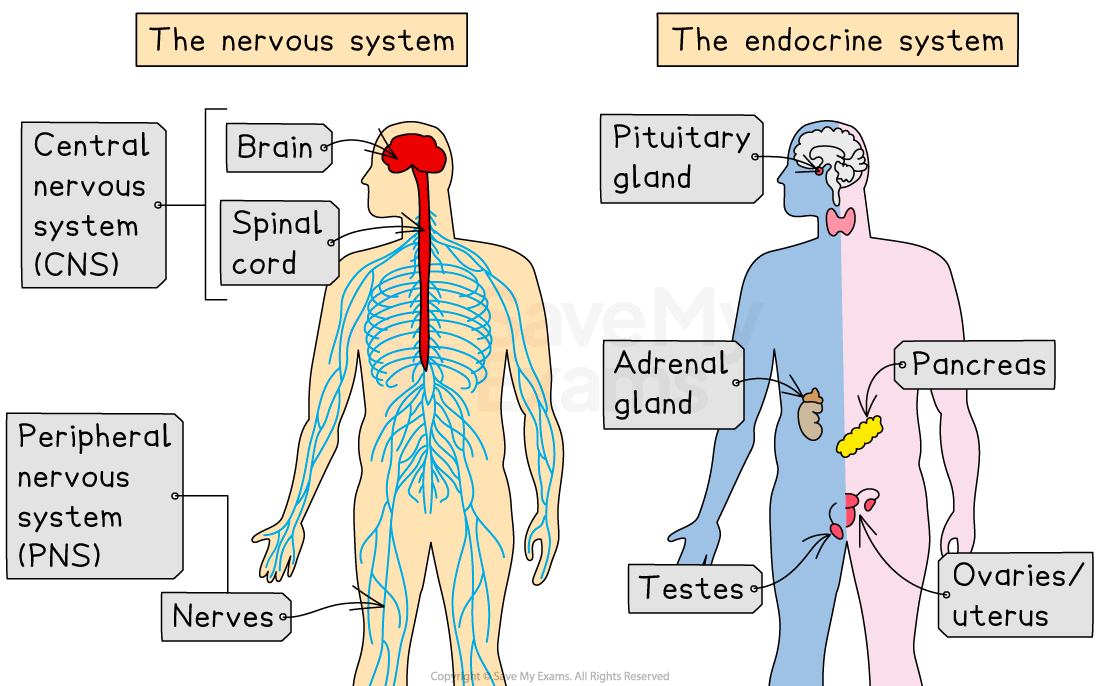
The nervous system and endocrine system allow humans to respond to their environment.
Use this image
Sensitivity responses in plants
-
In plants, responses are controlled by chemicals and are usually much slower
- Geotropism describes a plants response to gravity which causes the roots to grow down into the soil
- Phototropism describes a plants response to light which causes shoots to grow towards sunlight
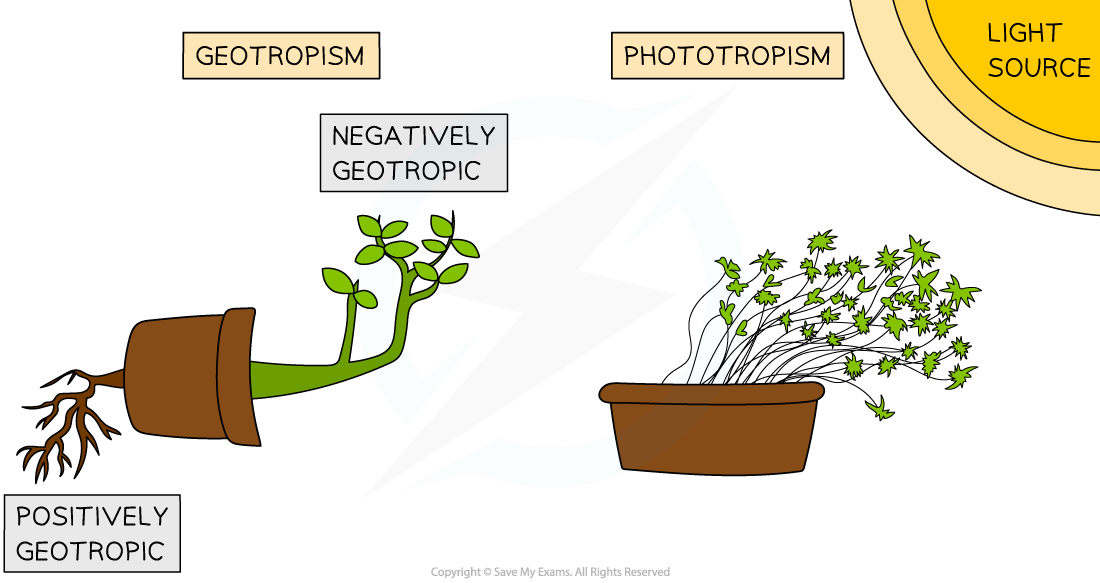
Use this image
Phototropism and geotropism allow plants to respond to their environment.
Movement
Spec point — "understand how living organisms share the following characteristics they require nutrition, they respire, they excrete their waste, they respond to their surroundings, they move, they control their internal conditions, they reproduce, they grow and develop"
Movement
-
Movement is an action by an organism causing a change of position or place
-
The movement of an organism from place to place is called locomotion
-
Plants cannot move from place to place but can change their orientation
- For example, sunflowers track the sun and so change their orientation throughout the day
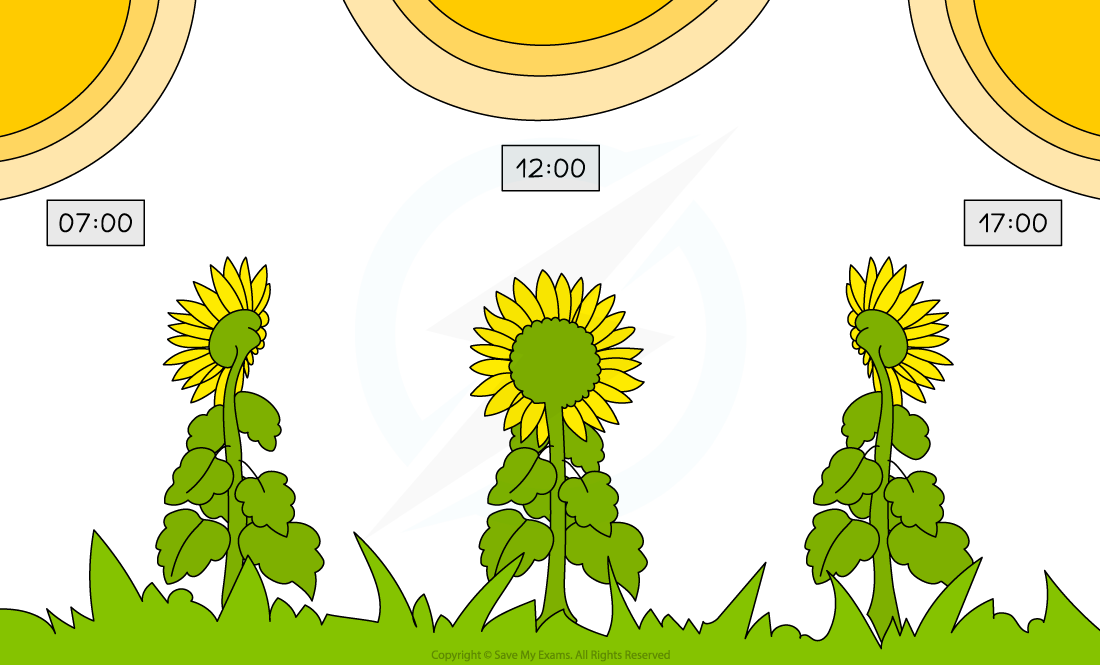
Use this image
Sunflowers track the sun throughout the day.
Control
Spec point — "understand how living organisms share the following characteristics they require nutrition, they respire, they excrete their waste, they respond to their surroundings, they move, they control their internal conditions, they reproduce, they grow and develop"
Control
- Living organisms must control their internal environment in order to keep conditions within required limits
- This is called homeostasis
Homeostasis in humans
-
Thermoregulation refers to the control of body temperature
-
The optimum human body temperature is 37°C
- If body temperature increases e.g. during exercise, mechanisms for control will be initiated to return the temperature back to the optimum
- Mechanisms include sweating or vasodilation
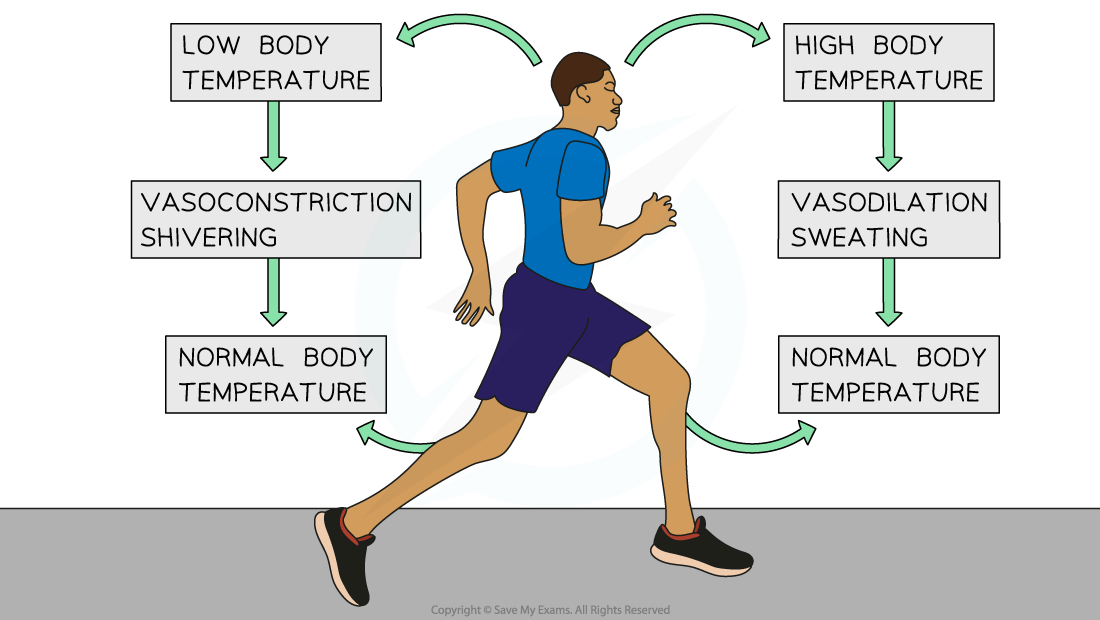
Use this image
Thermoregulation is an example of homeostasis required to maintain a body temperature of 37°C.
- Another homeostatic mechanism in humans is osmoregulation (control of water levels)
Homeostasis in plants
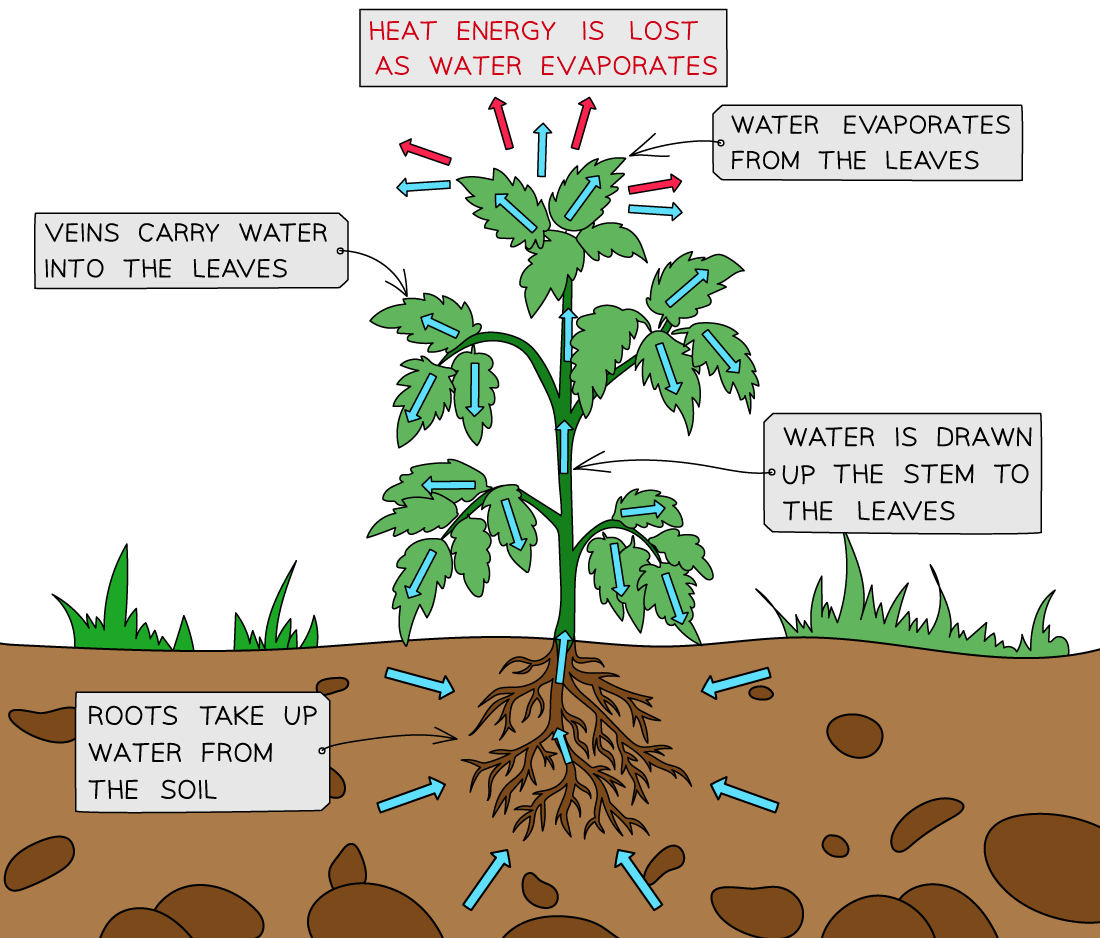
- Plants use transpiration to maintain a suitable temperature
- Water evaporates from the stomata on the underside of the leaf, leading to heat loss
Use this image
Plants maintain an optimum temperature through transpiration.
Reproduction
Spec point — "understand how living organisms share the following characteristics they require nutrition, they respire, they excrete their waste, they respond to their surroundings, they move, they control their internal conditions, they reproduce, they grow and develop"
Reproduction
- Reproduction is the process that leads to the production of more of the same kind of organism
- Reproduction is fundamental to the survival of a population and ultimately, the species
- There are different types of reproduction: sexual and asexual
Sexual reproduction
-
In this type of reproduction, the male and female gametes fuse together
- In humans, the male gamete is the sperm and the female gamete is the egg
- In plants, the male gamete is in the pollen grains and the female gamete is the ovule
-
The DNA of the offspring is composed of both maternal and paternal DNA
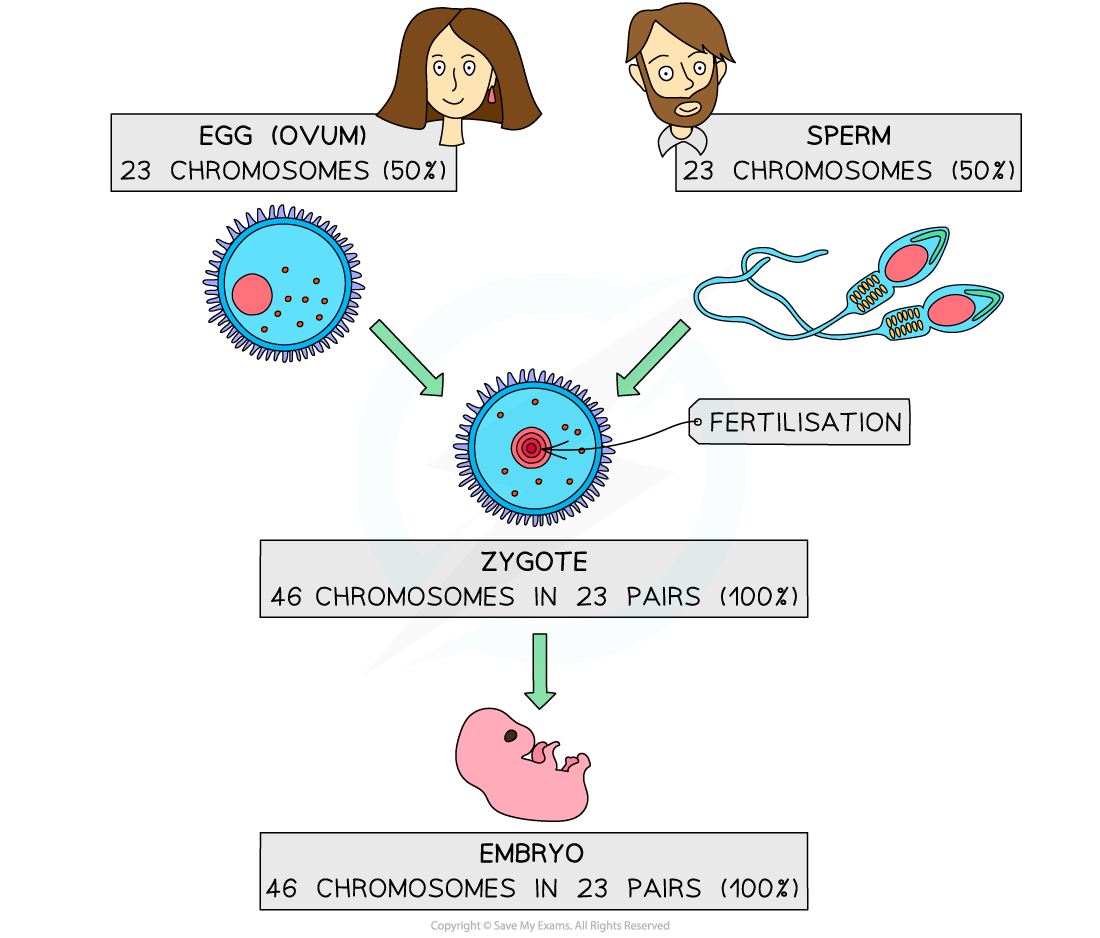
Sexual reproduction involves the fusing of two gametes to form a zygote that contains DNA from both parents.
Asexual reproduction
-
Cells or whole organisms can also reproduce using asexual reproduction
-
Mitosis is an example of asexual reproduction
-
There is only one parent involved so an exact clone is produced
-
The DNA of offspring is identical to parental DNA
- Plants can reproduce asexually naturally by runners or artificially by the taking of cuttings
- Single-celled organisms such as bacteria or protoctist amoeba reproduce asexually
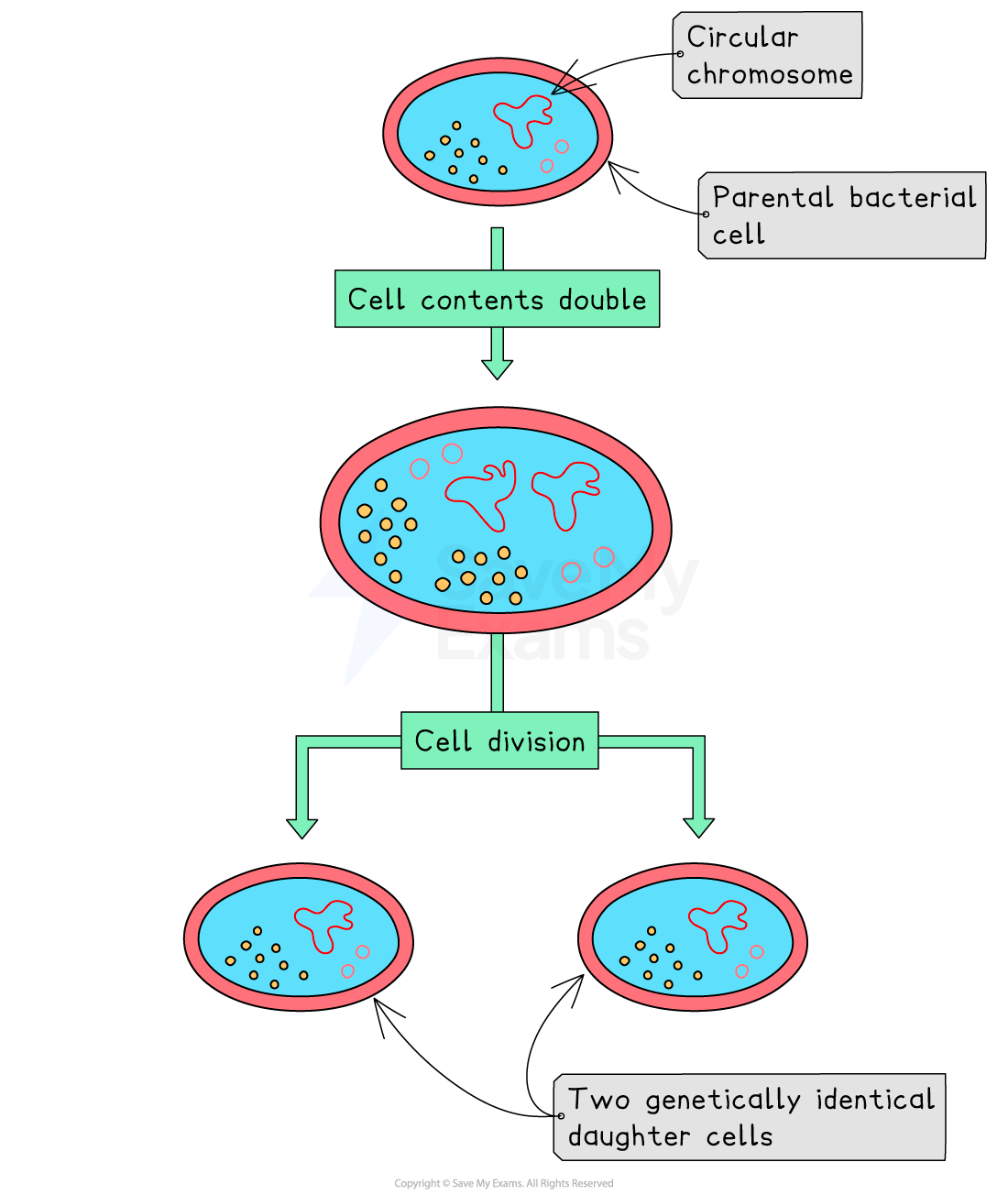
Asexual reproduction in bacteria involves creating exact copies of the parent cell.
Growth
Spec point — "understand how living organisms share the following characteristics they require nutrition, they respire, they excrete their waste, they respond to their surroundings, they move, they control their internal conditions, they reproduce, they grow and develop"
Growth
- Growth is defined as a permanent increase in size
- In animals, an individual grows larger between the zygote and adult stage with changes in proportion or shape
- In plants, an individual grows larger throughout their whole life with new shoots, leaves, branches etc. forming year after year
Was this revision note helpful?
Build on this topic