Carbon Dioxide from Thermal Decomposition (Edexcel IGCSE Science)
Exam board Pearson Edexcel · IGCSEUpdated 2024-08-21
Spec point —
2.12· describe the formation of carbon dioxide from the thermal decomposition of metal carbonates, including copper(II) carbonate
Thermal decomposition
What is thermal decomposition?
- Thermal decomposition is the term used to describe reactions where a substance breaks down due to the action of heat
- One such reaction is the thermal decomposition of metal carbonates
- Carbonates of metals from the lower half of the reactivity series tend to decompose on heating to produce the metal oxide and carbon dioxide gas:
metal carbonate → metal oxide + carbon dioxide
Thermal decomposition of copper(II) carbonate
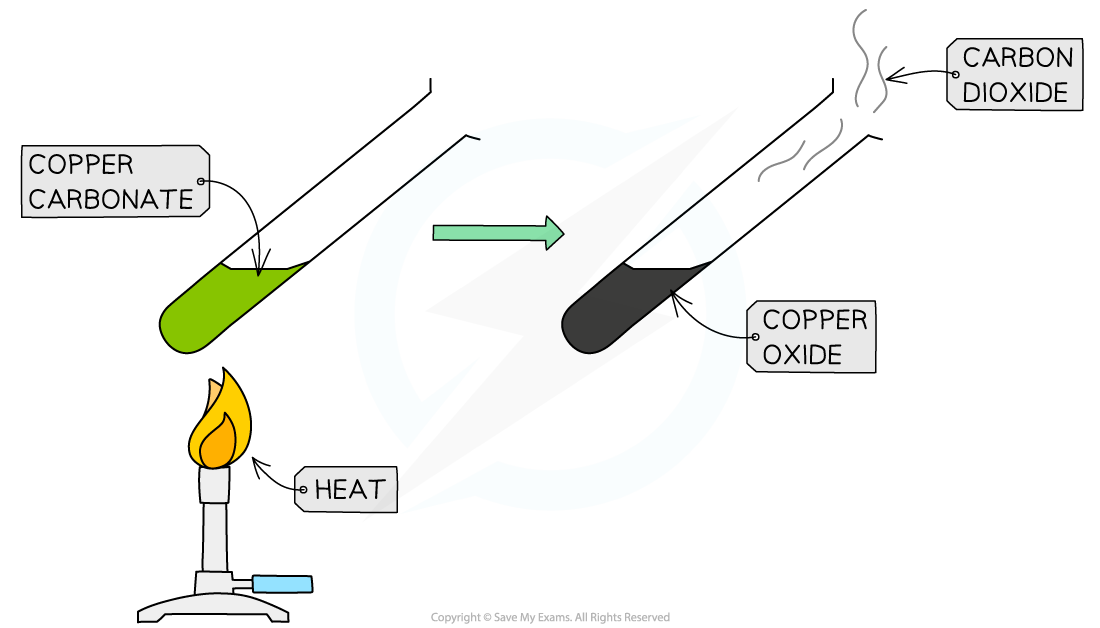
The thermal decomposition of copper(II)carbonate produces copper(II) oxide and carbon dioxide
- The thermal decomposition of copper(II)carbonate occurs readily on heating
- Copper(II) carbonate is a green powder and slowly darkens as black copper(II) oxide is produced
- The carbon dioxide given off can be tested by passing the gas through limewater and looking for it to turn milky
- The equation for the reaction is
CuCO3(s) → CuO (s)+ CO2(g)
copper(II) carbonate → copper(II) oxide + carbon dioxide
Exam Hint The release of carbon dioxide from calcium carbonate in the production of cement is a contributing source of rising atmospheric CO2 levels that contributes to the enhanced greenhouse effect.
Was this revision note helpful?
Build on this topic