Cracking (Edexcel IGCSE Science)
Spec point —
4.17· describe how long-chain alkanes are converted to alkenes and shorter-chain alkanes by catalytic cracking (using silica or alumina as the catalyst and a temperature in the range of 600–700 ºC)
Cracking hydrocarbons
What is cracking?
-
Cracking is an industrial process used to break low demand, long chain hydrocarbon molecules into more useful, small chain hydrocarbon molecules
- Any long chain hydrocarbon can be cracked into smaller chain hydrocarbons
- For example, kerosene and diesel oil are often cracked to produce petrol, alkenes and hydrogen
Conditions for catalytic cracking
- Catalytic cracking involves heating the hydrocarbon molecules to around 600 – 700 °C to vaporise them
- The vapours then pass over a hot powdered catalyst of aluminium oxide
- This process breaks covalent bonds in the molecules as they come into contact with the surface of the catalyst, causing thermal decomposition reactions
Products of cracking
-
The molecules are broken up in a random way which produces a mixture of shorter alkanes and alkenes
- Alkanes are saturated molecules containing carbon-carbon single bonds only
- Alkenes are unsaturated molecules containing carbon=carbon double bonds
Example of cracking
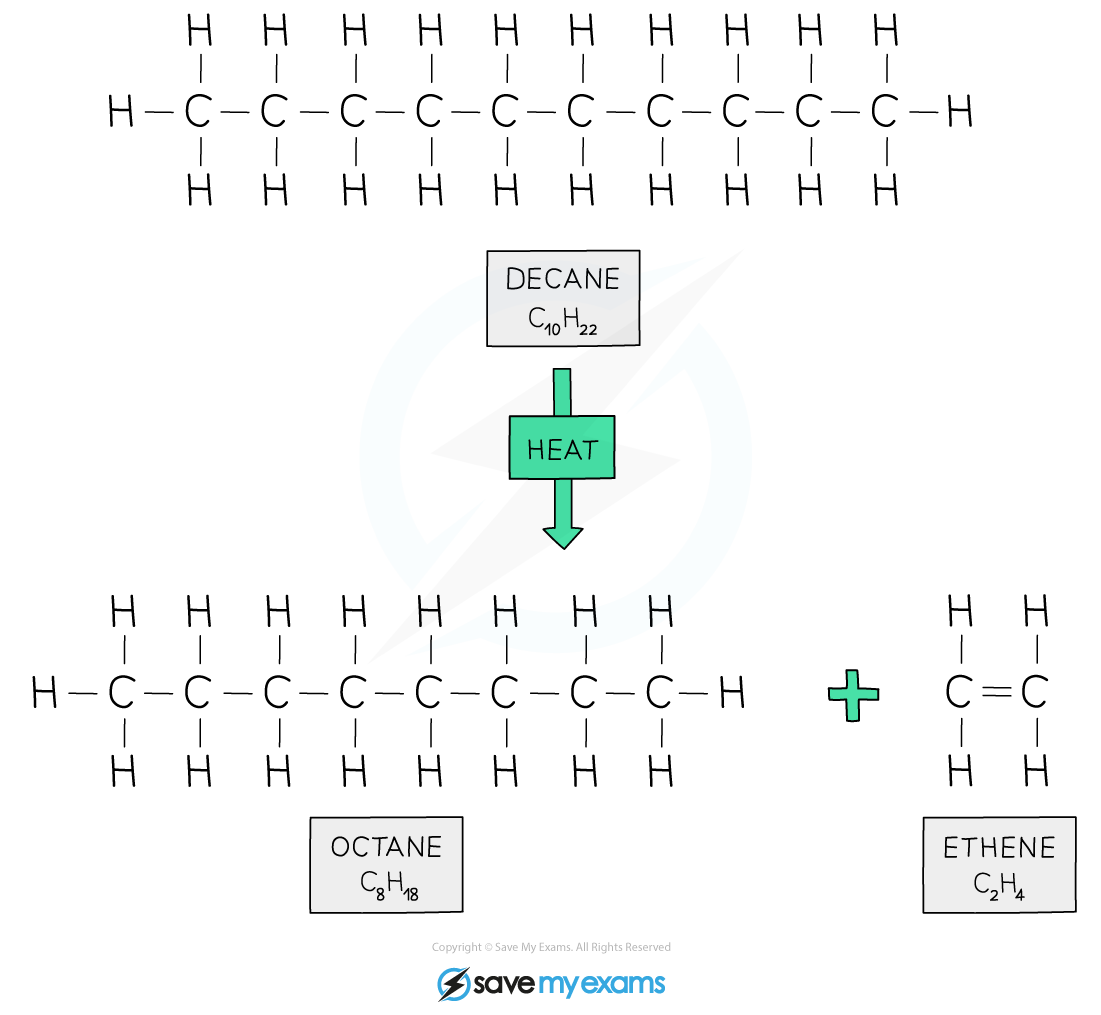
Decane is cracked to produce octane for petrol and ethene for ethanol synthesis
Fraction Supply & Demand
Spec point —
4.18· explain why cracking is necessary, in terms of the balance between supply and demand for different fractions
-
Fractional distillation separates crude oil into fractions containing hydrocarbons of similar chain lengths
-
Each fraction has different values for its supply and demand
- Supply is how much of a particular fraction can be produced from refining the crude oil
- Demand is how much customers want to buy
-
The demand for certain fractions outstrips the supply so cracking is used to convert excess unwanted fractions into more useful ones
-
You can see from the chart that fuel oil and bitumen are surplus fractions so they are cracked and modified to produce petrol, kerosene and diesel
Supply & demand of crude oil fractions
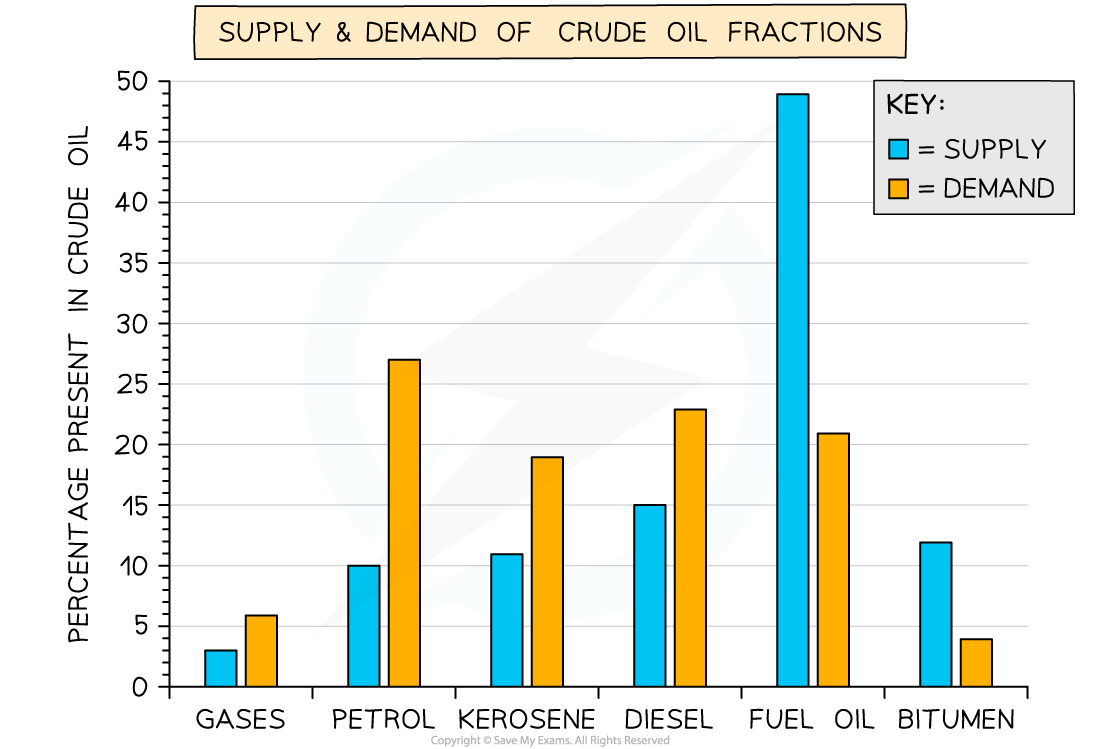
Demand for short chain hydrocarbon molecules such as petrol, kerosene and diesel is greater than the supply, while demand for long chain hydrocarbons such as fuel oil is less than the supply
Exam Hint Remember that cracking is an endothermic reaction.
Was this revision note helpful?
Build on this topic