Energy Resources
3 guided lessons · 27 checks · 4. Energy Resources and Energy Transfers → Work, Power & Energy Resources
Guided lessons for this note
Which concept don't you understand yet?
We'll explain it simply and check your understanding. Pick any lesson — any order works.
0 of 27 checks correct so far
Lesson 1 of 3
Resources, renewables and the generation chain
Energy resources are the large stores society draws on to generate electricity and to heat buildings. They split into renewables, which the world replaces as fast as we use them, and non-renewables, which run down — yet nearly all of them generate electricity through the same turbine-and-generator chain.
What you know already
Electricity has to come from somewhere. These lessons tour the resources that feed the Grid — wind, water, geothermal, solar, fossil and nuclear — and trace the transfer chain that turns each one into generated electricity.
Key points of understanding
- An energy resource is a large store used to generate electricity or to heat homes and businesses.
- A renewable resource is replenished at least as fast as it is used, so it will not run out.
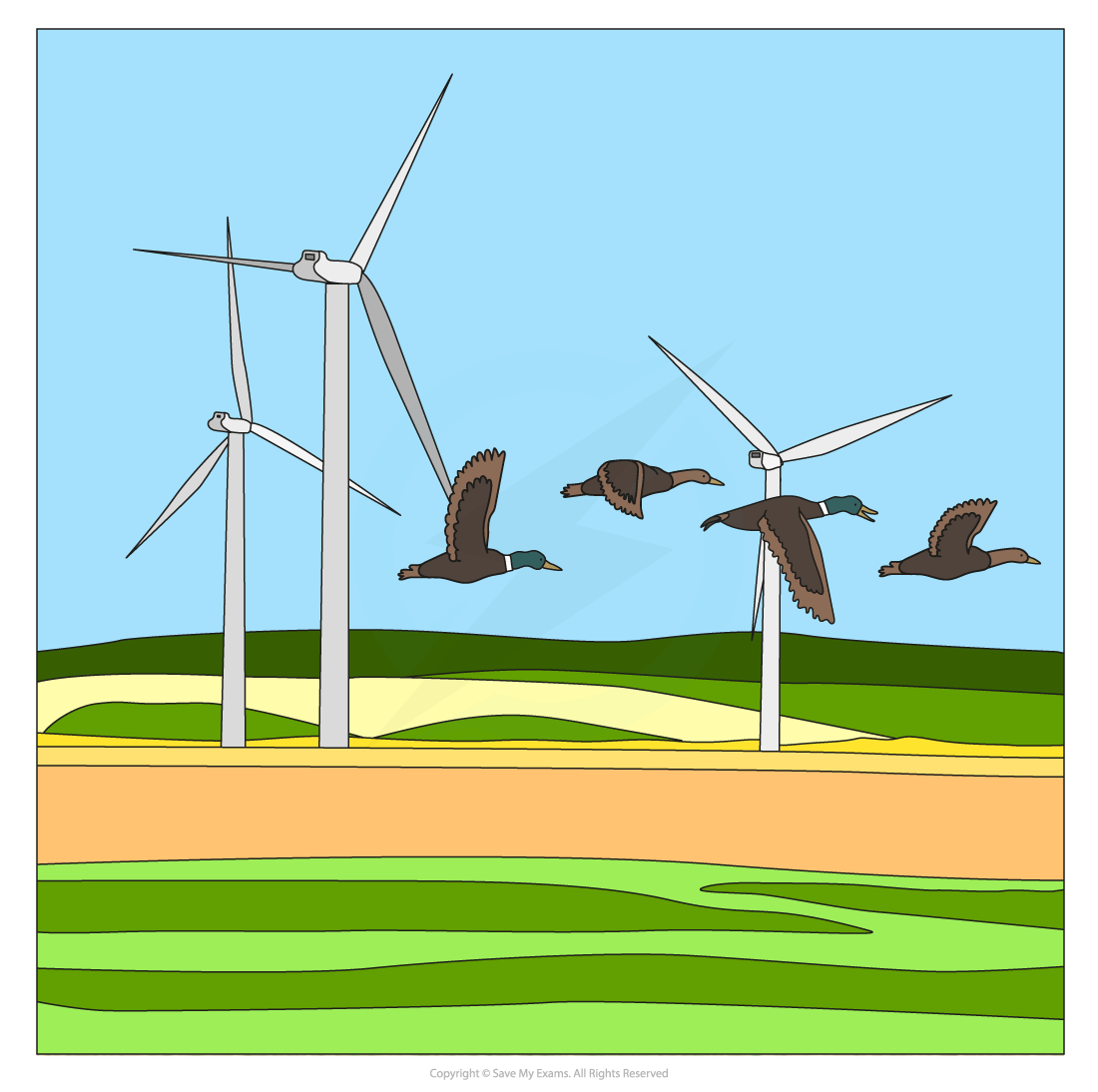
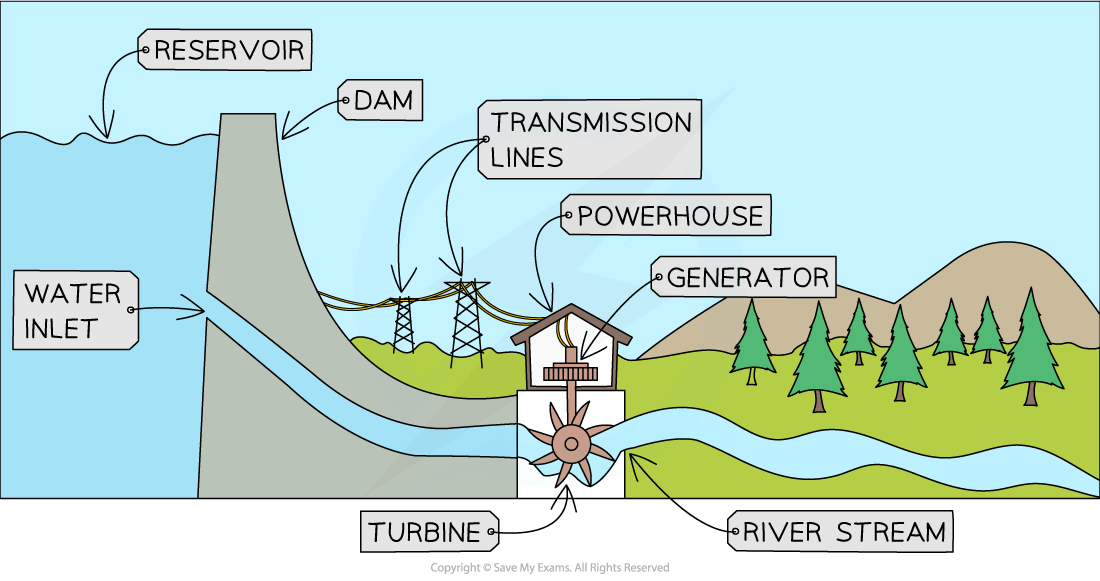
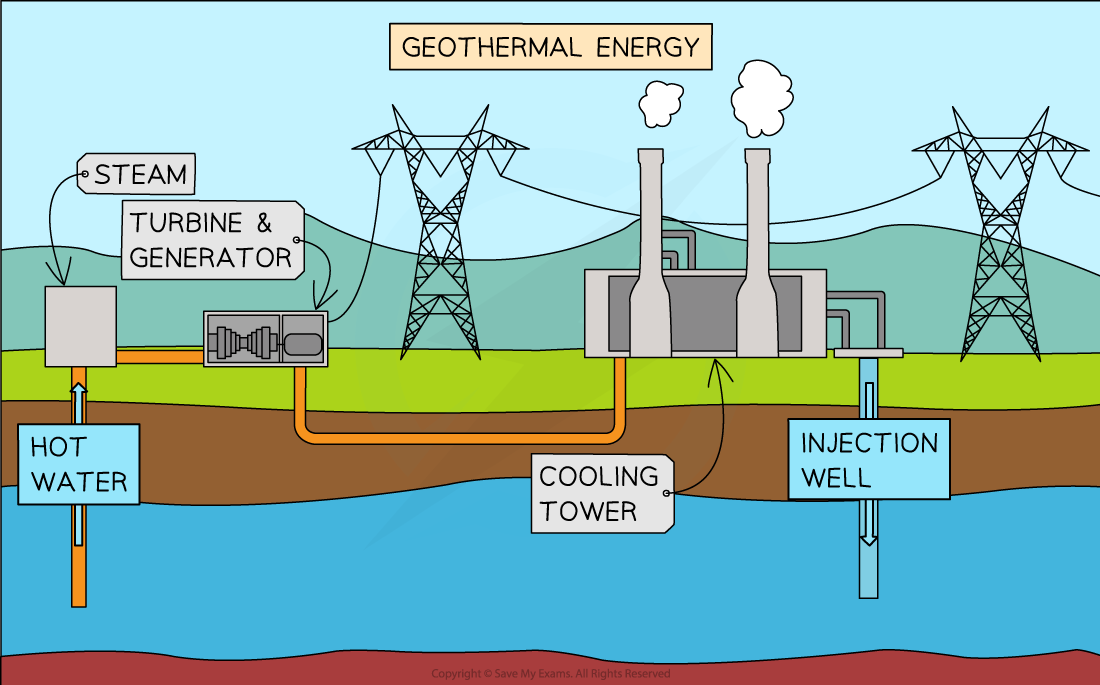
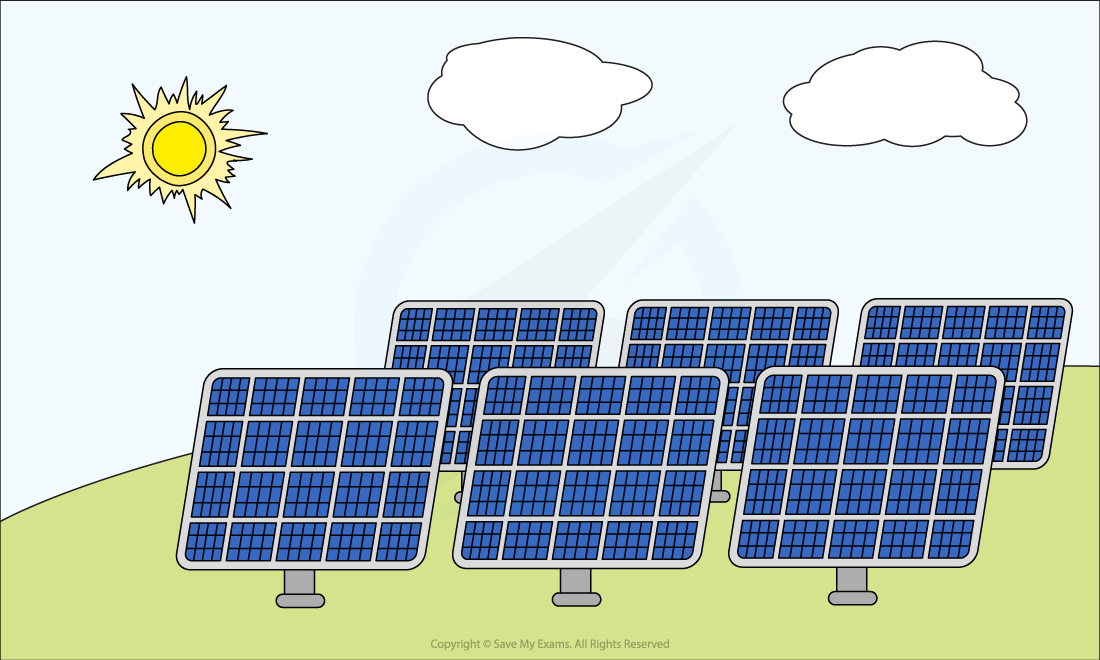
- Renewables include solar, wind, hydroelectricity, geothermal, wave and tidal; non-renewables are fossil fuels and nuclear fuel.
- Generation is shared machinery: a turning turbine drives a generator, and only the way the turbine turns differs.
- Solar cells are the exception — they generate electricity without any turbine.
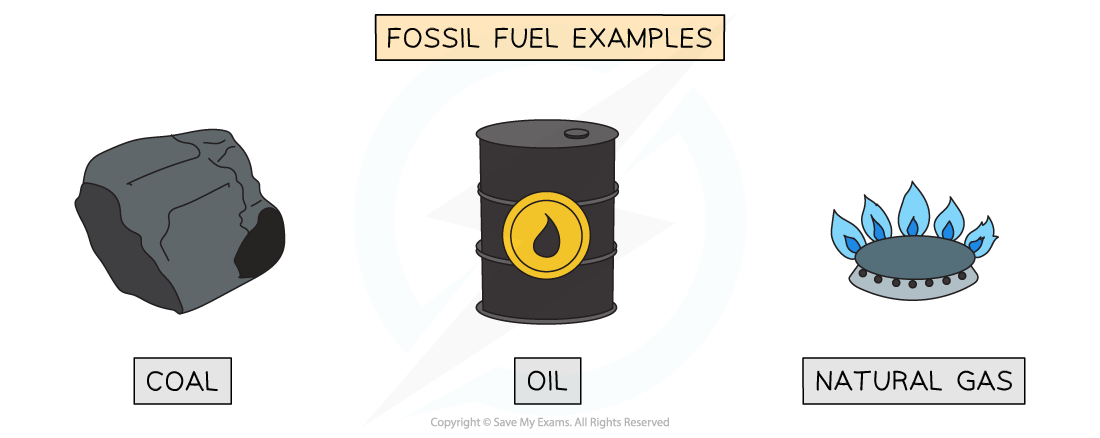
Coal, oil, and natural gas are examples of fossil fuels. These are energy resources in limited supply, meaning they will eventually run out
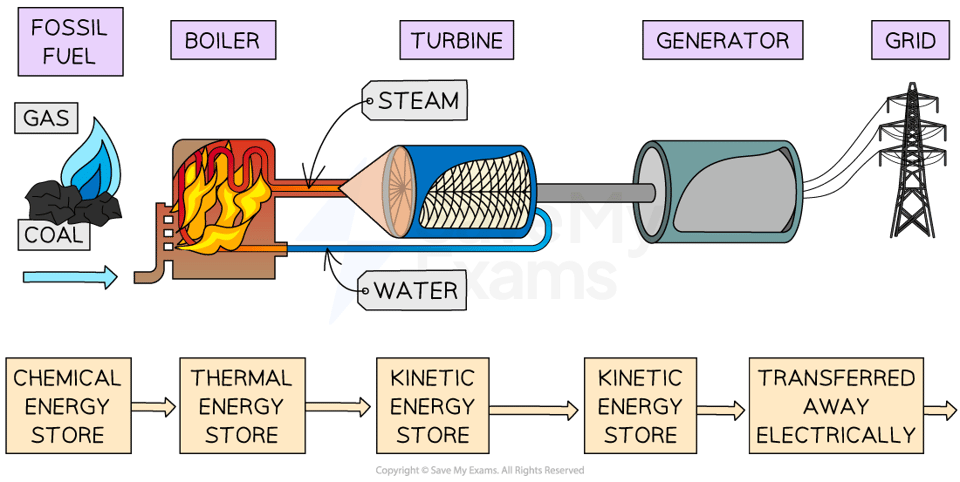
The energy transfers involved in the production of electricity from fossil fuels
Choose a confidence level to continue.
Prefer to read it all at once? Show the full lesson as a page
1.Resources, renewables and the generation chain
Energy resources are the large stores society draws on to generate electricity and to heat buildings. They split into renewables, which the world replaces as fast as we use them, and non-renewables, which run down — yet nearly all of them generate electricity through the same turbine-and-generator chain.
Coal, oil, and natural gas are examples of fossil fuels. These are energy resources in limited supply, meaning they will eventually run out
The energy transfers involved in the production of electricity from fossil fuels
Key points
Guided content from the SME authoring corpus — note rn_sb9rpDPgVq9JChng, pinned at c40b8b284935 · promoted SyllabAI/syllabai-resources b3caaaa90c5e