Electrical Safety
3 guided lessons · 27 checks · 2. Electricity → Electrical Power & Mains Electricity
Guided lessons for this note
Which concept don't you understand yet?
We'll explain it simply and check your understanding. Pick any lesson — any order works.
0 of 27 checks correct so far
Lesson 1 of 3
Live hazards: damaged insulation, overheating & damp
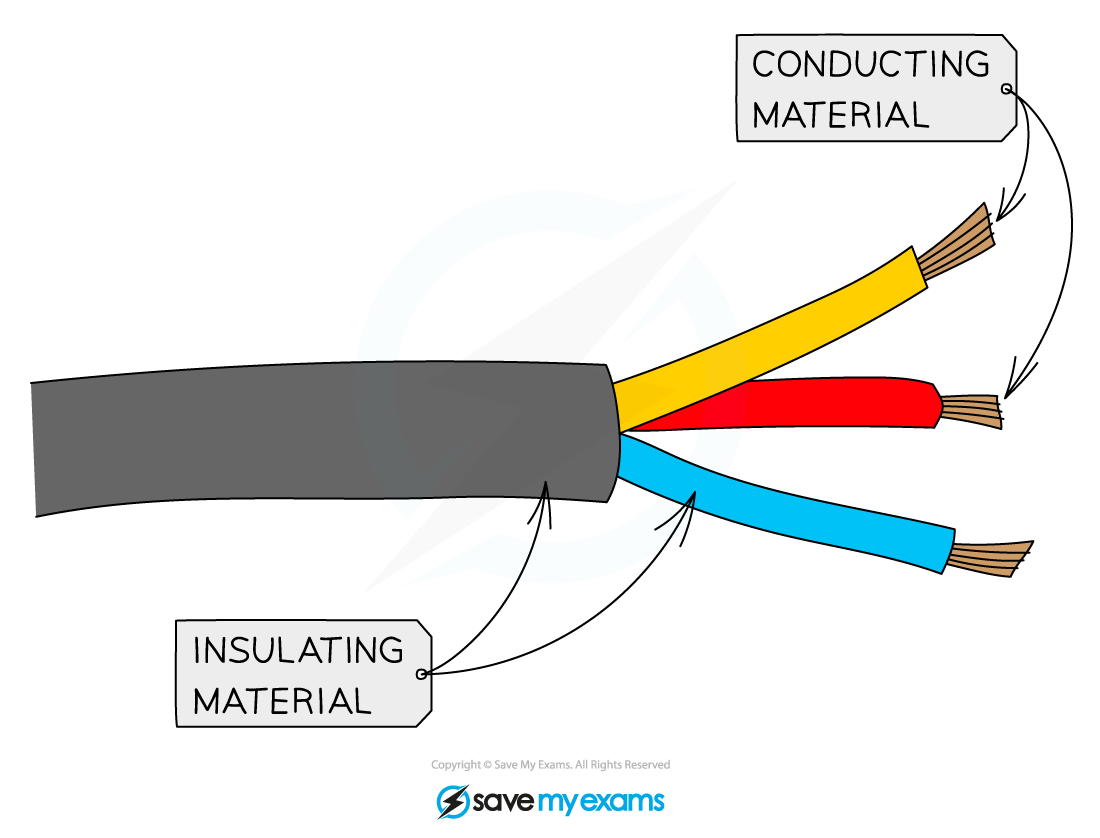
Mains electricity does not need to be dramatic to be dangerous: even fifty volts can deliver a serious shock. The everyday hazards are few and predictable — broken insulation exposing live conductors, cables overheating under too much current, and moisture giving the current an unexpected path. Each has a matching defence later in this note.
What you know already
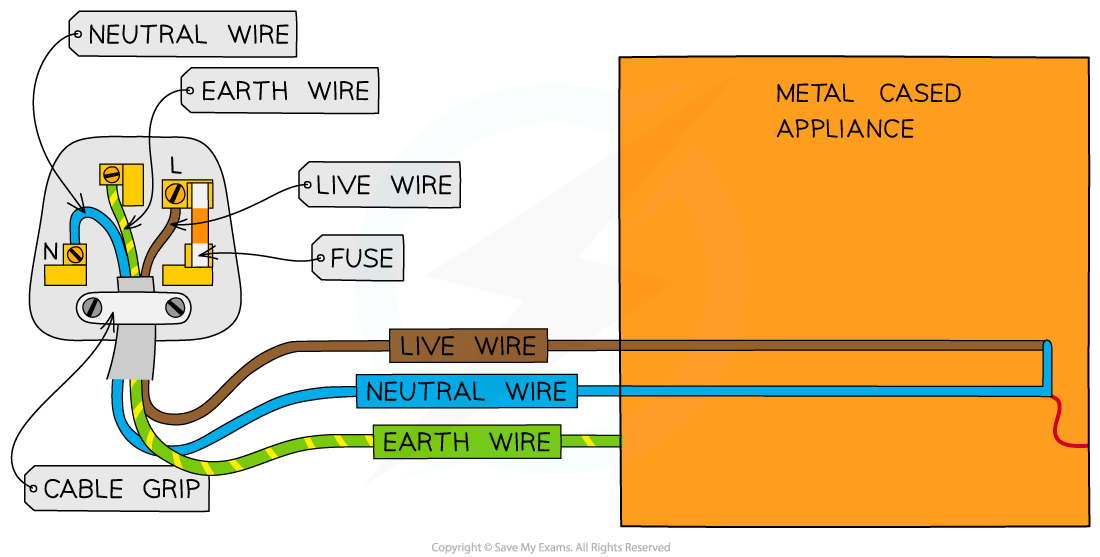
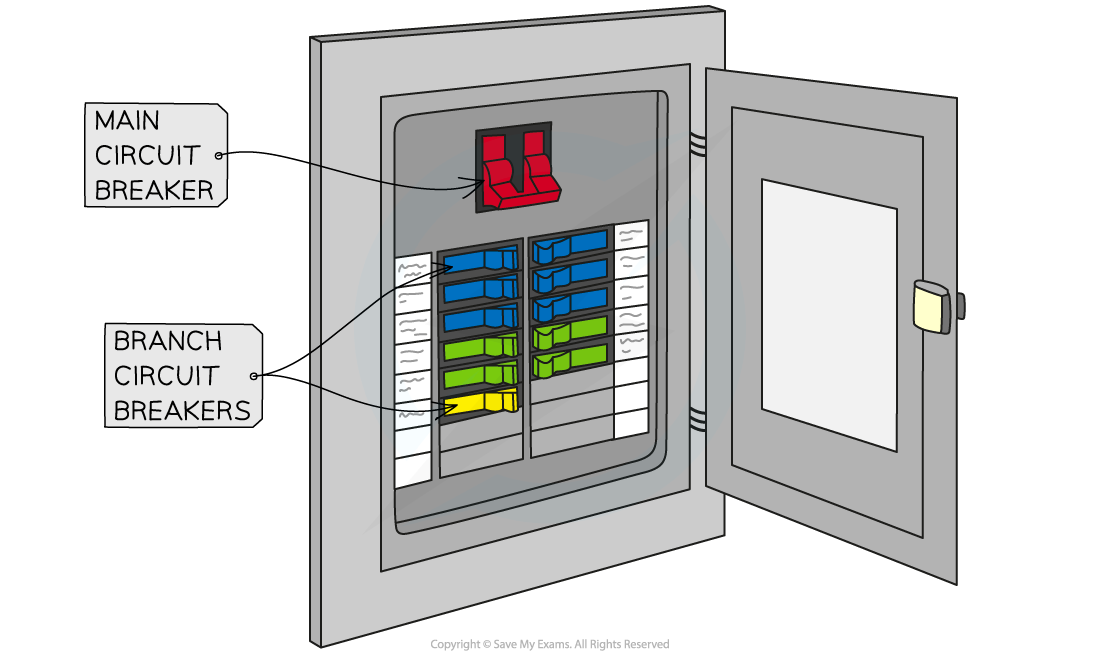
Mains electricity is powerful enough to kill, so domestic appliances carry a full set of protections. This note walks through the hazards — exposed conductors, overheating cables and damp — and then the defences: insulated and double-insulated casings, the earth wire, fuses and the resettable circuit breakers that guard modern homes.
Key points of understanding
- Mains electricity can kill: even a 50 V potential difference is a serious hazard.
- Touching exposed conductors through damaged insulation can give a lethal shock.
- Too much current in a thin or tightly coiled cable overheats it and can melt the insulation.
- Damp conditions let moisture conduct, short-circuiting devices or electrocuting users.
- Warning signs mark places where electrocution is a risk.
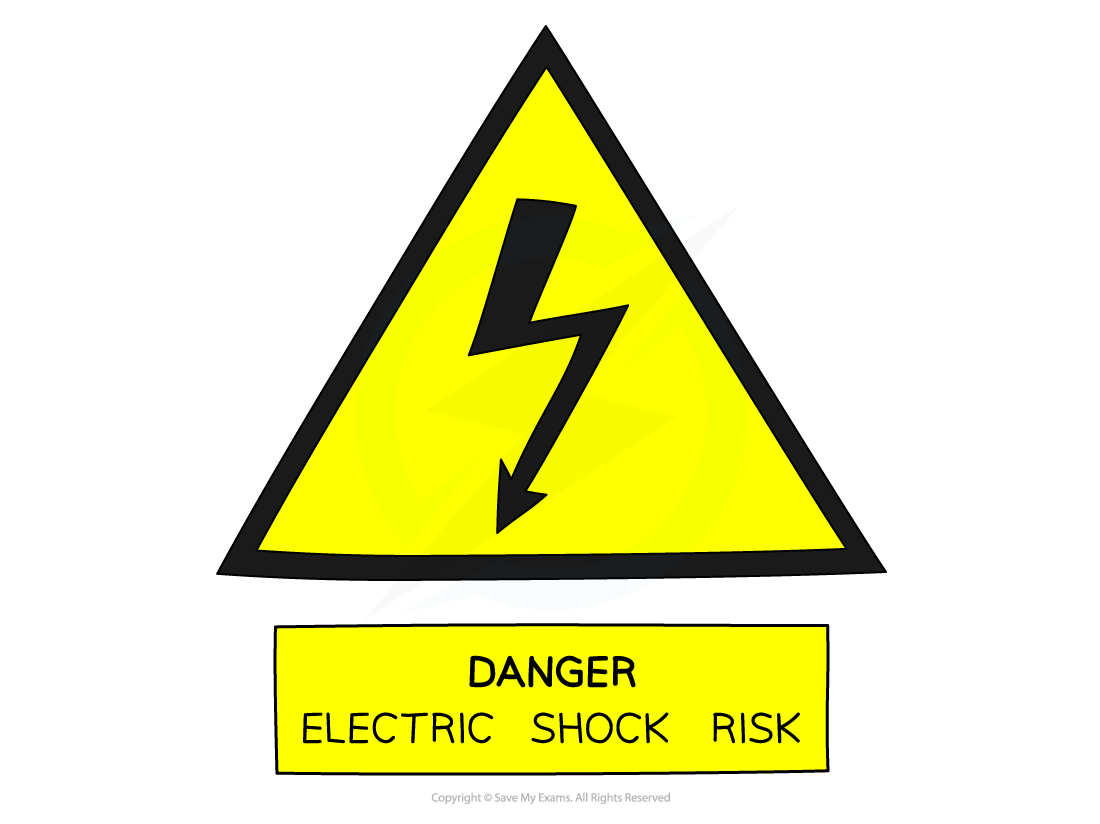
Signs, like the above, warn of the risk of electrocution
Choose a confidence level to continue.
Prefer to read it all at once? Show the full lesson as a page
1.Live hazards: damaged insulation, overheating & damp
Mains electricity does not need to be dramatic to be dangerous: even fifty volts can deliver a serious shock. The everyday hazards are few and predictable — broken insulation exposing live conductors, cables overheating under too much current, and moisture giving the current an unexpected path. Each has a matching defence later in this note.
Signs, like the above, warn of the risk of electrocution
Key points
- Mains electricity can kill: even a 50 V potential difference is a serious hazard.
- Touching exposed conductors through damaged insulation can give a lethal shock.
- Too much current in a thin or tightly coiled cable overheats it and can melt the insulation.
Guided content from the SME authoring corpus — note rn_kxw7Ms4Pr7dQJykY, pinned at 502107a3fcac · promoted SyllabAI/syllabai-resources b3caaaa90c5e