Pitch & Loudness
2 guided lessons · 18 checks · 3. Waves → Sound
Guided lessons for this note
Which concept don't you understand yet?
We'll explain it simply and check your understanding. Pick any lesson — any order works.
0 of 18 checks correct so far
Lesson 1 of 2
Pitch and the oscilloscope trace
Pitch tracks how fast a sound source vibrates. On an oscilloscope that speed becomes visible as the number of complete cycles packed across the screen, so two notes can be ranked by pitch from their traces alone, without hearing either one.
What you know already
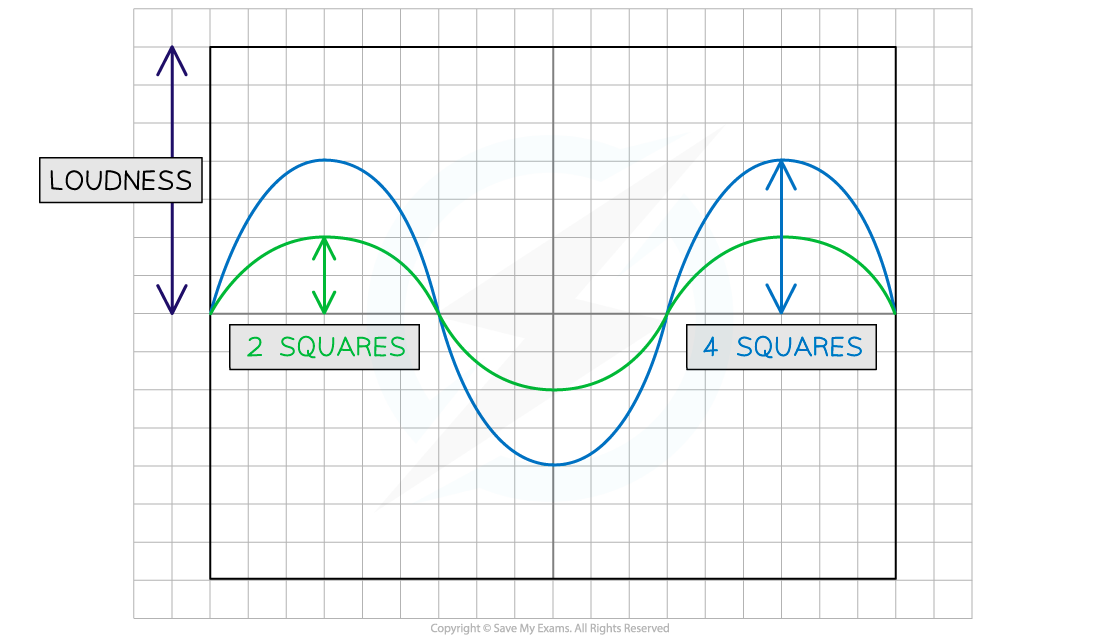
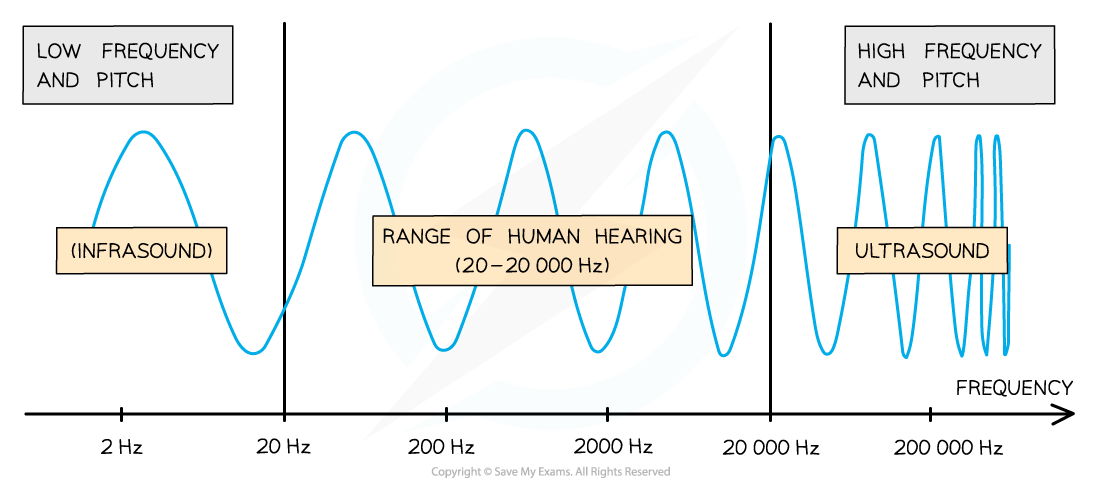
Pitch and loudness are the two handles a listener has on any note, and both have a mechanical counterpart in the vibrating source. This note fixes the pitch-frequency pairing on the oscilloscope, the loudness-amplitude pairing beside it, and marks out the frequency window of human hearing with its infrasound and ultrasound borders.
Key points of understanding
- Pitch tracks the frequency of the vibrating source.
- High-frequency vibration gives high pitch and low-frequency vibration gives low pitch.
- On an oscilloscope, a higher-frequency note shows more complete cycles across the same screen width.
- Wider peak-to-peak spacing on the screen means fewer cycles per second, so lower pitch.
- Doubling the frequency of a note raises it by one octave.
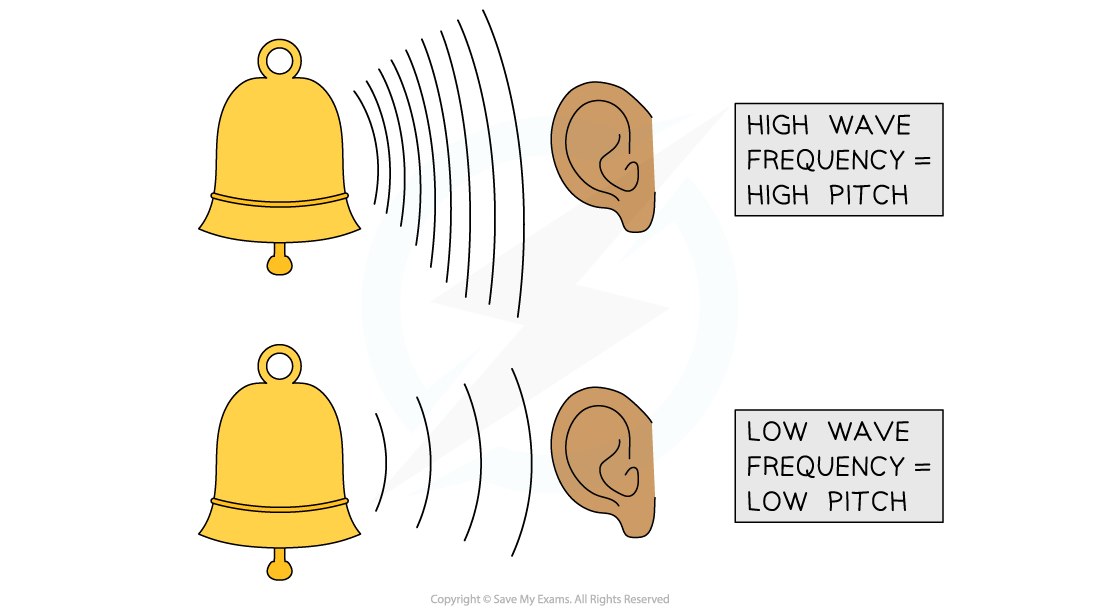
The pitch of the sound is related to the frequency of the sound waves
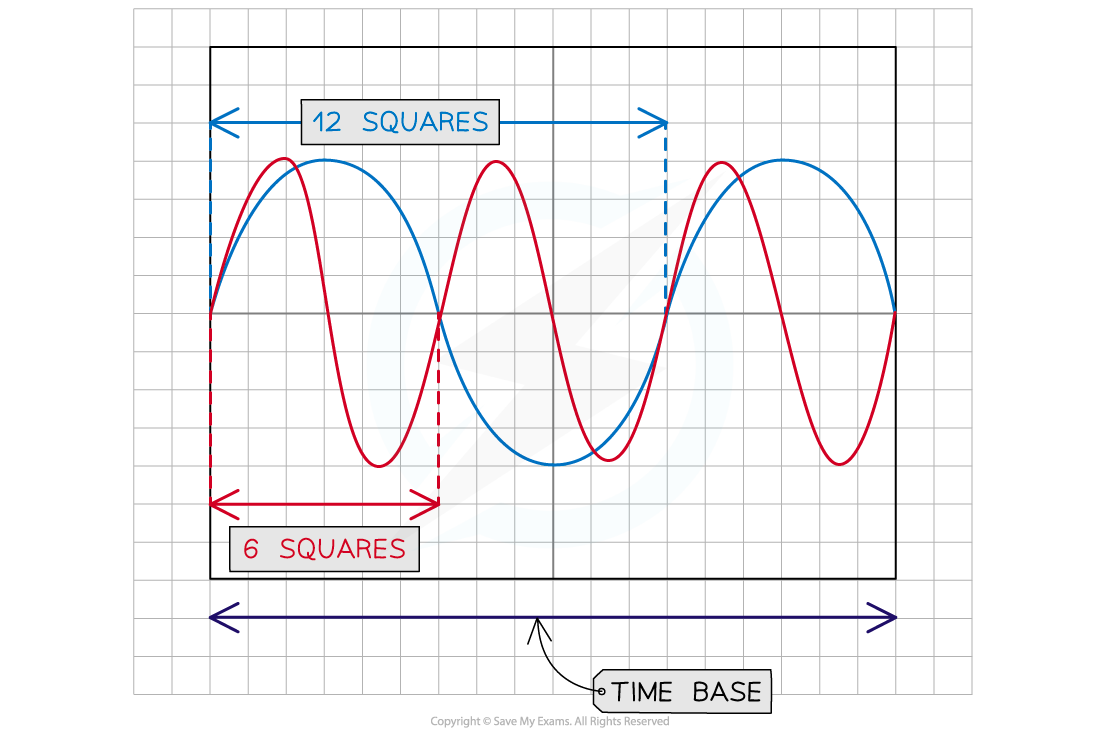
This image shows two sound waves displayed on an oscilloscope. The red wave has smaller wavelength than the blue wave hence it has higher frequency and higher pitch
Choose a confidence level to continue.
Prefer to read it all at once? Show the full lesson as a page
1.Pitch and the oscilloscope trace
Pitch tracks how fast a sound source vibrates. On an oscilloscope that speed becomes visible as the number of complete cycles packed across the screen, so two notes can be ranked by pitch from their traces alone, without hearing either one.
The pitch of the sound is related to the frequency of the sound waves
This image shows two sound waves displayed on an oscilloscope. The red wave has smaller wavelength than the blue wave hence it has higher frequency and higher pitch
Key points
Guided content from the SME authoring corpus — note rn_kTvJN82ZMcTrCypr, pinned at 8f834fff738f · promoted SyllabAI/syllabai-resources b3caaaa90c5e