Electrical Components
2 guided lessons · 18 checks · 2. Electricity → Components in Series & Parallel Circuits
Guided lessons for this note
Which concept don't you understand yet?
We'll explain it simply and check your understanding. Pick any lesson — any order works.
0 of 18 checks correct so far
Lesson 1 of 2
Thermistors & LDRs
Two components turn the physical world into resistance readings. The thermistor watches the temperature; the LDR watches the light. Both follow the same pattern — more of their condition means less resistance — and both plot it as a falling curve. This lesson maps each sensor's behaviour and its graph.
What you know already
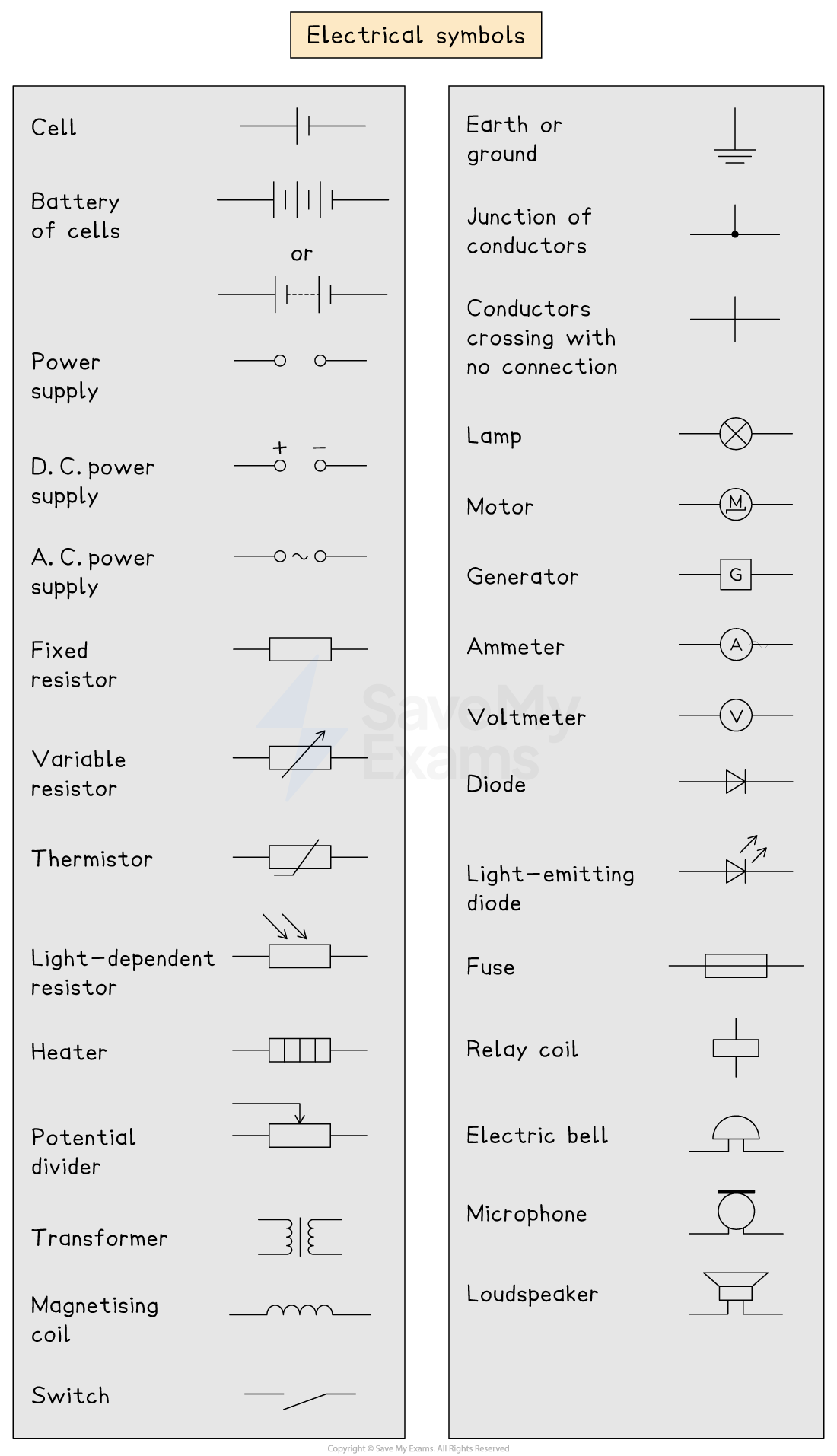
Some resistors respond to the world around them: warmth thins a thermistor's resistance, brightness thins an LDR's. Others simply announce that a current is flowing. This note covers thermistors and light-dependent resistors as sensors, then lamps and LEDs as the circuit's built-in current indicators.
Key points of understanding
- A thermistor's resistance depends on its temperature.
- Thermistors read high in the cold and low in the heat.
- Warming a thermistor lowers its resistance; cooling it raises the resistance.
- An LDR's resistance depends on the light intensity falling on it.
- LDRs read high in darkness and low in bright light.
- Both devices plot resistance against their condition as a falling curve.
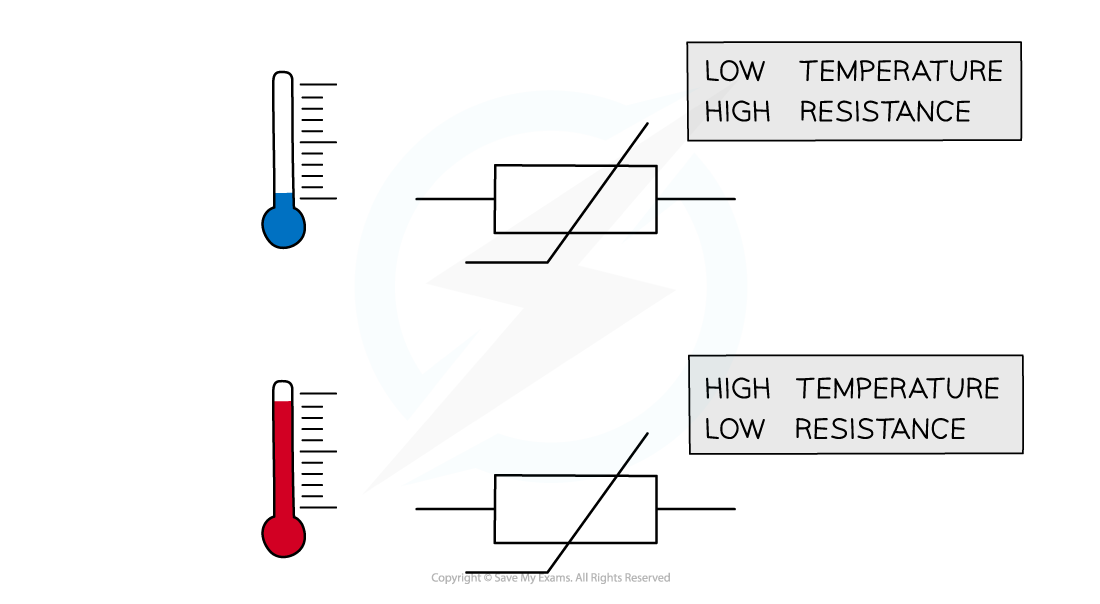
The resistance of a thermistor depends on its temperature
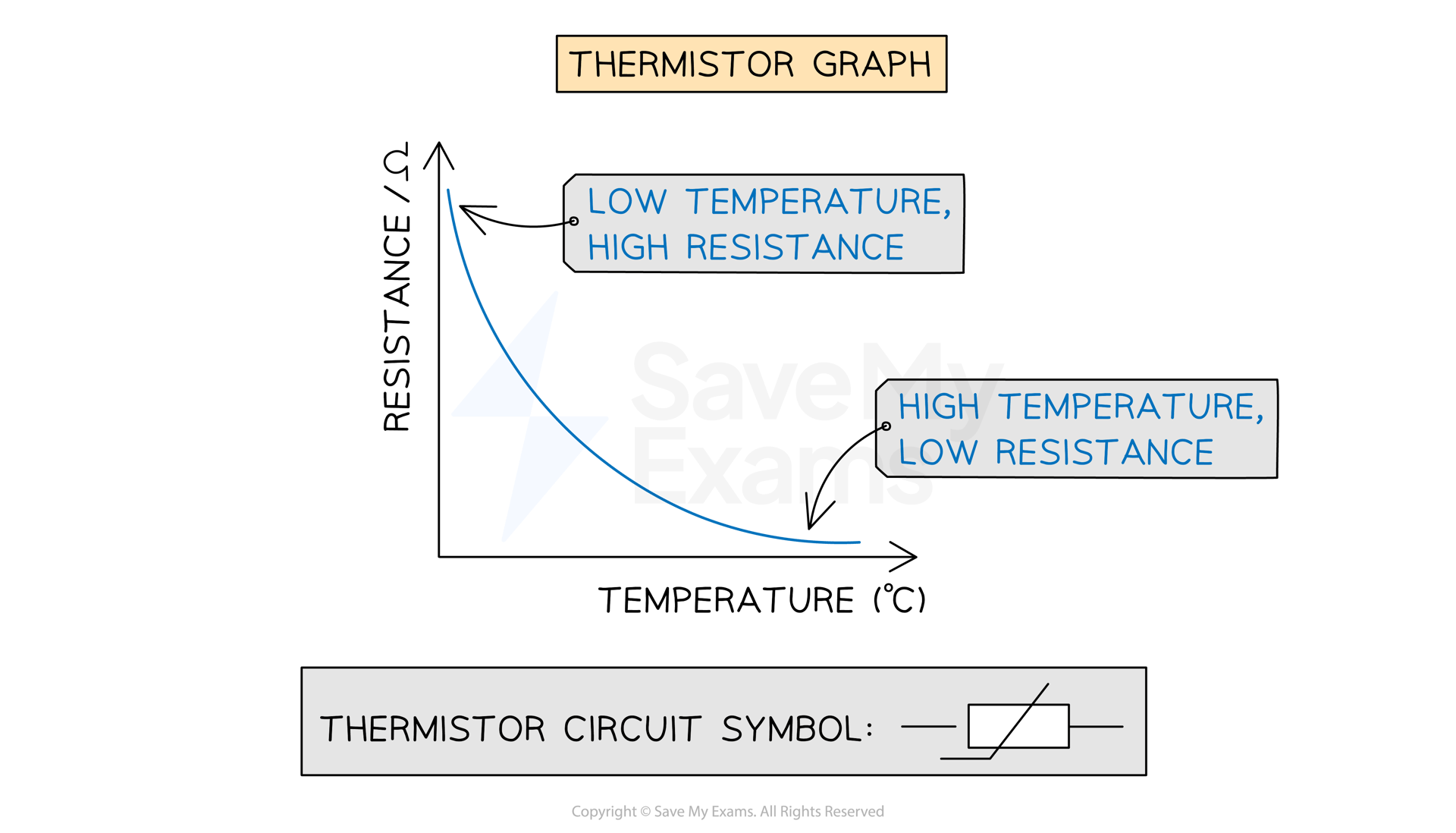
The graph of resistance against temperature for a thermistor shows a curve indicating these quantities are inversely proportional to each other
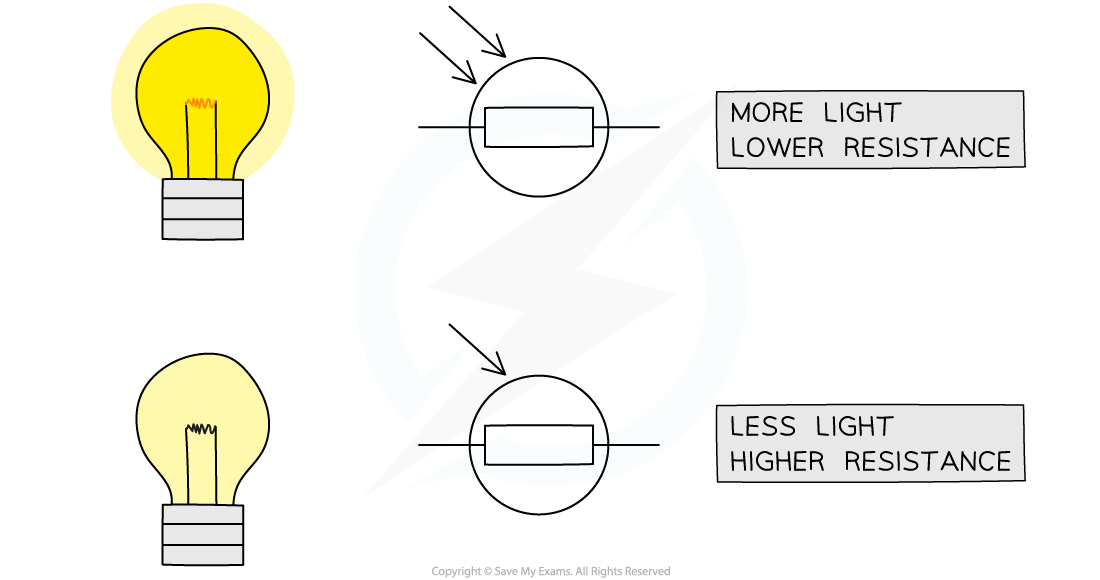
The resistance of an LDR depends on the intensity of light on it
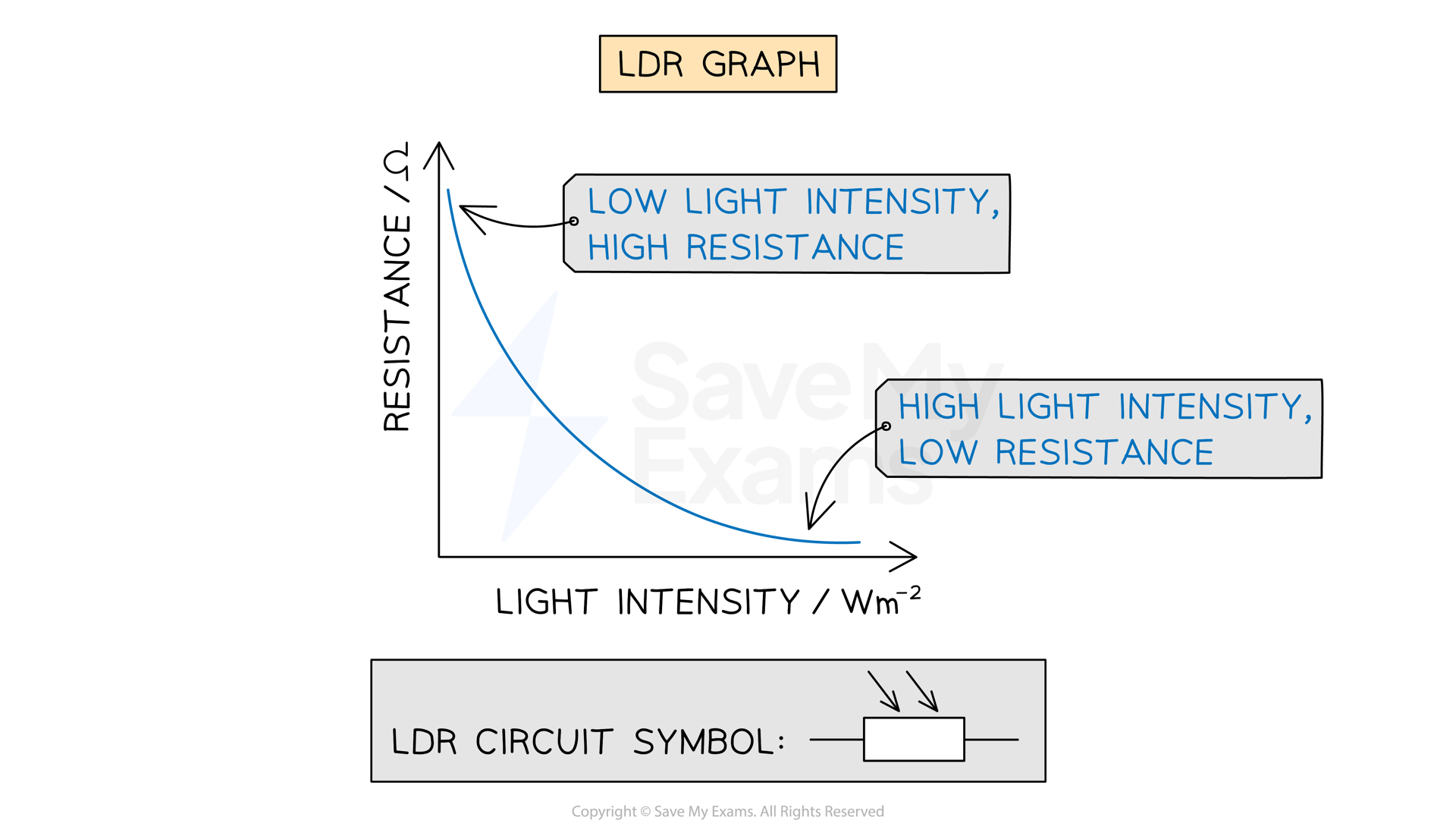
The graph of light intensity against temperature for an LDR shows a curve indicating these quantities are inversely proportional to each other
Choose a confidence level to continue.
Prefer to read it all at once? Show the full lesson as a page
1.Thermistors & LDRs
Two components turn the physical world into resistance readings. The thermistor watches the temperature; the LDR watches the light. Both follow the same pattern — more of their condition means less resistance — and both plot it as a falling curve. This lesson maps each sensor's behaviour and its graph.
The resistance of a thermistor depends on its temperature
The graph of resistance against temperature for a thermistor shows a curve indicating these quantities are inversely proportional to each other
The resistance of an LDR depends on the intensity of light on it
Guided content from the SME authoring corpus — note rn_gYqbXsJPfrqtg5yQ, pinned at 275f3b535d78 · promoted SyllabAI/syllabai-resources b3caaaa90c5e
