Conservation of Energy
3 guided lessons · 27 checks · 4. Energy Resources and Energy Transfers → Energy Stores & Transfers
Guided lessons for this note
Which concept don't you understand yet?
We'll explain it simply and check your understanding. Pick any lesson — any order works.
0 of 27 checks correct so far
Lesson 1 of 3
The principle of conservation of energy
One law underpins every energy account in physics: energy cannot be created or destroyed, only transferred between stores. A closed system keeps a constant total; whatever one system gains, another loses; and energy that spreads to the surroundings is never lost — merely no longer useful.
What you know already
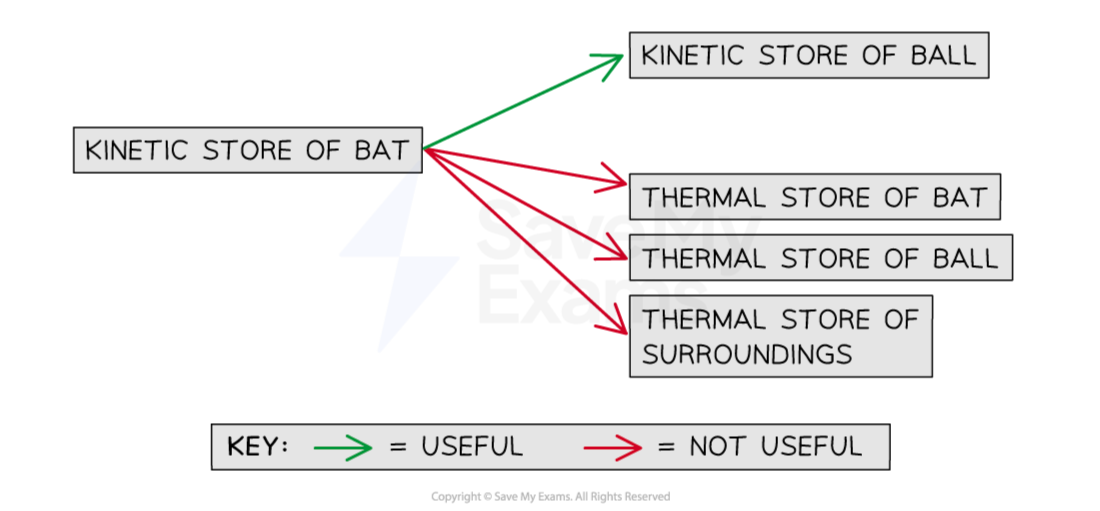
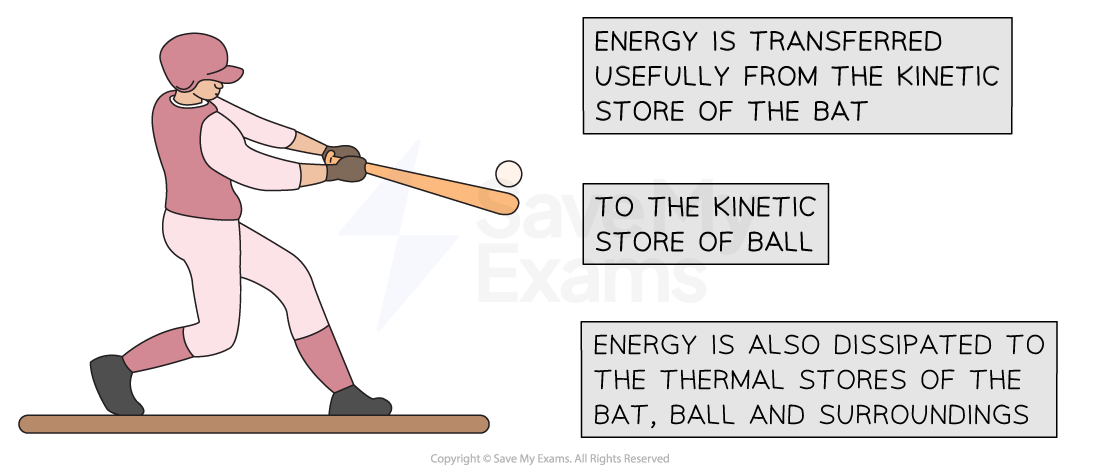
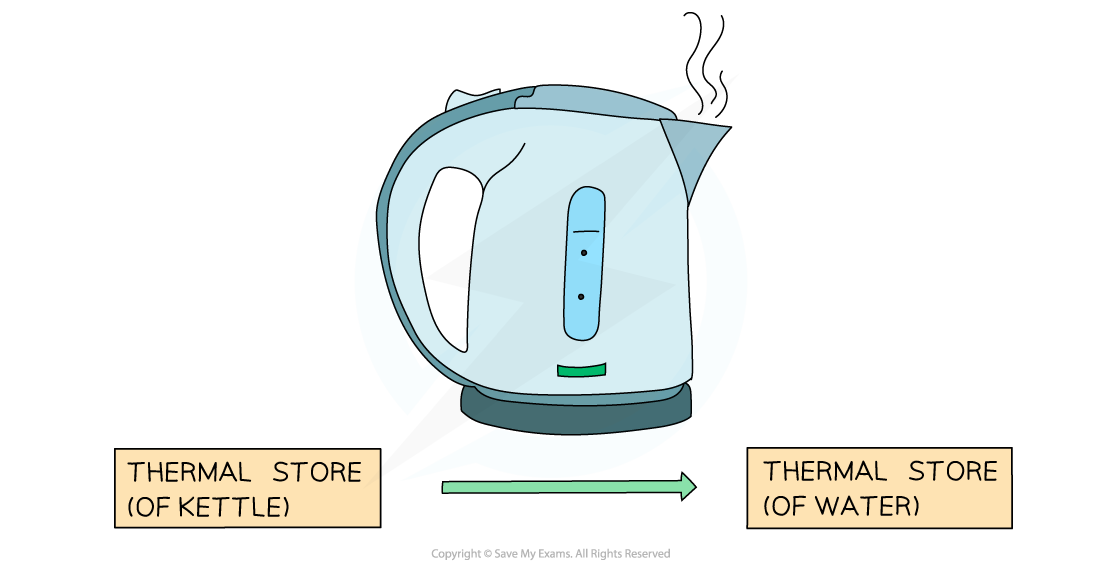
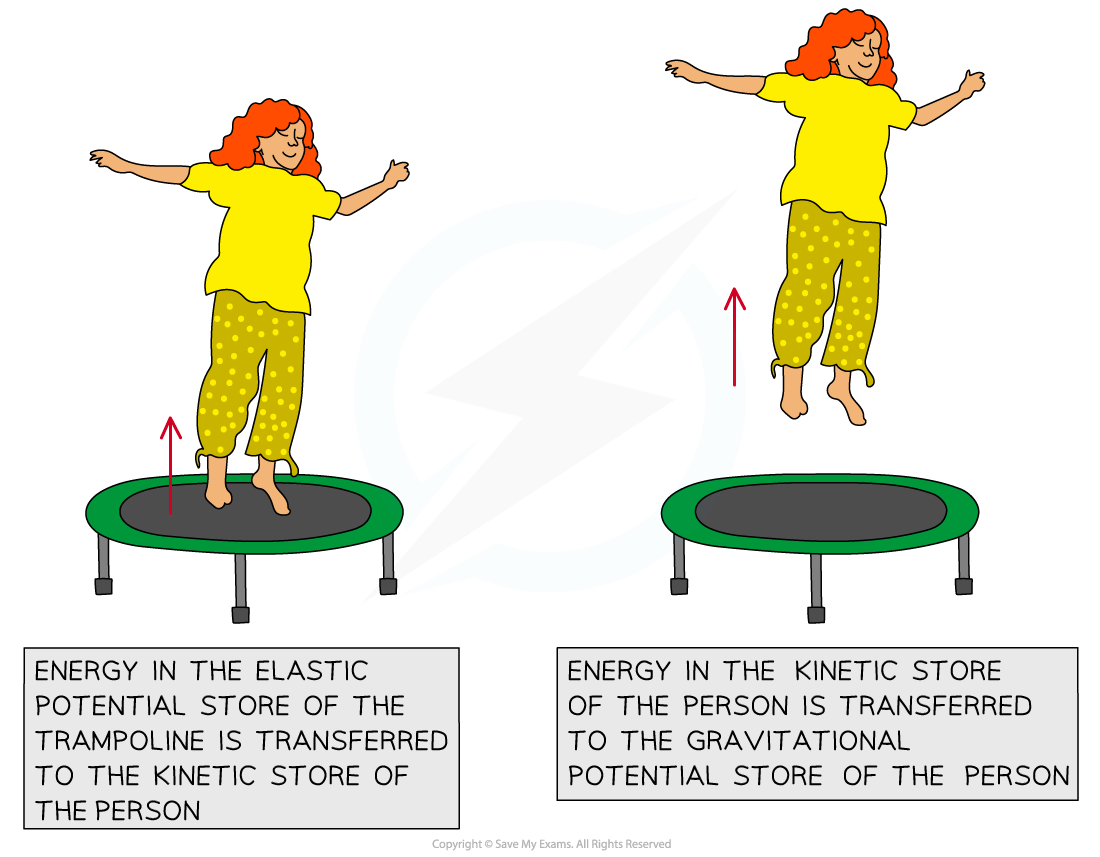
Energy is the strictest accountant in physics: nothing created, nothing destroyed, everything transferred. This note states the principle, then walks it through a bat-and-ball strike, a boiling kettle and a trampoline cycle — watching useful and wasted branches close every account.
Key points of understanding
- Energy is never created nor destroyed — it only moves between stores.
- The total energy of a closed system remains constant.
- Whatever one system gains, another system loses by the same amount.
- Energy spreads out into the surroundings by heating and radiation — dissipated, and usually wasted.
- Dissipated transfers are usually not useful, so the energy is described as wasted.
Choose a confidence level to continue.
Prefer to read it all at once? Show the full lesson as a page
1.The principle of conservation of energy
One law underpins every energy account in physics: energy cannot be created or destroyed, only transferred between stores. A closed system keeps a constant total; whatever one system gains, another loses; and energy that spreads to the surroundings is never lost — merely no longer useful.
Key points
- Energy is never created nor destroyed — it only moves between stores.
- The total energy of a closed system remains constant.
- Whatever one system gains, another system loses by the same amount.
- Energy spreads out into the surroundings by heating and radiation — dissipated, and usually wasted.
- Dissipated transfers are usually not useful, so the energy is described as wasted.
Guided content from the SME authoring corpus — note rn_g66ndvxcyxsTpKPn, pinned at 8f834fff738f · promoted SyllabAI/syllabai-resources b3caaaa90c5e