Core Practical: Investigating Specific Heat Capacity
4 guided lessons · 36 checks · 5. Solids, Liquids and Gases → Changes of State
Guided lessons for this note
Which concept don't you understand yet?
We'll explain it simply and check your understanding. Pick any lesson — any order works.
0 of 36 checks correct so far
Lesson 1 of 4
Aim and variables of the SHC investigation
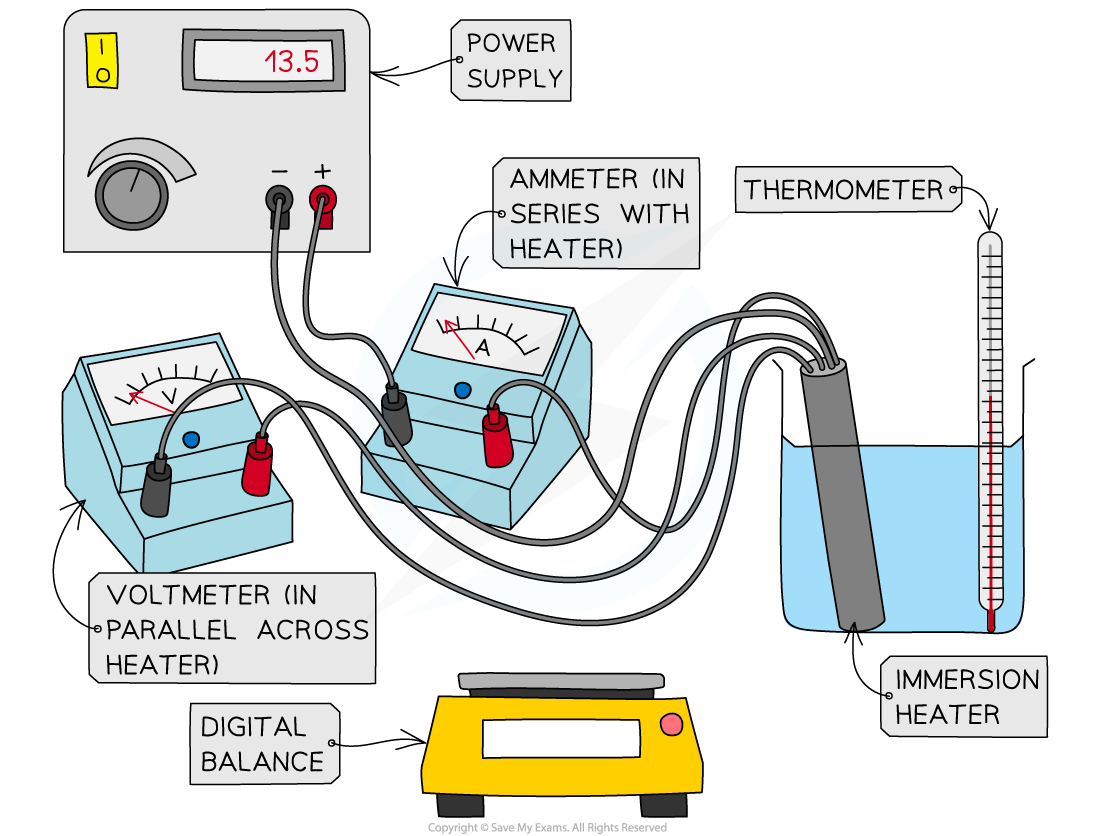
The aim is to measure a specific heat capacity from first principles: supply counted electrical energy to a known mass and watch the temperature respond. Naming the variables precisely is what turns a heating demonstration into a fair test.
What you know already
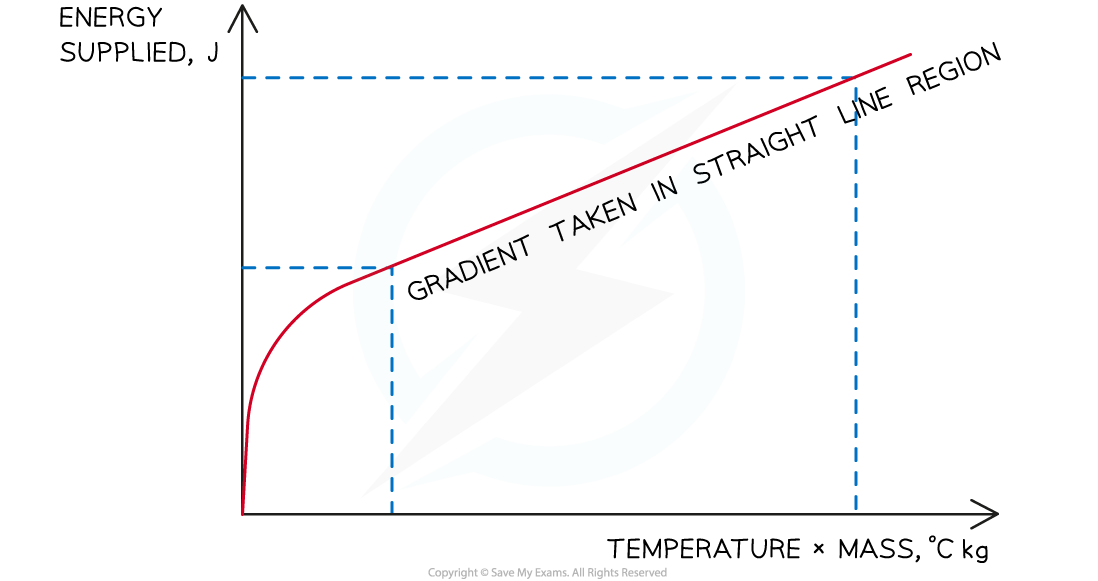
Here the ΔQ = mcΔT equation is turned around and measured, not just used. An immersion heater delivers counted joules into a known mass, a thermometer logs the rise, and the gradient machinery of the plotted graph yields the capacity of water or a solid block — with honest error analysis attached.
Key points of understanding
- The aim is to determine the specific heat capacity of water or a solid material.
- The independent variable is the energy supplied by the heater.
- The dependent variable is the temperature rise of the material.
- The mass of material and the starting temperature are controlled variables.
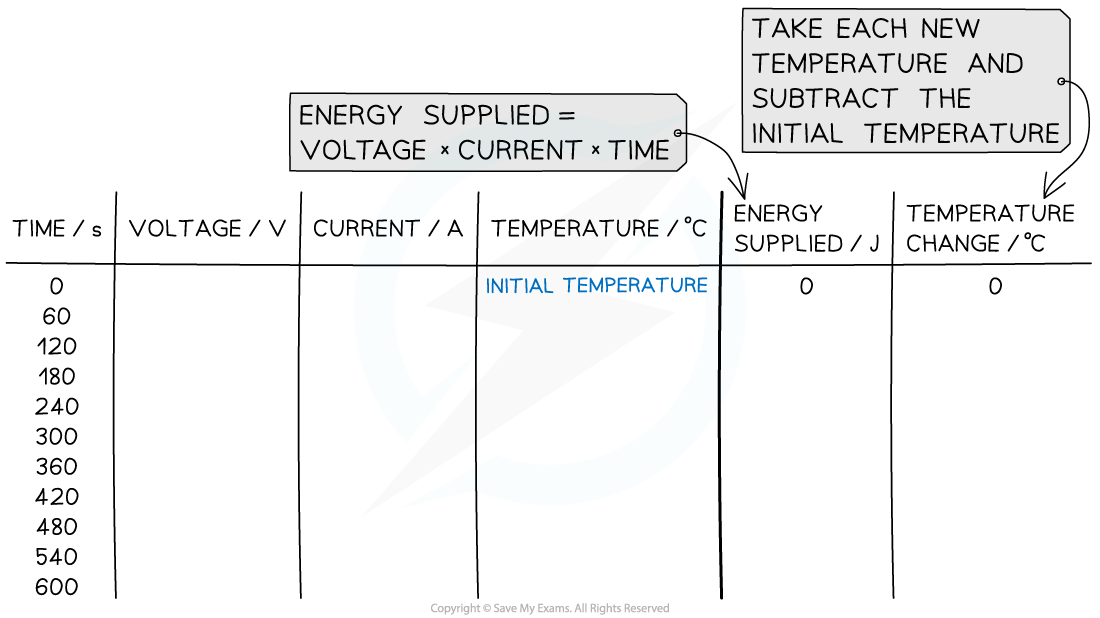
- Energy supplied is computed from the heater's voltage, current and heating time.
Choose a confidence level to continue.
Prefer to read it all at once? Show the full lesson as a page
1.Aim and variables of the SHC investigation
The aim is to measure a specific heat capacity from first principles: supply counted electrical energy to a known mass and watch the temperature respond. Naming the variables precisely is what turns a heating demonstration into a fair test.
Key points
- The aim is to determine the specific heat capacity of water or a solid material.
- The independent variable is the energy supplied by the heater.
- The dependent variable is the temperature rise of the material.
- The mass of material and the starting temperature are controlled variables.
- Energy supplied is computed from the heater's voltage, current and heating time.
First pass
Guided content from the SME authoring corpus — note rn_KQ2Z3k364fVw9Gkq, pinned at 8788fc85a2c1 · promoted SyllabAI/syllabai-resources b3caaaa90c5e