Total Internal Reflection
3 guided lessons · 27 checks · 3. Waves → Reflection & Refraction
Guided lessons for this note
Which concept don't you understand yet?
We'll explain it simply and check your understanding. Pick any lesson — any order works.
0 of 27 checks correct so far
Lesson 1 of 3
Total internal reflection
Shine light from glass towards air at a shallow angle and it escapes, bent away from the normal. Increase the incidence angle and a threshold arrives: past it, nothing escapes — the whole ray snaps back inside the glass. Optical fibres ride that effect bounce after bounce to carry phone calls and see inside patients, while prisms use it in periscopes, binoculars and the reflectors that guard bicycles at night.
What you know already
A light ray crossing from glass into air usually refracts away from the normal — but push the incidence angle far enough and the ray never leaves at all: every bit of the light turns back inside the denser material. That sharp switch is total internal reflection, it has a threshold called the critical angle, and one small equation links that angle to the refractive index. Fibres, prisms and sparkling gemstones all run on it.
Key points of understanding
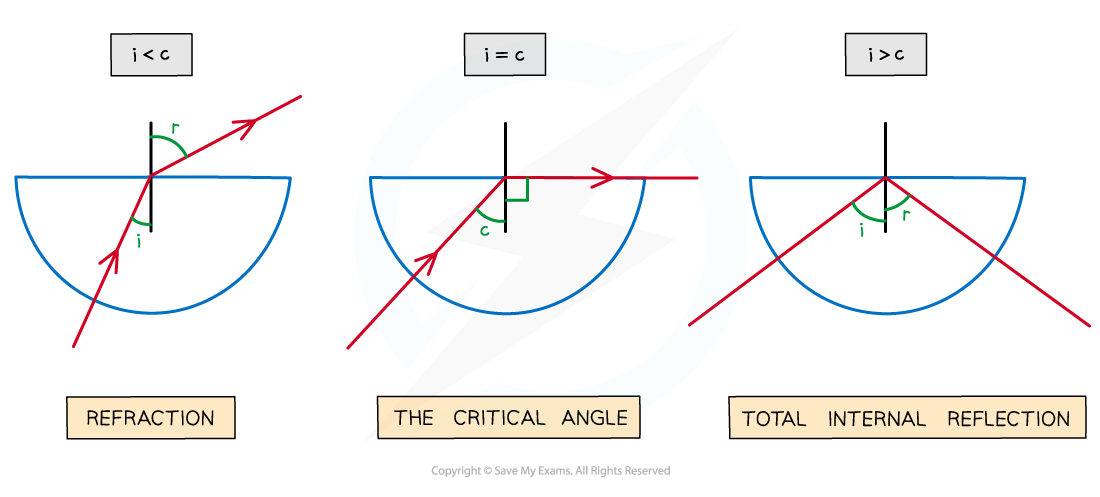
- Total internal reflection happens when light travels from a denser material towards a less dense one and the incidence angle exceeds the critical angle.
- Both conditions must hold: the incidence angle is greater than the critical angle and the first material is denser than the second.
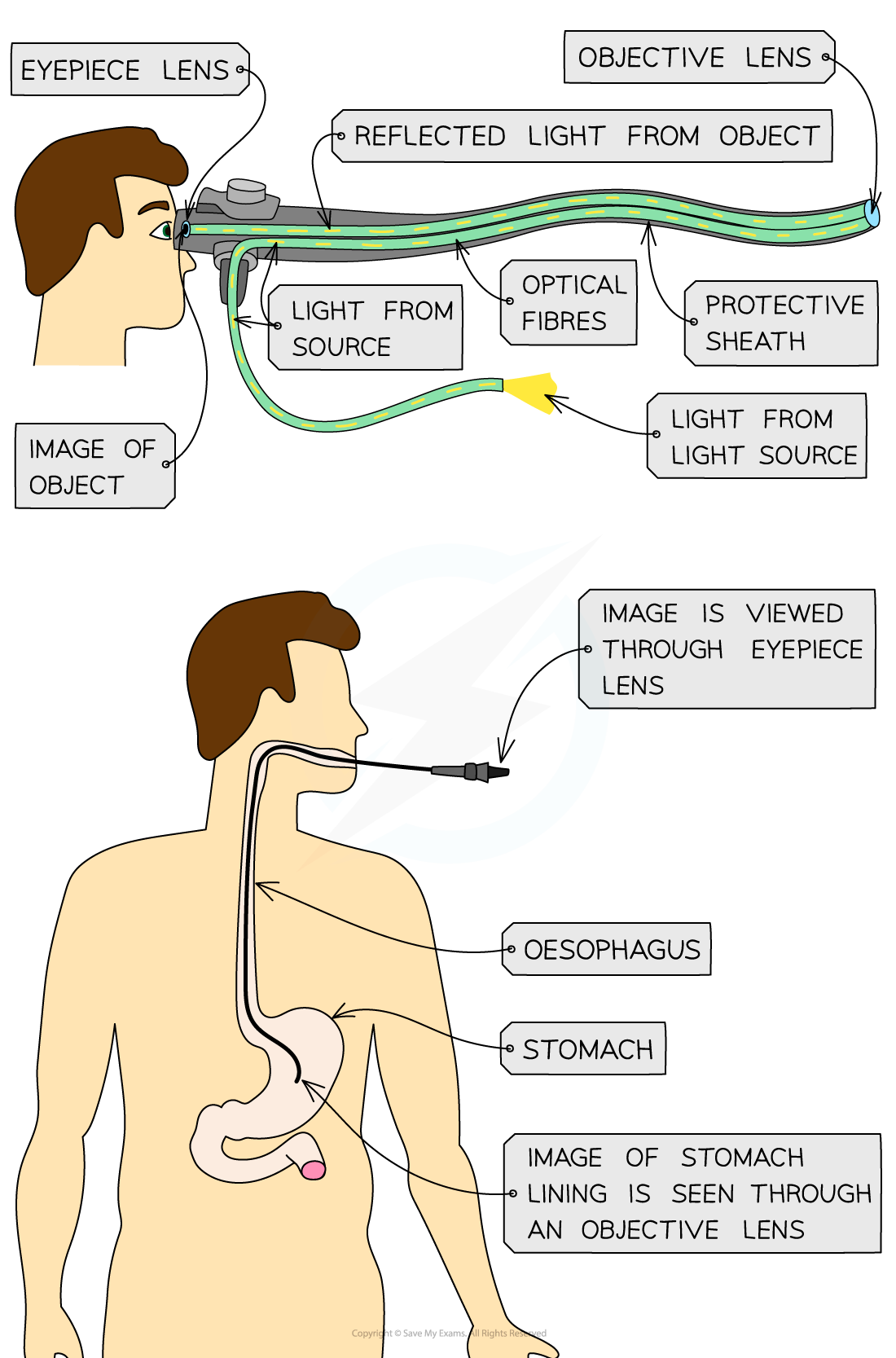
- Optical fibres guide light by repeated total internal reflection, used for communications, endoscopes and decorative lamps.
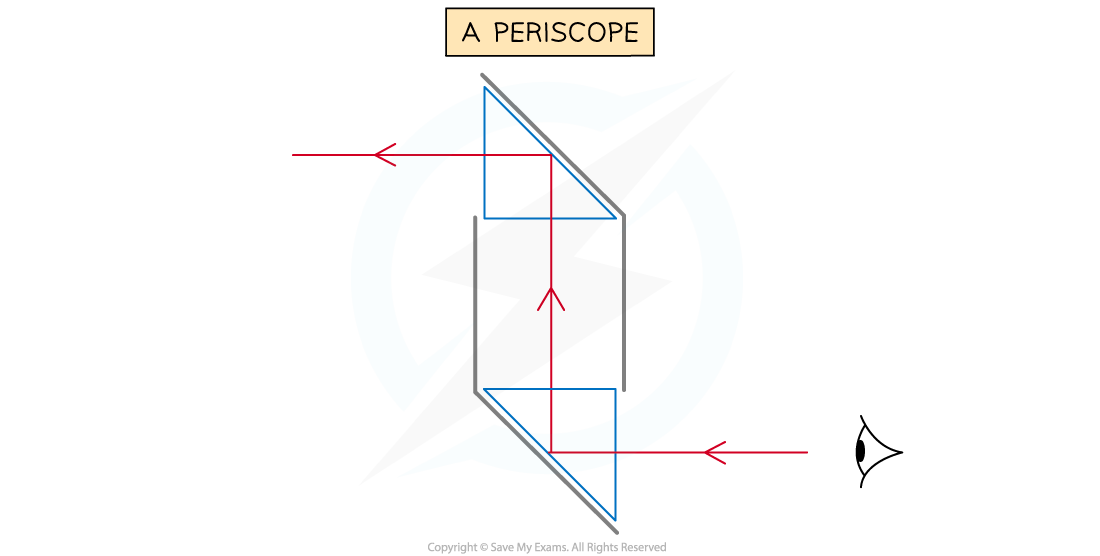
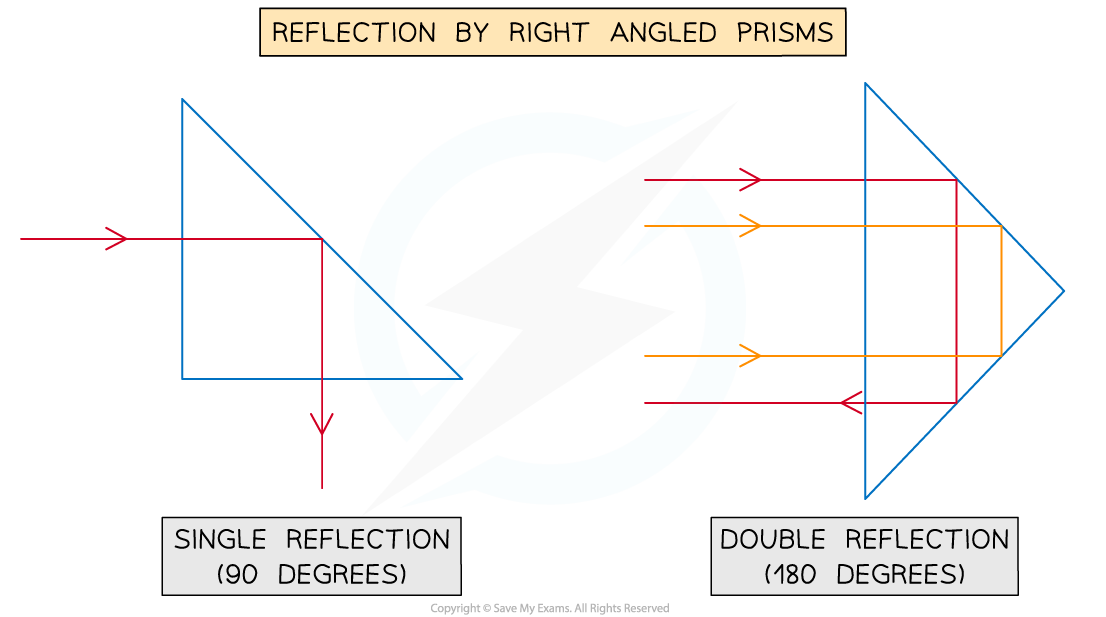
- Prisms reflect light internally in periscopes, binoculars, telescopes and cameras.
- Safety reflectors for bicycles and cars, and posts marking road edges, also use prismatic reflection.
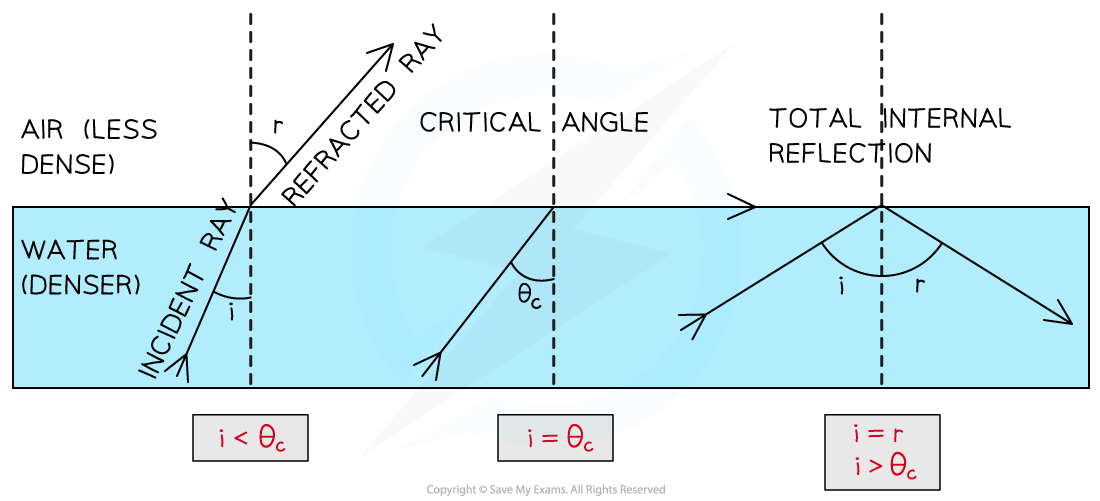
The critical angle is different for different materials. Refraction occurs when the angle of incidence is less than the critical angle, and total internal reflection occurs when it is greater
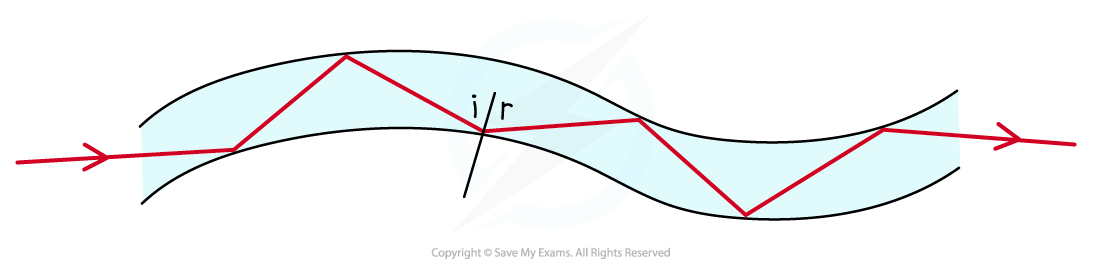
Optical fibres utilise total internal reflection for communications
Choose a confidence level to continue.
Prefer to read it all at once? Show the full lesson as a page
1.Total internal reflection
Shine light from glass towards air at a shallow angle and it escapes, bent away from the normal. Increase the incidence angle and a threshold arrives: past it, nothing escapes — the whole ray snaps back inside the glass. Optical fibres ride that effect bounce after bounce to carry phone calls and see inside patients, while prisms use it in periscopes, binoculars and the reflectors that guard bicycles at night.
The critical angle is different for different materials. Refraction occurs when the angle of incidence is less than the critical angle, and total internal reflection occurs when it is greater
Optical fibres utilise total internal reflection for communications
Key points
Guided content from the SME authoring corpus — note rn_HhjktGSR32fxhHPW, pinned at dad406f1ecd8 · promoted SyllabAI/syllabai-resources b3caaaa90c5e