Acceleration
2 guided lessons · 18 checks · 1. Forces & Motion → Movement & Position
Guided lessons for this note
Which concept don't you understand yet?
We'll explain it simply and check your understanding. Pick any lesson — any order works.
0 of 18 checks correct so far
Lesson 1 of 2
Acceleration as the rate of change of velocity
Everyday speech calls any gain of pace acceleration; physics makes the idea precise by dividing the change in velocity by the time it took. This lesson assembles that equation piece by piece and settles the unit in which every answer must be quoted.
What you know already
Speed tells you how fast something moves; acceleration tells you how fast that speed itself is changing. This lesson defines the rate of change of velocity, builds the equation from initial and final velocity, and shows why slowing down deserves its own negative sign rather than a different word alone.
Key points of understanding
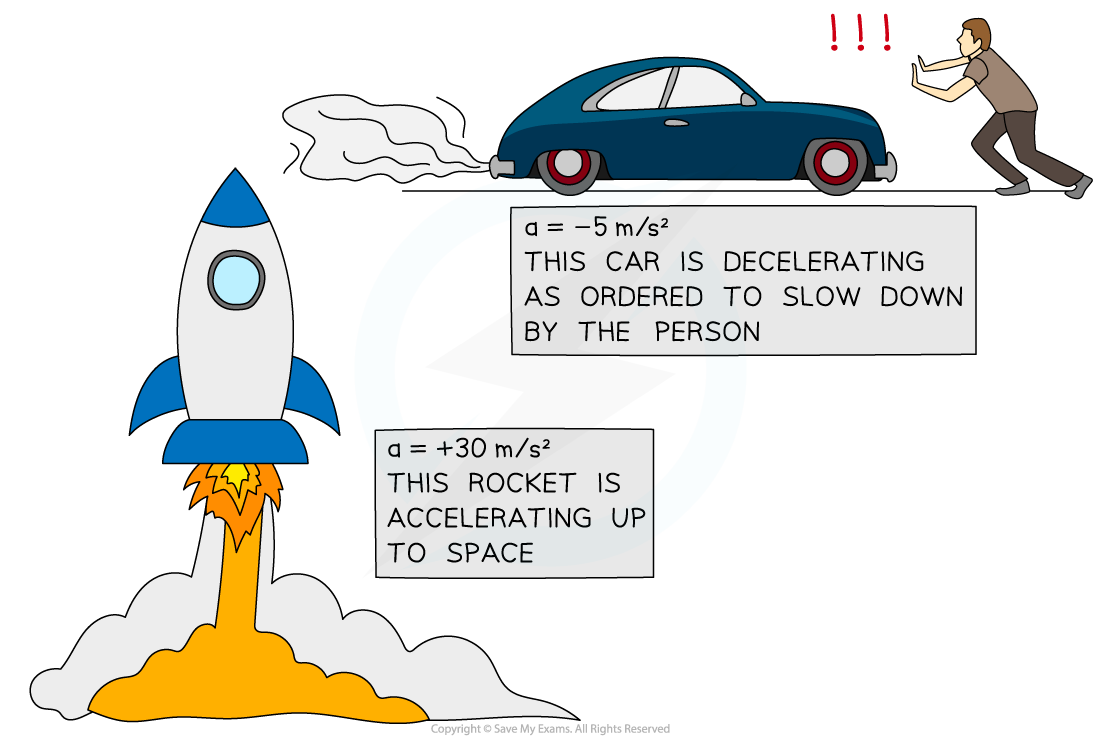
- Acceleration is defined as the rate of change in velocity: how much the velocity changes each second.
- The change in velocity is the gap between final and initial velocity, written Δv = v − u.
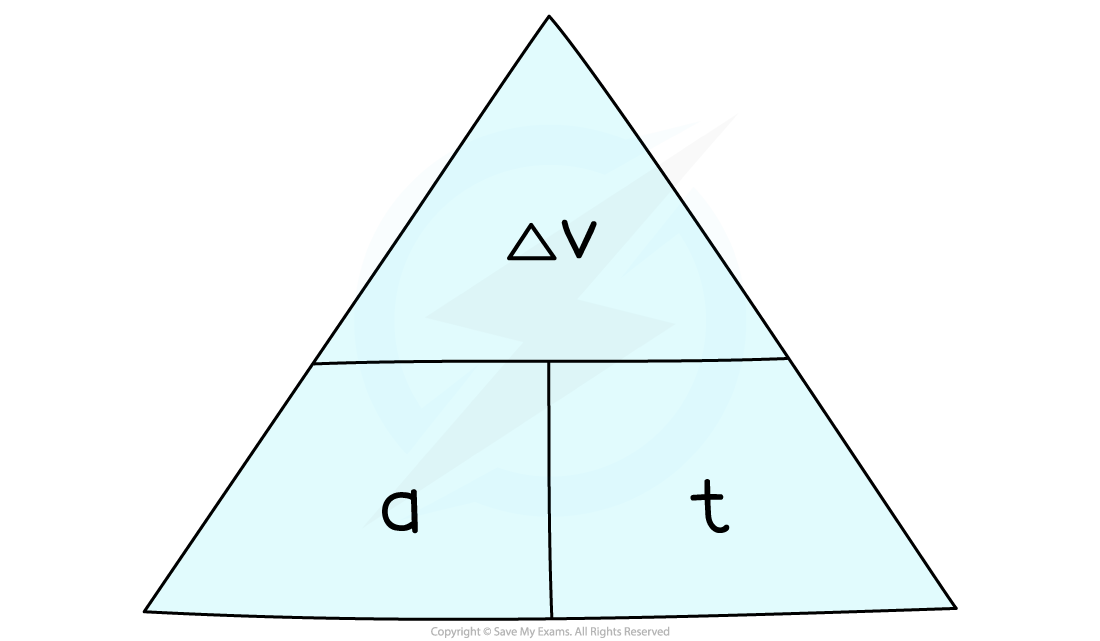
- The relationship reads a = Δv / t, with acceleration in metres per second squared (m/s²).
- A change of one metre per second every second is one metre per second squared.
Choose a confidence level to continue.
Prefer to read it all at once? Show the full lesson as a page
1.Acceleration as the rate of change of velocity
Everyday speech calls any gain of pace acceleration; physics makes the idea precise by dividing the change in velocity by the time it took. This lesson assembles that equation piece by piece and settles the unit in which every answer must be quoted.
Key points
- Acceleration is defined as the rate of change in velocity: how much the velocity changes each second.
- The change in velocity is the gap between final and initial velocity, written Δv = v − u.
- The relationship reads a = Δv / t, with acceleration in metres per second squared (m/s²).
- A change of one metre per second every second is one metre per second squared.
First pass
Take the velocity at the end, subtract the velocity at the start, and divide by how long the change lasted. That quotient is the acceleration.
Guided content from the SME authoring corpus — note rn_CpJZQWzbvMcM8fw3, pinned at aa6485187429 · promoted SyllabAI/syllabai-resources b3caaaa90c5e