Energy Stores & Transfers
2 guided lessons · 18 checks · 4. Energy Resources and Energy Transfers → Energy Stores & Transfers
Guided lessons for this note
Which concept don't you understand yet?
We'll explain it simply and check your understanding. Pick any lesson — any order works.
0 of 18 checks correct so far
Lesson 1 of 2
Systems and energy stores
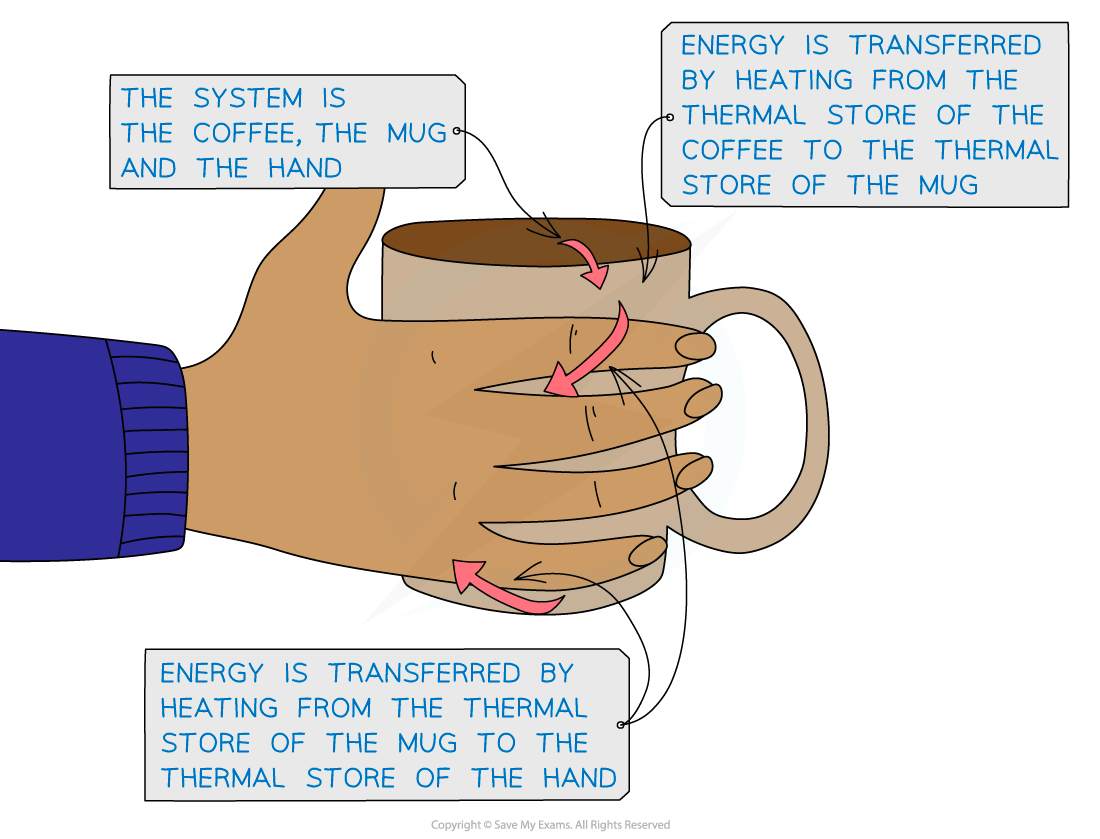
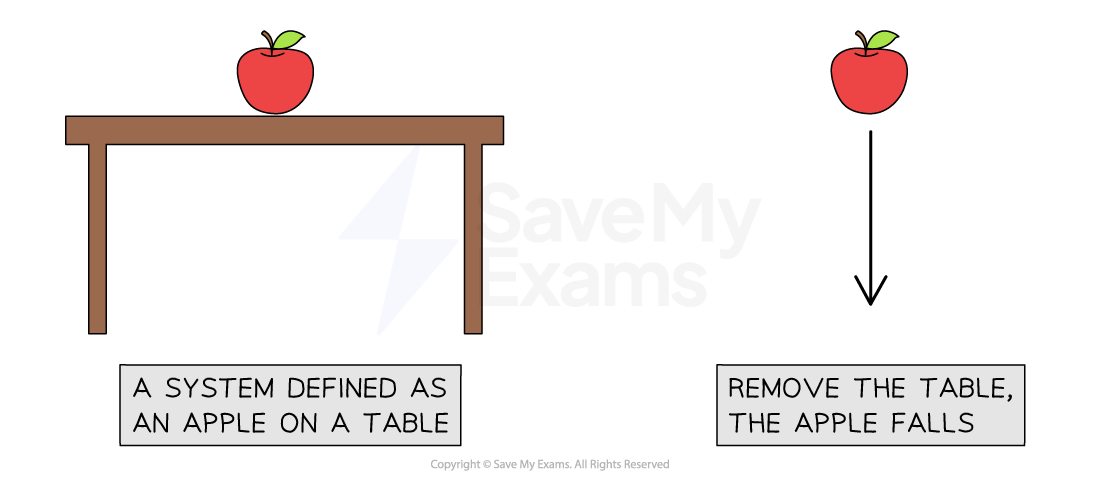
Physics borrows a bookkeeping idea to keep energy arguments tidy: define a system — an object or group of objects — and then only energy crossing its boundary matters. Inside the accounts, eight named stores hold the energy while anything changing moves it between them.
What you know already
Every energy argument in this course runs on one model: eight stores that hold energy and four pathways that move it. This note fixes the vocabulary — system, equilibrium, stores, pathways — so that later calculations always have somewhere precise to put the joules.
Key points of understanding
- A system means an object or a group of objects chosen for study.
- Defining the system narrows the physics to what is relevant for the situation being observed.
- A system in equilibrium transfers nothing; any change to the system moves energy between stores.
- There are eight energy stores: kinetic, gravitational, elastic, magnetic, electrostatic, chemical, nuclear and thermal.
- Moving objects fill the kinetic store; lifted objects fill the gravitational store; hotter objects fill the thermal store.
Choose a confidence level to continue.
Prefer to read it all at once? Show the full lesson as a page
1.Systems and energy stores
Physics borrows a bookkeeping idea to keep energy arguments tidy: define a system — an object or group of objects — and then only energy crossing its boundary matters. Inside the accounts, eight named stores hold the energy while anything changing moves it between them.
Key points
- A system means an object or a group of objects chosen for study.
- Defining the system narrows the physics to what is relevant for the situation being observed.
- A system in equilibrium transfers nothing; any change to the system moves energy between stores.
- There are eight energy stores: kinetic, gravitational, elastic, magnetic, electrostatic, chemical, nuclear and thermal.
Guided content from the SME authoring corpus — note rn_7Mn6fNZ3mz6pYFkg, pinned at 8f834fff738f · promoted SyllabAI/syllabai-resources b3caaaa90c5e