Reflections of Graphs (Edexcel IGCSE Maths)
Spec point —
3.3B
Reflections of graphs
What are reflections of graphs?
- Reflections of graphs are a type of transformation where the curve is reflected about one of the axes
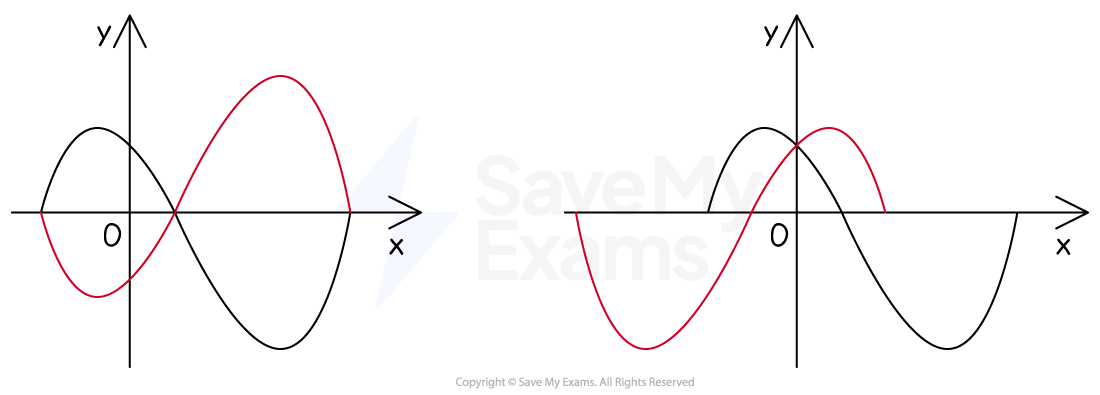
Examples of reflections
How do I reflect graphs?
- Let be the equation of the original graph
Vertical reflections: y=-f(x)
-
is a reflection in the -axis
-
The coordinates change sign
- The coordinates are unaffected
-
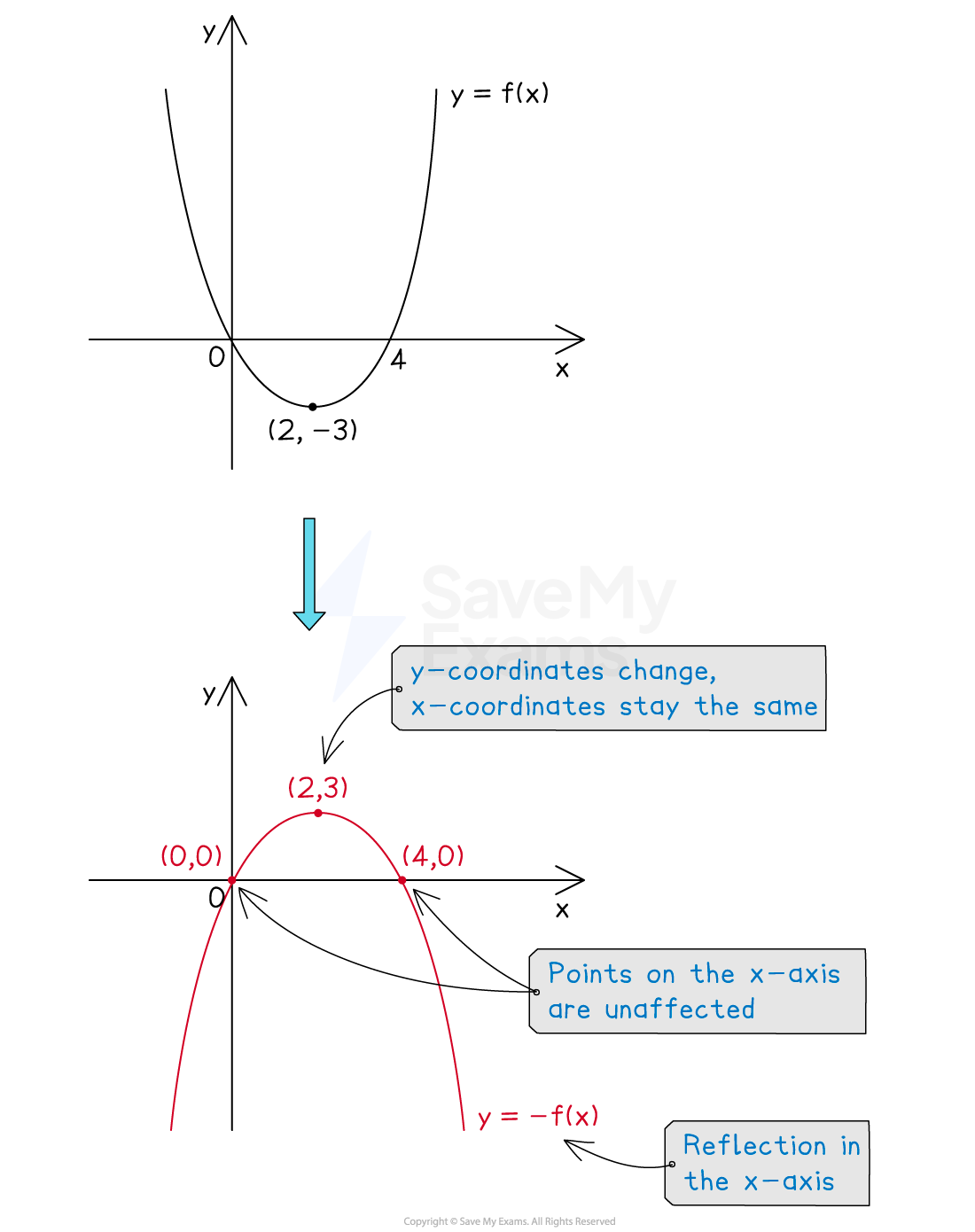
Example of a vertical reflection
Horizontal reflections: y=f(-x)
-
is a reflection in the -axis
-
The coordinates change sign
- The coordinates are unaffected
-
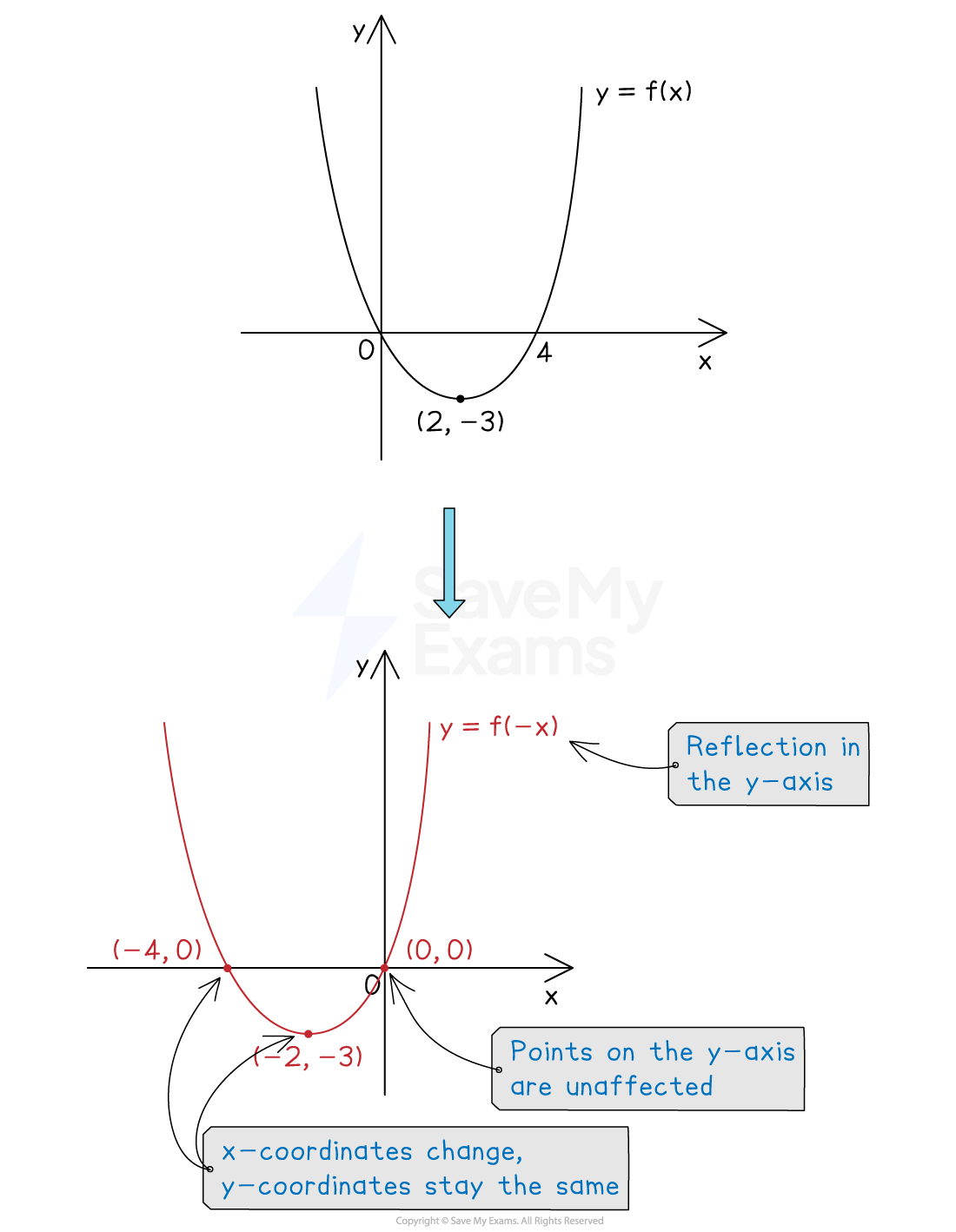
Example of a horizontal reflection
What happens to asymptotes when a graph is reflected?
- Any asymptotes of are also reflected
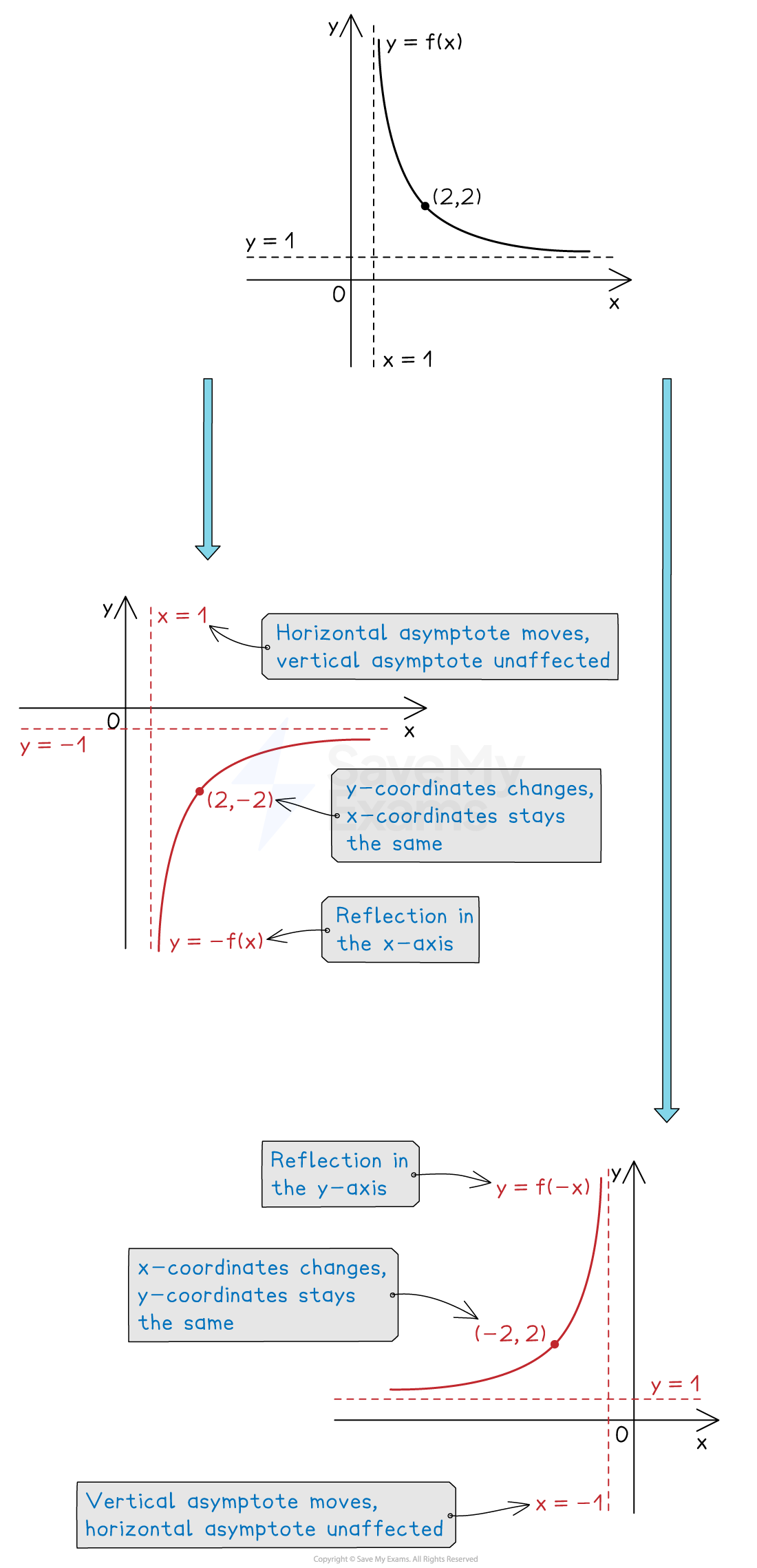
Exam Hint When reflecting graphs in the exam, reflect any key points on the graph first, then join them up with a smooth curve.
How does a reflection affect the equation of the graph?
-
When a graph is reflected, you can change its equation algebraically
- There is no need to sketch the graph
-
Reflecting in the -axis puts a in front of the whole equation
-
For example, becomes
y=−(x²+2x)- This simplifies to
-
-
Reflecting in the -axis replaces anywith
(−x)in the equation-
For example, becomes
y=(−x)²+2 (−x)- This simplifies to
-
How do I apply a combined reflection?
-
The graph of is a combined reflection in both the and axes
-
It does not matter which order you apply these in
- For example, reflect about the -axis then about the -axis
-
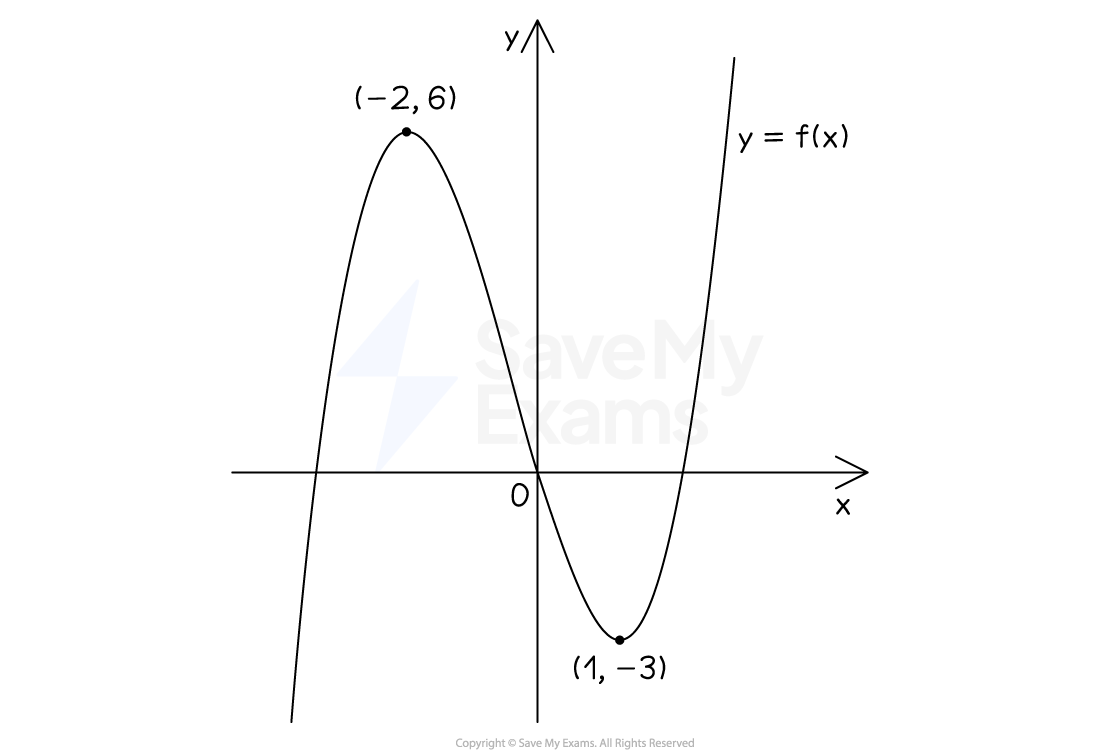
Worked Example The diagram below shows the graph of .
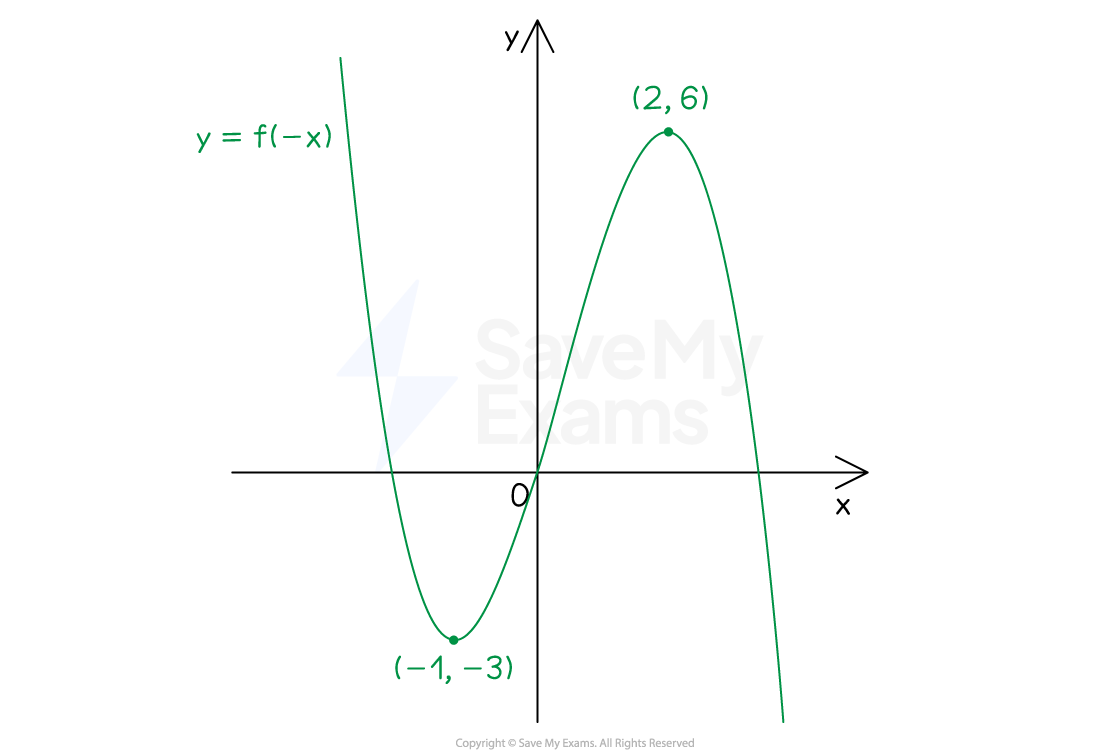
Sketch the graph of .
Answer:
The transformation is a reflection in the -axis Reflect the points (-2, 6) and (1, -3) in the -axis to get (2, 6) and (-1, -3) Sketch these points and join with a smooth curve through the origin
Was this revision note helpful?