Two numbers and are such that
The sum of the squares of and is .
Show that
Using calculus, find the value of for which is a minimum, justifying that this value of gives a minimum value for .
Using calculus, find the minimum value of .
22 questions · 232 marks · ≈ 4 hours
Two numbers and are such that
The sum of the squares of and is .
Show that
Using calculus, find the value of for which is a minimum, justifying that this value of gives a minimum value for .
Using calculus, find the minimum value of .

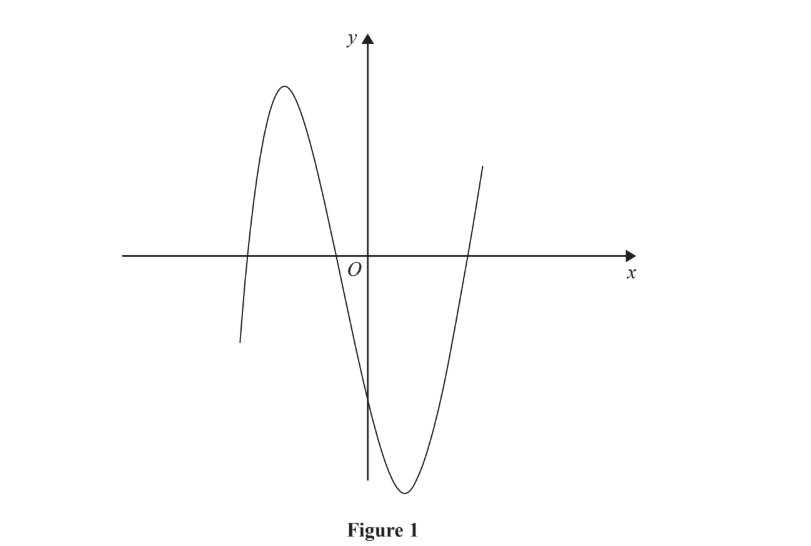
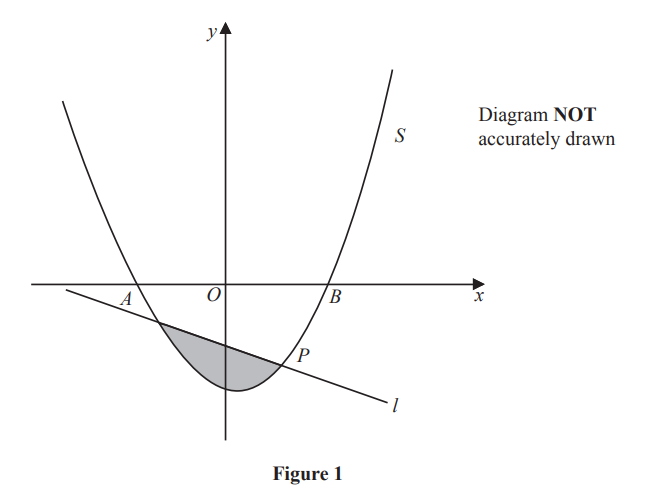
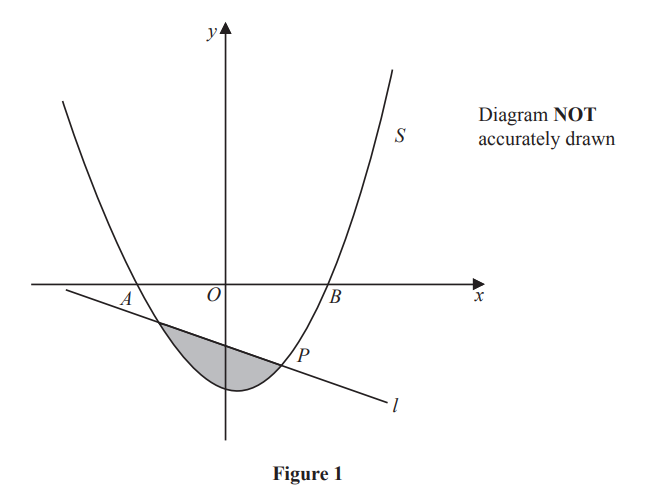
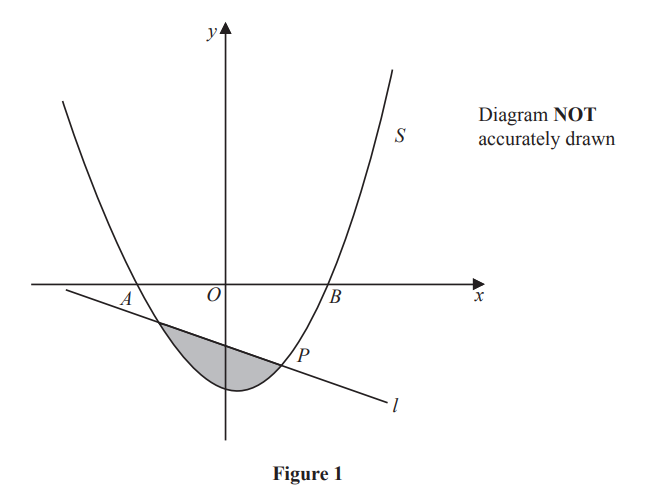
Figure 1 shows the curve with equation
The point , with coordinate −2, lies on and line is the tangent to at the point .
Find an equation for
The point lies on and the line is the tangent to at the point .
Given that and are parallel,
find an equation for
The normal to at meets at the point .
Find the coordinates of .
Find the exact length of the line .
The tangent and normal at and the tangent and normal at form a rectangle.
Find the exact area of this rectangle.

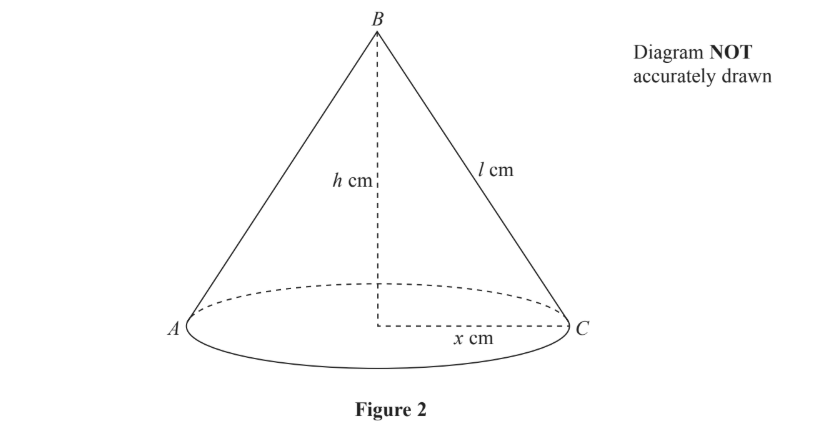
Figure 2 shows a right circular cone with a base radius of cm. The slant height of the cone is cm and the height of the cone is cm. The vertex of the cone is and the points and , on the base of the cone, are such that is a diameter of the base.
The cone is increasing in size in such a way that the size of the angle is constant at and the total surface area of the cone is increasing at a constant rate of 10 cm2 /s.
Find the exact rate of increase of the volume of the cone when
Given that can be written in the form , where and are integers,
find the value of , the value of and the value of
Given that can be written in the form , where and are integers,
(i) Hence, or otherwise, find the value of for which is a maximum
(ii) find the maximum value of
The surface area of a sphere with radius cm is increasing at a constant rate of cm2 /s
Find, in cm3 , the exact volume of the sphere at the instant when the rate of increase of is cm/s

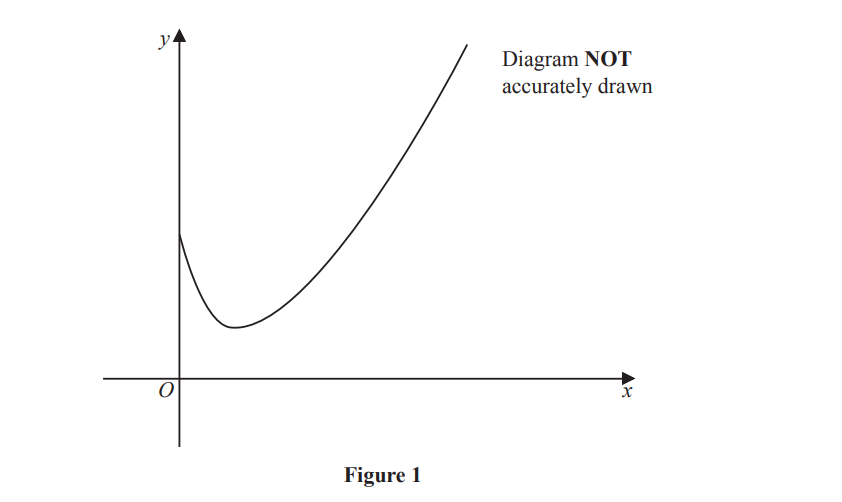
Figure 1 shows a sketch of part of the curve with equation
The point lies on and has coordinates
Show that
The line is the normal to at the point
Show that an equation of is
The finite region is bounded by the curve , the line , the -axis and the line with equation
Use calculus to find the exact area of

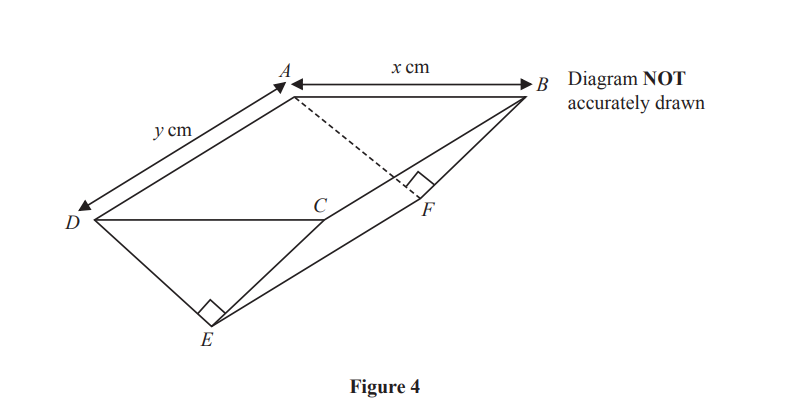
Figure 4 shows a solid right triangular prism
The cross section of the prism is an isosceles triangle.
The triangular faces of the prism are vertical and the edges and are horizontal. The volume of the prism is cm3 The total external surface area of the prism is cm2
Show that satisfies the equation
Given that can vary, use calculus, to find to 3 significant figures, the value of for which is a minimum.
Justify that this value of gives a minimum value of
Hence find, to 2 significant figures, the minimum value of

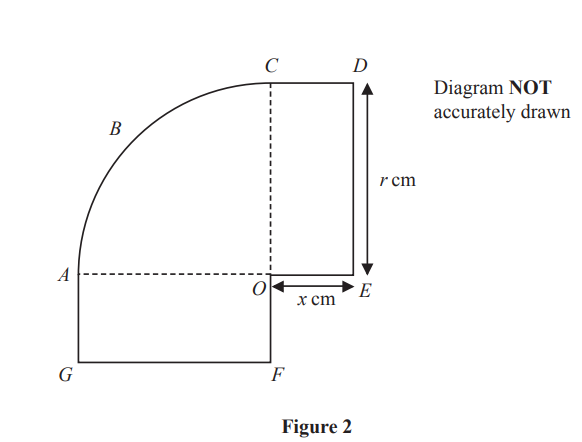
Figure 2 shows a shape
is a quarter circle with radius cm and are congruent rectangles of length cm and width cm
The total area of the shape is 100cm2 The perimeter of the shape is cm
Show that
Use calculus to find the value of for which is a minimum, justifying that this value of gives a minimum value of
Find the minimum value of
Given that can be expressed in the form where , and are positive constants
find the value of , the value of and the value of
Given that can be expressed in the form where , and are positive constants
Hence write down the maximum value of
The equation has roots and
Without solving the equation , form a quadratic equation, with integer coefficients, that has roots and
Show that
where and are constants
The equation has roots and where and are the roots of the equation
Using your answer to part (d), find in simplified exact form, the value of and the value of
The height of liquid in a vessel is The volume, , of the liquid in is given by Liquid is leaking from at a constant rate of
Find the exact rate of change, in cm/s, of when
A curve has equation
Find the coordinates of the point where intersects the
(i) -axis
(1 mark)
(ii) -axis
(1 mark)
A curve has equation
Write down an equation of the asymptote to that is
(i) parallel to the -axis
(1 mark)
(ii) parallel to the -axis
(1 mark)
Sketch on the opposite page. Show and label the asymptotes and the coordinates of the points where crosses the coordinate axes.
Point lies on such that the gradient of at is parallel to the line with equation
The normal to at intersects the -axis at point and the -axis at point Given that the coordinate of is positive,
find, in its simplified form, the exact length of line

A solid cuboid has width cm, length 4 cm and height cm. The volume of the cuboid is 75cm3 and the surface area of the cuboid is
Show that
Given that can vary, using calculus,
(i) find to 3 significant figures, the value of for which is a minimum,
(ii) justify that this value of gives a minimum value of
Find, to 3 significant figures, the minimum value of
The equation of a curve is
When is increased to , increases to where and are small.
Show that
The equation of a curve is
When is increased to , increases to where and are small.
Given that = 2.5
find an estimate, to 2 significant figures, of the value of when the value of increases by 0.2%

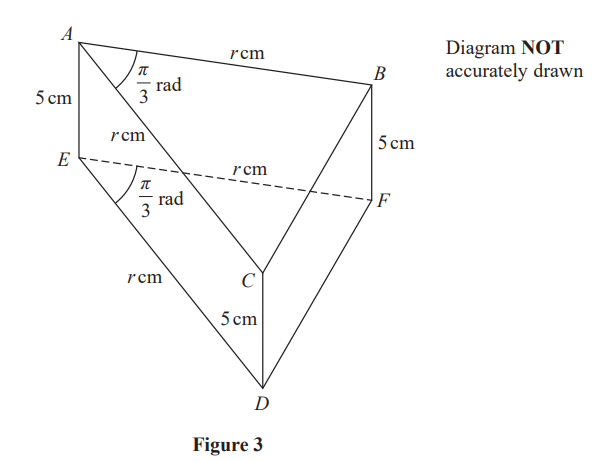
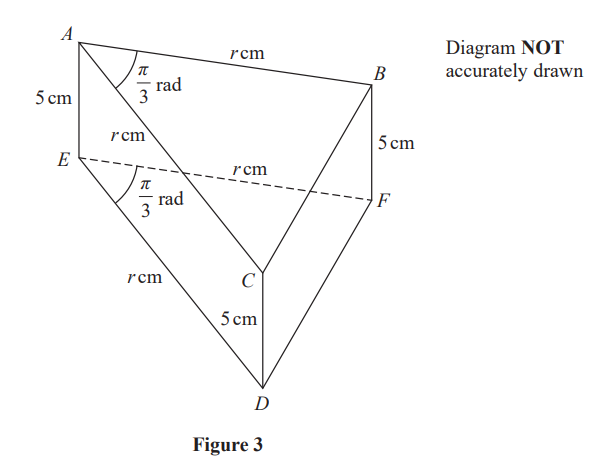
Figure 3 shows a right triangular prism . A cross section of the prism is a triangle in which and angle C A B equals pi over italic 3radians.
In the prism
and angle D E F equals pi over italic 3 radians.
Show that the volume of the prism is

Figure 3 shows a right triangular prism . A cross section of the prism is a triangle in which and angle C A B equals pi over italic 3radians.
The volume of the prism is increasing in such a way that the size of angle C A B and the size of angle D E F remain constant and the length of , the length of and the length of remain constant.
The lengths of and are each increasing at a constant rate of 0.2cm / s
Find the exact rate of increase, in cm3 / s, of the volume of the prism when the area of the rectangular face is 60 cm2
Express in the form where , and are rational numbers to be found.
Find
(i) the minimum value of
(ii) the value of at which this minimum occurs.
Hence, or otherwise, write down
(i) the minimum value of
(ii) the value of at which this minimum occurs.

Figure 1 shows part of the curve with equation where , and are constants.
The points , and with coordinates (– 2, 0), (6, 0) and (4, – 6) respectively lie on
Show that an equation of is

Figure 1 shows part of the curve with equation where , and are constants.
The line is the normal to at the point
Show that an equation of is

Figure 1 shows part of the curve with equation where , and are constants.
The finite region shown shaded in Figure 1 is bounded by and
Use algebraic integration to find the exact area of the shaded region.
The volume of oil in a container is cm3 when the height of the oil is cm. Oil is pouring into the container at a constant rate of 12 cm3 /s. Given that
find the exact rate, in cm/s, at which the height of the oil is increasing when
Two numbers and are such that
Show that
Given that can vary,
use calculus to find the value of for which is a minimum, justifying that this value of gives a minimum value of
Find the minimum value of

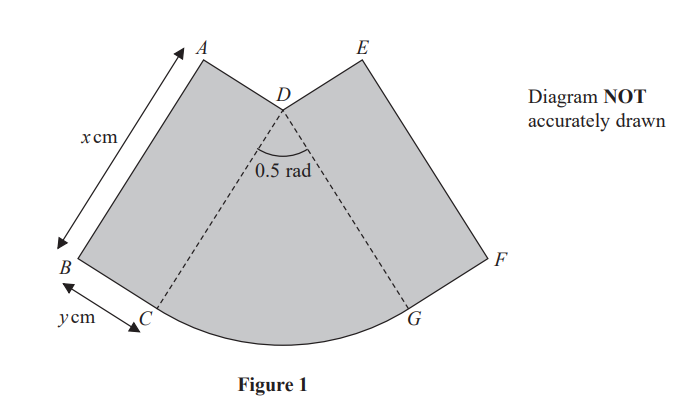
Figure 1 shows a badge, shown shaded, made from two identical rectangles, and , and a sector of a circle with centre .
Each rectangle measures cm by cm. The radius of the sector is cm and the angle is 0.5 radians.
The area of the badge is 50 cm2 The perimeter of the badge is cm.
Show that
Given that can vary,
use calculus, to find the exact value of for which is a minimum. Justify that this value of gives a minimum value for
Find the minimum value of Give your answer in the form , where is an integer to be found.
The equation of a curve is
Find an equation of the tangent to the curve at the point on the curve where
Give your answer in the form
A cube has edges of length cm.
The total surface area, , of the cube is increasing at a constant rate of 0.45cm2 /s
Find the rate of increase, in cm3 /s, of the volume of the cube at the instant when the total surface area of the cube is 384cm2

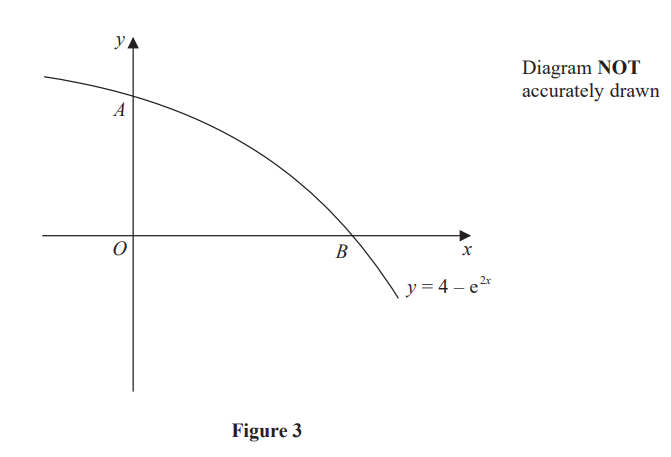
Figure 3 shows part of the curve with equation The curve crosses the -axis at the point and the -axis at the point .
(i) Write down the coordinate of point .
(1 mark)
(ii) Show that the coordinate of is
(2 marks)
The line is the normal to at the point .
Find an equation for , giving your answer in the form
The finite region is bounded by , and the -axis.
Using calculus, find the area of . Give your answer to one decimal place.