The Merchant of Venice: Character Quotations (Edexcel IGCSE English Literature)
Spec point —
IGCSE_ENGLISH_LITERATURE:C2T08
The Merchant of Venice: Character Quotations
GCSE English Literature exam questions usually focus on a theme, a character or a relationship between two or more characters. Examiners reward responses that track the development of characters or themes through the play.
When revising, try to consider quotes in terms of their narrative effects — how characters are presented, what attitudes or relationships are presented and why these ideas have been shown to the reader.
- Shylock
- Portia
- Bassanio
- Antonio
Exam Hint Something to bear in mind when you are revising ‘The Merchant of Venice’ quotations is that the dialogue conveys the characters’ attitudes and often shows how they conduct their relationships. Examiners suggest that you consider the ideas represented by the characters, and how this is illustrated in their interactions.
Examiners like you to use references or quotations as support for your ideas. That’s why we’ve included a “key word or phrase” from our longer quotations to help you remember important references from across the play.
The Merchant of Venice: Character Quotations: Shylock
Spec point —
IGCSE_ENGLISH_LITERATURE:C2T08
Shylock
blockquote “Antonio shall become bound. Well”— Shylock, Act 1, Scene 3
 Shylock | Key word or phrase to memorise:“bound” and “Well” | What the quotation means: Shylock is quick to repeat that Antonio is indeed “bound” to him when he enters into a deal with Bassanio that means that Antonio owes him money | **Theme: **Wealth and Power |
|---|---|---|---|
| - Shakespeare presents ideas about wealth and the way it brings power through Shylock: - His****pun, “bound”, alludes to the way Antonio’s debt (which he is “bound” to pay back) will figuratively bind him (like a trap) to Shylock - His pleasure at the certainty of this is conveyed in the addition of “Well” - Shakespeare foreshadows the conflict that this relationship will bring: - Shylock’s obsession leads him to seek merciless vengeance on Antonio |
blockquote “I would my daughter were dead at my foot and the jewels in her ear!” — Shylock, Act 3, Scene 1
Shylock | Key word or phrase to memorise:“jewels in her ear!” | What the quotation means: Shylock is furious that his daughter has disappeared and asks Tubal if he has found her, adding that he would rather she were dead so that the jewels she wears are returned to him | **Theme: **Love and Friendship |
|---|---|---|---|
| - Shylock’s emotional outbursts are often about the cost of things, or his loss of wealth - Shakespeare illustrates Shylock’s value for money over his relationships: - While he seems desperate to find his daughter, his real worry is revealed - Shylock’s wish for the “jewels” rather than her safe return portrays his callousness - It would be a mistake, though, to suggest that he does not care for his daughter at all: - Much of his anger here comes from a sense of betrayal — her disappearance hurts him because he trusted her - The plosive alliteration**** of the “d” sound here gives a sense of his fury, suggesting that he spits these words out |
blockquote “Nay, take my life and all, pardon not that” — Shylock, Act 4, Scene 1
Shylock | Key word or phrase to memorise:“take my life” | What the quotation means: When Shylock’s judgement comes, he is offered a pardon if he gives half his wealth to Antonio and half to the state, but Shylock refuses, asking instead for them to take his life | Theme: Prejudice and Intolerance |
|---|---|---|---|
| - Shakespeare illustrates how Shylock considers money to be vital to life: - His need for his living, he says, is more valuable than “life” - He suggests that he cannot sustain life without money - The play presents ideas about a society that prioritises wealth - Shakespeare’s Shylock is intolerant of Antonio’s values and seeks vengeance: - In this scene, though, Shylock is forced to surrender all of his values - The play raises questions about justice and intolerance - Shakespeare’s Elizabethan audience would have found this line, which plays into racial stereotypes of covetous Jews, amusing: - Modern audiences, though, recognise the cruelty and racially-motivated injustice with which Shylock is treated here |
The Merchant of Venice: Character Quotations: Portia
Spec point —
IGCSE_ENGLISH_LITERATURE:C2T08
Portia
blockquote “If he have the condition of a saint and the complexion of a devil, I had rather he should shrive me than wive me” — Portia, Act 1, Scene 2
 Portia | Key word or phrase to memorise:“condition of a saint” and “complexion of a devil” | What the quotation means: Portia is frustrated at her father’s wish that she find a suitable man to marry through a series of tests, joking that she cares less about their nature and more about their skin colour or race, and that she would prefer a foreign man to be her priest than her husband | Theme: Prejudice and Intolerance |
|---|---|---|---|
| - Shakespeare illustrates society-wide discriminatory attitudes: - Portia’s witty comment reveals her casual, flippant racism - Her joke links non-white races to the “devil”, playing on the common belief that the devil had black skin - The play portrays a number of oppressed characters who exhibit prejudice against other minorities: - The rhyming of “wive” with “shrive” (which means ‘to confess) perhaps indicates ironic resignation at her limited role in her marriage - Portia links suitors and priests, illustrating the influence of both |
blockquote “There’s something tells me — but it is not love —
I would not lose you; and you know yourself,
Hate counsels not in such a quality”— Portia, Act 3 Scene 2
Portia | Key word or phrase to memorise:“it is not love” and “lose you” | What the quotation means: Portia tells Bassanio that she wants him to stay longer, but not because of love (she does not want to admit her feelings just yet, or push him away), but that it is definitely not “hate” as they get along so well | Theme: Love and Friendship |
|---|---|---|---|
| - Shakespeare’s female character, Portia, is conventionally measured in matters of love: - She is portrayed as hesitant to enter a relationship although she enjoys Bassanio’s company - She insists that she does not feel love and contrasts this with “hate” - Shakespeare portrays Portia as an independent female who finds a sense of power in her status and singledom: - Portia’s desire for friendship and a worthy companion supersedes her need for marriage and love |
blockquote “If you had known the virtue of the ring,
Or half her worthiness that gave the ring,
Or your own honour to contain the ring,
You would not then have parted with the ring” — Portia, Act 5, Scene 1
 Bassanio | Key word or phrase to memorise:“half her worthiness that gave the ring” | What the quotation means: Portia mirrors Bassanio’s words and contradicts him, saying that he would not have given away the ring if he had known the significance of it, the worth of the person who gave it, or was honourable enough to take care of it | Theme: Wealth and Power |
|---|---|---|---|
| - Shakespeare portrays Portia and Bassanio as equals: - His attempts to justify himself are met with a witty, sophisticated reply - Portia’s superior knowledge gives her the power in this scene - The list structure (emphasised by the polysyndeton of “Or” and the repetition of “the ring”) creates a sense of verbally punishing Bassanio, attacking him with fault after fault - Dramatic irony and disguise is used to create comedy: - Portia’s scolding is ironic as she is withholding information from him |
The Merchant of Venice: Character Quotations: Bassanio
Spec point —
IGCSE_ENGLISH_LITERATURE:C2T08
Bassanio
blockquote “Brutus’ Portia;
Nor is the wide world ignorant of her worth” — Bassanio, Act 1, Scene 1
 Bassanio | Key word or phrase to memorise:“wide world” and “worth” | What the quotation means: Bassanio tells Antonio of Portia’s reputation around the world as a beautiful and wealthy woman | Theme: Wealth and Power |
|---|---|---|---|
| - Shakespeare’s ideas about wealth and power are introduced by Bassanio: - He is frustrated that he could never win Portia’s love as he has no means, or money - Shakespeare foreshadows the relationship between Bassanio and Portia: - Bassanio expresses his admiration for her reputation and wealth with alliterative “wide world” and “worth” |
blockquote “I like not fair terms and a villain’s mind”— Bassanio, Act 1, Scene 3
 Bassanio | Key word or phrase to memorise:“fair terms” and “villain’s mind” | What the quotation means: After Antonio has made a deal with Shylock, Bassanio expresses his suspicious and distrustful attitude towards Shylock, suggesting that even if the deal is “fair” Shylock may cheat him as he probably has evil plans | Theme: Prejudice and Intolerance |
|---|---|---|---|
| - Shakespeare illustrates the prejudicial way Antonio and Bassanio refer to Shylock: - While Bassanio does not know Shylock he suspects him as a cheat - He implies Shylock is conniving - The play examines the conflict that comes from divisions and imbalances: - Bassanio’s position makes him vulnerable and suspicious - Shylock’s access to money affords him some power which he exploits |
blockquote “Sweet doctor, you shall be my bedfellow. When I am absent, then lie with my wife”— Bassanio, Act 5 Scene 1
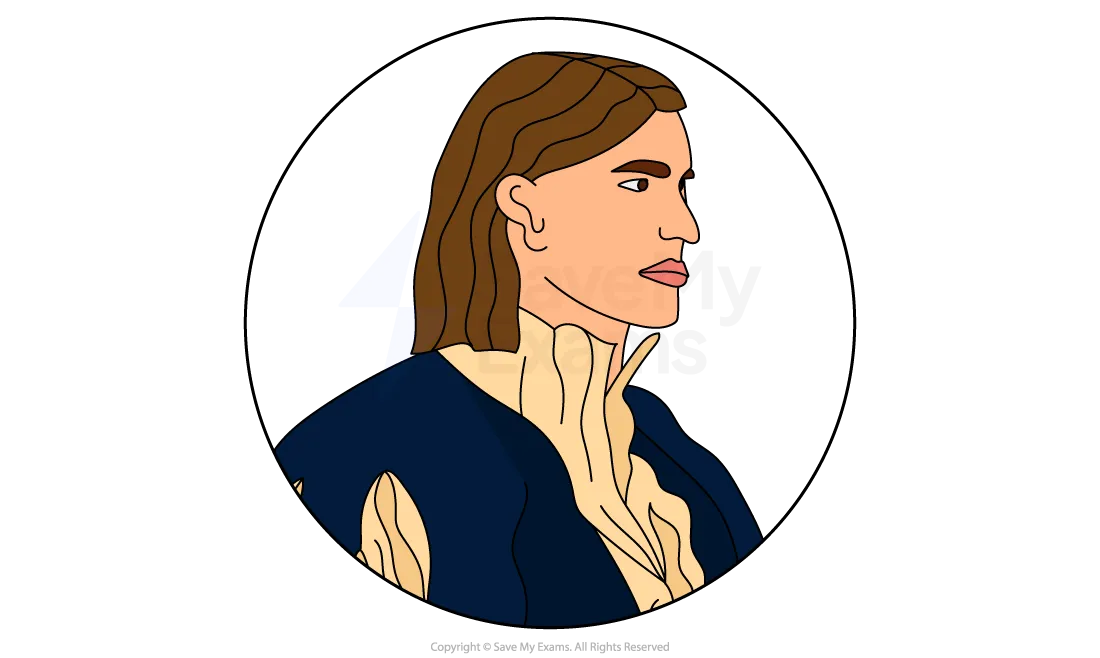 Bassanio | Key word or phrase to memorise:“Sweet doctor” and “lie with my wife” | What the quotation means: Bassanio makes a joke when he finds out that Portia was, in fact, the doctor, and he says that he wants the doctor to sleep with him, and when he is not there, the doctor can sleep with his wife (herself, in other words!) | Theme: Love and Friendship |
|---|---|---|---|
| - Shakespeare’s challenge to gender stereotypes is presented in the relationship between Bassanio and Portia: - Portia’s superior position in the relationship defies social norms - Their relationship, though, is presented as balanced and fair despite Portia’s higher social rank - Bassanio’s good-natured reply to her deception is comical - Bassanio’s joke blurs gender and sexuality and portrays him as tolerant: - The joke also alludes to the fact that, during the Elizabethan period, Portia, Bassanio’s wife, would have been played by a young boy actor, which adds to the humour of the scenario - References to gender trickery therefore remind Shakespeare’s audience that it is looking at a boy playing a woman playing a man |
The Merchant of Venice: Character Quotations: Antonio
Spec point —
IGCSE_ENGLISH_LITERATURE:C2T08
Antonio
blockquote “Neither have I money nor commodity
To raise a present sum. Therefore go forth —
Try what my credit can in Venice do”— Antonio, Act 1, Scene 1
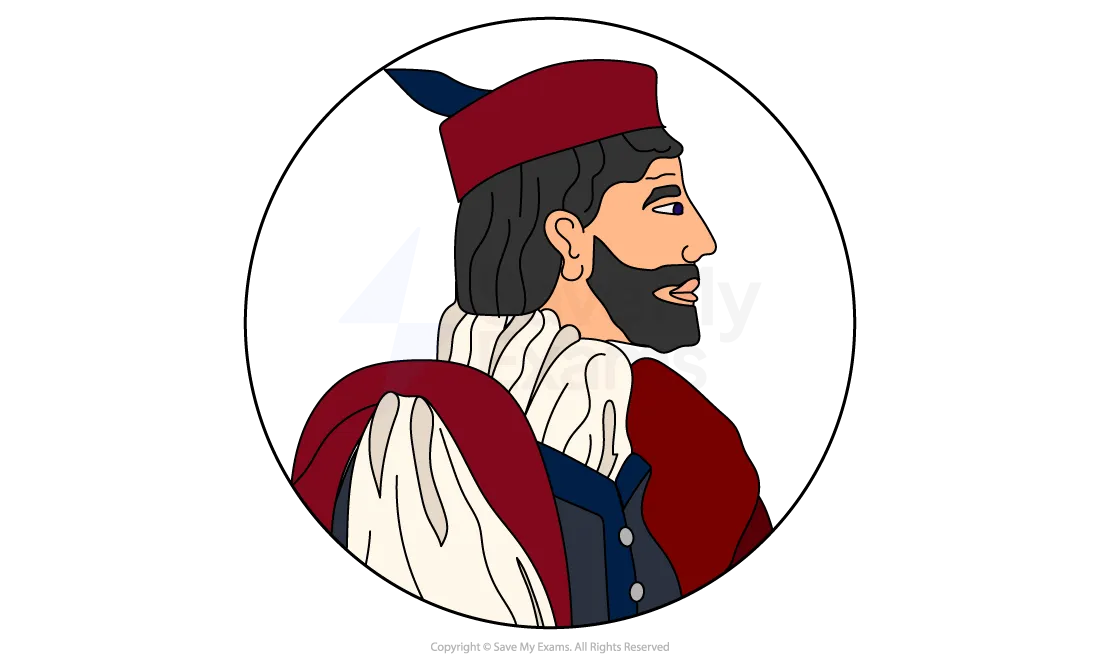 Antonio | Key word or phrase to memorise:“money nor commodity” and “my credit” | What the quotation means: Antonio tells his friend, Bassanio, that he cannot help him as he has no money or wealth, but that his reputation in Venice may be of some worth | Theme: Wealth and Power |
|---|---|---|---|
| - The play explores a society in which money equates to independence, social opportunities, and individual power: - Antonio’s desire to help his friend is limited to his “credit” or reputation - His reference to having neither “money nor commodity” implies he is powerless to help - This conveys the limited choices for individuals like Antonio |
blockquote “Repent but you that you shall lose your friend, and he repents not that he pays your debt” — Antonio, Act 4, Scene 1
 Antonio | Key word or phrase to memorise:“lose your friend” and “pays your debt” | What the quotation means: Antonio tells Bassanio to regret only that he will lose their friendship and that he does not regret sacrificing himself to settle his debt | Theme: Love and Friendship |
|---|---|---|---|
| - Shakespeare’s presentation of the friendship between Antonio and Bassanio examines loyalty: - Antonio is portrayed as a martyr, but his words are hyperbolic - The repetition of “repent” highlights the “saintly” quality he attributes to his actions - Antonio’s willingness to die for Bassanio is considered by many to be an indication of Antonio’s romantic feelings for Bassanio - Shakespeare’s play links the value of money to the value of relationships: - Antonio’s reminder, that he “pays” Bassanio’s “debt” is a stark reminder of his broken bond |
blockquote “My soul upon the forfeit, that your lord
Will never more break faith advisedly”— Antonio, Act 5 Scene 1
 Antonio | Key word or phrase to memorise:“soul upon the forfeit” and “break faith” | What the quotation means: In the resolution, Antonio tells Portia that he is sure that his friend will not break a deal again, and that he would bet his “soul” on his faith in his friend | **Theme: **Justice and Mercy |
|---|---|---|---|
| - In the resolution justice is delivered: - Antonio’s loyalty to his friend is presented as forgiveness - He offers his “soul” as sacrifice if Bassanio breaks “faith” - Shakespeare explores the nature of justice and mercy: - Bassanio’s request for forgiveness is granted by Portia and Antonio - There is some irony**** here, though, given that Bassanio has already broken one significant promise to Portia (the ring) |
Sources
Stanley Wells and Gary Taylor (eds), 2005, The Oxford Shakespeare: The Complete Works (Second Edition), Oxford University Press
Was this revision note helpful?