An Inspector Calls Key Theme: Capitalism vs Socialism (Edexcel IGCSE English Literature)
An Inspector Calls Key Theme: Capitalism vs socialism: Capitalism vs socialism timeline
Spec point —
IGCSE_ENGLISH_LITERATURE:C2T02
Capitalism vs socialism timeline
The theme of capitalism versus socialism in each Act of An Inspector Calls:
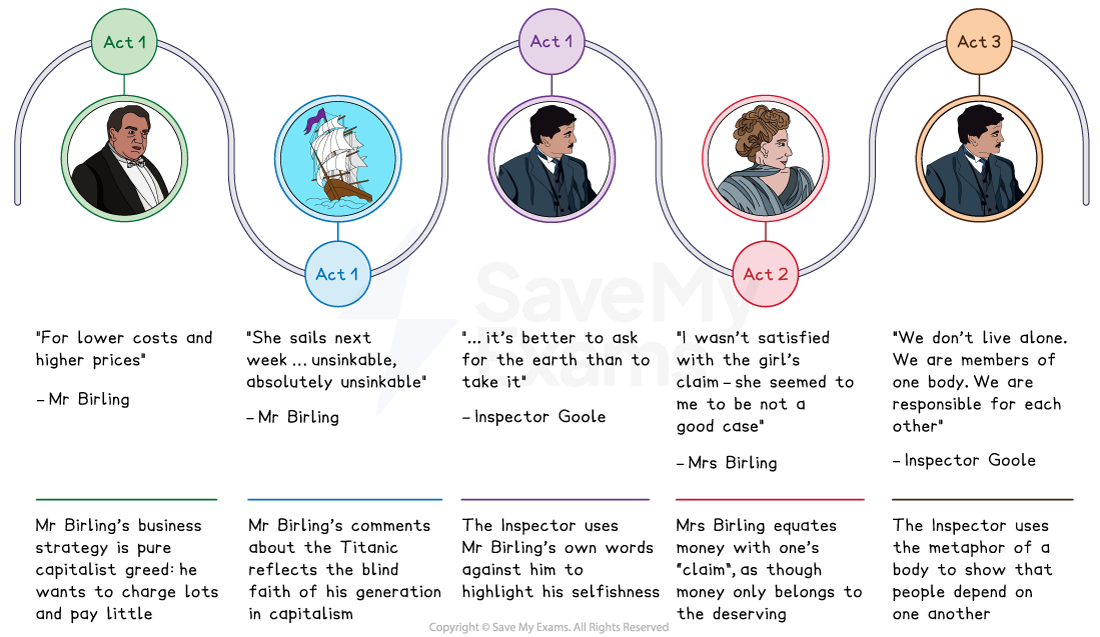
An Inspector Calls capitalism versus socialism timeline
An Inspector Calls Key Theme: Capitalism vs socialism: What are the elements of capitalism vs socialism in An Inspector Calls?
Spec point —
IGCSE_ENGLISH_LITERATURE:C2T02
What are the elements of capitalism vs socialism in An Inspector Calls?
Priestley presents capitalism vs socialism in An Inspector Calls through his characterisation:
- The Inspector: Embodies socialism; his investigation and moralistic speeches condemn how the poor and impoverished are victims of capitalist greed
- Mr Birling and Gerald Croft: Represent the greedy industrialists who treat workers like Eva Smith as cheap labour and refuse to raise wages
- Eva Smith: Her tragic fate shows the destructive potential of capitalism: she was fired for seeking a living wage, and denied charity on the basis of her perceived worth
Exam Hint Examiners warn against answers that turn into a general essay about politics. Keep the argument inside the play, where Priestley puts the two positions into the mouths of particular characters.
For example, you could write: “Birling insists that ‘a man has to mind his own business’ just before the doorbell rings, so Priestley has the play contradict him almost immediately”. Attaching an idea to a particular moment on stage keeps you writing about the play rather than about politics.
An Inspector Calls Key Theme: Capitalism vs socialism: The impact of capitalism vs socialism on characters
Spec point —
IGCSE_ENGLISH_LITERATURE:C2T02
The impact of capitalism vs socialism on characters
Priestley, as a socialist, believed that wealth should be distributed throughout society, and that the wealthy and privileged have a responsibility to support the poorest in society. The play attacks the most selfish elements of capitalism by emphasising its amoral qualities:
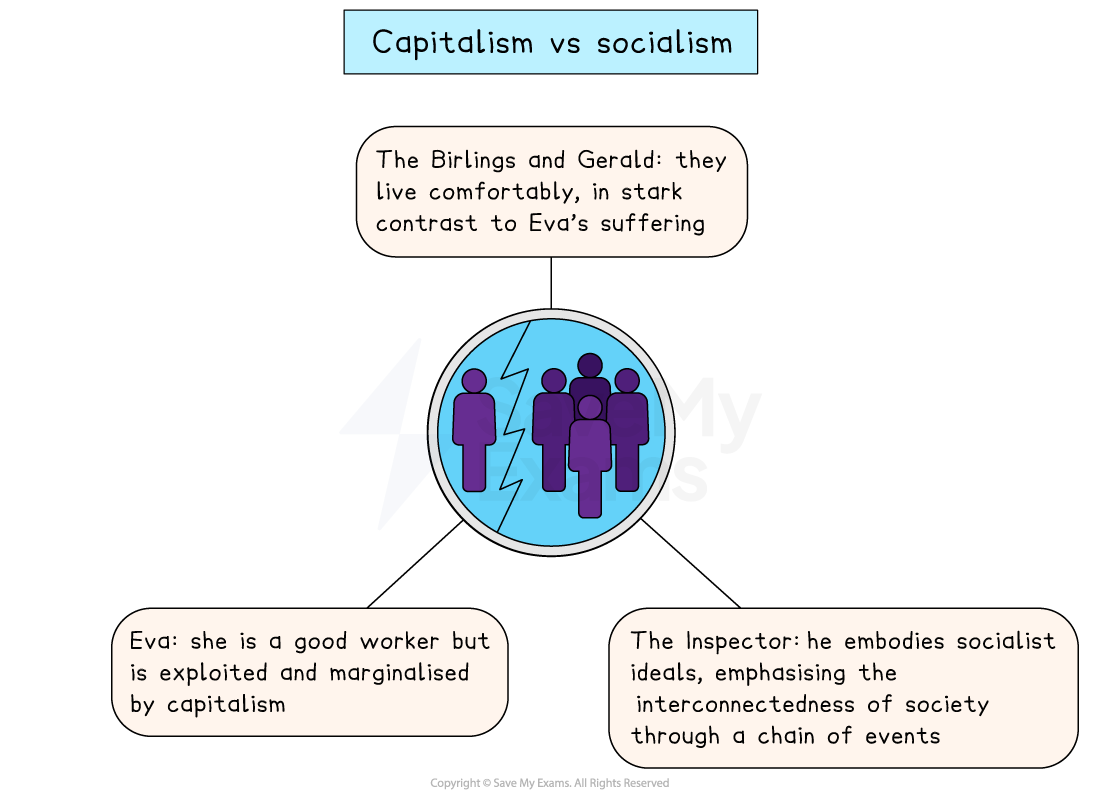
Capitalism versus socialism in An Inspector Calls
| Character | Impact |
|---|---|
| The Birlings and Gerald | - Priestley contrasts the comfortable, affluent life of the Birlings with the distressing account of Eva’s wretched life: - Gerald, son of the wealthy Crofts, also believes that Mr Birling was correct to sack a ‘troublemaker’ - Mr Birling, resistant to the Inspector’s message, protects his business to maximise profits: - He treats his workers with contempt, displaying no sense of responsibility or concern for their welfare |
| The Inspector | - The Inspector personifies socialist ideology by acting for the benefit of others rather than himself: - His central message is that everyone is connected by a “chain of events”; the actions of the upper classes affect the less fortunate - The Inspector seizes control of the Birlings’ celebration, symbolising Priestley’s hope that socialism could overcome capitalism |
| Eva | - Despite being a good worker, Eva is exploited and marginalised by the capitalist system: - Priestley, through the Inspector, maintains that such a system creates inequalities in society and prevents social mobility |
An Inspector Calls Key Theme: Capitalism vs socialism: Why does Priestley use the theme of capitalism vs socialism in his play?
Spec point —
IGCSE_ENGLISH_LITERATURE:C2T02
Why does Priestley use the theme of capitalism vs socialism in his play?
1. Setting and period
- Priestley underscores how the wealthiest in society enjoy privileges and lives of excess, but are blind to the effects of their actions on the less fortunate in society
- The play is a microcosm* of capitalist society, set in an industrial city, in the home of a wealthy manufacturer
2. Plot driver
- The play’s plot demonstrates what happens when powerful, greedy people prioritise money over the wellbeing of their fellow citizens
- For Priestley, Eva Smith represents “millions and millions and millions” of impoverished people, oppressed by an economic system that puts profit before people
3. Audience appeal
- Priestley’s 1945 audience was a more progressive and responsible generation, aware of workers’ rights and the rights of women like Eva
- Mr and Mrs Birling and Gerald reflect an outdated ideology from which society was seeking to move away
An Inspector Calls Key Theme: Capitalism vs socialism: Exam-style questions on the theme of capitalism vs socialism
Spec point —
IGCSE_ENGLISH_LITERATURE:C2T02
Exam-style questions on the theme of capitalism vs socialism
Try planning a response to the following essay questions as part of your revision of this theme:
- Explore how Priestley presents different attitudes towards social responsibility in An Inspector Calls?
- How does Priestley use Mr Birling to represent capitalism in An Inspector Calls?
Sources
Priestley, J.B. (1992). An Inspector Calls. Heinemann.
Was this revision note helpful?