Practical: Effect of Surface Area on Rate of Reaction (Edexcel IGCSE Chemistry)
Exam board Pearson Edexcel · IGCSEUpdated 2024-08-28
Spec point —
7.7
Practical: Effect of surface area on rate of reaction
Aim:
To investigate the effect of changing surface area on the rate of reaction
Diagram:
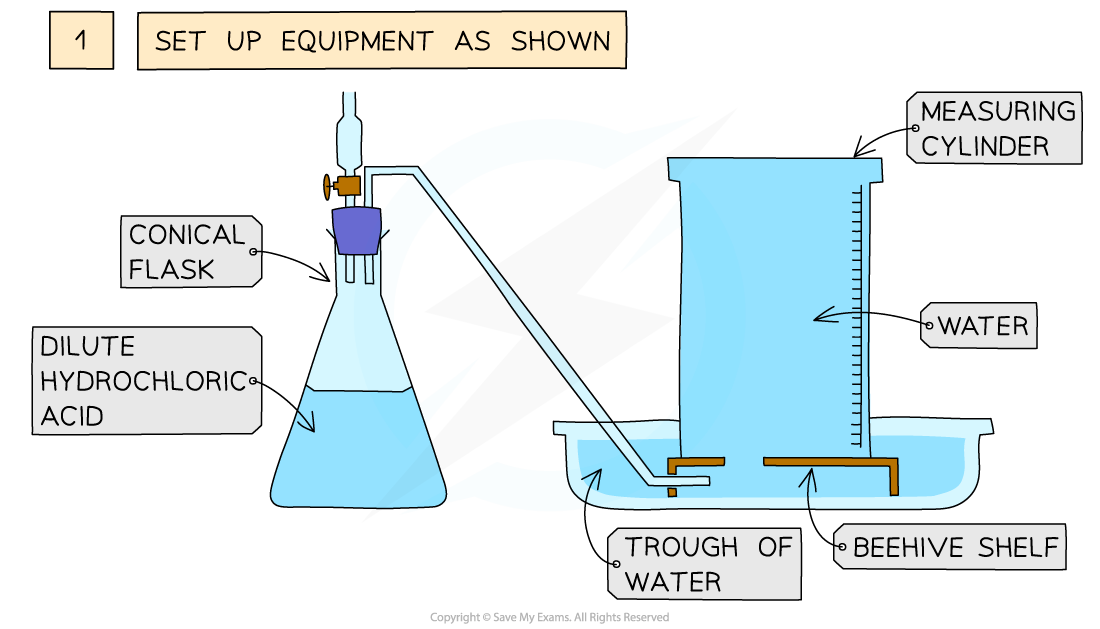
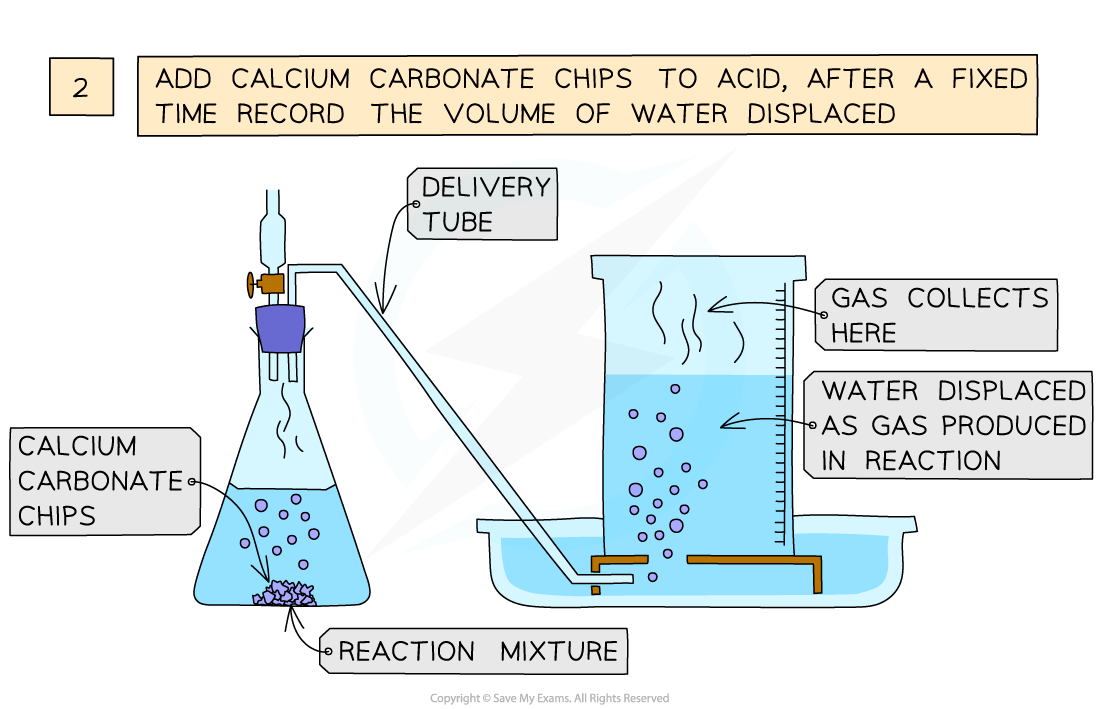
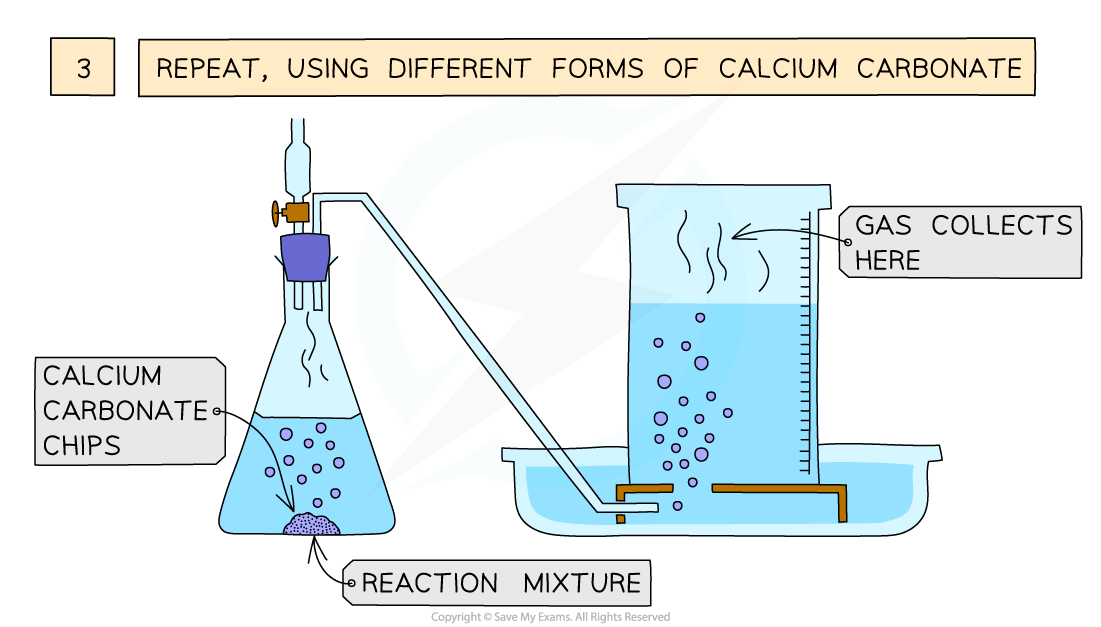
Investigating the effect of different size marble chips on the rate of reaction between calcium carbonate and hydrochloric acid
Method:
- Add a fixed volume of hydrochloric acid into a conical flask
- Use a delivery tube to connect this flask to an inverted measuring cylinder
- Add marble chips into the conical flask and close the bung
- Measure the volume of gas produced in a fixed time using the measuring cylinder
- Repeat with different sizes of marble chips
Results:
- Record your results in a table like this | Size of marble chip | Volume of gas produced in 30 seconds (cm3) | |---|---| | | | | | | | | | | | |
Conclusion:
- Increasing the surface area of the marble chip, increases the rate of reaction
- This is because more surface area particles of the marble chips will be exposed to the dilute hydrochloric acid so there will be more frequent and successful collisions, increasing the rate of reaction
Was this revision note helpful?
Build on this topic