Exothermic & Endothermic (Edexcel IGCSE Chemistry)
Spec point —
3.5C
Exothermic and endothermic reactions
-
The changes in heat content can be determined and measured with a thermometer
-
Note that the overall amount of energy does not change as energy is conserved in reactions
- This is known as the law of conservation of energy
-
This means that it cannot be created or destroyed but it can be transferred
-
So, if energy is transferred to the surroundings during a chemical reaction, then the products formed must have less energy than the reactants by the same amount as that transferred
Exothermic reactions
-
An exothermic reaction releases heat energy
- This means that the temperature increases
-
Examples of exothermic reactions include neutralisation and combustion
Exothermic reaction diagram
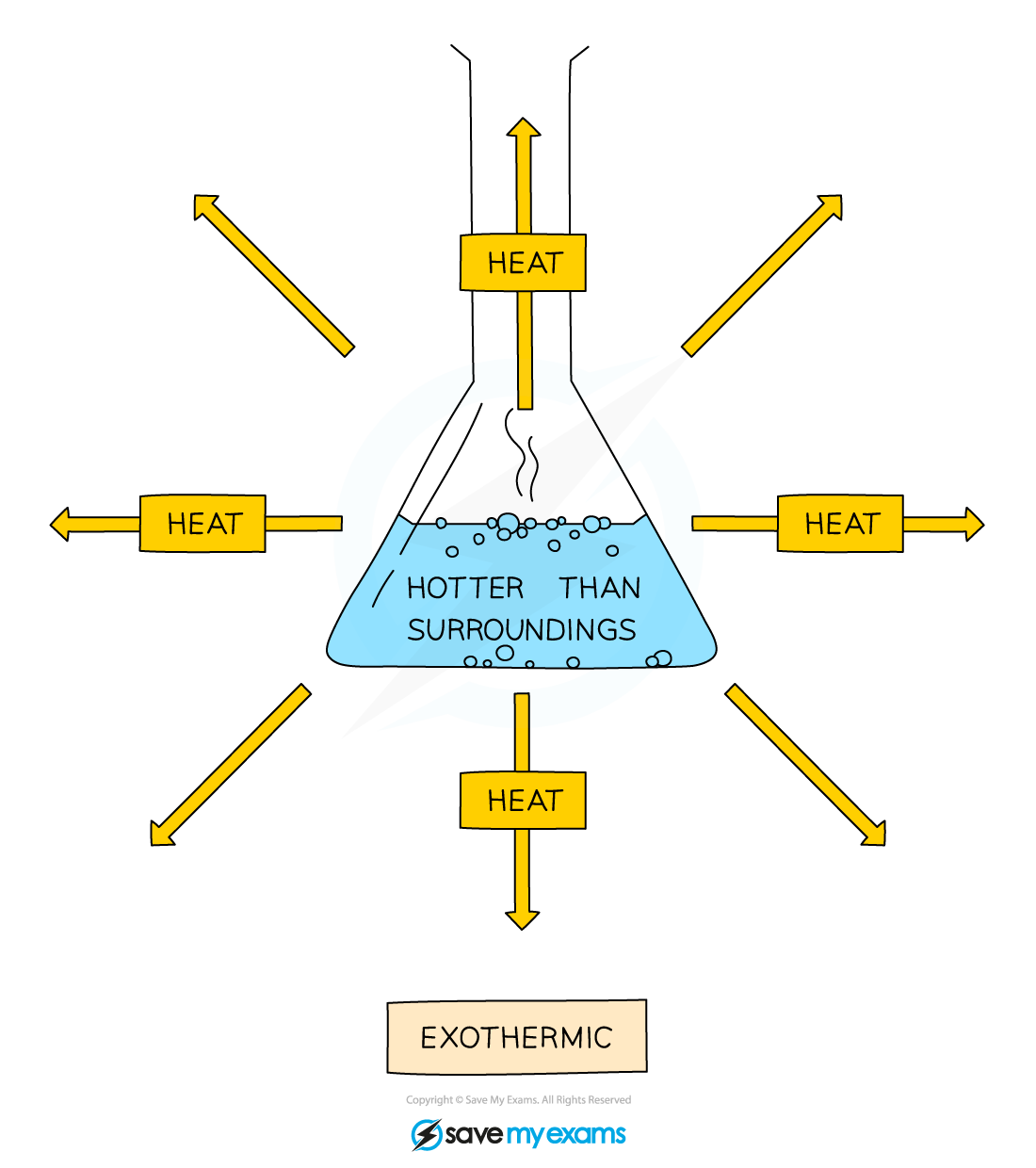
In exothermic reactions, the temperature of the surroundings increases and the heat content of the system falls
Endothermic reactions
-
An endothermic reaction takes heat energy in
- This means that the temperature decreases
Endothermic reaction diagram
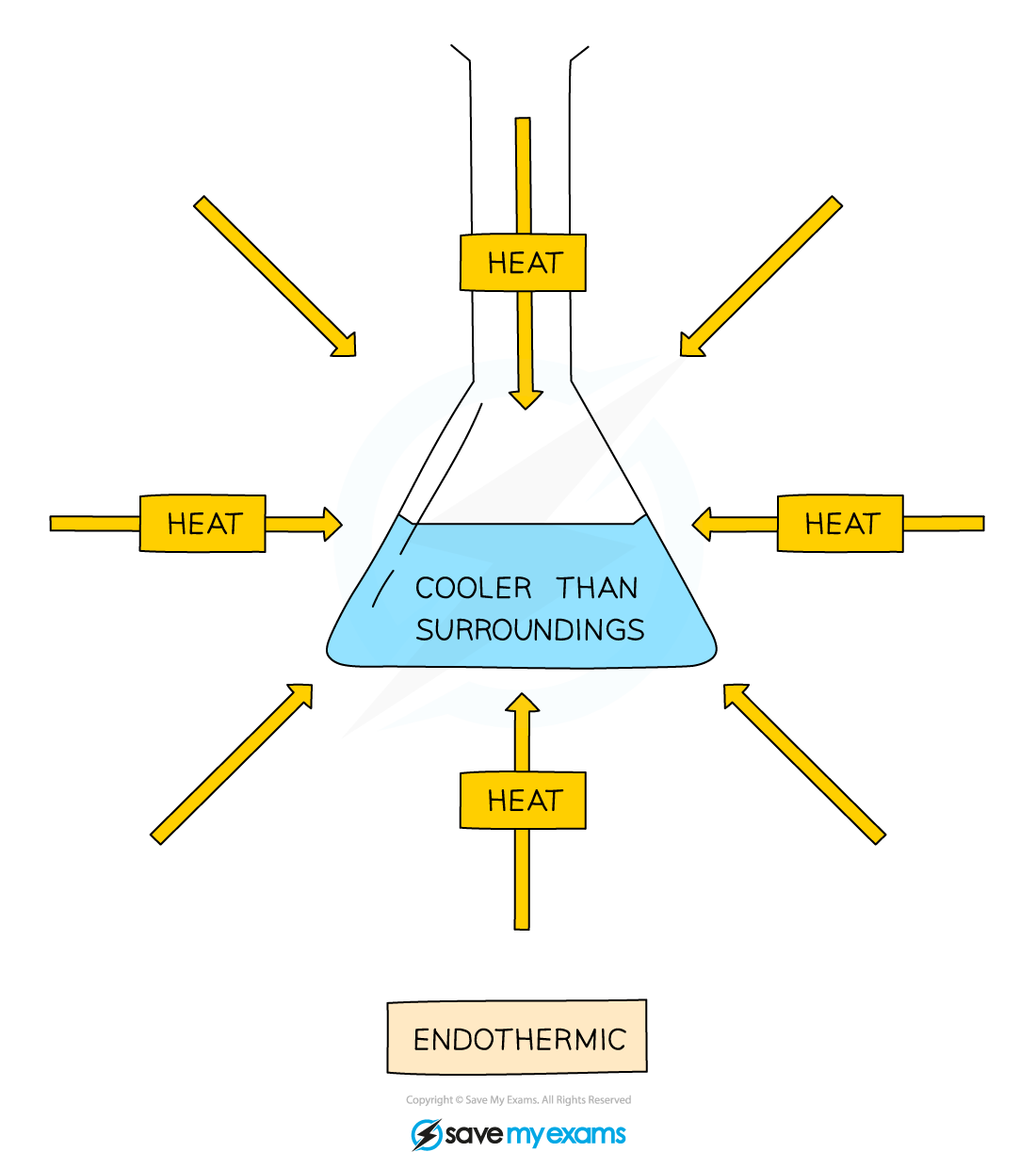
In endothermic reactions, the temperature of the surroundings falls and the heat content of the system increases
-
The following are some examples of heat changes in reactions
-
Neutralisation reactions:
- These always give energy out
-
Displacement reactions:
- These can either take energy in or give it out
-
Combustion reactions:
- These always give energy out
-
Worked Example A student was investigating the temperature change for four different chemical reactions. The table shows the chemicals that the student combined for each reaction along with the initial and final temperatures of the reaction.
Experiment Chemicals Initial temperature
(oC)Final temperature
(oC)1 10 cm3 NaOH 10 cm3 HCl 19 21 2 10 cm3 NaHCO3 2 g citric acid 20 16 3 10 cm3 CuSO4 0.5 g Mg powder 20 26 4 10 cm3 H2SO4 3 cm Mg ribbon 19 31 a) Identify each reaction as endothermic or exothermic.
b) Explain your answer.
Final answer: Answers:
a)
Exothermic reactions = 1, 3 and 4
Endothermic reaction = 2
b)
The exothermic reactions all show an increase in temperature, while the endothermic reaction shows a decrease in temperature
Exam Hint You need to able to work with experimental data to identify exothermic and endothermic reactions and justify your decisions.
Was this revision note helpful?
Build on this topic