Practical: Determine The Formula of a Metal Oxide (Edexcel IGCSE Chemistry)
Exam board Pearson Edexcel · IGCSEUpdated 2026-09-10
Practical: Determine the Formula of Magnesium Oxide
Spec point —
1.36
Aim:
To determine the empirical formula of magnesium oxide by combustion of magnesium
Diagram:
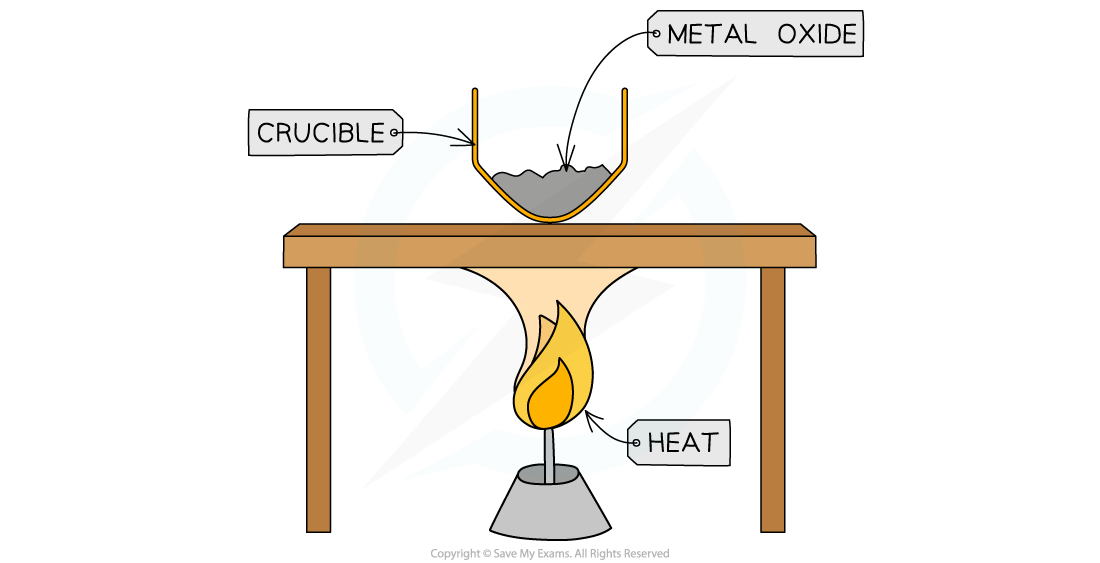
Method:
- Measure the mass of the crucible with the lid
- Add a sample of magnesium into the crucible and measure the mass with the lid (calculate the mass of the metal by subtracting the mass of the empty crucible)
- Strongly heat the crucible over a Bunsen burner for several minutes
- Lift the lid frequently to allow sufficient air into the crucible for the magnesium to fully oxidise without letting magnesium oxide smoke escape
- Continue heating until the mass of the crucible remains constant (maximum mass), indicating that the reaction is complete
- Measure the mass of the crucible and its contents (calculate the mass of metal oxide by subtracting the mass of the empty crucible)
Results
-
Mass of metal:
- Subtract the mass of the crucible from magnesium and the mass of the empty crucible
-
Mass of oxygen:
- Subtract the mass of the magnesium used from the mass of magnesium oxid
- Step 1 – Divide each of the two masses by the relative atomic masses of the element
- Step 2 – Simplify the ratio
| magnesium | oxygen | |
|---|---|---|
| mass | a | b |
| moles | a / Ar | b / Ar |
| x | y |
Ratio = x : y
- Step 3 – Represent the ratio in the form ‘MxOy‘ E.g, MgO
Practical: Determine the Formula of Copper(II)Oxide
Spec point —
1.36
Practical: Determine the formula of copper(II) oxide
Aim:
To determine the formula of copper(II)oxide by reduction with methane
Diagram:
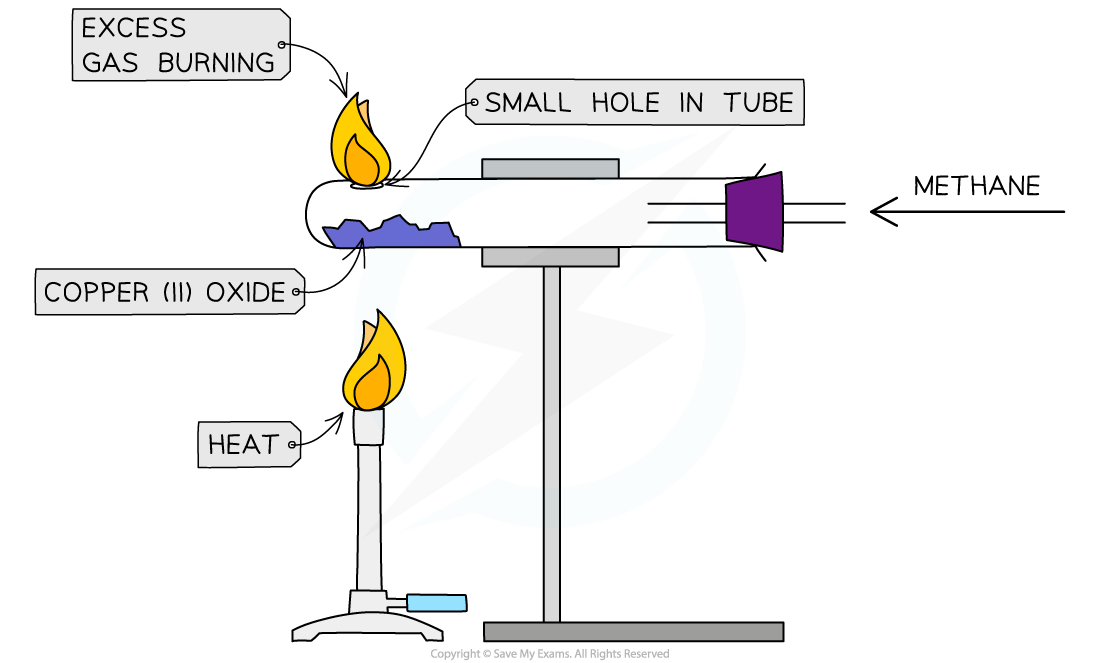
Method:
- Measure mass of the empty boiling tube
- Place metal oxide into a horizontal boiling tube and measure the mass again
- Support the tube in a horizontal position held by a clamp
- A steady stream of natural gas(methane) is passed over the copper(II)oxide and the excess gas is burned off
- The copper(II)oxide is heated strongly using a Bunsen burner
- Heat until metal oxide completely changes colour, meaning that all the oxygen has been removed
- Measure mass of the tube remaining metal powder and subtract the mass of the tube
Results:
Working out empirical formula:
Mass of Metal:
-
Measure mass of the remaining metal powder
-
Mass of Oxygen:
- Subtract mass of the remaining metal powder from the mass of metal oxide
- Step 1 – Divide each of the two masses by the relative atomic masses of elements
- Step 2 – Simplify the ratio:
-
| metal | oxygen | |
|---|---|---|
| mass | a | b |
| moles | a / Mr | b / Mr |
| Ratio | x | y |
- Step 3 – Represent the ratio in the form ‘MxOy‘ E.g, CuO
Was this revision note helpful?