The Marketing Mix: Product (Edexcel IGCSE Business)
An introduction to the marketing mix
Spec point —
4.3.1· The marketing mix
-
The marketing mix provides a framework for businesses to create and implement successful marketing strategies
- Sometimes known as the 'Four P's', it represents the key elements of a marketing strategy: product, price, place, and promotion
- These four components work together to satisfy the needs and wants of a target market while achieving the company's objectives
-
By understanding and manipulating the marketing mix, businesses can differentiate themselves from competitors, maximise marketing impact and achieve long-term success
The four P's of the marketing mix
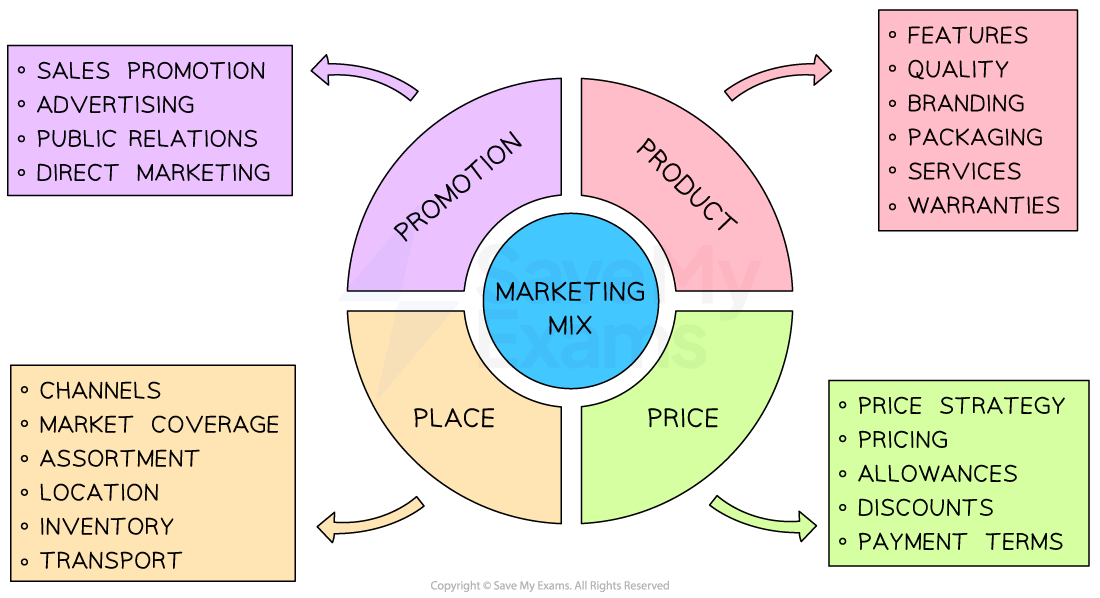
Businesses combine the 4 P's of the marketing mix in appropriate and unique ways to maximise their chances of success
Goods and services
Spec point —
4.3.1· the difference between goods and services
-
Goods are tangible objects that can be handled, used and stored
-
Consumer goods are used by an end consumer
- Durable goods can be used over and over again without wearing out, such as mobile phones, vehicles and beds
- Non-durable goods are consumed soon after they are purchased, such as chocolate bars, deodorant and milk
-
Producer goods are used by businesses to produce other goods, such as tools and office equipment
-
-
Services are intangible actions that cannot be touched, seen or stored
- Personal services are provided for individuals, such as tutoring, hairdressing or travel insurance
- Commercial services are provided to businesses, such as commercial cleaning or specialist recruitment services
-
In some cases, goods are sold with accompanying services
- E.g. Electrical goods such as televisions or computers are sold with product guarantees, or customers can purchase additional insurance
Developing a new product
Spec point —
4.3.1· development of a new product/service
- One way to stay ahead of the competition is by developing new products and innovating existing ones
- The process of new product development involves a number of important stages
The process of new product development
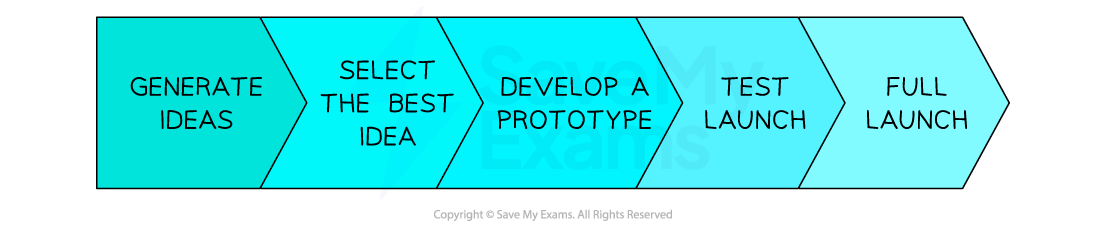
*New product development is a lengthy process that typically involves generating ideas, developing prototypes and test launches prior to the full launch *
- Generate ideas
- New product concepts are discussed and brainstormed using customer suggestions, ideas from competitors’ products, employees’ ideas and information collected through market and technical research
- Select the best idea
- Ideas are weighed up with some dropped and others chosen for further research
- This decision relates closely to costs and likely demand
- Research includes looking into forecast sales, size of market share, and cost-benefit analysis for each product idea
- Develop a prototype
- This allows the operations department to see how the product can be manufactured, any problems or difficulties arising from its production and how to fix them
- Computer simulations are often used to produce 3D prototypes on screen
- Test launch
- The developed product is sold to on a small scale to a limited market to see how well it sells before its full launch
- Changes may be needed prior to an expensive, large scale launch
- Digital products like apps and software run beta versions, which is a method of test-launching
- Full launch of the product
- The finalised version of the product is launched to the entire target market
Costs and benefits of new product development
| Costs | Benefits |
|---|---|
| - Market research collection and analysis regarding the new product is time-consuming | - Sell more products/services to existing customers - Making the most of existing relationships is cheaper than finding new customers |
| - Investment in Research and Development and design can be very expensive | - Developing new products **spreads fixed costs **like premises or salaries across a wider range of products |
| - The** costs of producing trial products,** including the costs of wasted materials, can be significant especially if innovative materials/components are used | - Diversifying the products it offers means a business is less reliant on certain customers or markets |
| - Low sales if the target market is wrong or if market or technical research leads to the development of an inappropriate product or service for the market | - Can create a unique selling point by developing a new innovative product for the first time in the market - This USP can be used to charge a high price for the product as well as be used in advertising |
| - Damage to the brand if the new product fails to meet customer needs | - Charge higher prices for new products - Pricing strategies such as price skimming can be used for innovative new products |
Exam Hint In the exam you may be asked to explain why a business might consider introducing new products. Explanation questions do not require you to use the business context in your answer. Give a reason and then make two points of development for that reason.
The importance of packaging
Spec point —
4.3.1· packaging and its importance
-
Packaging is the physical container or wrapping for a product. It is also used for promotion and selling appeal
-
Packaging is normally designed to
- **Present **products in the most practical yet attractive way
- Communicate the quality of the product
- Catch the customer's eye when they shop
- Provide** key information to customers**
- Establish the business brand image
- Protect a product from damage
-
To stand out from the competition and establish a long-lasting relationship with consumers, brands are investing more money than ever before in creative and environmentally friendly packaging designs
- This is becoming increasingly important for businesses as they place a greater emphasis on sustainability and their CSR policies
Examples of memorable packaging
| Apple iPhone | Ferrero Rocher |
|---|---|
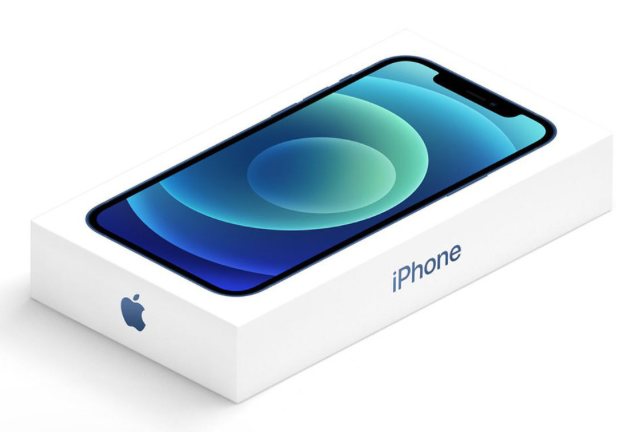 | 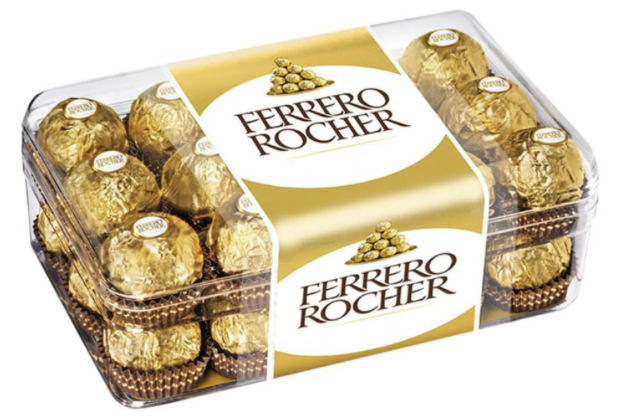 |
| - Apple’s IPhone packaging is designed to open slowly - First customers lift the box top and a moment passes before gravity overcomes a slight vacuum and the bottom slowly descends - One by one, layers within the box are revealed with elements such as cables wrapped like origami | - Each chocolate is wrapped in luxurious gold foil, placed in a fluted paper cup and topped off with a gold-fonted label - Chocolates are arranged and stacked in a clear carrying case with rounded edges ensuring they can be viewed from any angle |
| Tiffany | Pringles |
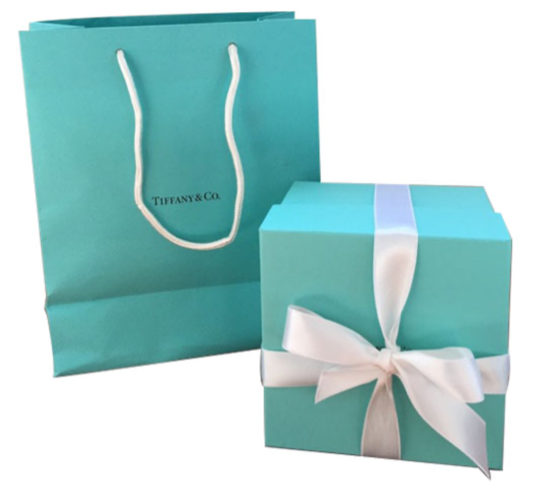 | 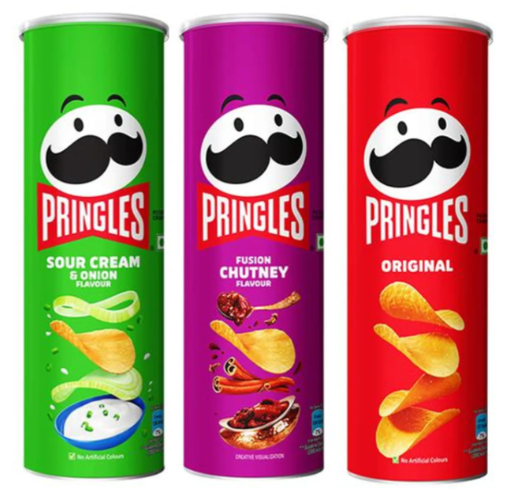 |
| - Tiffany’s packaging - including its iconic Blue Box represents the entire retail enterprise - The colour shade, tissue paper and satin ribbon are protected by trademark and empty boxes and bags are often posted on sites like Etsy or eBay - A small silver and enamel Tiffany Blue Box is now even sold as a wearable charm | - Pringles resealable paperboard tube with a metal base and plastic cap is designed to stand up as well as ensure freshness and prevent damage - Upon his death in 1998 the packaging creator insisted he be buried in a Pringles can as he loved his design so much |
Was this revision note helpful?
Build on this topic