The Concept of Break-even (Edexcel IGCSE Business)
The break-even point
Spec point —
3.3.2· The concept of break-even and calculation of break-even (from formula or diagram): • break-even level of output.
The break-even point
-
The break even point is the number of units a business must sell to reach the point where revenue is equal to total costs
-
At the break even point neither a loss nor a profit is made
- It helps businesses understand the minimum level of sales or output they need to achieve in order to cover all costs
- This helps business managers to make informed decisions about pricing and production volumes
The elements of break-even analysis
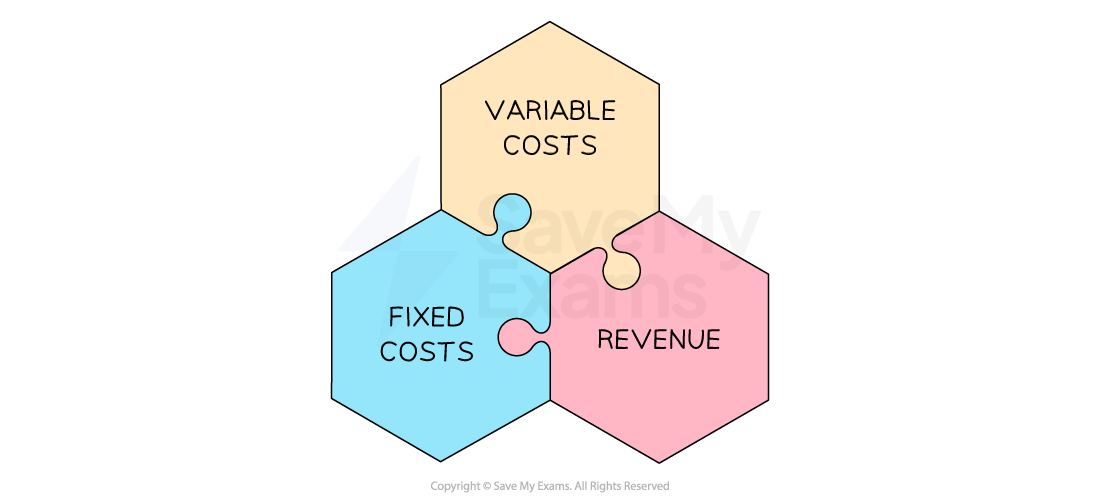
*Variable costs, fixed costs and sales revenue are all used in calculating the break-even point *
-
Fixed costs are costs that do not change regardless of the level of production or sales
- E.g. rent, salaries and insurance
-
Variable costs are costs that vary with the level of production or sales
- E.g. raw materials, direct labour costs, packaging and shipping costs
-
Revenue is the money earned from selling products/service and is calculated using the formula
-
In order to calculate the break even point the contribution per unit is needed
- Contribution is the difference between the selling price per unit and the variable costs per unit
- It is calculated using the formula
Exam Hint In some cases you may need to work out what the selling price is in order to calculate contribution
The selling price per unit is calculated using the formula
Was this revision note helpful?
Build on this topic