The Importance of Good Communication (Edexcel IGCSE Business)
Benefits of effective communication
Spec point —
2.1.1· Importance of good communication
-
Effective communication means that the information or message being sent is received, understood and acted upon in the way intended
-
Effective communication should be
- Clear and unambiguous
- Appropriate to the context and to the sender
- Sent to the correct receiver in an accessible format
- Timely and contain only the required amount of detail
-
Effective communication is important to any business as it affects many key stakeholders including employees, managers, suppliers and customers
-
Overall, effective communication helps a business meet it's objectives by making it e asier to control and coordinate business activity
- As poor communication leads to higher costs, demotivated workers and a lack of cooperation, it is essential businesses establish effective communication channels
The importance of good communication
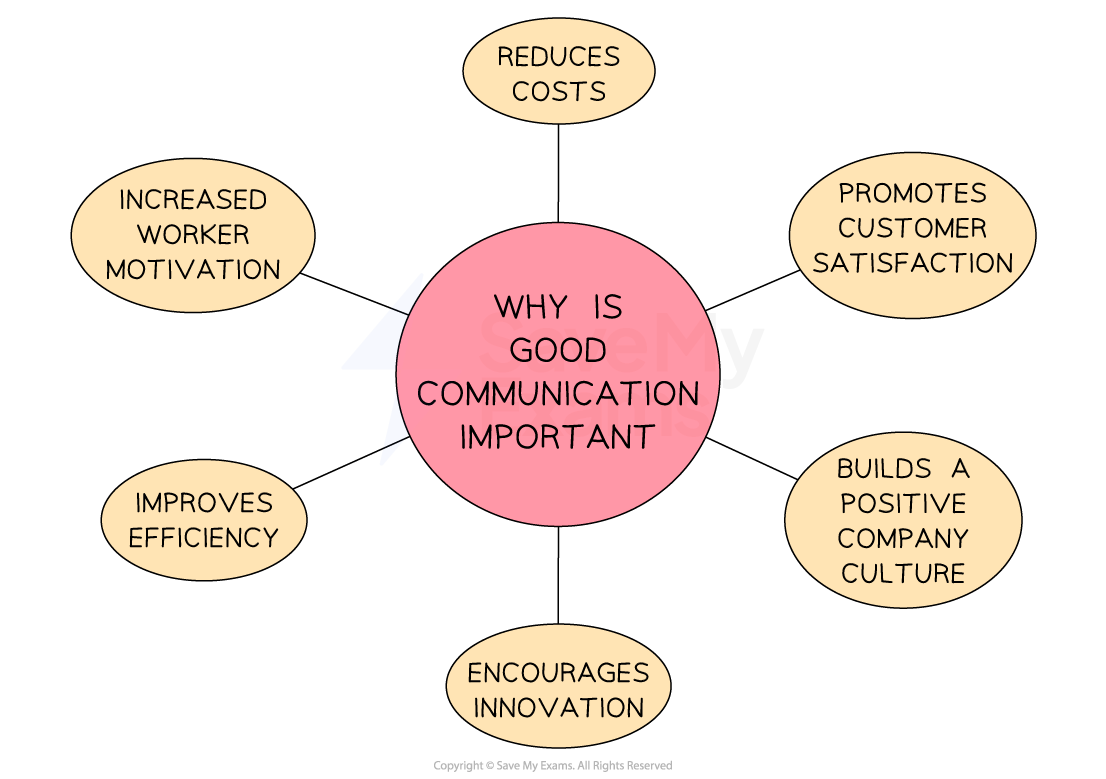
Effective communication prevents problems from arising and builds a positive culture
Increased worker motivation
-
Improved employee involvement in decision-making can significantly boost motivation
- When workers feel their voices are heard, they are more likely to be engaged and committed
- It enables feedback among employees, creating a collaborative environment
- E.g. UK bus company Stagecoach introduced Blink, an instant messaging and a reward system, which improved communication across the company - employee satisfaction rose by 32% and staff turnover decreased by 26%
Improves efficiency
-
Clear and complete communication supports better decision-making, as decisions are based on more accurate information
-
Employees who understand their roles and tasks thoroughly can work more efficiently and productively
- E.g. TED, known for its brief and impactful talks, limits meetings to just 18 minutes as research has shown that longer meetings reduce attention and productivity
Encourages innovation
-
Open communication encourages employees to ask questions, share ideas, and seek help when needed
- This openness promotes creativity and can lead to innovative solutions within the business
- E.g. at 3M, employees are encouraged to spend 15% of their time collaborating with colleagues. This policy fosters a culture of idea-sharing and innovation
Builds a positive company culture
-
Good communication helps individuals understand their roles and responsibilities
-
It also encourages teamwork and cooperation, contributing to a supportive workplace atmosphere
- E.g. Zappos keeps employees informed with timely updates, demonstrating transparency. This honest communication fosters a positive culture, as employees value openness from management.
Reduces costs
-
Effective communication minimises errors, which in turn reduces costs
- Communication tools such as email or messaging platforms are often low-cost and easy to implement
- E.g. Starbucks views employees as brand ambassadors and emphasises communication between staff and management. This approach reduces turnover and boosts product quality, helping to lower operational costs
Promotes customer satisfaction
-
Maintaining regular and meaningful communication with customers helps build strong relationships, which can lead to increased sales and brand loyalty
- E.g. Lidl Ireland supports Women’s Gaelic Football as part of its PR strategy
- This initiative demonstrates a commitment to Irish culture, helping the company connect with and retain customers in Ireland
Problems of ineffective communication
Spec point —
2.1.2· problems of ineffective communication and how they can be removed
-
Ineffective communication occurs if communication is not received or understood properly
- This may reduce business efficiency and increase mistakes or wastage
-
Ineffective communication may also confuse customers or stop them receiving a message
- This can negatively impact a business’ sales and profitability
-
Many businesses invest heavily in trying to improve communication in and outside of the business to experience all of the benefits that good communication provides
- E.g. more motivated employees
The effects of poor communication
| Less motivated employees | Increasing costs |
|---|---|
| - If workers feel less informed about their role or tasks, they may feel less motivated - This can cause a decrease in productivityand lack of morale - In the longer term, labour absenteeism and labour turnover may increase | - Delayed projects, increasing defects and a lack of co-operation amongst staff are all examples of factors that can cause rising costs for a business - Ineffective communication can have a significant impact on costs, lowering profits and effecting overall business performance |
| Inefficiency | Inaccuracy |
| - If messages are delayed or not sent to the right receiver, decision making and processes will slow down - This can lead to a rise in costs and potentially missed opportunities for the business - E.g. a business may be too late to secure a deal with a new supplier due to poor communication | - Inaccurate information can lead to mistakes being made such as products of a poorer quality or a compromise to customer safety - E.g. miscommunications between colleagues may lead to some safety checks for a new toy being missed or rushed |
Exam Hint In your exam you may need to explain one reason why poor communication causes problems for business. These questions are worth 3 marks. The table above provides a good structure for your response.
Example
Poor communication leads to inefficiency in a business. If messages are delayed, or not sent to the correct receiver, decision-making can be slowed down. This might mean a business misses opportunities such as securing a deal with a new supplier.
Was this revision note helpful?
Build on this topic