The Impact of the Internet on Location Decisions (Edexcel IGCSE Business)
E-commerce and location decisions
Spec point —
1.4.1· the impact of the internet on location decisions - e-commerce and/or fixed premises
-
E-commerce involves the buying and selling of goods and services online
- Some businesses sell goods online as well as operate physical stores
- Small businesses have the ability to reach international customers by selling products online
- E-commerce has grown significantly in recent decades
E-commerce sales growth in some countries in 2023
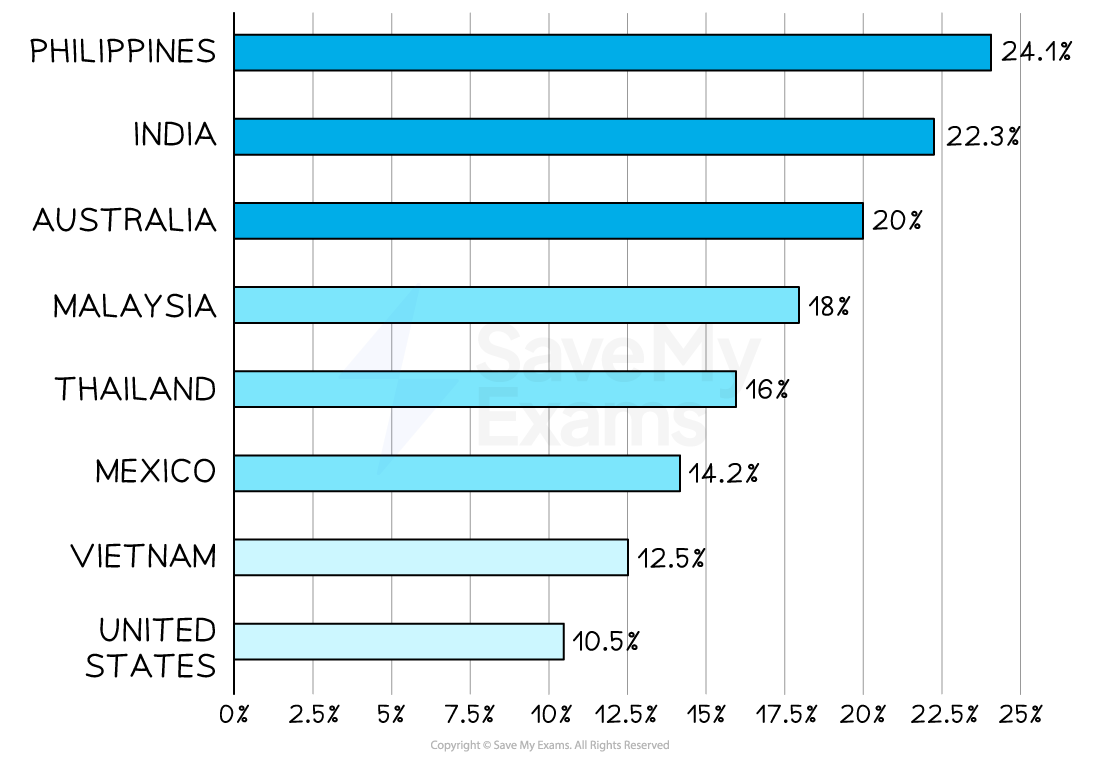
E-commerce sales grew significantly in 2023, requiring many businesses to reconsider their location needs (Source: Statista)
Factors for e-commerce businesses to consider
Lower business costs
-
Business costs are likely to be reduced as smaller premises in lower-profile areas are usually cheaper to rent or buy
- High-profile premises are less important than for physical stores as they do not rely on foot traffic
Cost and availability of labour
- Businesses with remote workers may only require a small hub, with workers requiring online access
- Experienced call centre and sales staff may be needed
Proximity to transport infrastructure
-
Products ordered online need to be delivered efficiently to customers
- Location close to highways, rail networks or logistics partners is a key consideration
Reliable IT infrastructure and power
-
Remote workers need to have access to good communications infrastructure, such as high-speed broadband, in their homes
-
Businesses in areas prone to power outages may struggle to maintain their online services
-
Many governments are prioritising the improvement of communication systems
- E.g. Sweden’s national broadband plan aims for all households and businesses to have access to high-speed broadband by 2025
Exam Hint You could be asked to outline a benefit of e-commerce to a particular business. Outline questions require you to use the business context in your answer. A useful structure is to state A benefit, Business Reason, Consequence, or A → B → C.
Was this revision note helpful?
Build on this topic