Leaf Adaptations for Gas Exchange (Edexcel IGCSE Biology)
Leaf Structure
Spec point —
2.42B· understand how the structure of the leaf is adapted for gas exchange
- The structure of the leaf is adapted to carry out both photosynthesis and gas exchange
- The different cell types (palisade mesophyll, spongy mesophyll etc.) and tissues are arranged in a specific way to facilitate these processes
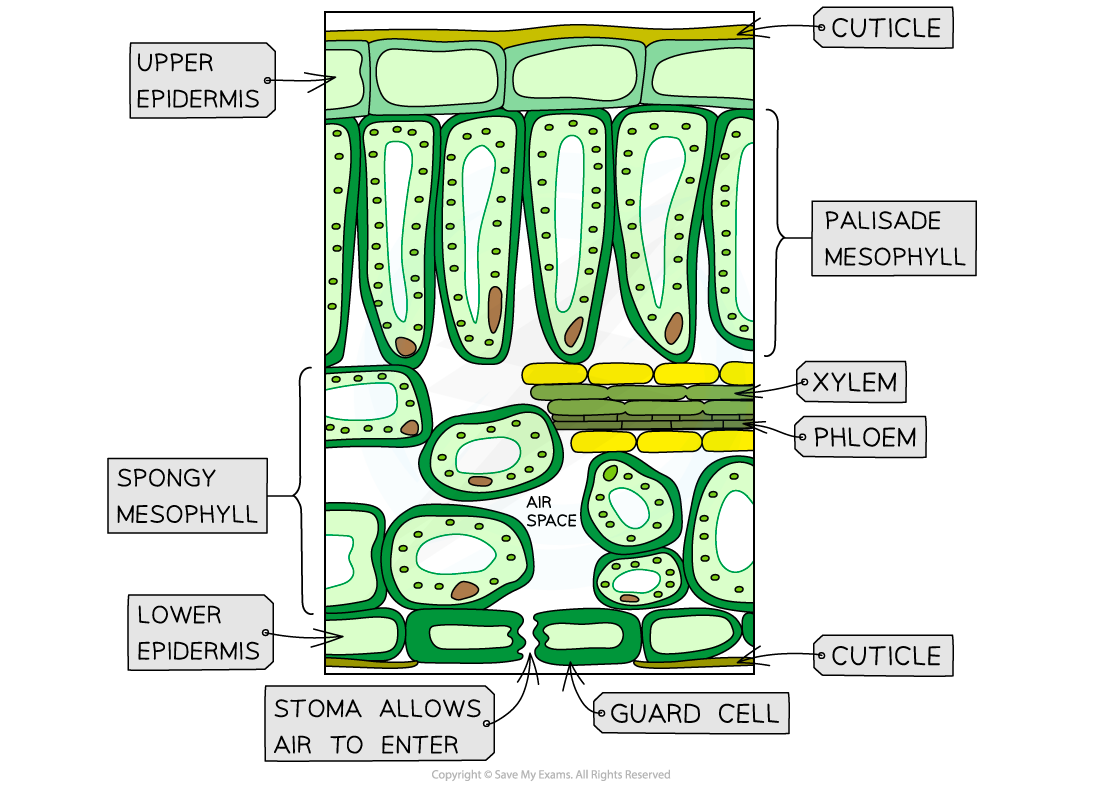
The cross-section of a leaf
Leaf structure and gas exchange
-
Leaves are adapted to maximise gas exchange
-
There are three key gases involved in gas exchange in the leaf:
- Carbon dioxide - released in respiration but used in photosynthesis
- Oxygen - released in photosynthesis but used in respiration
- Water vapour - released in respiration and transpiration
-
The route of diffusion of carbon dioxide into the leaf can be seen in the diagram below
-
Gases will always diffuse down a concentration gradient (from where there is a high concentration to where there is a low concentration)
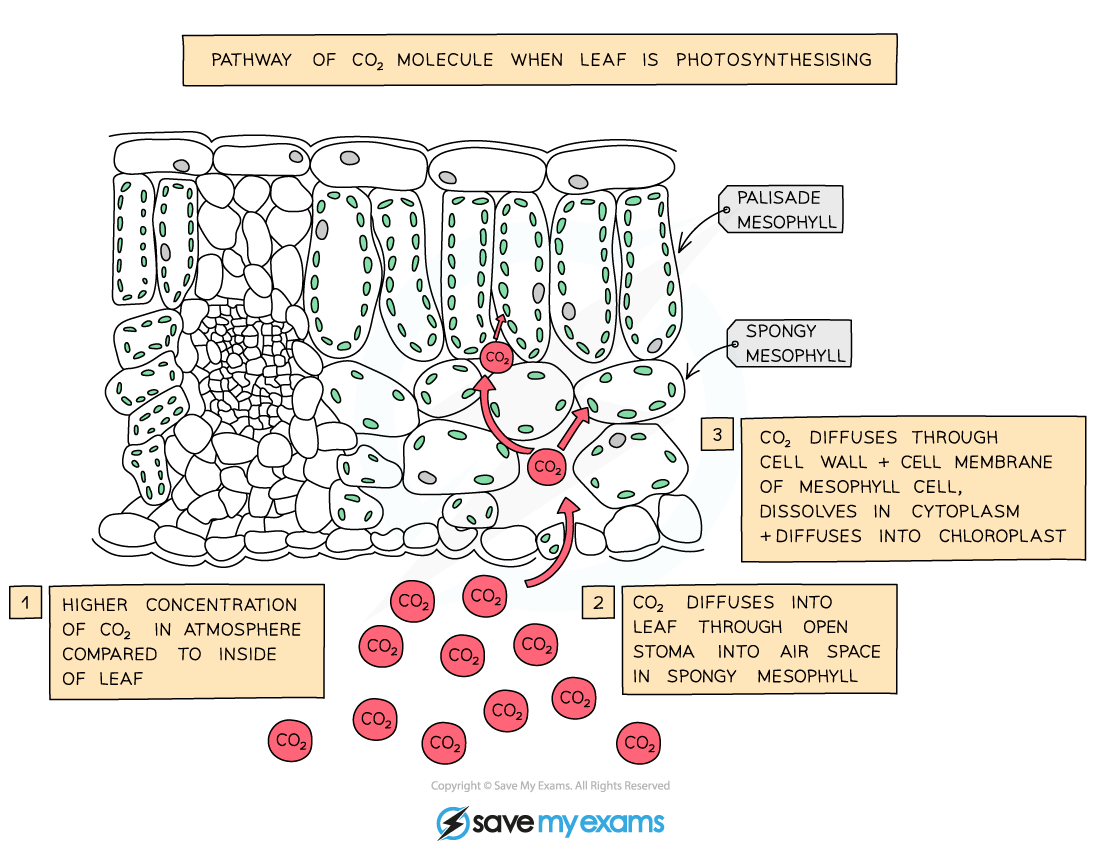
Pathway of carbon dioxide from atmosphere to chloroplasts by diffusion.
atmosphere → air spaces around spongy mesophyll tissue → leaf mesophyll cells → chloroplast
Adaptations of the whole leaf for gas exchange
-
Adaptations of leaves to maximise gas exchange:
- They are thin which gives a short diffusion distance
- They are flat which provides a large surface area to volume ratio
- They have many stomata which allow movement of gases in and out of the air spaces by diffusion
-
Other adaptations of the internal leaf structure/tissues include:
- Air spaces to allow gas movement around the loosely packed mesophyll cells
- Many stomata in the lower epidermis open in sunlight to allow gas movement in and out of the leaf
- Thin cell walls allow gases to move into the cells easily
- Moist air which gases can dissolve into for easier movement into and out of cells
- The close contact between the cells and the air spaces allows efficient gas exchange for photosynthesis and respiration
Stomata
Spec point —
2.43B· describe the role of stomata in gas exchange
-
Stomata are spaces found between two guard cells predominantly on the lower epidermis of the leaf
-
The guard cells open and close the stomatal pore, controlling gas exchange and water loss
-
Stomata open when water moves (by osmosis) into the guard cells causing them to become turgid
- This allows gases to diffuse in and out of the leaf through the stomatal pore
- Stomata tend to open when there is plenty of water and sunlight
-
Stomata close when the guard cells lose water (by osmosis) to the neighbouring epidermal cells and they become flaccid
- This prevents any diffusion into or out of the leaf
- Stomata tend to close due to low water availability or low sunlight
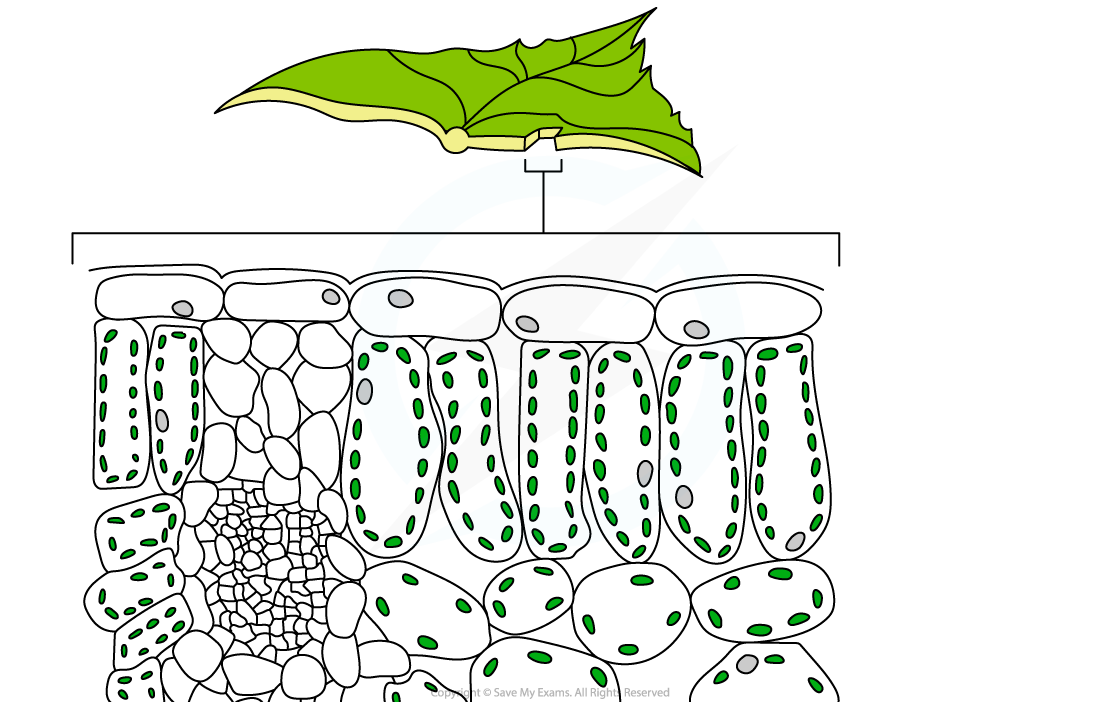
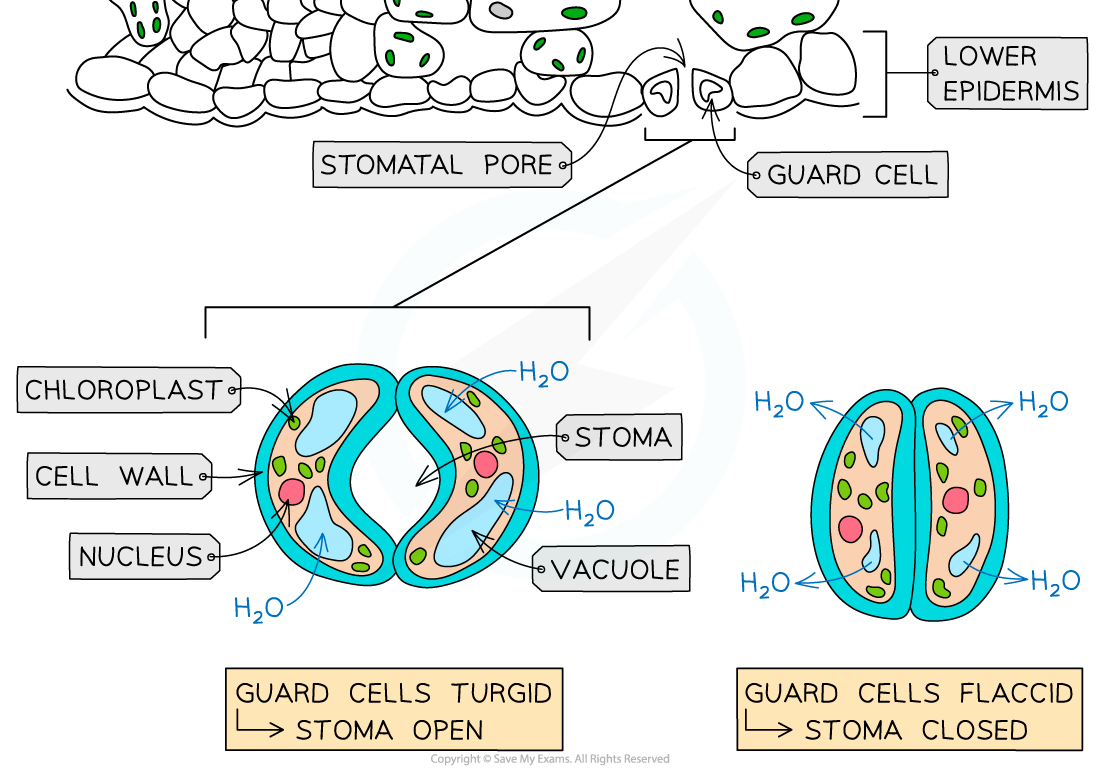
The guard cells control the opening and closing of the stomata
Was this revision note helpful?
Build on this topic