The Day Books (Edexcel IGCSE Accounting)
Purpose of Books of Original Entry
Spec point —
IGCSE_ACCOUNTING:S2.131
What are books of original entry?
-
Books of original entry are used to record the details of a transaction
-
Other terminology for these books includes
- Subsidiary books
- Books of prime entry
-
-
Information is taken from the business documents and entered into the books of original entry
-
The details are then transferred from the books of original entry to the ledger accounts
-
The seven books of original entry are:
- Sales day book
- Purchases day book
- Sales returns day book
- Purchases returns day book
- Cash book
- Petty cash book
- Journal
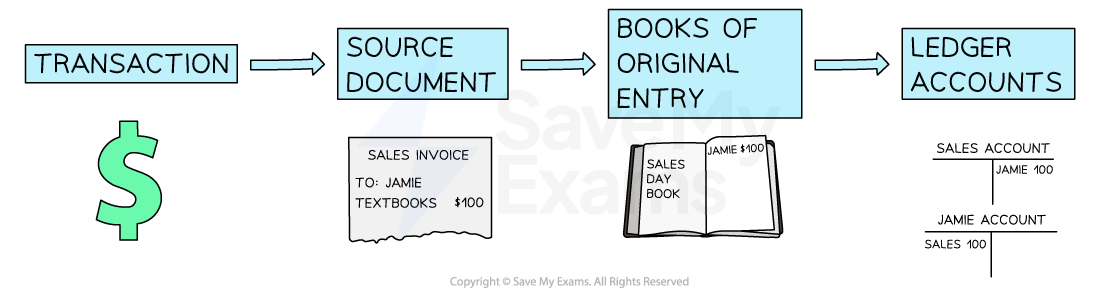
The accounting process
What are the advantages of using books of original entry?
-
Books of original entry are another stage which can be used to check for errors
- They can help in the preparation of control accounts to check the accuracy of the ledger accounts
-
Each book of original entry collects the same type of transaction
- The books allow managers to see the totals for different types of transactions easily
- Therefore, there are fewer entries in some of the ledger accounts
-
Bigger businesses may have multiple bookkeepers
- Different bookkeepers can be responsible for different books of original entry without any risk of work being duplicated or missed
Sales Day Book
Spec point —
IGCSE_ACCOUNTING:S2.132
What is the sales day book?
-
The sales day book is a record of all credit sales
-
Cash sales are not recorded in the sales day book
- They are recorded directly into the cash book
-
-
It contains:
-
The dates of sales
-
The names of the credit customers
-
The amounts for each of the sales
- The amounts should be after trade discounts have been applied to the list prices
-
-
The bookkeeper uses the sales invoices to enter the information into the sales day book
-
The totals are transferred to the ledger accounts at regular intervals
-
Credit the sales account with the total
- Call this entry “Sales day book”
-
Debit the individual trade receivables accounts
-
Exam Hint If a sales day book is used, only one entry is made to the sales account at the end of a given period rather than separate entries for each individual sale.
If a question does not mention a sales day book, enter the individual transactions into the sales account and label them with the names of the trade receivables.
Sales Returns Day Book
Spec point —
IGCSE_ACCOUNTING:S2.132
What is the sales returns day book?
-
The sales returns day book is a record of all the returns from credit customers
-
It contains:
- The dates of the returns
- The names of the credit customers
- The amounts for each of the returns
-
The bookkeeper uses the credit notes that were issued to enter the information into the sales returns day book
-
The totals are transferred to the ledger accounts at regular intervals
-
Debit the sales returns account with the total
- Call this entry “Sales returns day book”
-
Credit the individual trade receivables accounts
-
Exam Hint If a sales returns day book is used, only one entry is made to the sales returns account at the end of a given period rather than separate entries for each individual return.
Purchases Day Book
Spec point —
IGCSE_ACCOUNTING:S2.132
What is the purchases day book?
-
The purchases day book is a record of all credit purchases
-
Cash purchases are not recorded in the purchases day book
- They are recorded directly into the cash book
-
Purchases of non-current assets are not recorded in the purchases day book
- They are recorded in the journal
-
-
It contains:
- The dates of the purchases
- The names of the credit suppliers
- The amounts for each of the purchases
-
The bookkeeper uses the purchase invoices to enter the information into the purchases day book
-
The totals are transferred to the ledger accounts at regular intervals
-
Debit the purchases account with the total
- Call this entry “Purchases day book”
-
Credit the individual trade payables accounts
-
Exam Hint If a purchases day book is used, only one entry is made to the purchases account at the end of a given period rather than separate entries for each individual purchase.
If a question does not mention a purchases day book, enter the individual transactions into the purchases account and label them with the names of the trade payables.
Purchases Returns Day Book
Spec point —
IGCSE_ACCOUNTING:S2.132
What is the purchases returns day book?
-
The purchases returns day book is a record of all the returns to credit suppliers
-
It contains:
- The dates of the returns
- The names of the credit suppliers
- The amounts for each of the returns
-
The bookkeeper uses the credit notes that were received to enter the information into the purchases returns day book
-
The totals are transferred to the ledger accounts at regular intervals
-
Credit the purchases returns account with the total
- Call this entry “Purchases returns day book”
-
Debit the individual trade payables accounts
-
Exam Hint If a purchases returns day book is used, only one entry is made to the purchases returns account at the end of a given period rather than separate entries for each individual return.
Worked Example Jeff is a sole trader. In February 2024, the following transactions took place.
Feb 1 Bought goods on credit from Samson, $500 3 Bought goods on credit from Helina with a 10% trade discount, list price $300 6 Returned goods to Samson, $50 7 Paid $250 to Samson by credit transfer 10 Bought goods using cash from Jimmy, $70 15 Bought goods on credit from Samson, $400 18 Sold goods on credit to Jasper, $180 28 Returned goods to Samson, $100 Prepare the purchases day book and the purchases returns day book for February 2024. Total the day books on 29 February 2024, and indicate the ledger account to which the total would be posted.
Answer
Feb 1 > Purchases day book: $500 Samson 3 Find the discount given by Helina: 10% x $300 = $30
*Find the amount Jeff owes Helina: *$300 - $30 = $270
> Purchases day book: $270 Helina6 > Purchases returns day book: $50 Samson 7 > Neither day book: it is a payment, not a purchase or return
This would go in the cash book10 > Neither day book: it is a cash purchase
This would go in the cash book15 > Purchases day book: $400 Samson 18 > Neither day book: it is a credit sale
This would go in the sales day book28 > Purchases returns day book: $100 Samson Final answer: Purchases Day Book
Final answer: Date Final answer: Details Final answer: $ Final answer: Feb 1 Final answer: Samson Final answer: 500 Final answer: Feb 3 Final answer: Helina Final answer: 270 Final answer: Feb 15 Final answer: Samson Final answer: 400 Final answer: Feb 29 Final answer: Transfer to purchases account Final answer: 1 170 Final answer: Purchases Returns Day Book
Final answer: Date Final answer: Details Final answer: $ Final answer: Feb 6 Final answer: Samson Final answer: 50 Final answer: Feb 28 Final answer: Samson Final answer: 100 Final answer: Feb 29 Final answer: Transfer to purchases returns account Final answer: 150
Was this revision note helpful?
Build on this topic