Resistance & Illumination (Edexcel IAL Physics)
Modelling the Variation of Resistance with Illumination
Spec point —
80
- Light can cause a change in conductivity of some semi-conductors
- When light is absorbed by the material it causes more electrons to be available for conduction
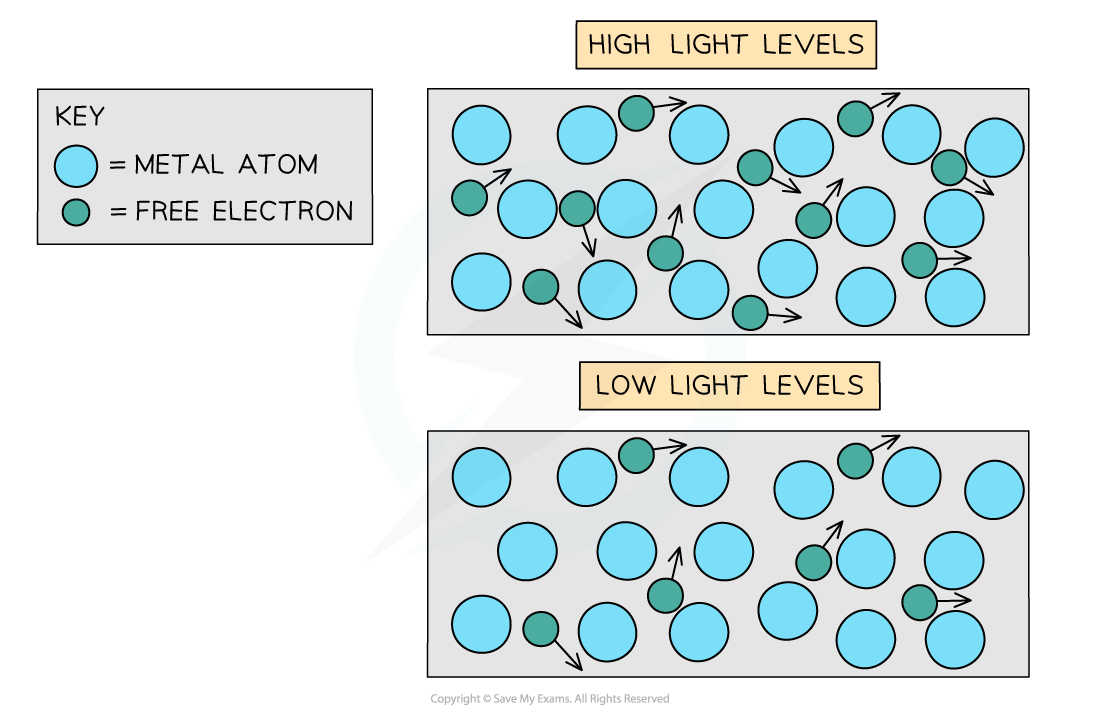
- An increase in the number of conduction electrons reduces the resistance
Resistance & Illumination for LDRs
Spec point —
80
- A light-dependent resistor (LDR) is a non-ohmic conductor and sensory resistor
- Its resistance automatically changes depending on the light energy falling onto it (illumination)
- As the light intensity increases, the resistance of an LDR decreases
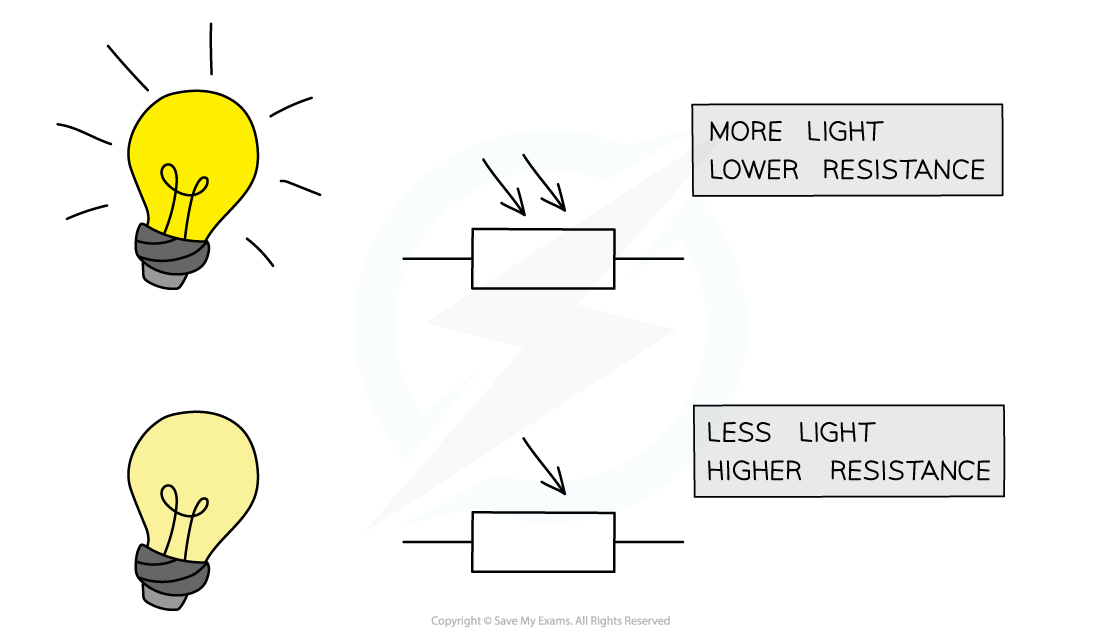
Resistance of an LDR depends on the light intensity falling on it
- This is shown by the following graph:
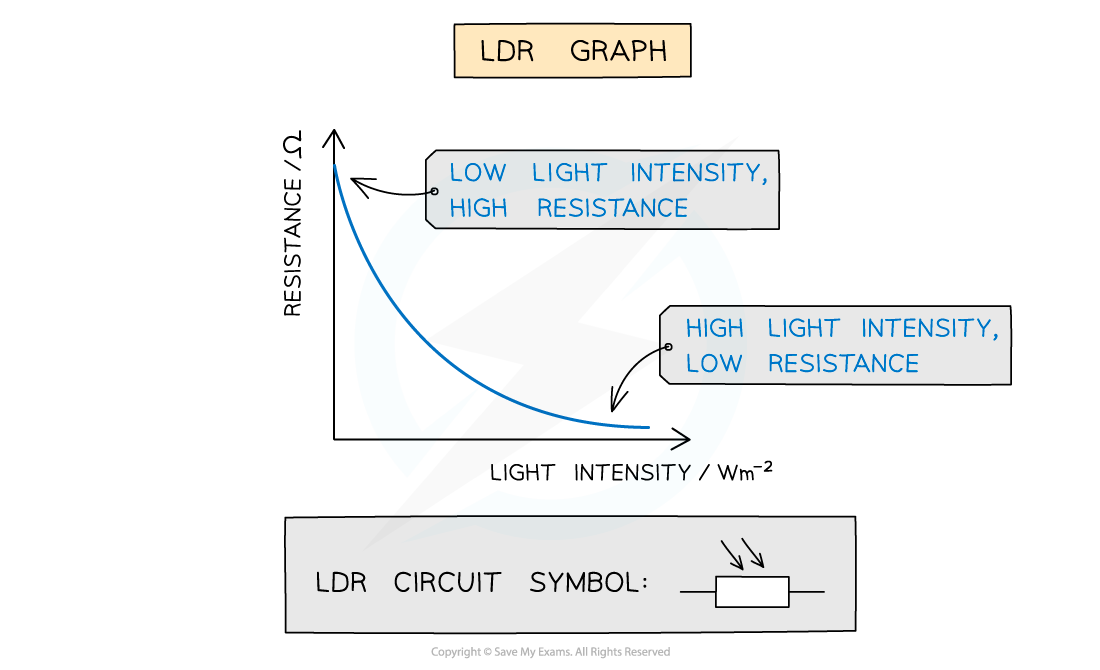
Graph of light intensity and resistance for an LDR
-
LDRs can be used as light sensors, so, they are useful in circuits which automatically switch on lights when it gets dark, for example, street lighting and garden lights
- In the dark, its resistance is very large (millions of ohms)
- In bright light, its resistance is small (tens of ohms)
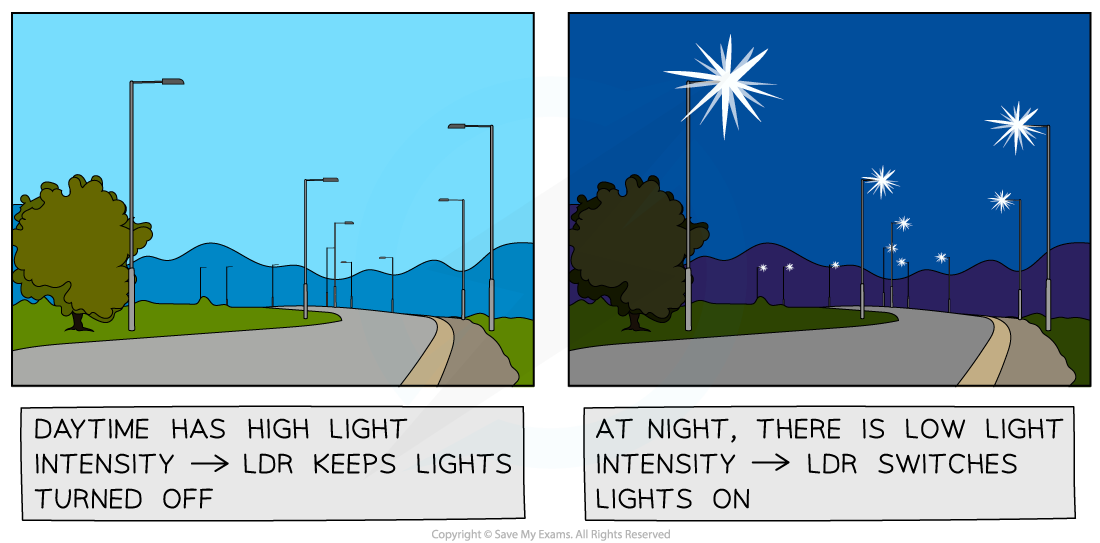
LDRs are used for automatic street lights
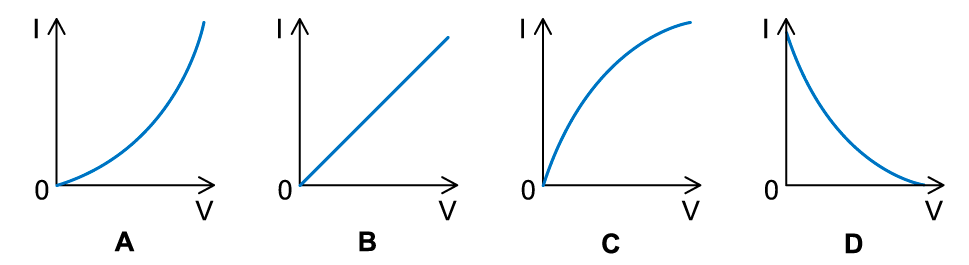
Worked Example The graphs show various possible relationships between current and voltage through a component.
Which graph best represents the relationship between the current and voltage of an LDR?
Step 1: Consider the relationship between light intensity and resistance
- As light intensity increases, resistance decreases in an LDR
- If the resistance decreases then the potential difference will increase
Step 2: Consider a relevant equation
Ohm’s law states that V= IR
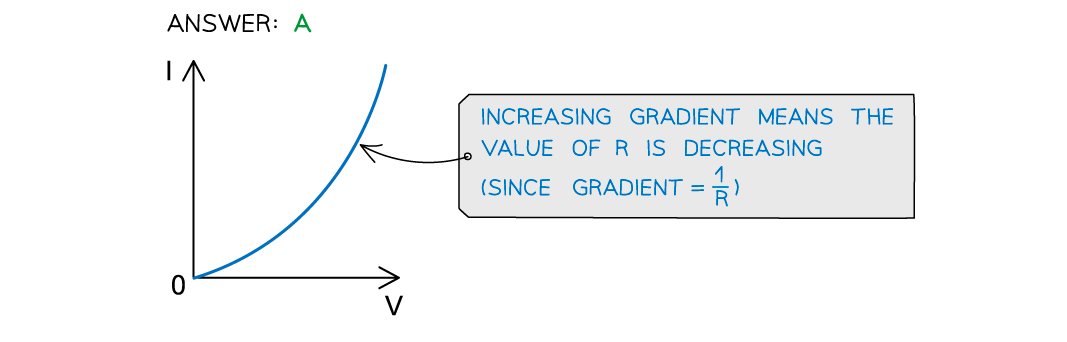
The resistance is equal to V/I or 1/R = I/V = gradient of the graph
- Since R decreases, the value of 1/R increases, so the gradient must increase
Step 3: State the conclusion
- Therefore, I increases with changing V with an increasing gradient
- This is seen in graph A
Was this revision note helpful?
Build on this topic