e & ln (Edexcel IAL Maths)
"e"
Spec point —
3.1
What is the number "e" in maths?
-
e is an irrational number, sometimes called Euler's number
- e ≈ 2.718
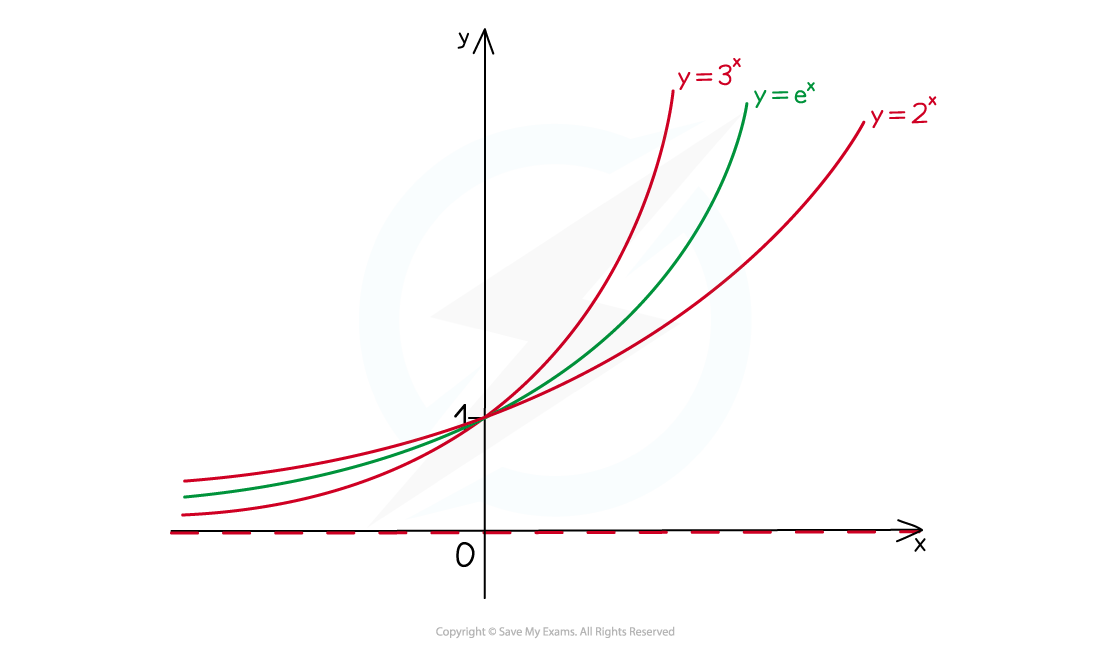
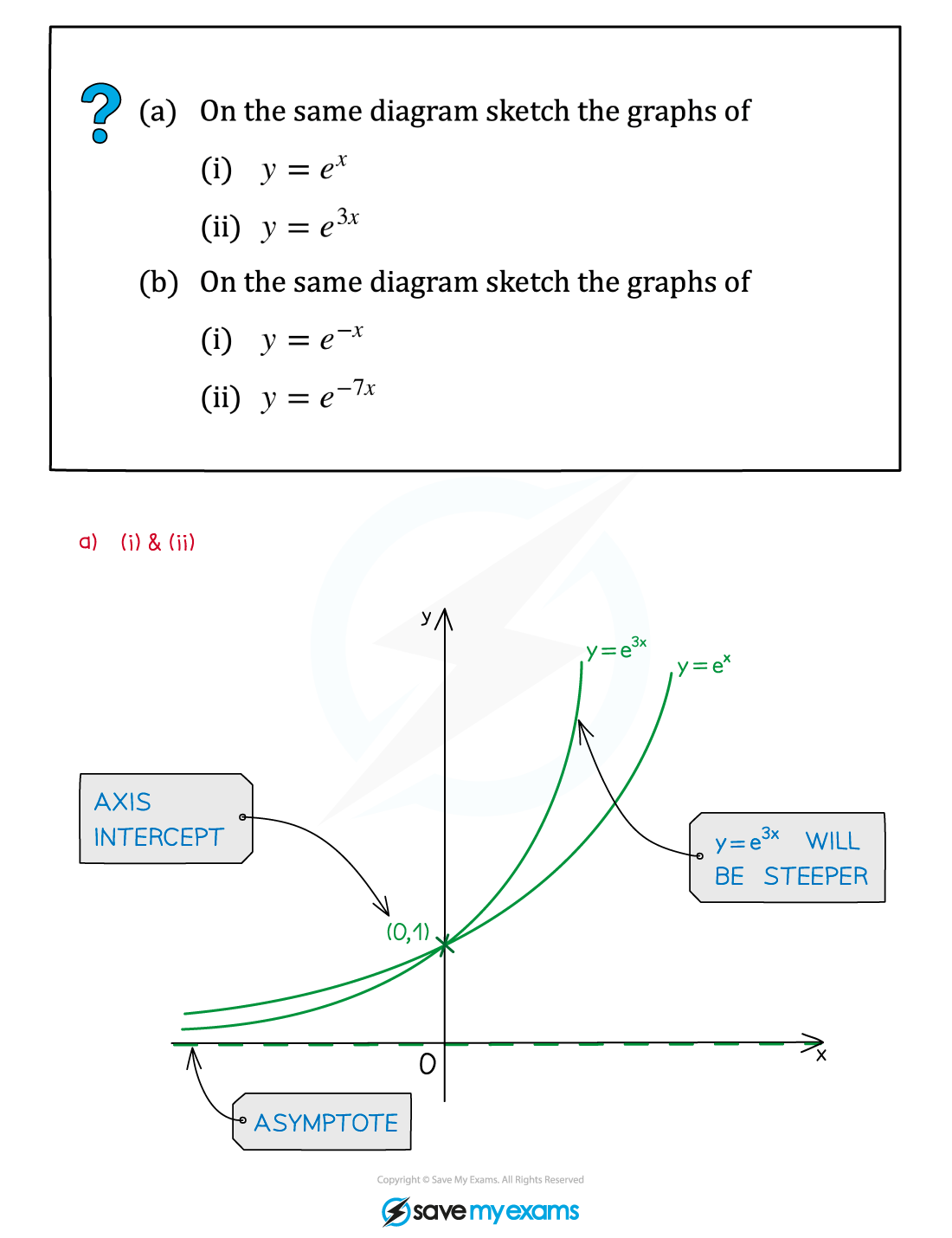
How do I sketch y = ex?
-
As other exponential graphs do, y = ex
- passes through (0, 1)
- has the x-axis as an asymptote
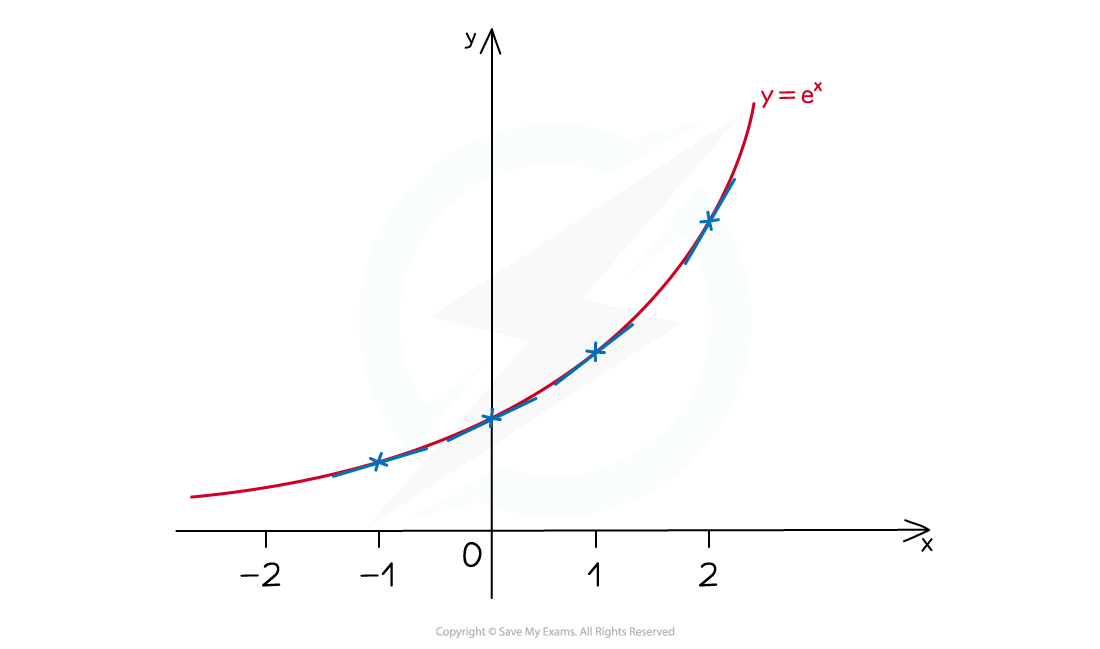
What is the special property of "e"?
-
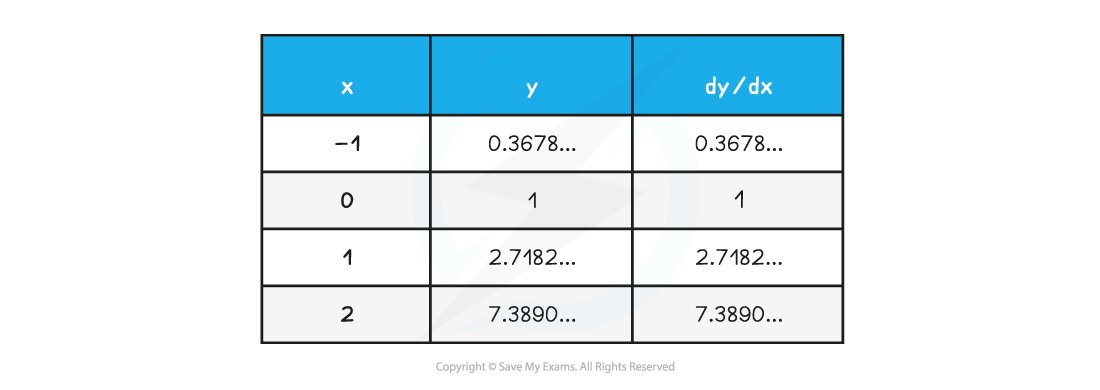
y = ex has the particular property
- dy/dx = ex
- ie for every real number x, the gradient of y = ex is also equal to ex (see Derivatives of Exponential Functions)
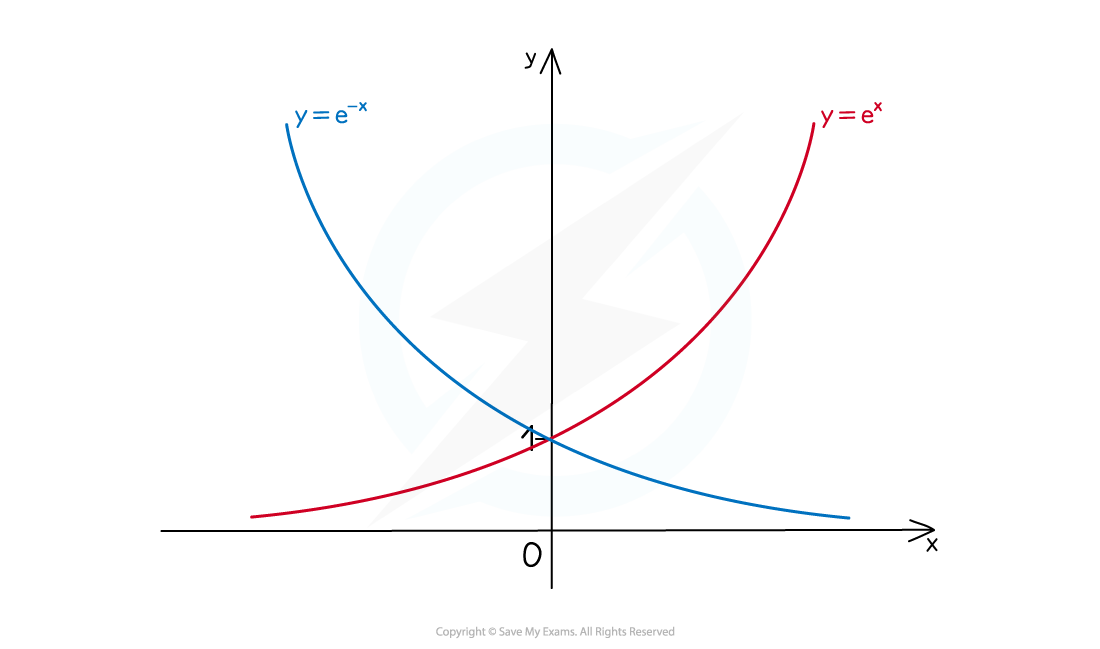
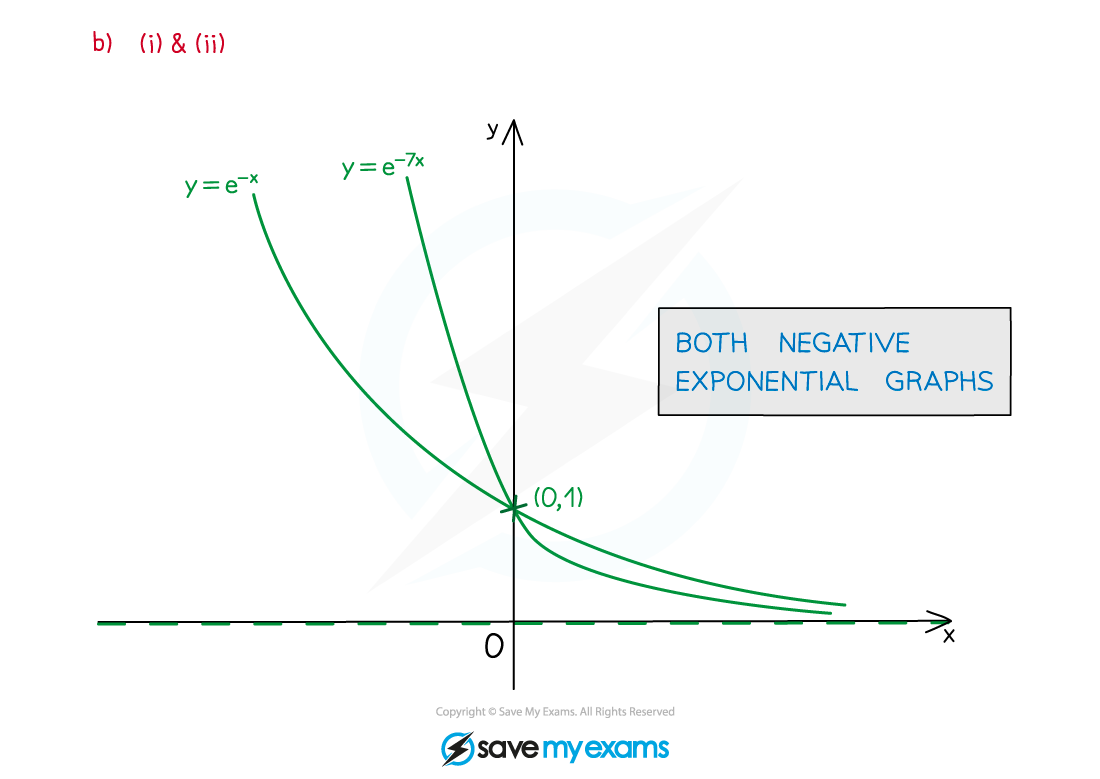
How do I sketch y = e-x?
-
y = e-x is a reflection in the y-axis of y = ex
- They are of the form y = f(x) and y = f(-x) (see Transformations of Functions - Reflections)
What is exponential growth and decay?
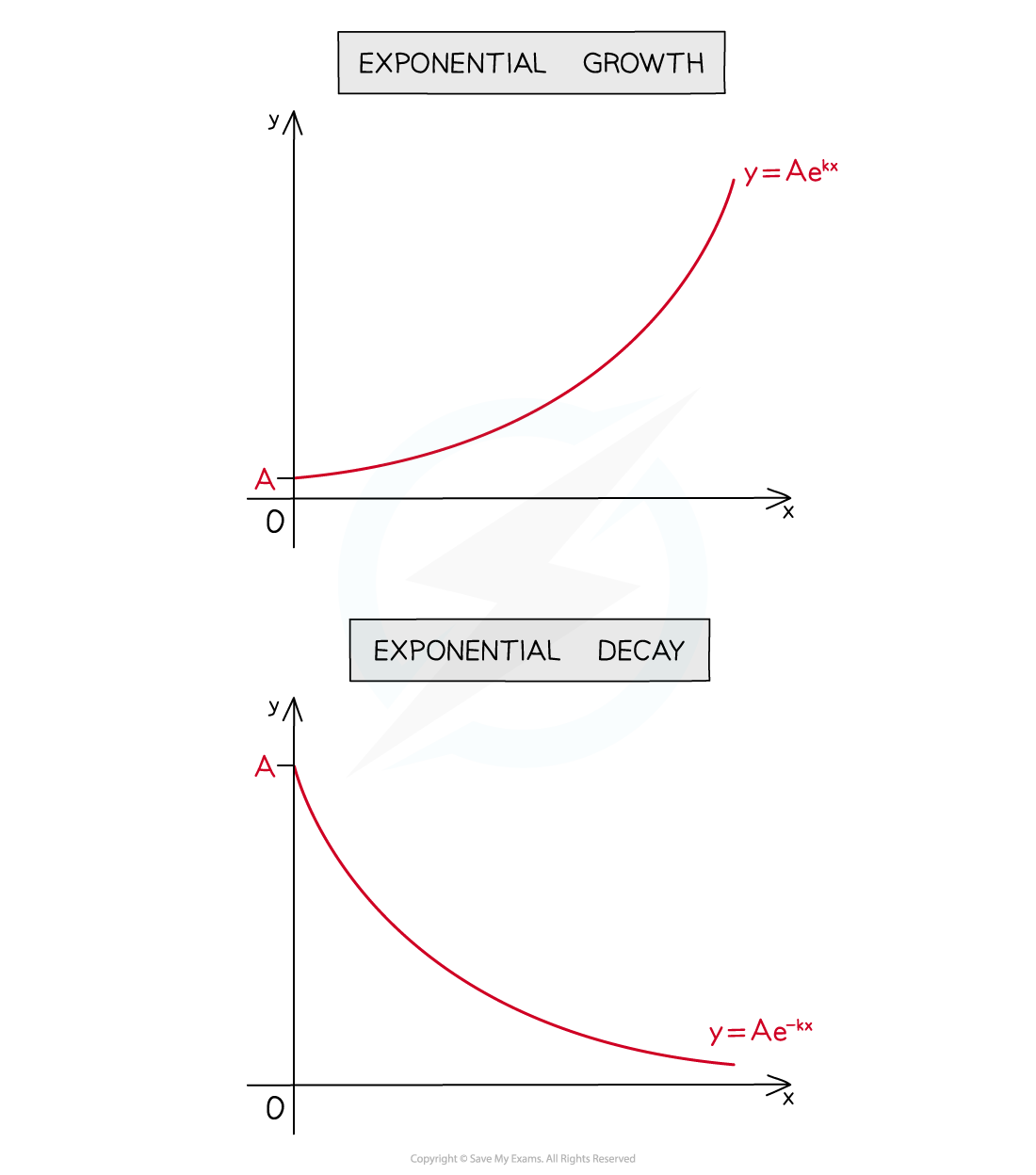
- y = Aekx (k > 0) is exponential growth
- y = Ae-kx (k > 0) is exponential decay
- A is the initial value
- k is a (usually positive) constant
- “-“ is used in the equation making clear whether it is growth or decay
Worked Example
"ln"
Spec point —
3.2
What is ln x?
-
ln is a function that stands for natural logarithm
-
It is a logarithm where the base is the constant "e"
- It is important to remember that ln is a function and not a number
What properties of ln x do I need to know?
-
Using the definition of a logarithm you can see
- is only defined for positive x
-
As ln is a logarithm you can use the laws of logarithms
-
Any logarithm can be written in terms of the natural logarithm using the change of base formula
How do I solve equations involving ex & ln x?
-
The functions and are inverses of each other
- If then
- If then
-
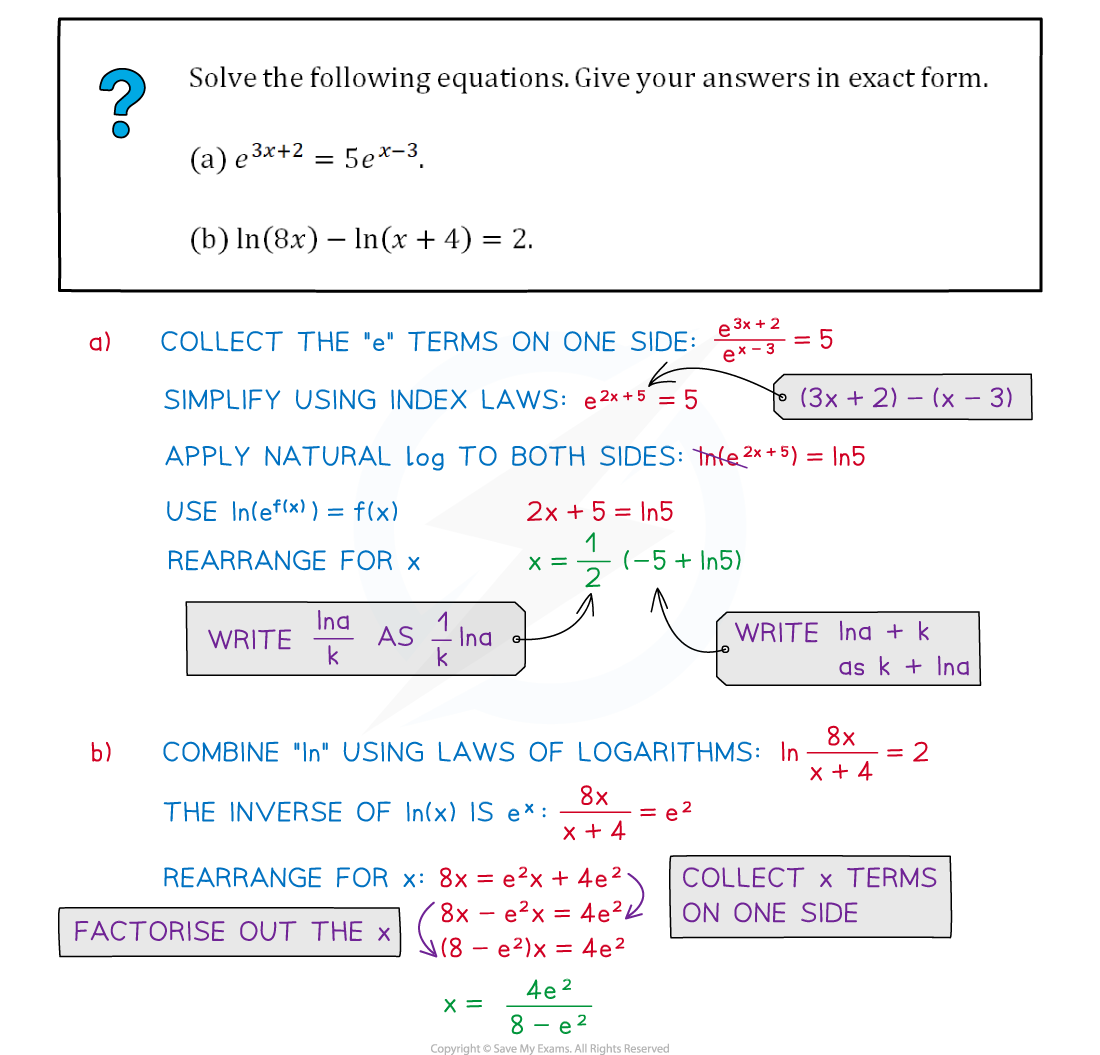
If your equation involves "e" then try to get all the "e" terms on one side
-
If "e" terms are multiplied, you can add the powers
- You can then apply ln to both sides of the equation
-
If "e" terms are added, try transforming the equation with a substitution
- For example: If then
- You can then solve the resulting equation (usually a quadratic)
- Once you solve for y then solve for x using the substitution formula
-
-
If your equation involves "ln", try to combine all "ln" terms together
- Use the laws of logarithms to combine terms into a single term
- If you have then solve
- If you have then solve
Worked Example
Exam Hint
Always simplify your answer if you can
- for example,
- you wouldn't leave your final answer as so don't leave your final answer as
Was this revision note helpful?
Build on this topic