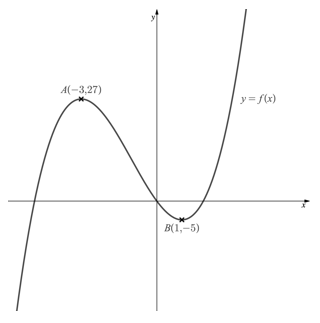
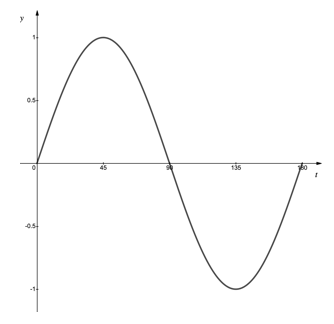
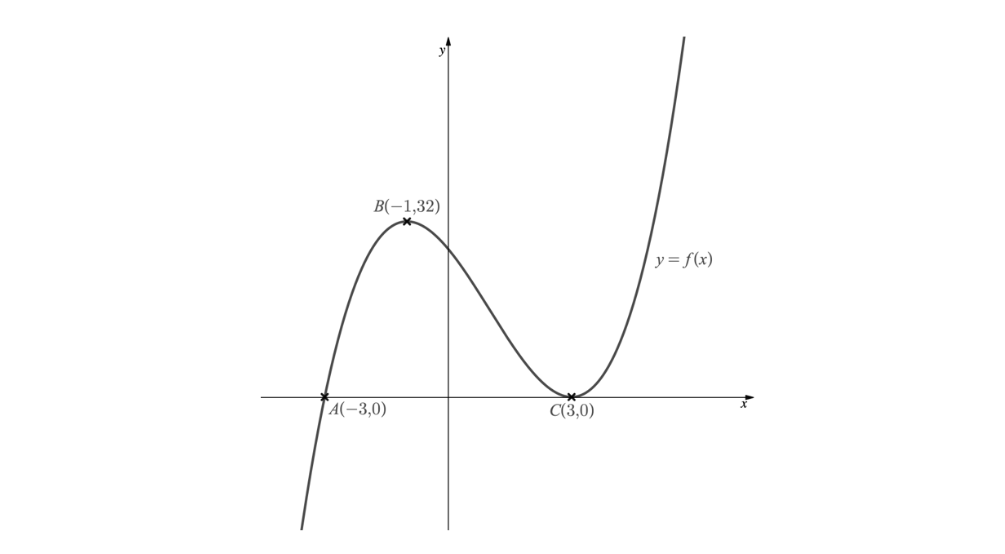
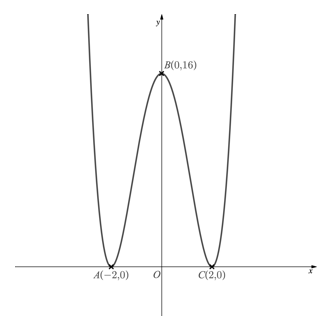
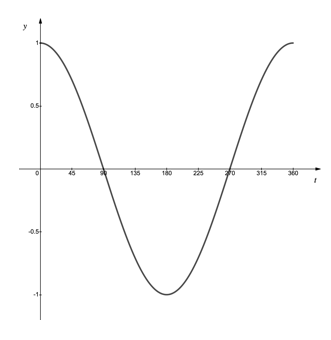
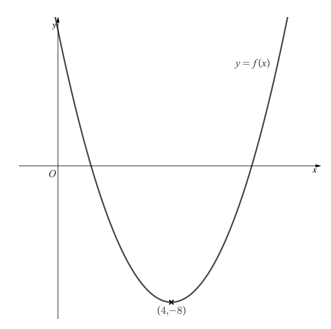
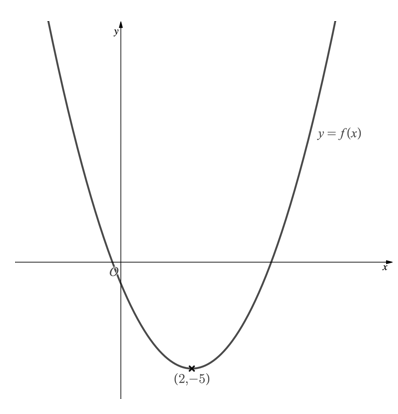
The diagram below shows the graph of .
The stationary point is marked on the diagram.
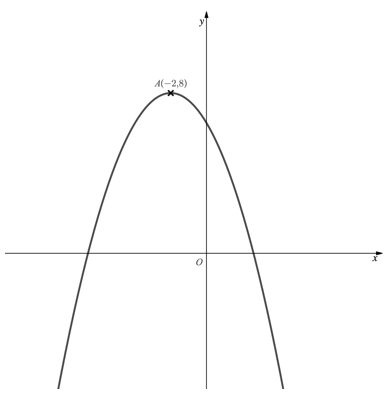
On separate diagrams, sketch the following graphs
(i)
(ii)
On each diagram, state the coordinates of the image of point under the given transformation.
33 questions · 161 marks · ≈ 3 hours
The diagram below shows the graph of .
The stationary point is marked on the diagram.

On separate diagrams, sketch the following graphs
(i)
(ii)
On each diagram, state the coordinates of the image of point under the given transformation.
Given that , find equations, in terms of , for the following transformations:
(i) Translation by
(ii) Horizontal stretch of scale factor 2 followed by a vertical stretch of scale factor 3
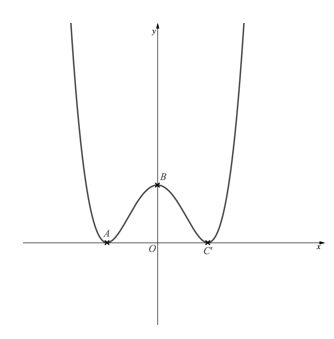
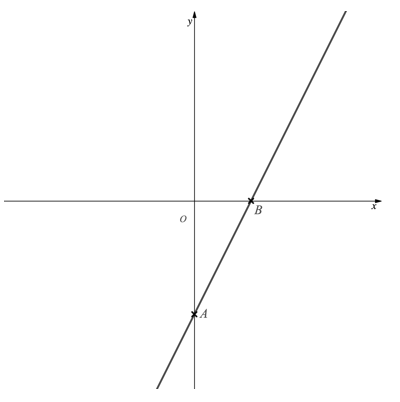
The graph of where is shown below.

Determine the coordinates of the points marked and .
(i) On the diagram above sketch the graph of .
(ii) Determine the coordinates of the image of the points and under the transformation in part (i).
Describe, in order, a sequence of transformations of the graph of given by the following equations:
(i)
(ii)
The function is given as .
On the same diagram, sketch the graphs of and Label the coordinates of the points where each graph crosses the coordinate axes.
(i) Write down an expression for in terms of .
(ii) Find an expression for in terms of and state the type of transformation this would be.
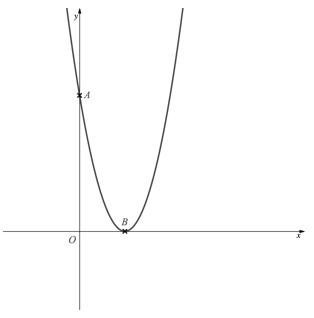
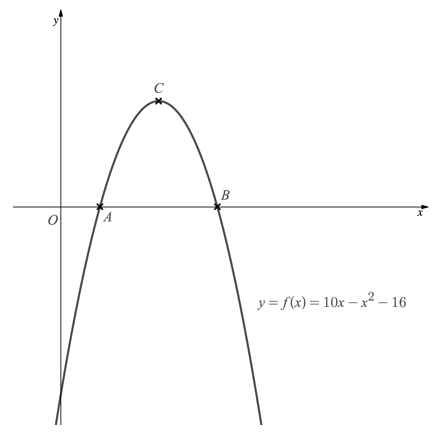
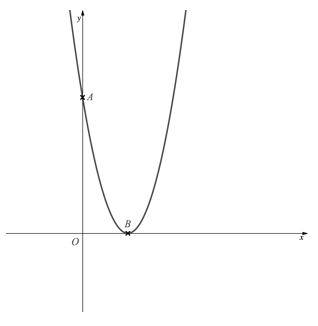
The equation , where , is shown below..

The points and are the points where the graph intersects the coordinate axes.
(i) Write down the coordinates of and .
(ii) The graph of is transformed to the graph of . Find the coordinates of the images of points and under these transformations.
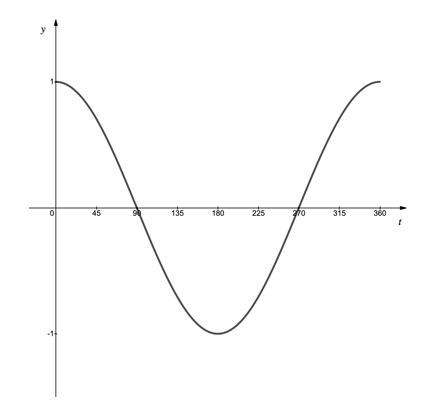
The diagram shows the graph of , where ,

(i) Write down the minimum value of in the given domain for .
(ii) Write down the value of for which this minimum occurs.
(i) Write down the minimum value of in the given domain for .
(ii) Write down the value of for which this minimum occurs.
Find, in terms of , the combination of transformations that would map the graph of onto the graph of ,
The function is to be transformed by a sequence of functions, in the order detailed below:
Write down an expression for the combined transformation in terms of .
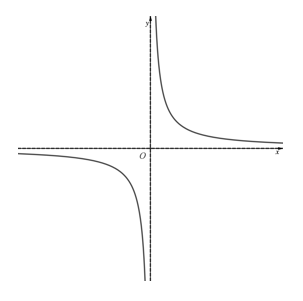
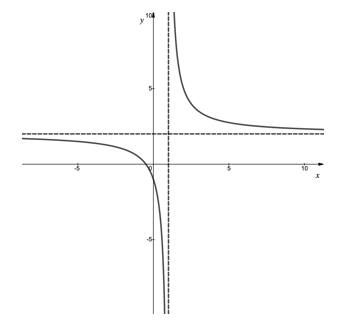
The diagram below shows the graph of where

(i) Write down the equations of the two asymptotes.
(ii) Determine the equations of the two asymptotes on the graph of .
The diagram below shows the graph of . The stationary points are marked on the diagram.

On separate diagrams, sketch the graphs with equation
(i)
(ii)
On each diagram, state the coordinates of the images of the points and under the given transformation.
Describe, in order, a sequence of transformations that maps the graph of onto the following graphs:
(i) ,
(ii) .
Given that find an expression for , where is obtained by applying the following sequence of transformations to .
Translation by
Vertical stretch of scale factor 4
Translation by
(i) Sketch the graph of , where .
(ii) On the same set of axes, sketch the graph of . Label the coordinates of the points where each graph crosses the coordinate axes
(i) Find an expression for .
(ii) Find an expression for .
(iii) What can you deduce about the sequence of transformations given by ?
The equation , where , with , is shown below.

The points and are the points where the graph intercepts the coordinate axes.
Write down, in terms of , the coordinates of and .
Sketch the graph of , labelling the images of the points and stating their coordinates in terms of .
Write down the value of such that the point is three times as far from the origin as the point .
The diagram shows the graph of , where ,

(i) Write down the maximum value of when .
(ii) Write down the first value of for which this maximum occurs.
(i) Write down the minimum value of when .
(ii) Write down the first value of for which this minimum occurs.
Find, in terms of , the combination of transformations that would map the graph of onto the graph of , .
The function is to be transformed by a sequence of functions, in the order detailed below:
Write down an expression for the combined transformation in terms of .
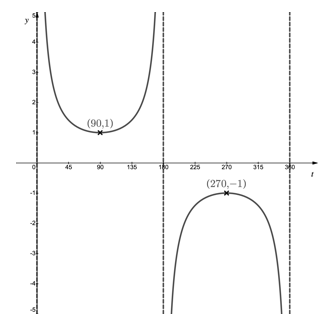
The diagram below shows the graph of where

Write down the equations of the two asymptotes.
Determine the equations of the two asymptotes on the graph of .
Determine the range of .
The point with coordinates is a stationary point on the graph with equation .
Determine the coordinates of the stationary point on the graphs with the following equations:
(i) ,
(ii) ,
(iii) .
The turning point on the graph of has coordinates as shown on the diagram below.

(i) On the diagram above sketch the graph of and state the coordinates of the turning point.
(ii) State the distance between the turning points on the graphs of and . .
The diagram below shows the graph of . The stationary points and intercepts with the -axis are marked on the diagram.

On separate diagrams, sketch the graphs with equations
(i)
(ii)
On each diagram, mark the coordinates of the images of the points and under the given transformation.
Given that find an expression for , where is obtained by applying the following sequence of transformations to .
On the same axes sketch the graphs of and , where .
Find an expression for and state its domain.
Show that .
A sketch of the graph with equation , where is shown below.

The points and are the points where the graph intercepts the coordinate axes.
Sketch the graph of , labelling the images of the three points and .
Suggest a combination of at least two transformations that will transform the points and such that none of them lie on the coordinate axes.
Give your answer in the form of an expression in terms of .
The diagram shows the graph of , where ,

(i) Write down the maximum value of when .
(ii) Write down the value of for which this maximum occurs.
Find, in terms of , the combination of transformations that would map the graph of onto the graph of ,.
The function is to be transformed by a sequence of functions, in the order detailed below.
Write down the combined transformation in terms of .
The minimum point on the graph of has coordinates as shown on the diagram below.

Sketch the graph of and state the coordinates of the maximum point.
Find the exact distance between the minimum point on the graph of and the maximum point on the graph of .
Describe, in order, a sequence of transformations that would map the graph of onto each of the following graphs:
(i) for the case when .
(ii)
How, if at all, would your answer to part (a) (i) change if or if ?
The function is transformed by a sequence of transformations as described below.
Write down the resulting transformation in terms of as well as an expression in terms of .
Show that the graph of where maps onto the graph of its inverse under the transformations described by .
Prove, that for a constant , if , then .
A sketch of the graph with equation , where , with is shown below.

The points and are points where the graph intercepts the coordinate axes.
Write down, in terms of , the coordinates of and .
Sketch the graph of , labelling the images of the three points and and stating their coordinates in terms of .
Suggest, in terms of , a combination of at least two transformations, such that the points and transform to new positions but remain lying on their respective axes.
The diagram shows the graph of , where ,

The vertical distance between the minimum point, , and the maximum point, is 2. The horizontal distance between them is 180.
Find, in terms of , the vertical and horizontal distances between the minimum and maximum point on the graph of .
Hence or otherwise show that the distance between the minimum and maximum point on the graph of , i
A sketch of the graph with equation where is shown below.
Points and are the -axis intercepts and point is the maximum point on the graph.

On the diagram above, sketch the graph of labelling the image of the points and with and .
Show that the area of is twice the area of triangle .