Domain and range dominoes
Excerpt: This card sorting activity makes students think carefully about what we mean by the domain and range of a function and how to express them precisely. They will get lots of practise whilst arranging the cards into a loop.
Warm-up
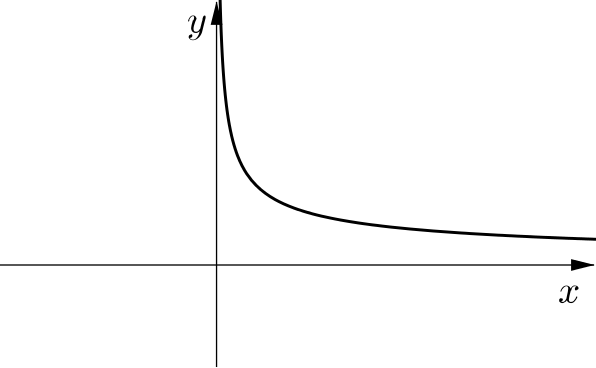
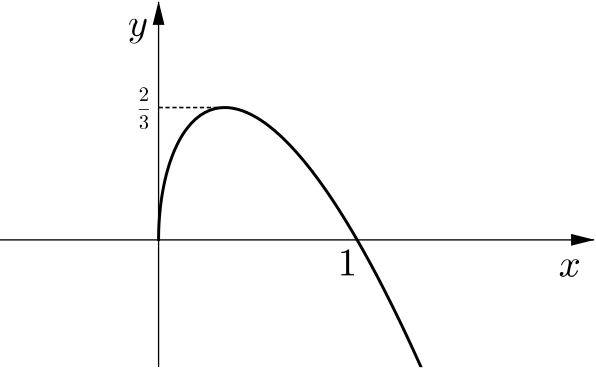
Describe in words, as accurately as possible, the domain and range of the functions illustrated here.
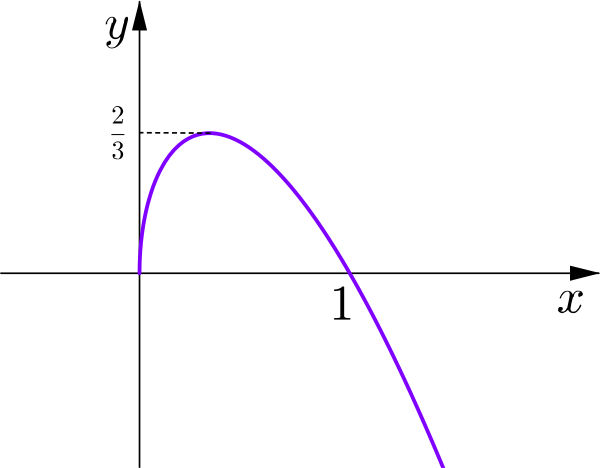
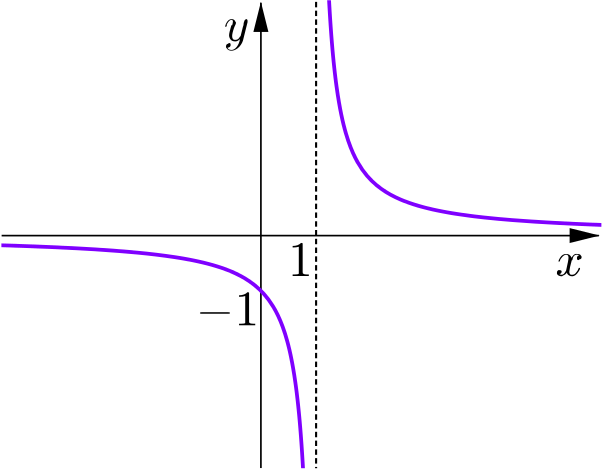
Can you write the domains and ranges using mathematical notation?
The function on the left is undefined for any negative value of because of the square root. It is defined at , so we could describe its domain as any real number greater than or equal to zero. and as increases increases up to then decreases. The function’s range is any real number less than or equal to .
The symbols are mathematical notation meaning “is a member of the set of all real numbers”.
The function on the right is defined for all real values of except for . Its range is all real numbers greater than zero and all real numbers less than zero. Notice that it is impossible to obtain the output value .
Sometimes, the domain and range might be written in an abbreviated form such as
We refer to real numbers as opposed to imaginary or complex numbers. You may learn about those elsewhere.
Check your answers
Problem
Match up each function with its domain and range. They form a set of domino cards that can be arranged in a sequence.
To turn the sequence into a closed loop, you will need to complete the cards with missing information. A separate sheet containing just those cards is available here.
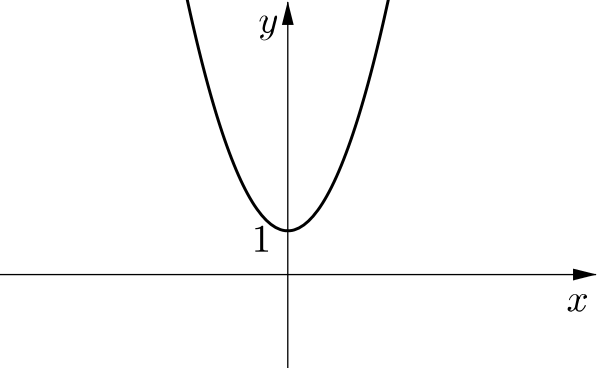 | domain: range: |
|---|
| 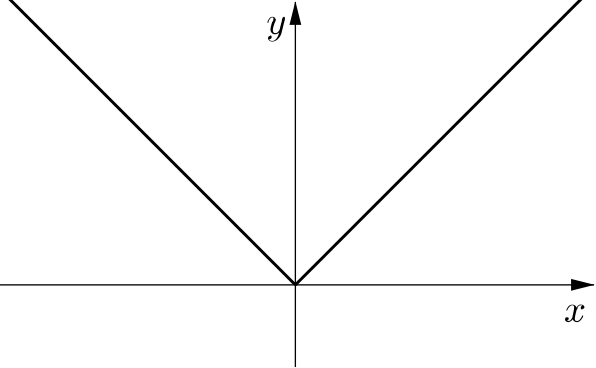 | domain: range: |
| --- | --- |
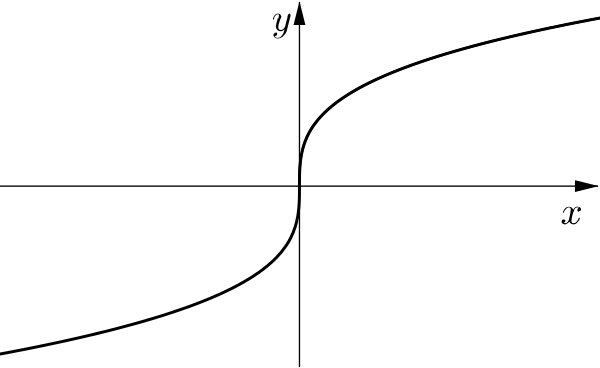 | domain: range: |
|---|
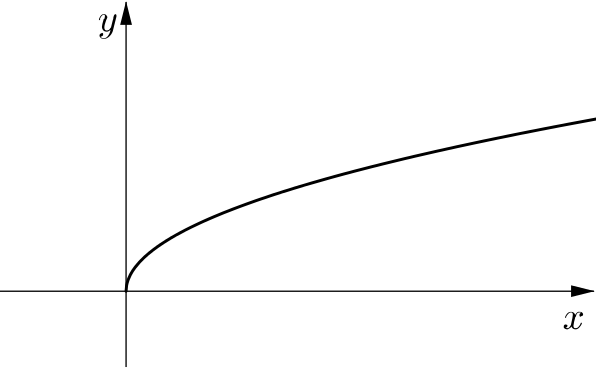 | domain: range: |
|---|
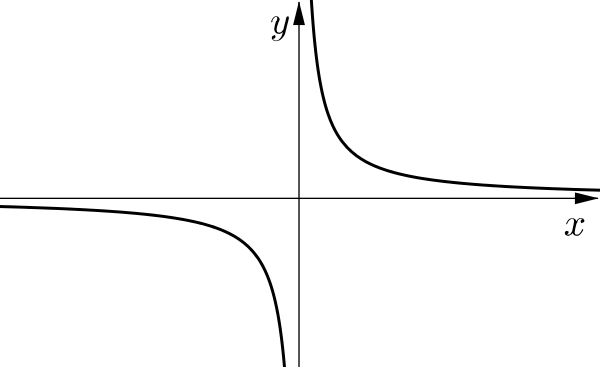 | domain: range: |
|---|
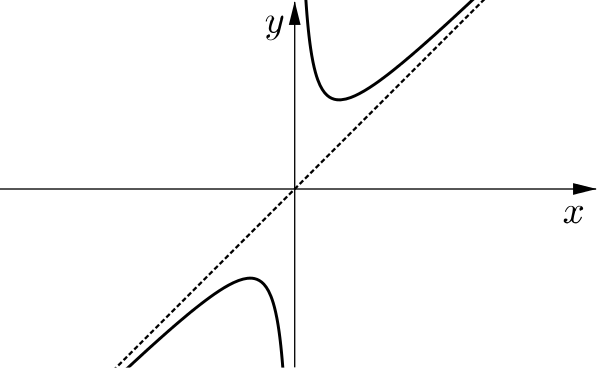 | domain: , range: or |
|---|
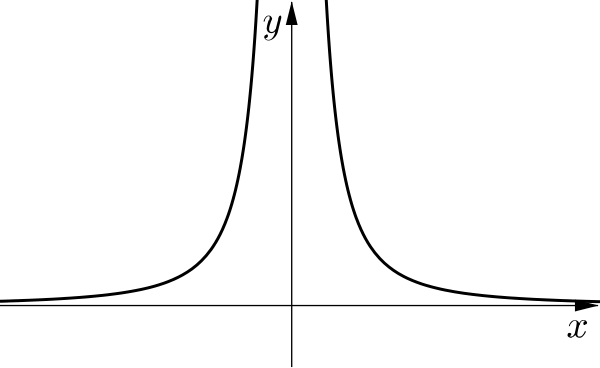 | domain: range: |
|---|
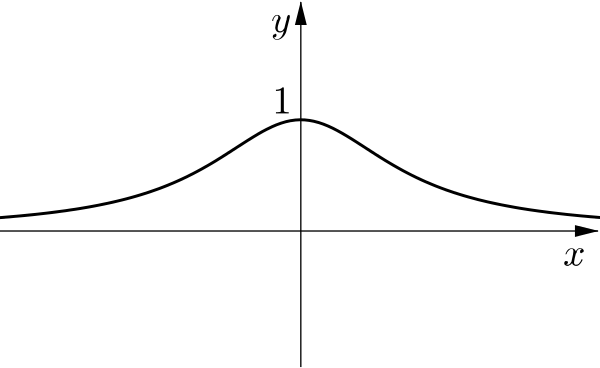 | domain: range: |
|---|
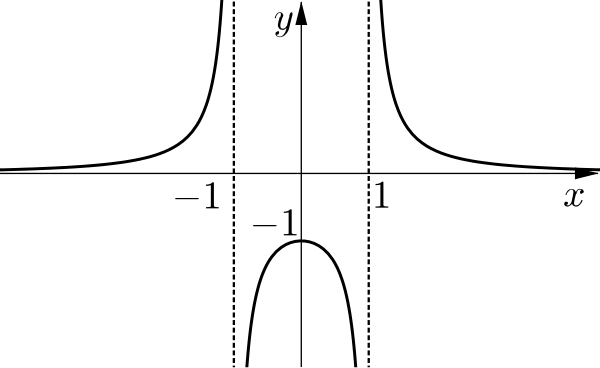 | domain: range: |
|---|
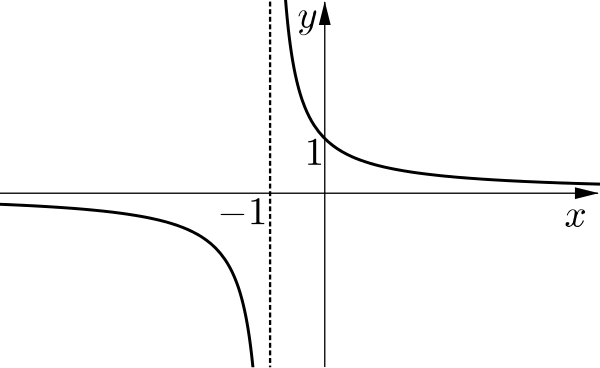 | domain: range: |
|---|
 | domain: range: |
|---|
 | domain: range: |
|---|
 | domain: range: |
|---|
| | domain: range: |
|---|
Things you may have noticed
Unrestricted domains
In this exercise we are using domain to mean all the possible values of . In other contexts, we may artificially restrict the domain of a function. For instance we might only be interested in the function in the domain .
Similar inequalities
With some of the functions you have to be careful to distinguish between, for instance, and .
Multiple inequalities
One of the functions has a range that is between and , including but not including . This can be written neatly as .
Another has a range that includes all numbers and all numbers but not numbers in between. This has to be written as two separate inequalities.
Turning points of
Finding the range of depends on knowing the value of the function at its turning points (maximum and minimum) and this is not given on the card. There is more than one way to find these values; here are a few.
Using calculus
We could differentiate the function and thus find when its gradient is zero.
Using an inequality
By substitution we can find that
. Is there any positive
value for which
? If so,
Rearranging and factorising leads to an inequality with no real solutions, so must be the minimum value of for positive . The local maximum can be found by symmetry.
When rearranging the inequality, why does it matter that the question specified positive values?
By adding gradients
Notice that is the sum of two functions: and . So the gradient of is the sum of the gradients of and (it is possible to prove this, but we aren’t going to do so here!).
has gradient , so the turning points of will be where has gradient . Can you find the values where this happens?
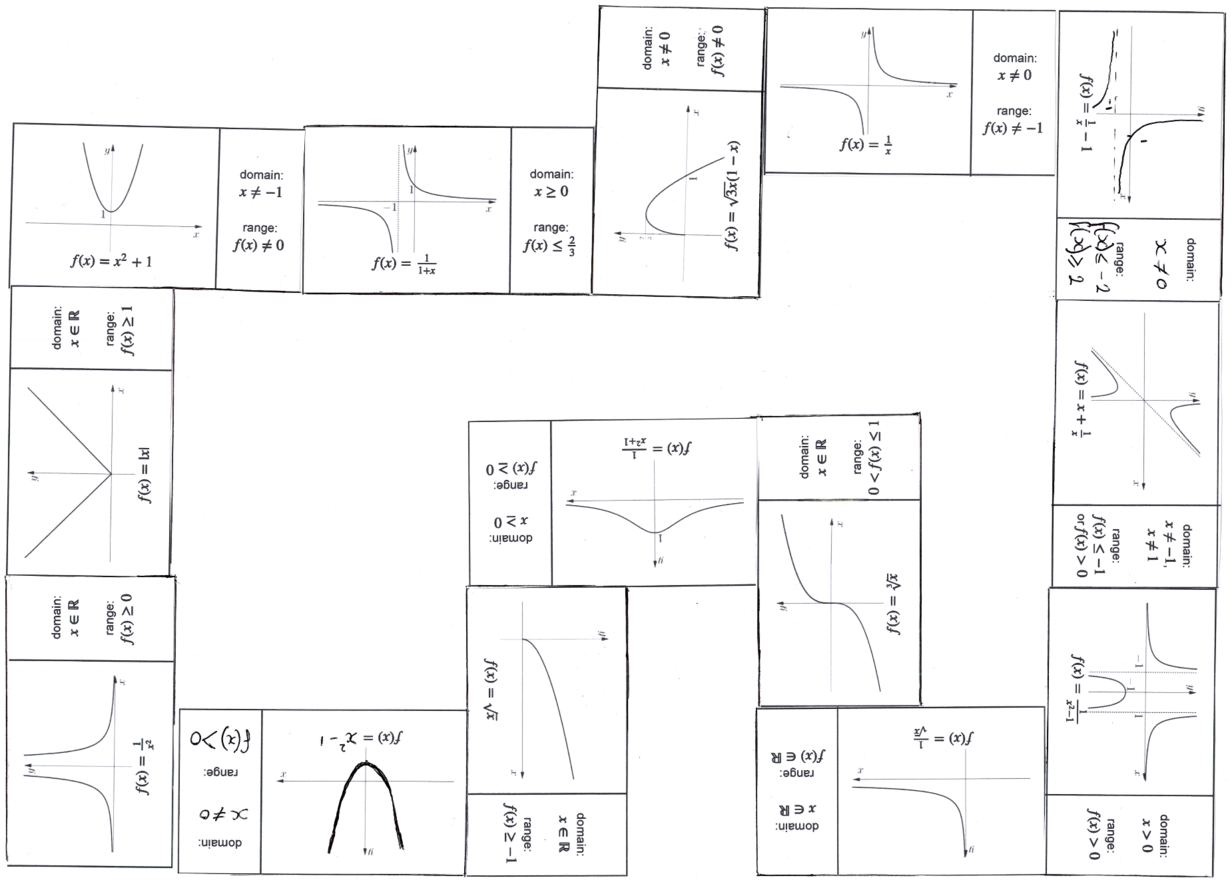
Here is one way of arranging the cards