Differentiating Powers of x (Edexcel IAL Maths)
Exam board Pearson Edexcel · IALUpdated 2026-07-02
Spec point —
4.2
Differentiating powers of x
How do I differentiate expressions with powers of x?
-
Powers of x are differentiated according to the following formula
-
- Where is any real constant
-
This can be written as:
- If then
- If then
-
Exam Hint is usually used when a function, , has been defined. is used when a graph of a function is given in the form They both represent the derivative of an expression.
-
If the term involves a scalar multiple, then you can differentiate the power of x and then multiply by the scalar
-
- Where and are any real constants
-
-
Differentiating terms with positive integer powers of x is straightforward
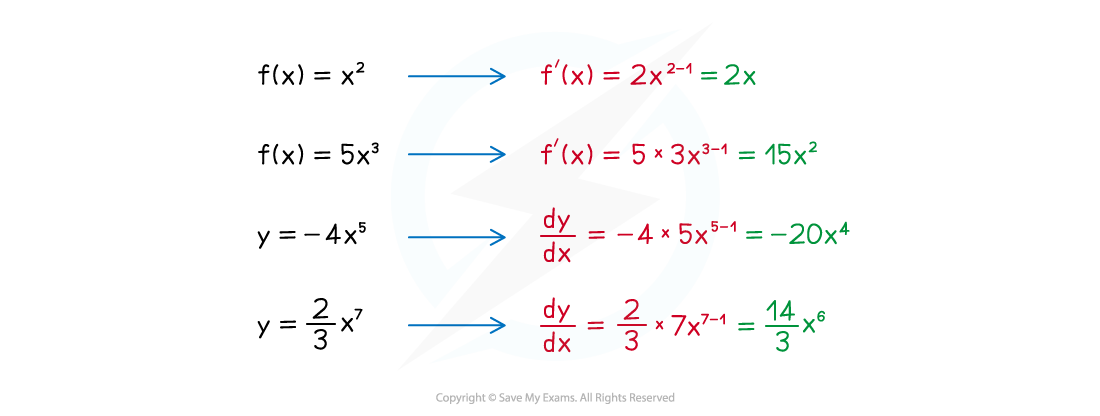
- But negative and fractional powers of x can also be differentiated this way
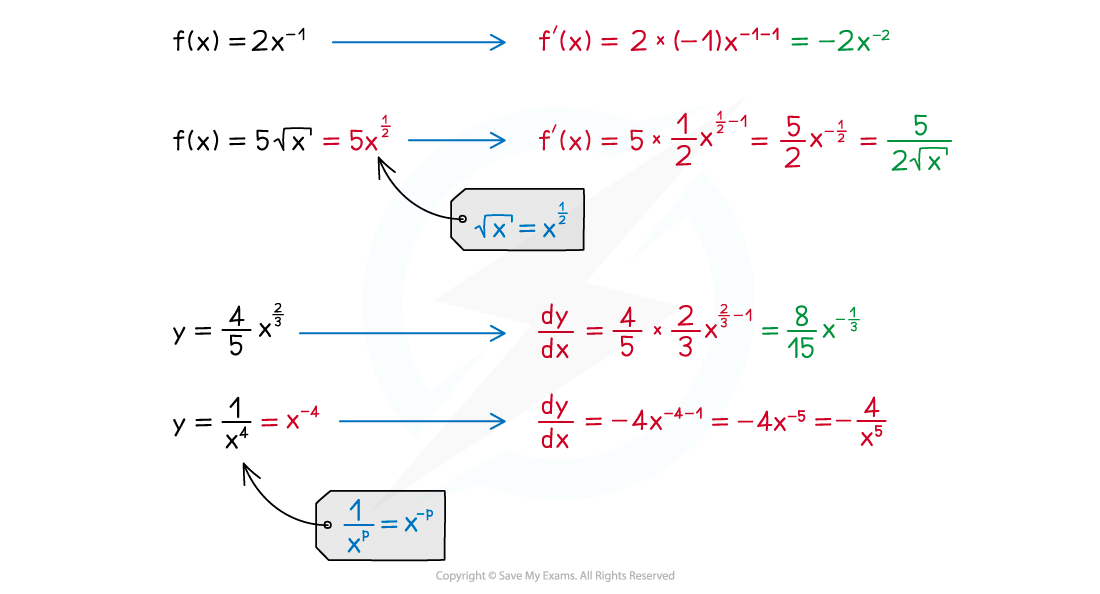
-
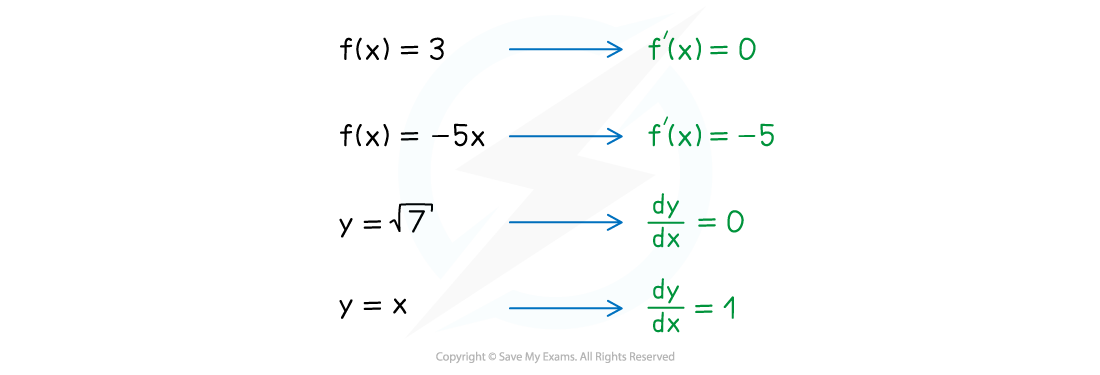
Don't forget these two special cases:
-
The derivative of a linear function is a constant
- Where is any real constant
-
The derivative of a constant function is zero
- Where is any real constant
-
-
These allow you to differentiate constants and linear terms in x
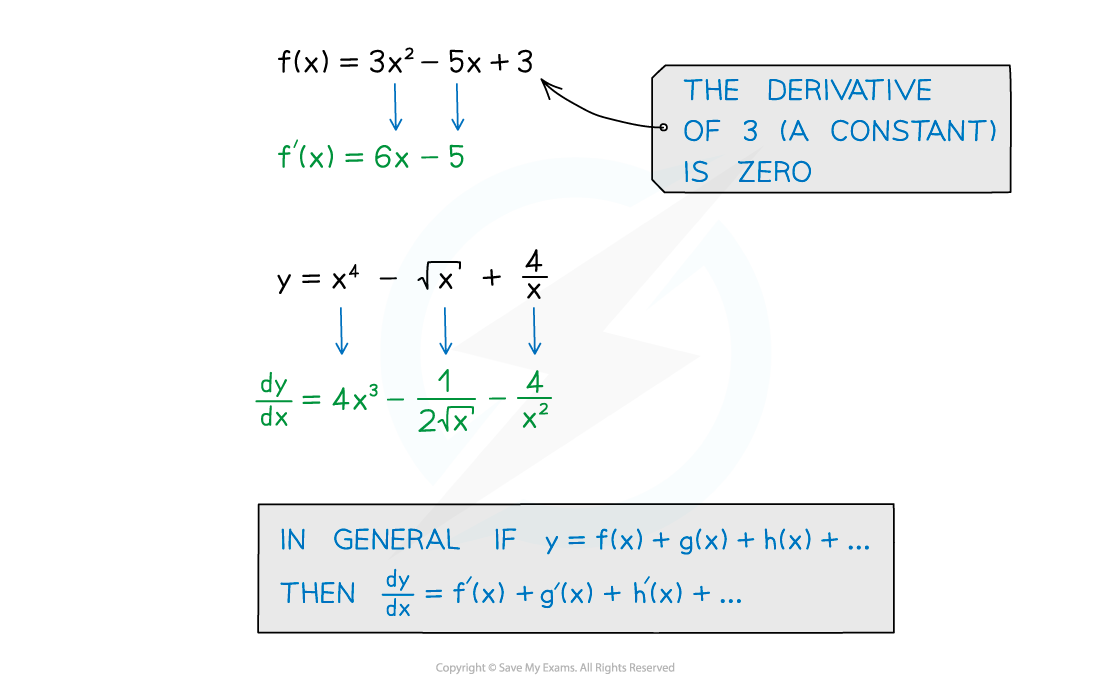
- If the expression involves a sum or difference of terms just differentiate one term at a time
Exam Hint
- Take extra care when differentiating negative and fractional powers of x as mishandling negative signs and fractions is a common way to lose marks in these sorts of questions.
Worked Example
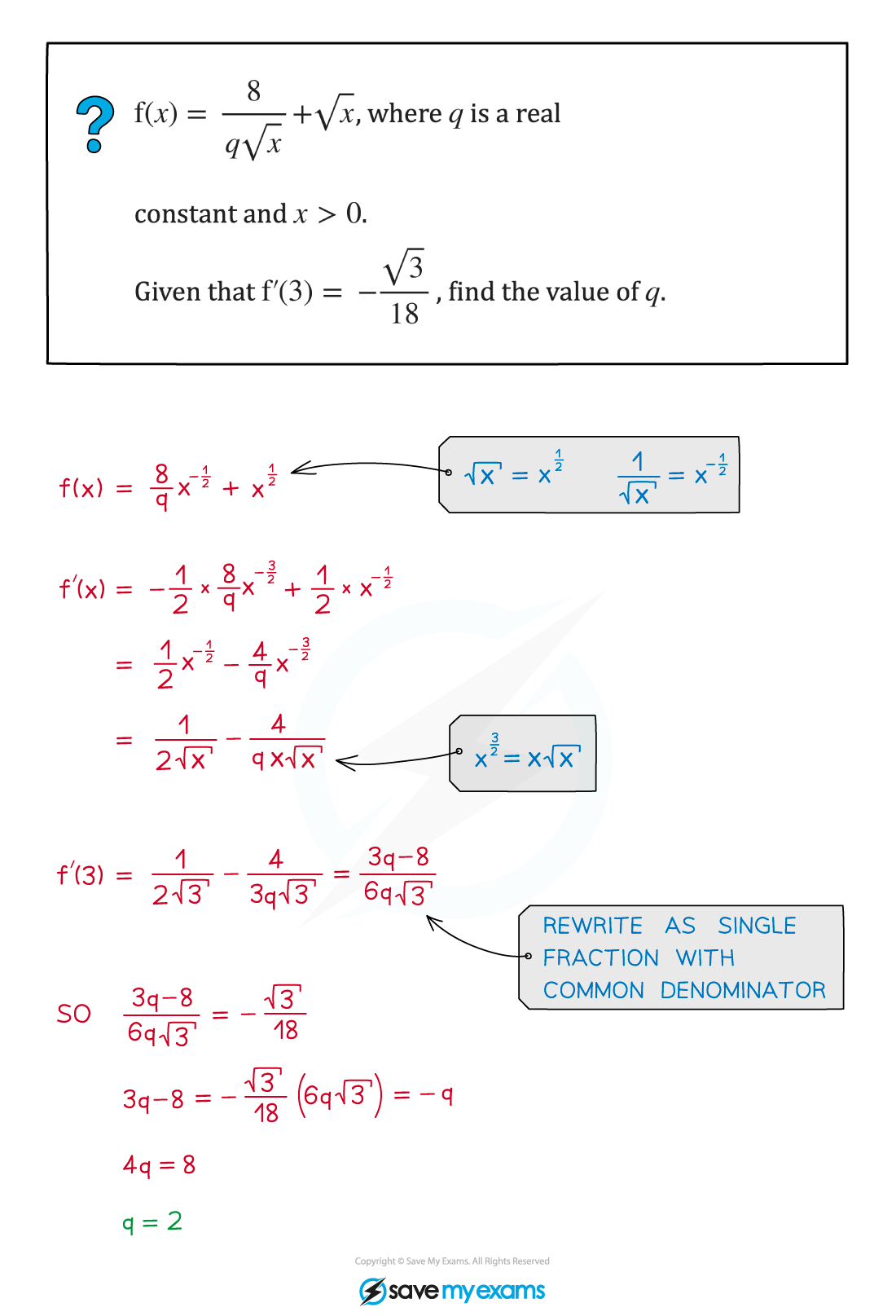
Was this revision note helpful?
Build on this topic