Basic Coordinate Geometry (Edexcel IAL Maths)
Exam board Pearson Edexcel · IALUpdated 2026-07-02
Spec point —
2.1
Basic coordinate geometry
What is basic coordinate geometry?
-
Basic coordinate geometry refers to working with points, lines and shapes on the coordinate axis
-
Cartesian coordinates are simply the x-y coordinate system
-
Using coordinates you can
- Calculate the distance between two points (length of a line)
- Divide lines in m:n ratio,
- Find the mid-point of a line
- Calculate the area of a triangle (or other shapes)
- Find missing coordinates using any of the above
-
Most of these involve working with straight line graphs
-
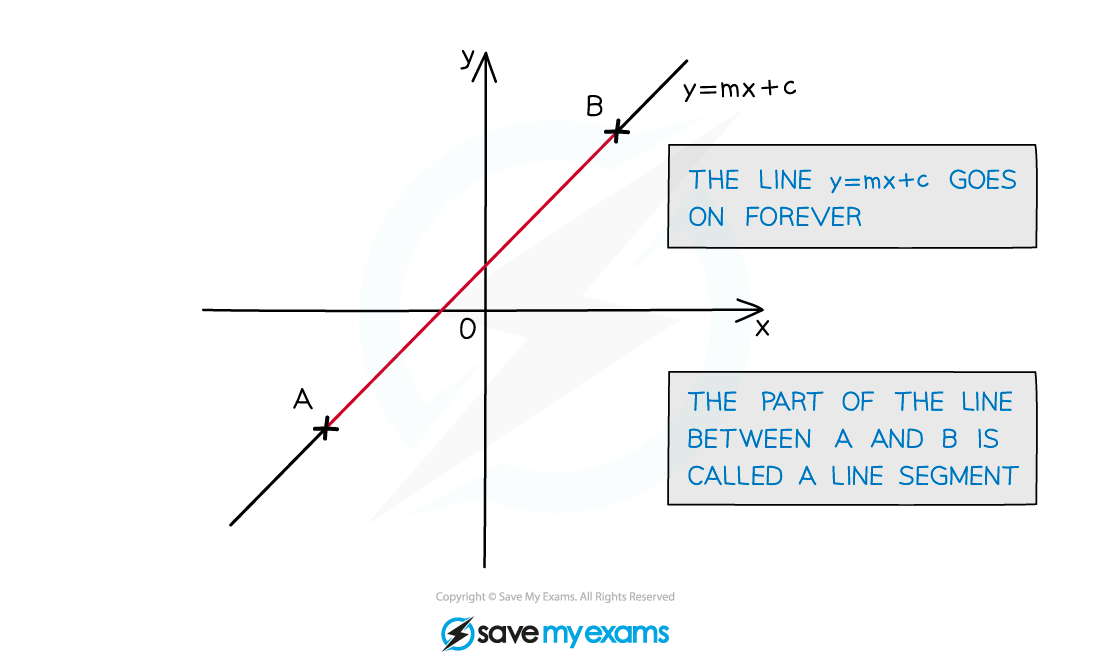
Straight line graphs are of the form y = mx + c
- m is the gradient
- c is the y-axis intercept
- Part of a straight line is called a line segment
How do I find the length of a line segment?
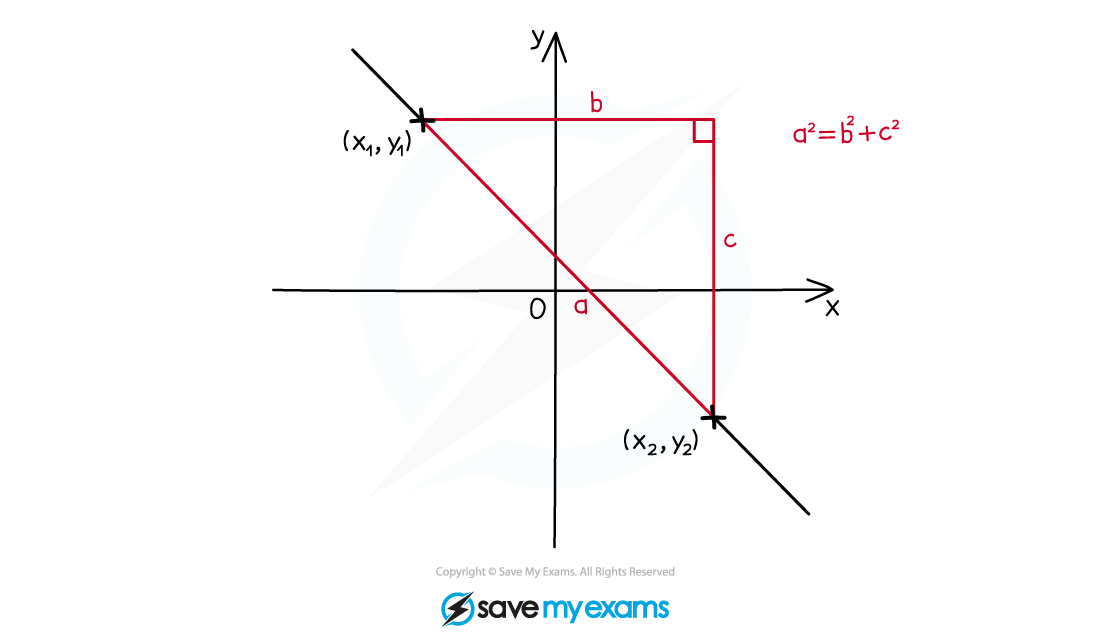
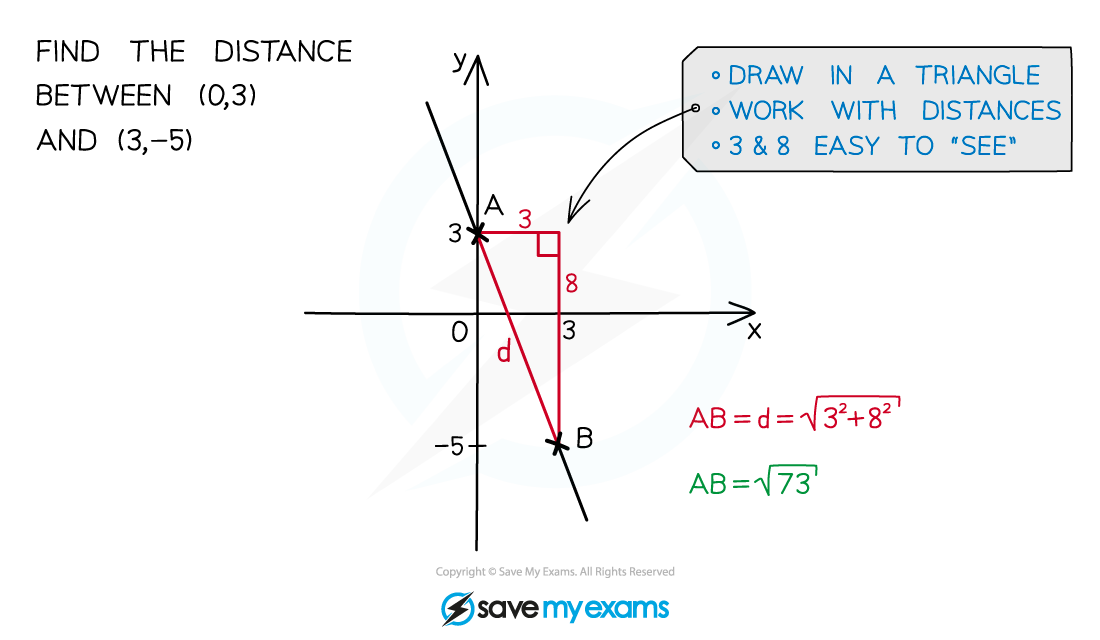
- By finding the distance, d, between two points (x1, y1) and (x2, y2)
- Pythagoras’ Theorem (a2= b2+ c2) is used to find the length of a line

How do I find the midpoint of a line segment?
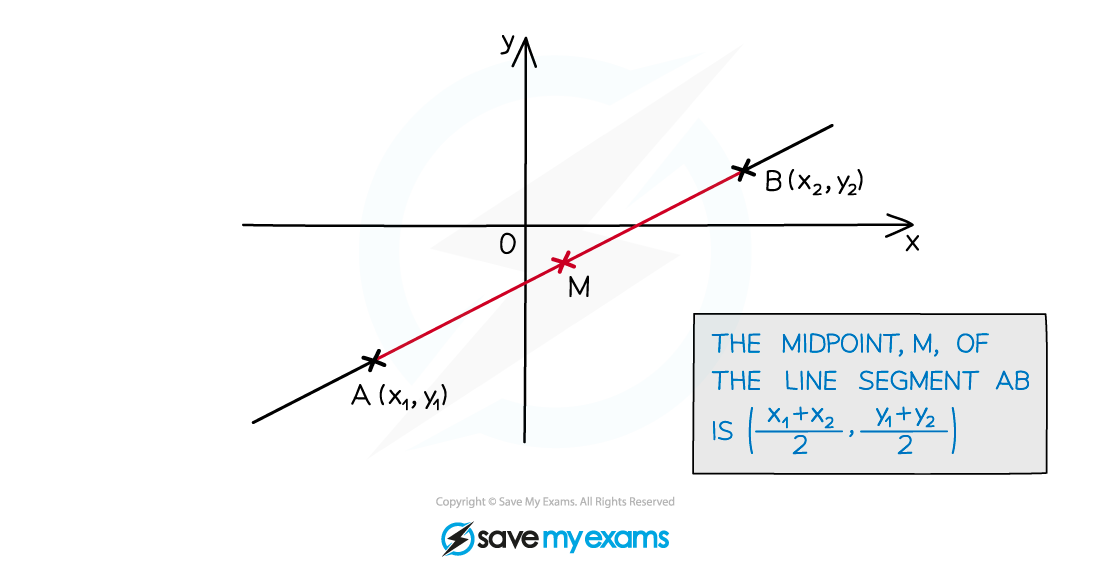
- M is often used as the midpoint between two points (x1, y1) and (x2, y2)
- It is the average of both the x and y coordinates
Exam Hint
- Work with the square of a distance for as long as possible as this avoids early rounding errors and surds.
- Only square root when forced to or for a final answer, and use the ANS button (and other memory features) on your calculator.
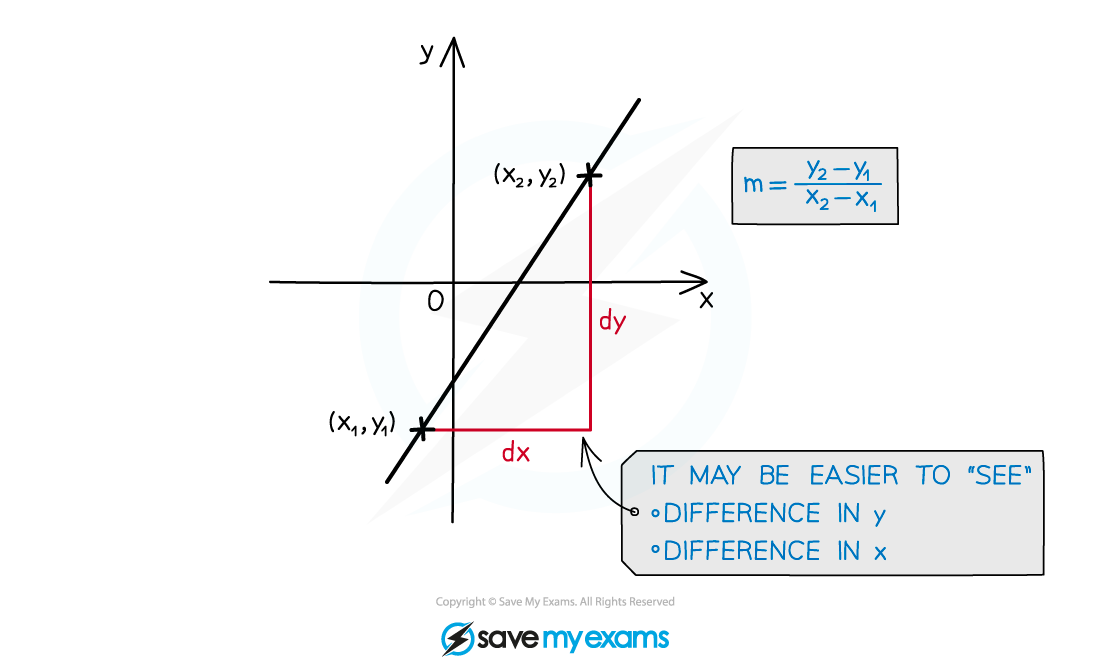
How do I find the gradient of a line segment?
-
There are lots of ways to find the gradient, m, of a line segment
-
Use the two end points to find the change in y divided by change in x
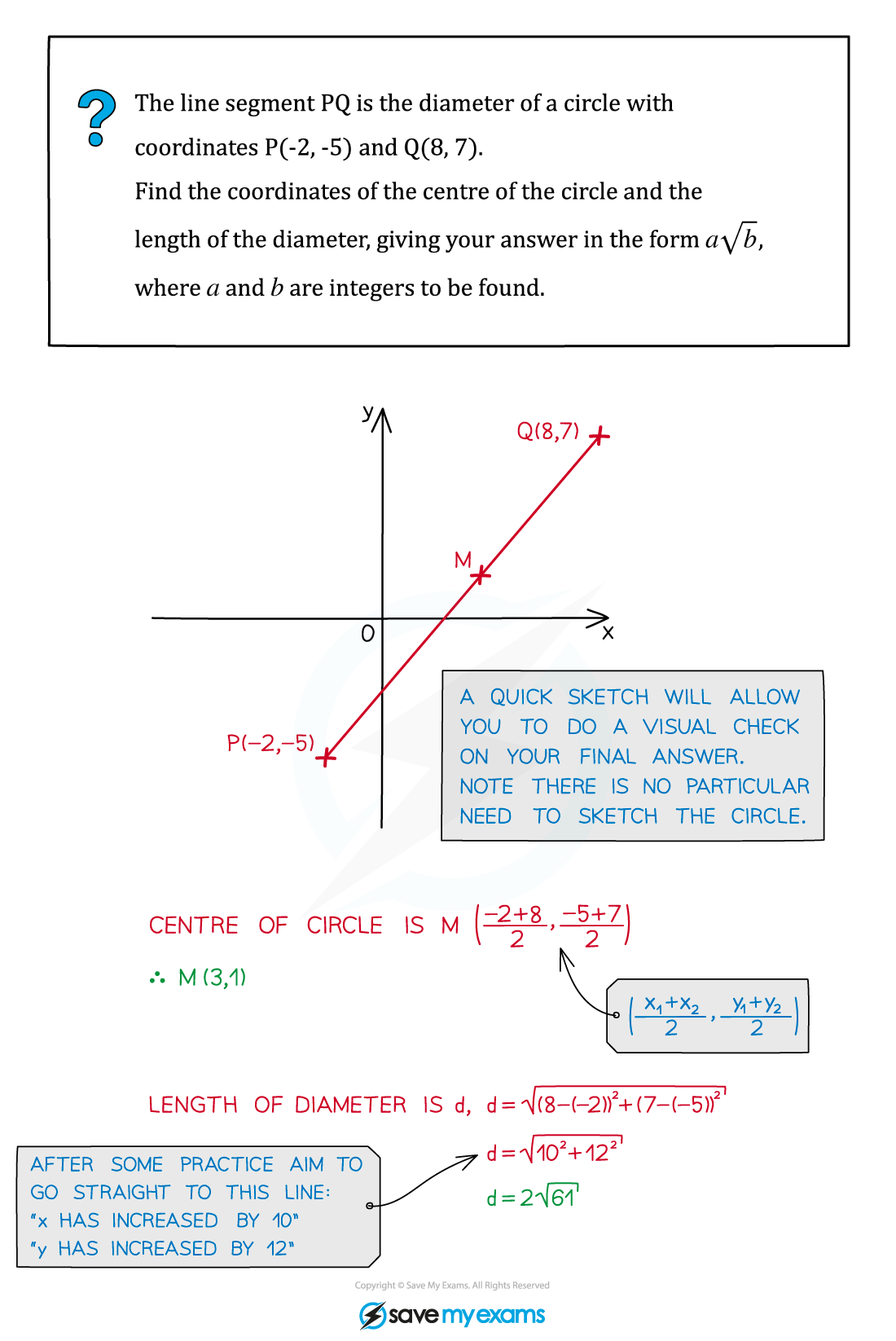
Worked Example
Was this revision note helpful?