Proportional Relationships (Edexcel IAL Maths)
Spec point —
2.1
Proportional relationships
What are proportional relationships?
-
Proportional relationships describe a proportional connection between two variables
-
This can happen in two ways
-
Direct proportion
- one variable increases or decreases the other does the same
-
Inverse proportion
- one variable increases the other decreases and vice versa
-
-
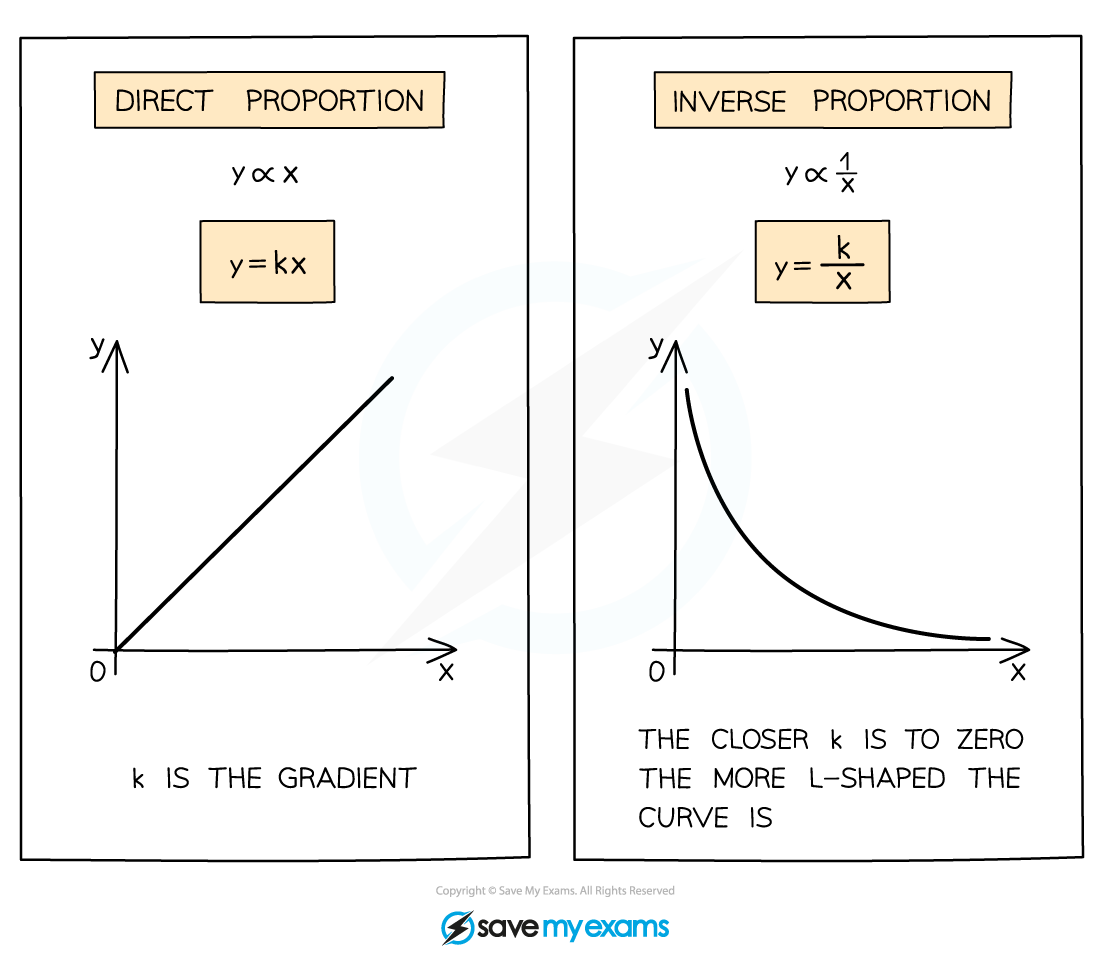
Proportional relationships use the symbol which means is proportional to
-
Both direct and inverse proportion can be represented graphically
- Direct proportion creates a linear graph where k is the gradient
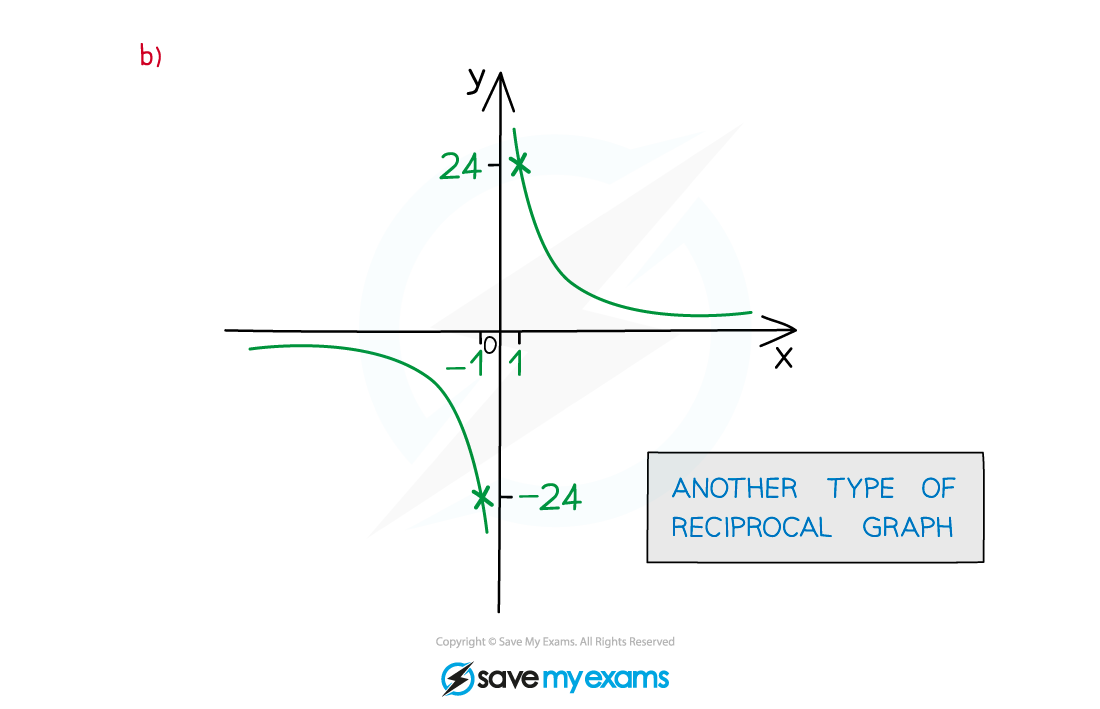
- Inverse proportion creates a reciprocal graph
What is direct proportion?
-
means y is proportional to x
-
y increases as x does, k determines the rate (gradient)
-
by changing this to the equation we can substitute in given values and solve to find k
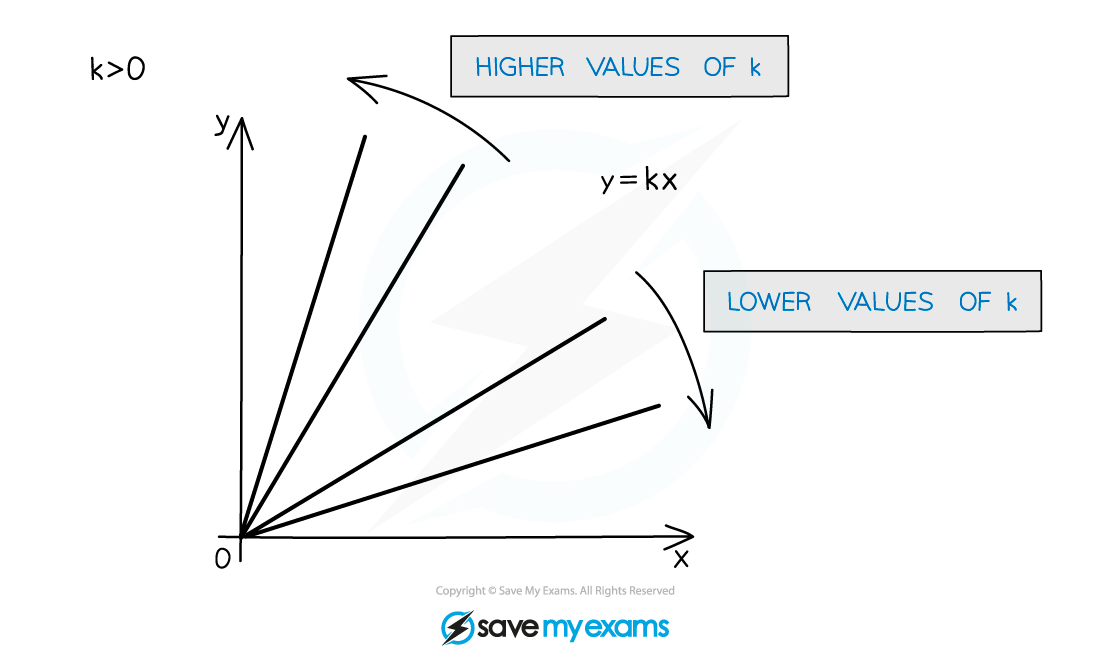
- Note that this means the ratio of x and y is constant k = y / x
What is inverse proportion?
-
means y is proportional to or y is inversely proportional to x
-
y decreases as x increases and vice versa, k determines the rate
-
by changing this to the equation we can substitute in given values and solve to find k
- Note that this means the product of x and y is constant k = xy
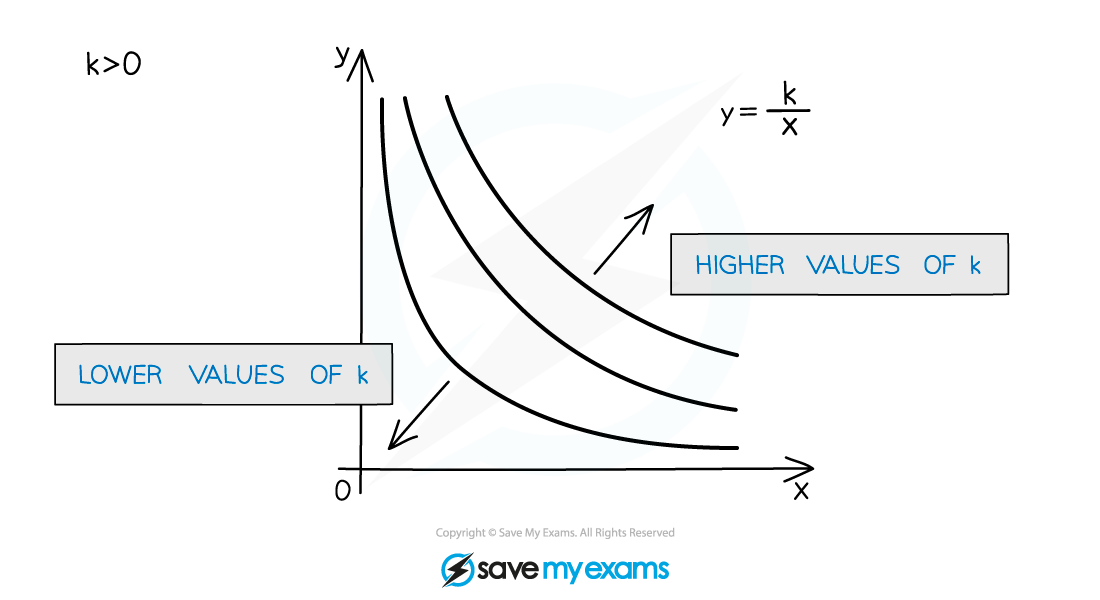
- Note that this means the product of x and y is constant k = xy
-
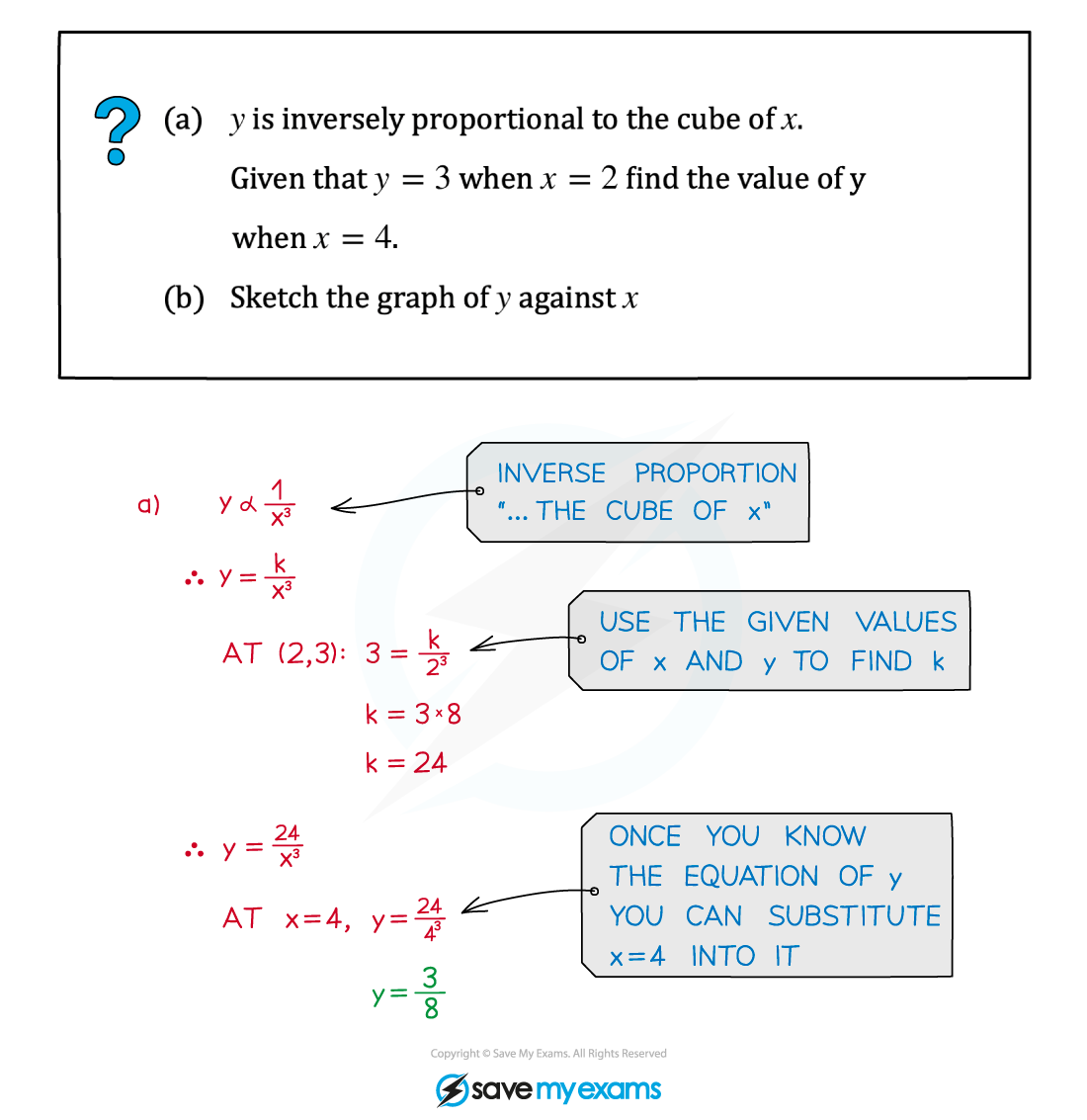
Set up your proportional relationship using then change to = k
-
Be clear about what y is proportional to …
- “… the square of x” (x2)
- “… x plus four” (x + 4)
-
Calculate or deduce the value of k from the information given or a graph
-
Once you've found k sub it back in to your original proportion equation
-
You can now find any values using this proportional relationship
-
y = mx + c rearranges to y – c = mx so (y - c) is directly proportional to x
-
Proportional relationships are often used in modelling
Worked Example
Was this revision note helpful?