Standard Matrix Transformations (Edexcel IAL Further Maths)
Reflection Matrices
Spec point —
6.2
How do I find reflection matrices?
-
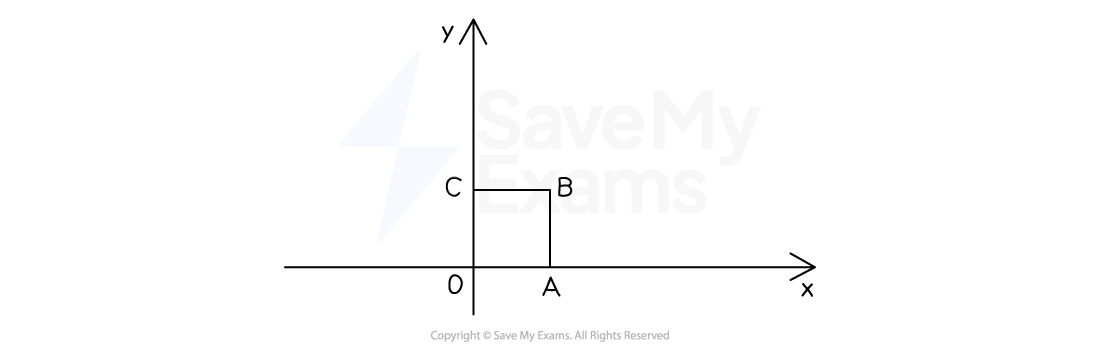
Imagine the unit square OABC
- It has a side-length 1 unit
- O is the origin
-
The coordinates of A and C as column vectors are
- and
-
Under a reflection about an axis or, A moves to A' and C moves to C'
-
The matrix, representing this reflection is
-
A' and C' are column vectors of their new positions
- The points O * and B are not needed, as we can draw the reflected square using just A' and C' (O won't move)
-
-
For example:
-
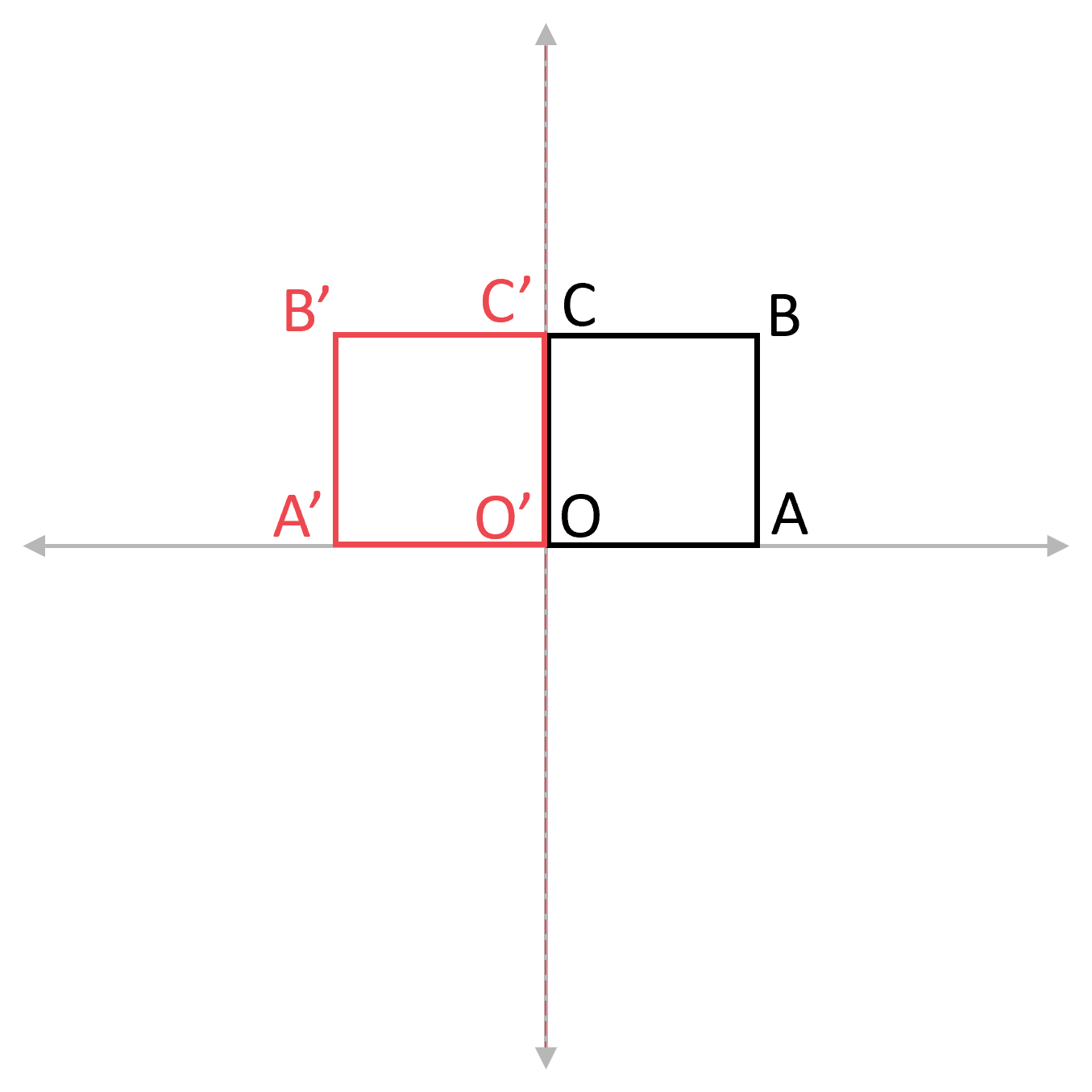
To find the matrix representing a reflection about the-axis
- A stays where it is, so
- C goes to (on the negative -axis)
-
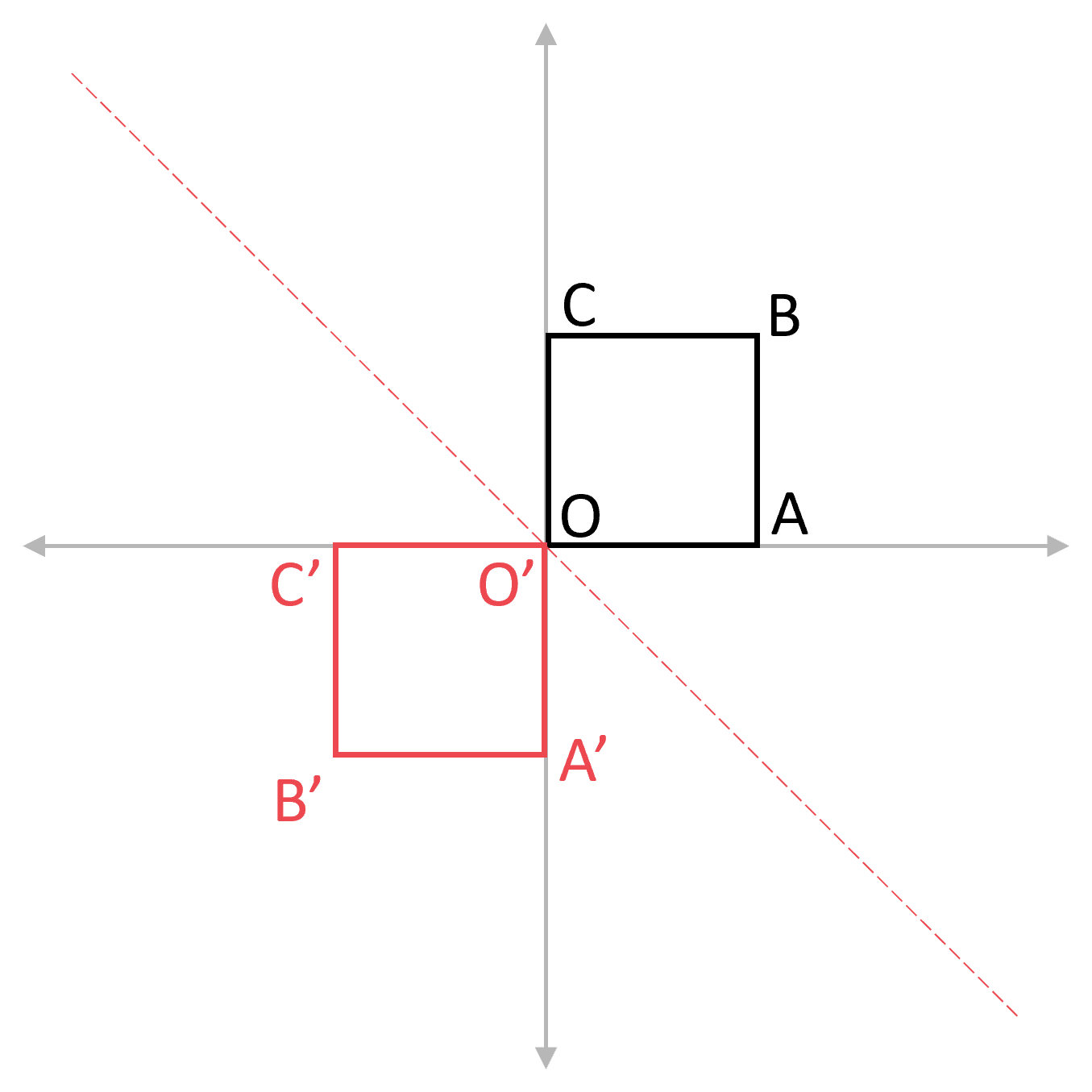
To find the matrix representing a reflection in the line
- A goes to (on the positive y-axis)
- C goes to (on the positive x-axis)
- (This is not the same as the identity matrix, as the 1s are on the wrong diagonal)
-
Worked Example (a) The matrix represents a reflection in the y-axis.
Work out .
Consider how the points A and C on the unit square are transformed by a reflection in the -axis
*The point A moves to A' *
*The point C * remains in the same place
The transformation matrix is given by * *
(b) Describe fully the transformation represented by the matrix .
*Consider how the points A and C on the unit square are transformed *
The point A moves to A' *
*The point C moves to C' *
It helps to draw a picture of the unit square being transformed with vertices clearly labelled
*This transformation could be a rotation of 180 ° about O or a reflection in * The vertices A' and C' are in the correct places for a reflection, but not a rotation
Final answer: The matrix N represents a reflection in the line
Enlargement & Stretch Matrices
Spec point —
6.2
Which matrix represents an enlargement?
-
The matrix represents an enlargement of scale factor about the origin, O
-
This is the same as
- is the identity matrix
-
Which matrix represents a stretch?
-
The matrix represents a stretch parallel to the-axis of scale factor
- The point becomes
-
The matrix represents a stretch parallel to the-axis of scale factor
- The point becomes
-
The matrix represents a combined stretch of scale factor parallel to the -axis and scale factorparallel to the -axis
- If , the combined stretch is an enlargement
Exam Hint Use phrases like "parallel to the -axis" or "parallel to the -axis" to describe stretches (not "left" or "up"!)
Worked Example A transformation is represented by the matrix .
Describe fully the transformation in each of the following cases:
(a)
Substitute in
This has the form where
Final answer: represents an enlargement of scale factor 3 about the origin
You must give its scale factor and centre of enlargement
(b)
Substitute in
This has the form where
Final answer: represents a stretch of scale factor 5 parallel to the-axis
You must give its scale factor and direction
Rotation Matrices
Spec point —
6.2
How do I find matrices for rotations by multiples of 90°?
-
Imagine the unit square OABC
- It has a side-length of 1 unit
- O is the origin
-
The coordinates of A and C as column vectors are
- and
-
Under a rotation about the origin, A moves to A' and C moves to C'
-
The matrix, representing this rotation is
-
A' and C' are column vectors of their new positions
- The points O and B are not needed, as we can draw the rotated square using just A' and C' (O won't move)
-
-
For example:
-
To find the matrix representing a rotation of 90° anticlockwise about the origin
- A goes to (on the positive* *-axis)
- C goes to (on the negative -axis)
-
To find the matrix representing a rotation of 180° about the origin
- A goes to (on the negative -axis)
- C goes to (on the negative -axis)
- This is the same as where* * is the identity matrix
-
Exam Hint Students often confuse rotations of 180° with reflections in the lines .
How do I find matrices for rotations by any angle?
-
A rotation anticlockwise by any angle, , about the origin is represented by the matrix:
-
- can be in degrees or radians
-
-
A negative value of represents a clockwise rotation
- Remember that but that
-
You can substitute in multiples of 90° to get the matrices above
-
You may be required to recognise common angles from their ratios
- For example,
(sqrt( 3)/(2) = cos ( pi / 6 )
- For example,
Exam Hint You are given the rotation matrix in the Formulae Booklet.
Worked Example (a) Describe fully the transformation represented by the matrix .
*Consider how the points A and C on the unit square are transformed *
The point A moves to A' *
*The point C moves to C' *
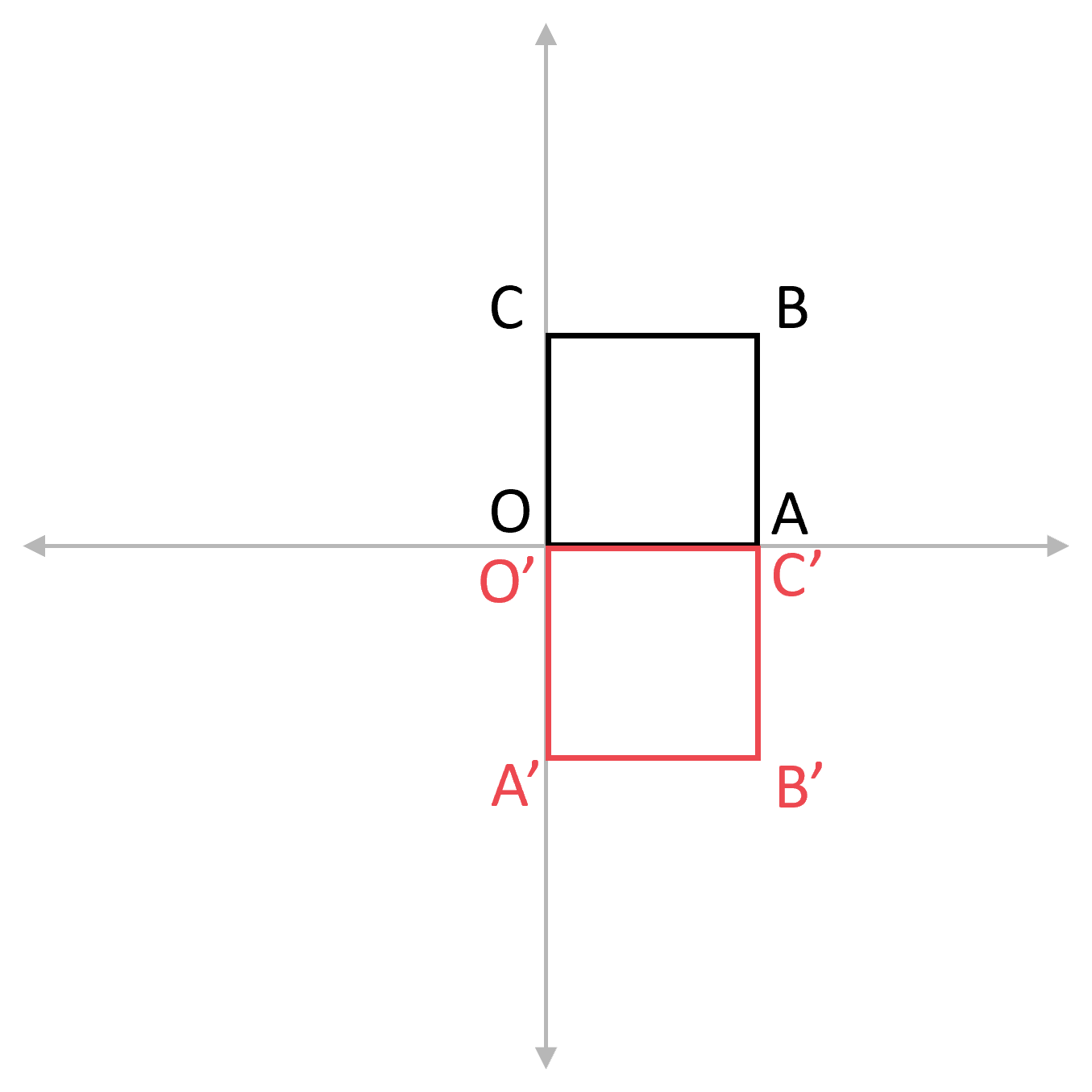
It helps to draw a picture of the unit square being transformed with vertices clearly labelled
This transformation could be a rotation of 90 ° clockwise about O or a reflection in the -axis The vertices A' and C' are not in the correct places for a reflection, but are for a rotation
The matrix P represents a rotation of 90°clockwise about the origin
You must give its angle, direction and centre of rotation 270°anticlockwise would also be accepted
(b) Find , the matrix that represents a clockwise rotation of 120° about the origin, giving your answer in an exact form.
The matrix for an anticlockwise rotation by is is negative, as the rotation is clockwise
Substitute this value of into the matrix Use that and that
Use a calculator to find these values (or common angles and symmetry)
Was this revision note helpful?