Combustion of Alkanes (Edexcel IAL Chemistry)
Problems of Pollution
Spec point —
4.14
Problems of Pollution - General
-
When alkanes are burnt in excess(plenty of) oxygen, complete combustion will take place and all carbon and hydrogen will be oxidised to carbon dioxide and water respectively
-
When alkanes are burnt in only a limited supply of oxygen, incomplete combustion will take place and not all the carbon is fully oxidised
- Some carbon is only partially oxidised to form carbon monoxide
-
Incomplete combustion often takes place inside a car engine due to a limited amount of oxygen present
-
With a reduced supply of oxygen, carbon will be produced
-
Solid carbon particles (or particulates) released from incomplete combustion clump together to form soot which gradually falls back to the ground

- Car exhaust fumes include toxic gases such as carbon monoxide(CO), oxides of sulfur, oxides of nitrogen(NO/NO2) and volatile organic compounds(VOCs)
- When released into the atmosphere, these pollutants have serious environmental consequences damaging nature and health
Carbon monoxide
-
CO is a toxic and odourless gas which can cause dizziness, loss of consciousness and eventually death
- The CO binds well to haemoglobin which therefore cannot bind oxygen and carbon dioxide
- Oxygen is transported to organs
- Carbon dioxide is removed as waste material from organs
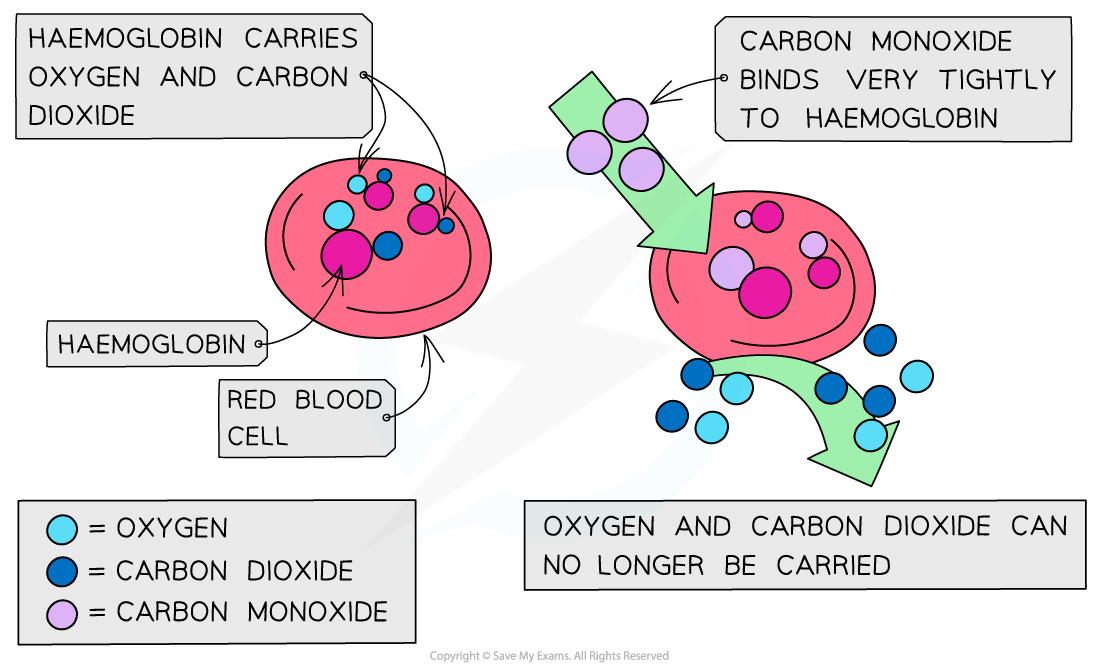
The high affinity of CO to haemoglobin prevents it from binding to O2and CO2
Oxides of sulfur
-
Some of the crude oil products from fractional distillation, cracking and reforming contain sulfur atoms
-
When these molecules are combusted, the sulfur atoms form sulfur dioxide and sulfur trioxide
- Both of these sulfur oxides are acidic
S + O2→ SO2
2SO2+ O2→ 2SO3
- When these acidic sulfur oxides dissolve into water in the atmosphere, they form sulfurous and sulfuric acid
SO2+ H2O → H2SO3
SO3+ H2O → H2SO4
-
Both of these acids contribute to acid rain, which is responsible for various environmental issues:
- Damage / death of aquatic life
- Damage / death to crops and forests
- Release of carbon dioxide from carbonate rocks and building materials
- Corrosion of metallic structures
Oxides of nitrogen
- Normally, nitrogen is too unreactive to react with oxygen in air
- However, in a car engine, high temperatures and pressures are reached causing the oxidation of nitrogen to take place:
N2+ O2→ 2NO
N2+ 2O2→ 2NO2
-
The oxides of nitrogen are then released in the exhaust fumes into the atmosphere
-
Car exhaust fumes also contain unburnt hydrocarbons from fuels and their oxides (VOCs)
-
In air, the nitrogen oxides can react with these VOCs to form peroxyacetyl nitrate (PAN) which is the main pollutant found in photochemical smog
- PAN is also harmful to the lungs, eyes and plant-life
-
Nitrogen oxides can dissolve in water to form nitrous and nitric acid:
2NO2+ H2O → HNO2+ HNO3
- Nitrogen oxides can also react with water and oxygen to form nitric acid:
4NO2 (g) + 2H2O (l) + O2 (g) → 4HNO3 (aq)
- Nitric and nitrous acids are a cause of acid rain, which can corrode buildings, endanger plant and aquatic life (as lakes and rivers become too acidic) as well as directly damaging human health
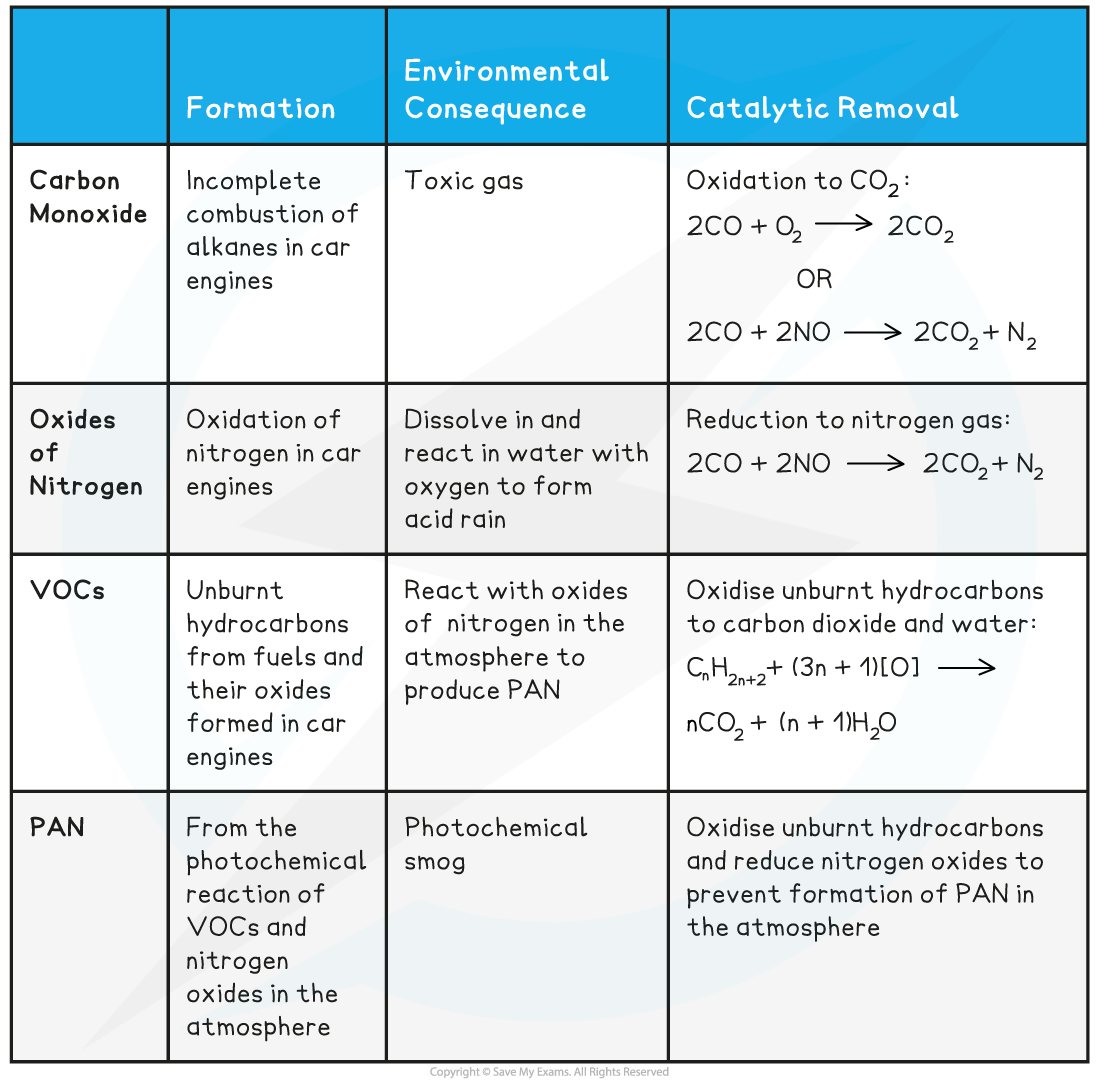
Pollutants, their Effect & Removal Table
Was this revision note helpful?