Photosynthesis: Light-Dependent Stage (Edexcel IAL Biology)
Spec point —
5.3
Photosynthesis: Light-Dependent Stage
-
Photosynthesis takes place in two distinct stages
- The light-dependent reactions, which rely on light directly
- The light-independent reactions, which do not use light directly, though do rely on the products of the light-dependent reactions
-
Both these sets of reactions take place within the chloroplast
- The light-dependent reactions take place across the thylakoid membrane
- The light-independent reactions take place in the stroma
-
Light energy in the light-dependent reactions enables the splitting of water molecules in a reaction known as photolysis
-
Photolysis of one molecule of water, or H2O, produces
- 2 hydrogen ions (2H+), also known as protons
- 2 electrons (2e-)
- One atom of oxygen (O)
-
The hydrogen ions and electrons are used during the light-dependent reactions while the oxygen is given off as a waste product
-
-
During the light-dependent reactions light energy is converted into chemical energy in the form of ATP and reduced NADP
-
NADP is a type of molecule called a coenzyme; its role is to transfer hydrogen from one molecule to another
-
When NADP gains hydrogen it is reduced, and can be known as either reduced NADP or NADPH
-
Remember that
- Reduction is gain of electrons, gain of hydrogen, or loss of oxygen
- Oxidation is loss of electrons, loss of hydrogen, or gain of oxygen
-
Reduced NADP can reduce other molecules by giving away hydrogen
-
NADP can oxidise other molecules by receiving hydrogen
-
-
The useful products of the light-dependent reactions, ATP and NADPH, are transferred to the light-independent reactions within the chloroplast
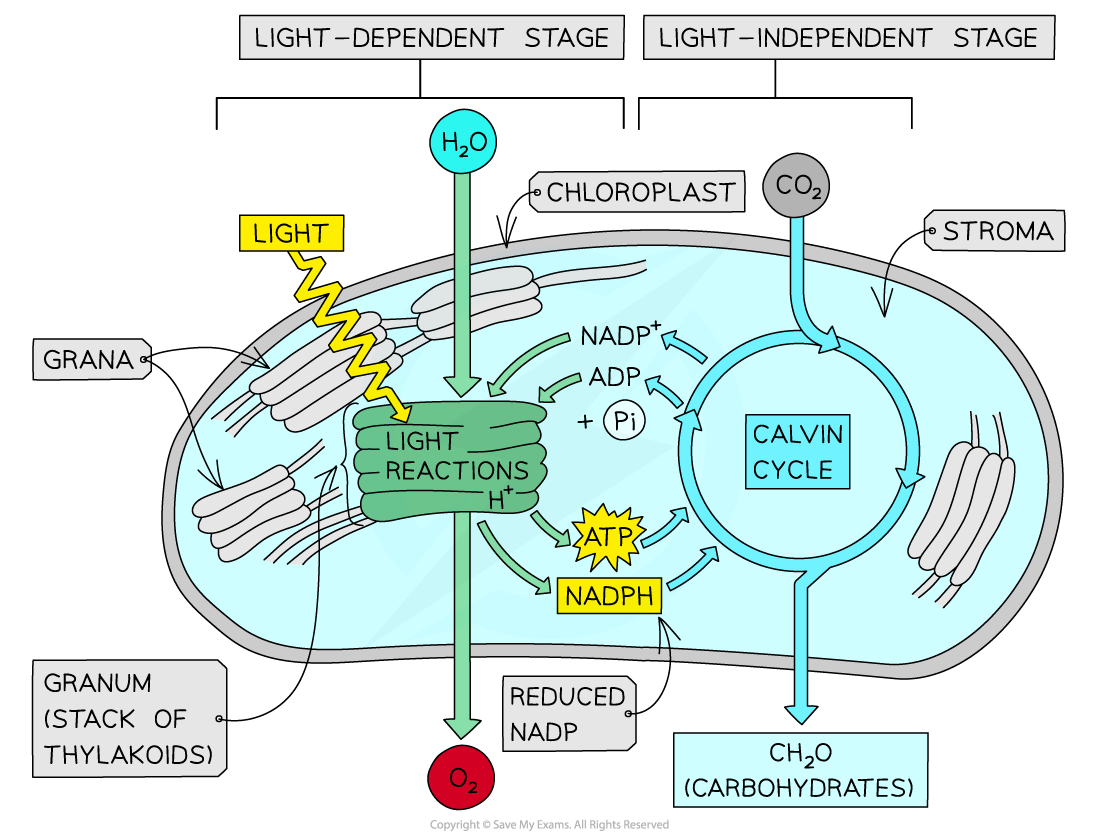
The products of the light-dependent reaction are ATP, NADPH, and oxygen. Oxygen is given off as a waste product while ATP and NADPH pass to the light-independent reactions. The ADP and NADP produced during the light-independent reaction can pass back to the light-dependent reactions to allow more ATP and NADPH to be produced.
Production of ATP and NADPH
-
ATP and NADPH are produced during the light-dependent reactions as a result of a series of events that occur on the thylakoid membrane known as photophosphorylation
- Photo = light
- Phosphorylation = the addition of phosphate; in this case to ADP to form ATP
-
Two types of photophosphorylation take place
-
Non-cyclic photophosphorylation
- This produces both ATP and NADPH
-
Cyclic photophosphorylation
- This produces ATP only
-
-
Both cyclic and non-cyclic photophosphorylation involve
-
A series of membrane proteins which together make up the electron transport chain
- Electrons pass from one protein to another along the electron transport chain, releasing energy as they do so
-
Chemiosmosis
- The energy released as electrons pass down the electron transport chain is used to produce ATP
-
Non-cyclic photophosphorylation
-
Light energy hits photosystem II in the thylakoid membrane
- It is slightly confusing that photosystem II comes first in this sequence; the numbers simply reflect the order in which the photosystems were discovered
-
Two electrons gain energy and are said to be excited to a higher energy level
-
The excited electrons leave the photosystem and pass to the first protein in the electron transport chain
- As the excited electrons leave photosystem II they are replaced by electrons from the photolysis of water
-
The electrons pass down the chain of electron carriers known as an electron transport chain
-
Energy is released as the electrons pass down the electron transport chain which enables chemiosmosis to occur
- H+ions are pumped from a low concentration in the stroma to a high concentration in the thylakoid space, generating a concentration gradient across the thylakoid membrane
- H+ ions diffuse back across the thylakoid membrane into the stroma via ATP synthase enzymes embedded in the membrane
- The movement of H+ ions causes the ATP synthase enzyme to catalyse the production of ATP
-
At the end of the electron transport chain the electrons from photosystem II are passed to photosystem I
-
Light energy also hits photosystem I, exciting another pair of electrons which leave the photosystem
-
The excited electrons from photosystem I also pass along an electron transport chain
-
These electrons combine with hydrogen ions from the photolysis of water and the coenzyme NADP to form reduced NADP
H++ 2e-+ NADP+→ NADPH
- The reduced NADP and the ATP pass to the light-independent reactions
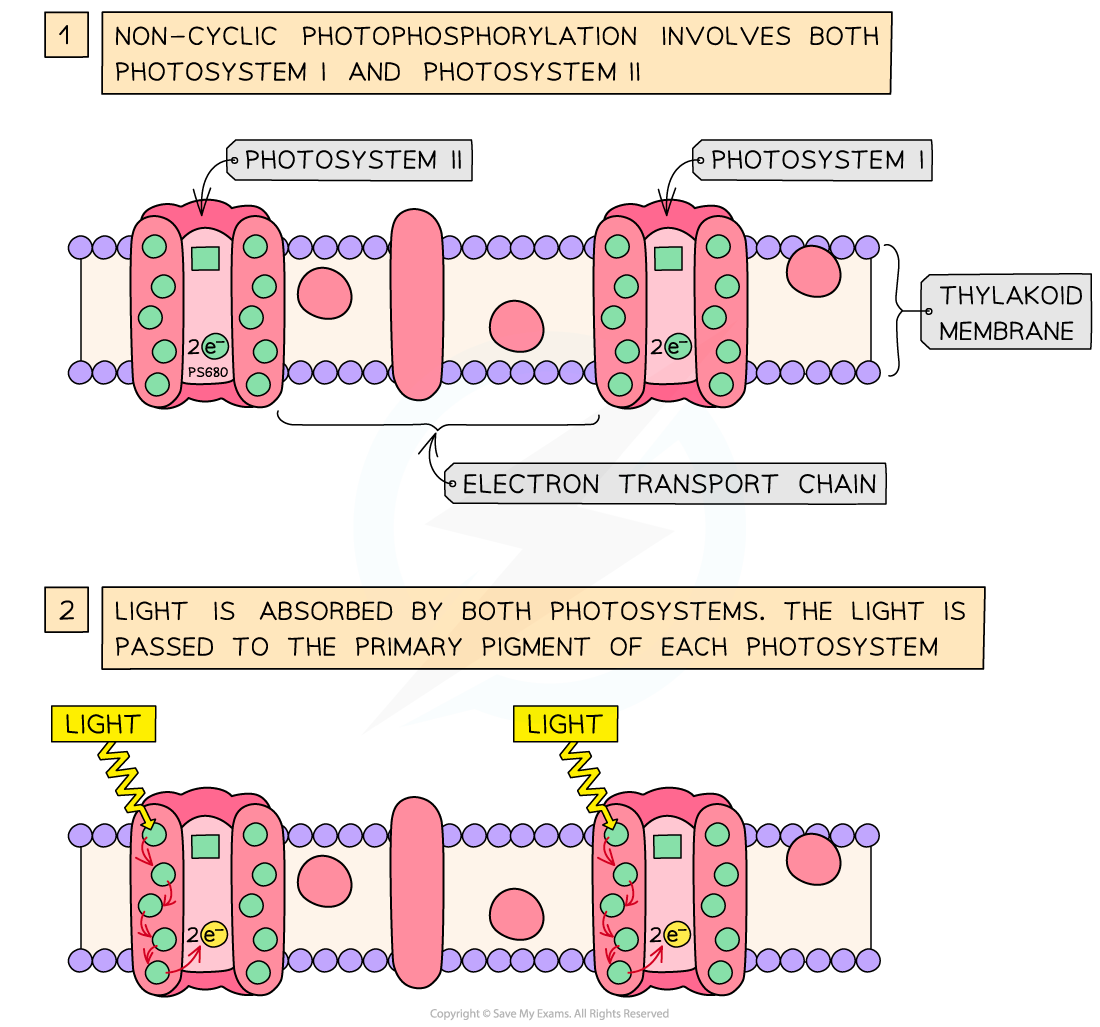
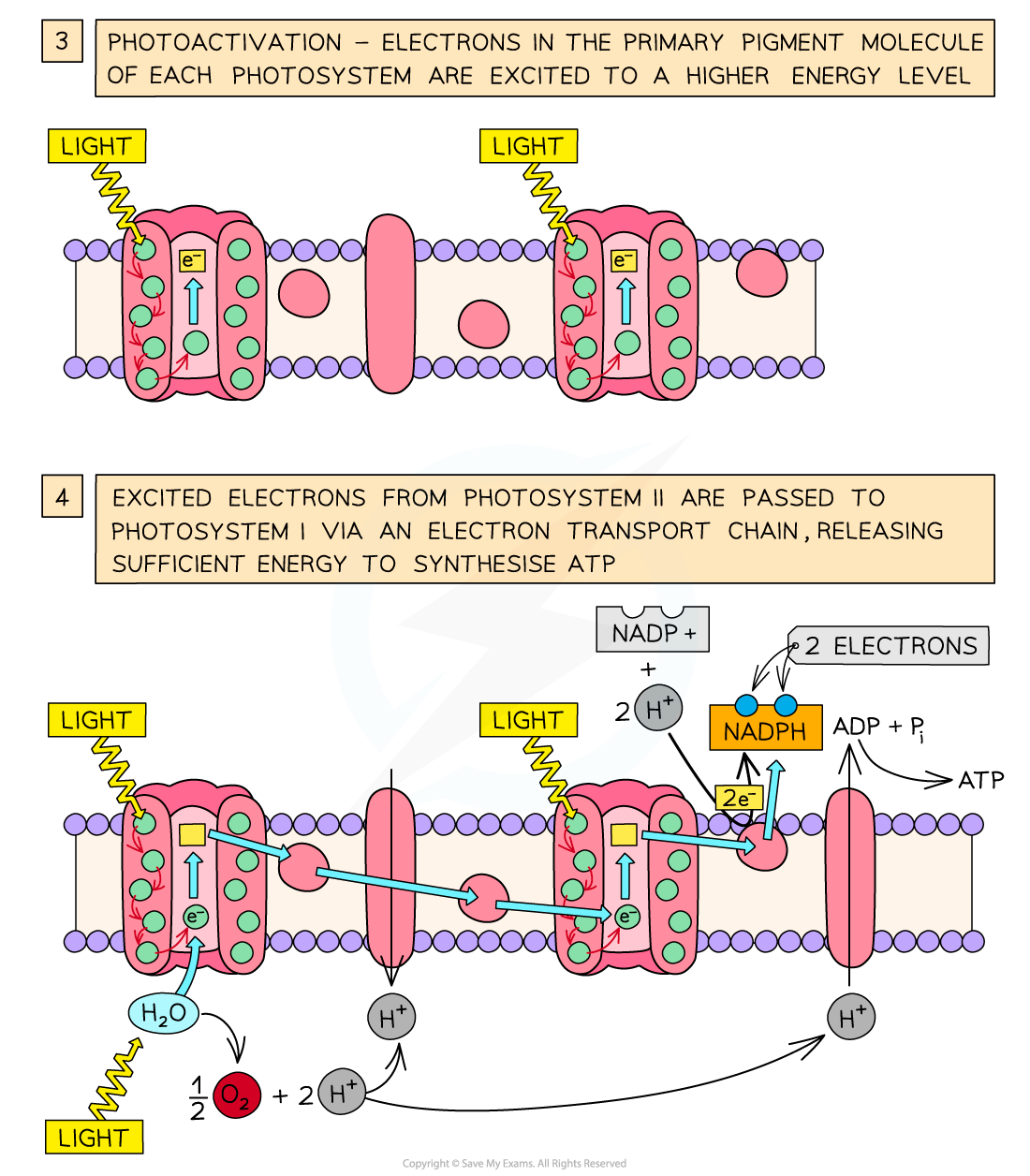
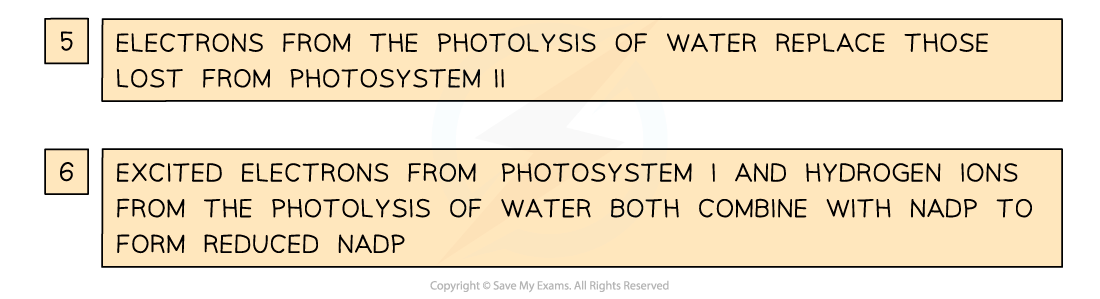
Non-cyclic photophosphorylation involves photosystems I and II and produces both ATP and NADPH
Cyclic photophosphorylation
-
Light hits photosystem I
-
Electrons are excited to a higher energy level and leave the photosystem
-
The excited electrons pass along the electron transport chain, releasing energy as they do so
-
The energy released as the electrons pass down the electron transport chain provides energy to drive the process of chemiosmosis
- H+ions are pumped from a low concentration in the stroma to a high concentration in the thylakoid space, generating a concentration gradient across the thylakoid membrane
- H+ ions diffuse back across the thylakoid membrane into the stroma via ATP synthase enzymes embedded in the membrane
- The movement of H+ ions cause the ATP synthase enzyme to catalyse the production of ATP
-
At the end of the electron transport chain the electrons rejoin photosystem I in a complete cycle; hence the term cyclic photophosphorylation
-
The ATP produced enters the light-independent reaction
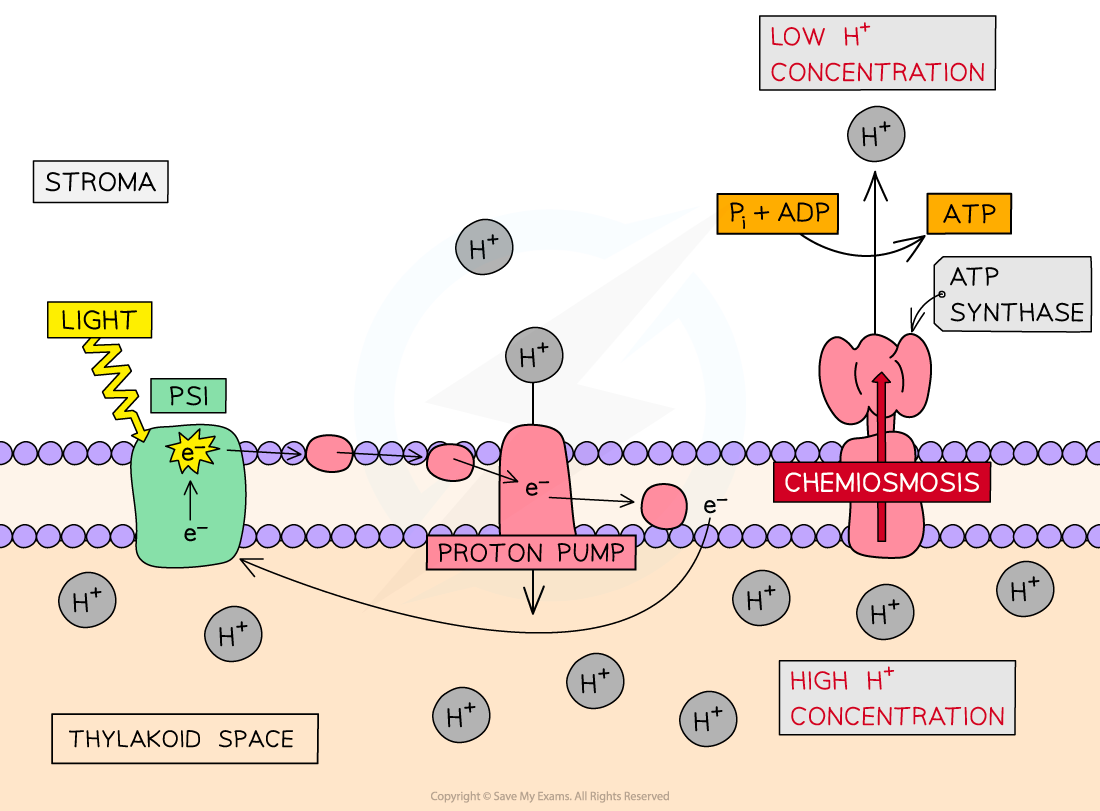
Cyclic photophosphorylation involves Photosystem I and produces ATP
Was this revision note helpful?