Antibiotics (Edexcel IAL Biology)
Spec point —
6.13
Antibiotics
-
When humans experience a bacterial infection they are often prescribed **antibiotics **
-
Antibiotics are chemical substances that** damage bacterial cells** with little or no harm to human tissue
- Penicillin is a well-known example; it was discovered in 1928 by Sir Alexander Fleming
-
Antibiotics are either
-
Bactericidal; they kill bacterial cells
-
Bacteriostatic; they inhibit bacterial growth processes
- Note that bacteriostatic antibiotics given at a high enough dose will result in the death of bacterial cells
-
-
Antibiotics work by interfering with the growth or metabolism of the target bacterium e.g.
-
Inhibiting bacterial enzymes needed to form bonds in the cell walls; this prevents bacterial growth and can cause death
- Cell walls are weakened and burst under the pressure of water entering the cell by osmosis
-
Binding to ribosomes and preventing protein synthesis; this inhibits enzyme production, stopping metabolic processes in the bacterial cell
-
Damaging cell membranes, leading to loss of useful metabolites or uncontrolled entry of water
-
Preventing bacterial DNA from coiling into rings, meaning that it no longer fits into the bacterial cell
-
-
Since mammalian cells are eukaryotic, they will not be damaged by antibiotics
- They do not have cell walls
- They have different enzymes
- They have different ribosomes
-
Viruses do not have cellular structures such as enzymes, ribosomes, and cell walls so they are not affected by antibiotics
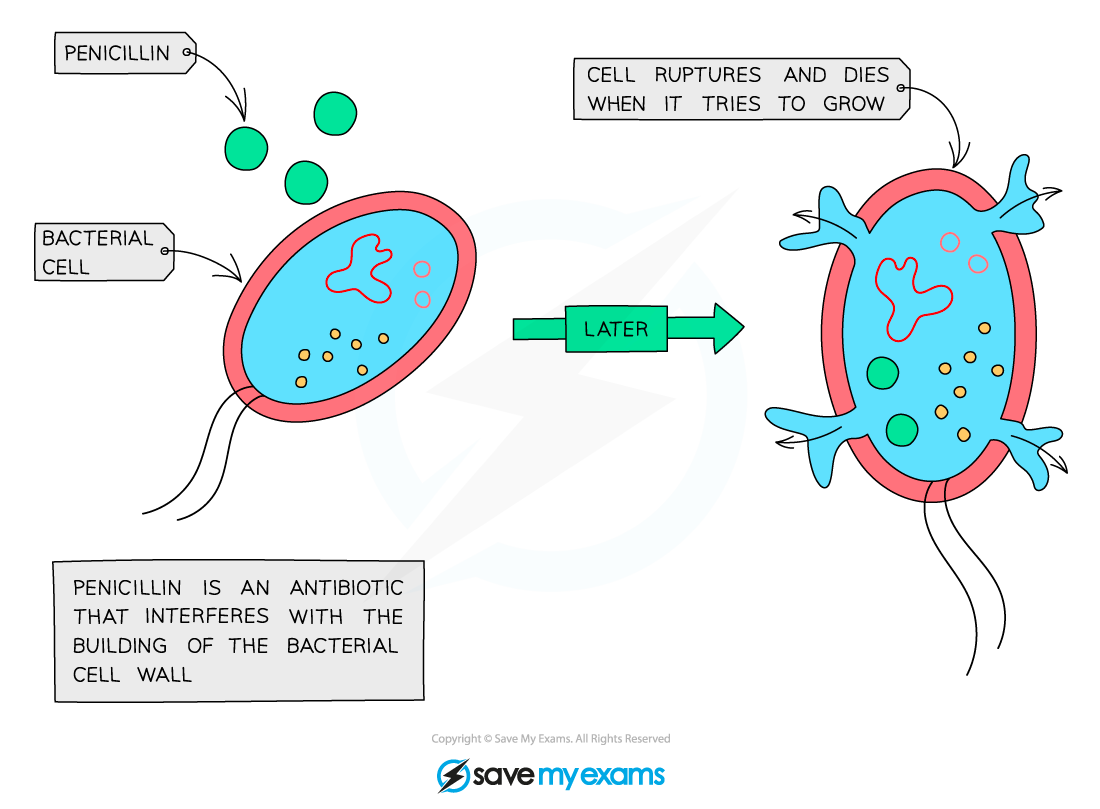
Penicillin prevents the formation of a strong cell wall in prokaryotes, ultimately leading to the death of the cell by lysis
Was this revision note helpful?