Treatments for CVD: Benefits & Risks (Edexcel IAL Biology)
Spec point —
1.20
Treatments for CVD: Benefits & Risks
-
While reducing the risk factors and lowering the risk of developing cardiovascular disease (CVD) is the best option, CVD is still very common and treatment options are needed
-
There are a number of different treatment options for cardiovascular disease, many of which involve taking medication
-
Types of medication for the treatment of CVD include
- Antihypertensives
- Statins
- Anticoagulants
- Platelet inhibitors
Antihypertensives
-
These drugs work by lowering blood pressure
- High blood pressure is also known as hypertension
-
Lowering blood pressure **reduces the risk of arterial endothelial damage **and therefore reduces the risk of atheromas and thrombosis
-
Beta blockers, vasodilators and** diuretics** act as antihypertensives
-
Beta blockers prevent increases in heart rate
-
Vasodilators increase the diameter of the blood vessels
- ACE inhibitors are a type of drug that block the production of angiotensin, a hormone that causes constriction of the blood vessels
- This keeps the arteries dilated, which lowers the blood pressure
-
Diuretics reduce blood volume by decreasing the amount of sodium reabsorbed into the blood by the kidneys, therefore decreasing the volume of water reabsorbed into the blood
-
Statins
-
These drugs work by lowering blood cholesterol
- They block an enzyme in the liver which is needed to make cholesterol
-
This lowers the LDL concentration in the blood therefore reducing the risk of atheroma formation
- LDLs are sometimes known as 'bad' cholesterol; at high levels they increase the risk of atheromas forming
-
Statins also reduce inflammation in the arterial lining, which lowers the risk of atherosclerosis
Anticoagulants
-
These drugs reduce blood clotting
- Blood clotting can be referred to as blood coagulation
- Warfarin is an anticoagulant that decreases the level of prothrombin in the bloodstream
-
Reduced formation of blood clots decreases the likelihood of thrombosis and therefore reduces the risk of blood vessels being blocked by blood clots
Platelet inhibitors
-
These are also substances which reduce blood clotting
- Platelet inhibitors are a type of anticoagulant
- Aspirin and clopidogrel are the most commonly used examples of these drugs
-
They prevent the clumping together of platelets, so preventing the formation of blood clots
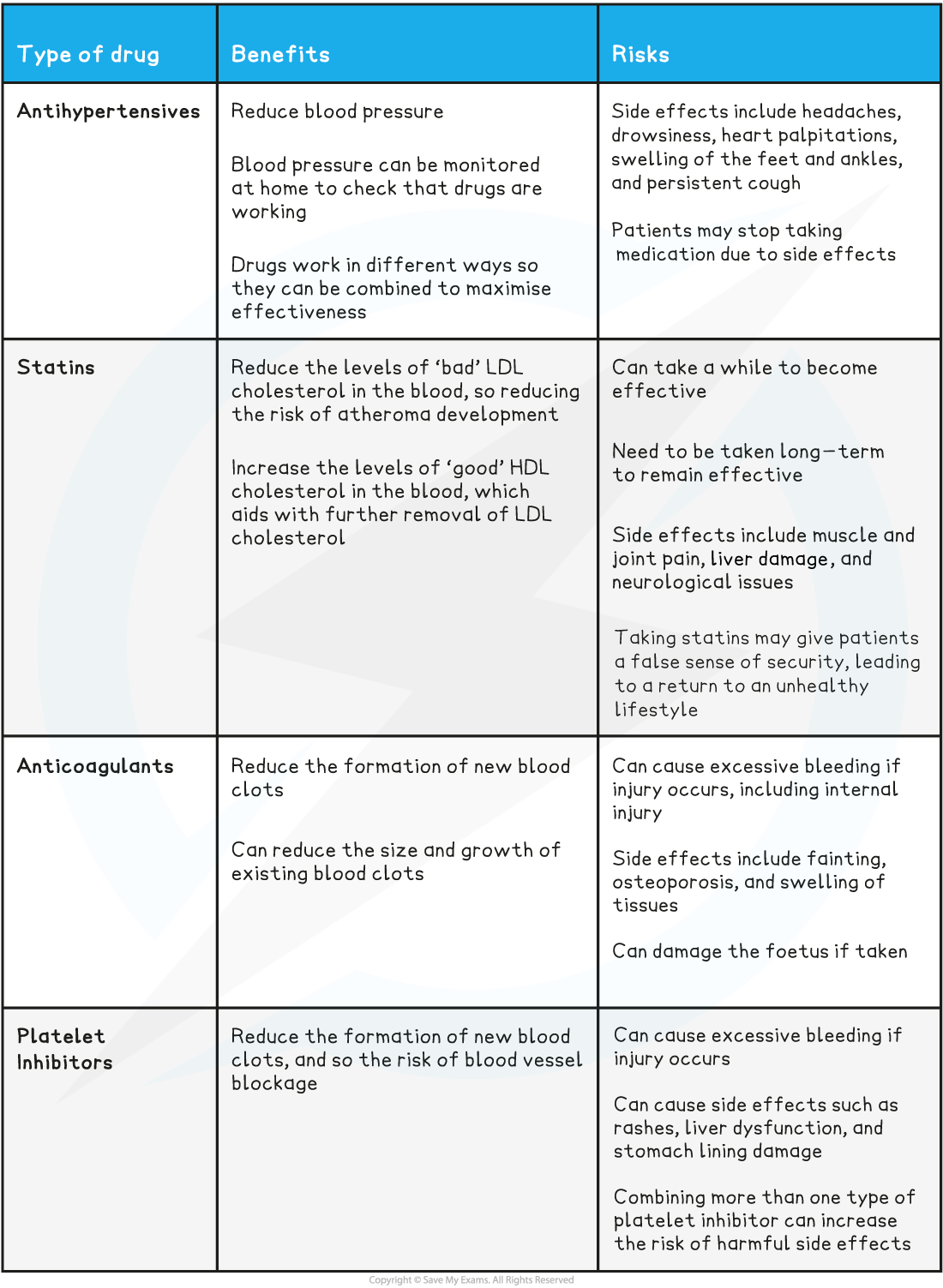
Benefits and Risks of Cardiovascular Disease Drugs Table
Was this revision note helpful?