Post-Transcriptional Changes to mRNA (Edexcel IAL Biology)
One Gene Can Code for More Than One Protein
Spec point —
3.19
-
Gene expression can be regulated after an mRNA transcript has been produced
-
In eukaryotes, transcription and translation occur in separate parts of the cell, allowing for significant post-transcriptional modification to occur
-
Post-transcriptional modification mechanisms include
- Splicing
- Alternative splicing
Splicing
-
Polypeptides are made during the process of protein synthesis, during which the DNA base code is transcribed and translated
-
The DNA code within eukaryotic cells contains many non-coding sections
-
Non-coding DNA can be found within genes; these sections are called introns, whilst ****sections of coding DNA are called exons
-
During transcription, eukaryotic cells transcribe both introns and exons to produce** pre-mRNA** molecules
-
Before the pre-mRNA exits the nucleus, a process called splicing occurs
- The non-coding intron sections are removed
- The coding exon sections are joined together
- The resulting mRNA molecule contains only the coding sequences of the gene
-
Since these modifications are made after transcription occurred, they are called post-transcriptional modifications
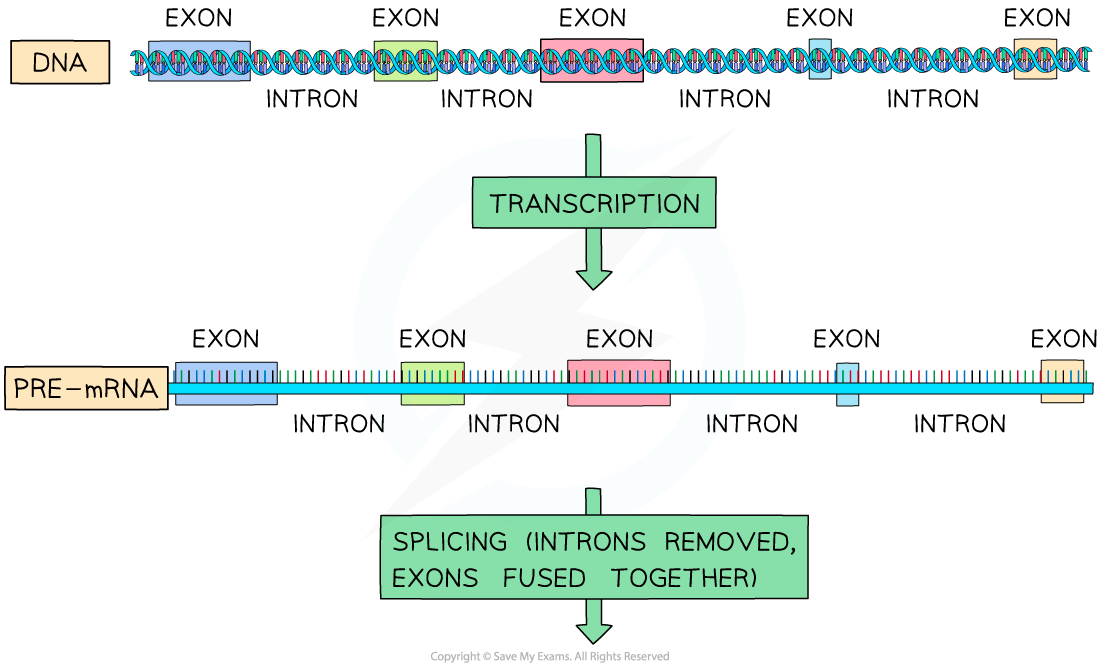
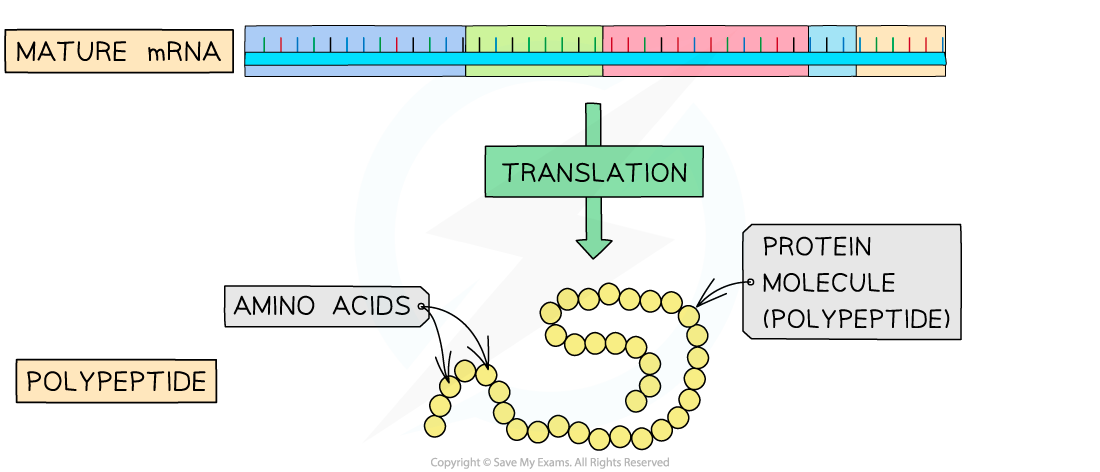
Pre-mRNA is spliced before it exits the nucleus
Alternative splicing
- The exons (coding regions) of genes can be spliced in many different ways to produce different mature mRNA molecules through alternative splicing
- A particular exon may or may not be incorporated into the final mature mRNA
- Polypeptides translated from alternatively spliced mRNAs may differ in their amino acid sequence, structure and function
- This means that a single eukaryotic gene can code for multiple proteins
- This is part of the reason why the proteome is much bigger than the genome
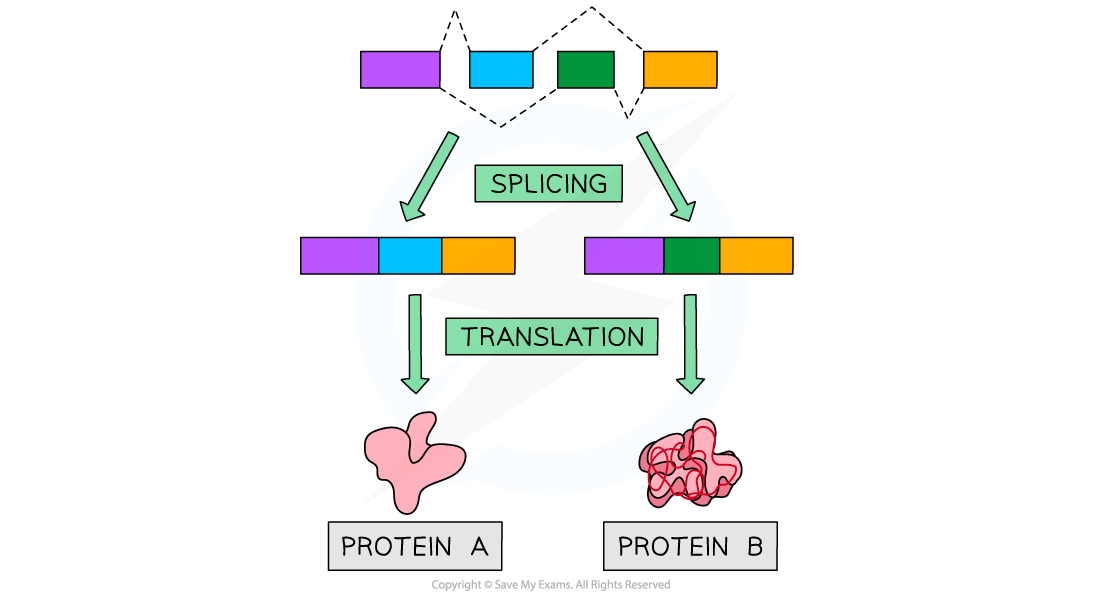
Alternative splicing of a gene can produce more than one type of protein
Exam Hint It is important you learn the terms pre-mRNA and mRNA, their location and whether they include introns as well as exons. A handy way to distinguish between introns and exons is to remember that EXons are EXpressed.
Was this revision note helpful?