The Muscle Fibre (Edexcel IAL Biology)
Muscle Fibre: Structure
Spec point —
7.10
-
Skeletal muscle makes up the muscles in the body that are attached to the skeleton
-
Skeletal muscle is made up of muscle fibres
-
A muscle fibre is a highly specialised cell-like unit:
-
Each muscle fibre:
- Contains an organised arrangement of contractile proteins in the cytoplasm
- Is surrounded by a cell surface membrane
- Contains many nuclei (multi-nucleated) – this is why muscle fibres are not usually referred to as cells
-
-
The different parts of a muscle fibre have different names to the equivalent parts of a normal cell:
- Cell surface membrane = sarcolemma
- Cytoplasm = sarcoplasm
- Endoplasmic reticulum = sarcoplasmic reticulum (SR)
-
The sarcolemma has many deep tube-like projections that fold in from its outer surface:
- These are known as transverse system tubules or T-tubules
- These run close to the SR and help spread electrical impulses throughout muscle fibre
-
The sarcoplasm contains mitochondria and myofibrils
- The mitochondria carry out aerobic respiration to generate the *ATP required for muscle contraction
- Myofibrils are bundles of actin and myosin filaments, which slide past each other during muscle contraction
-
The membranes of the SR contain protein pumps that transport calcium ions into the lumen of the SR
- Calcium ions are needed for the contraction of muscle
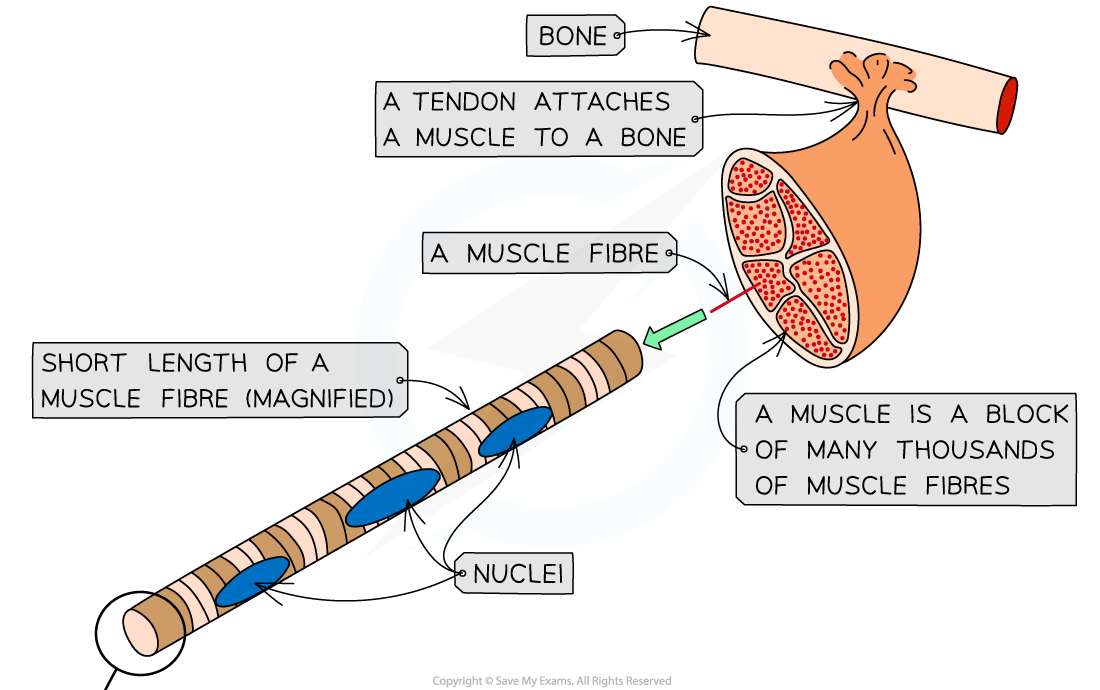
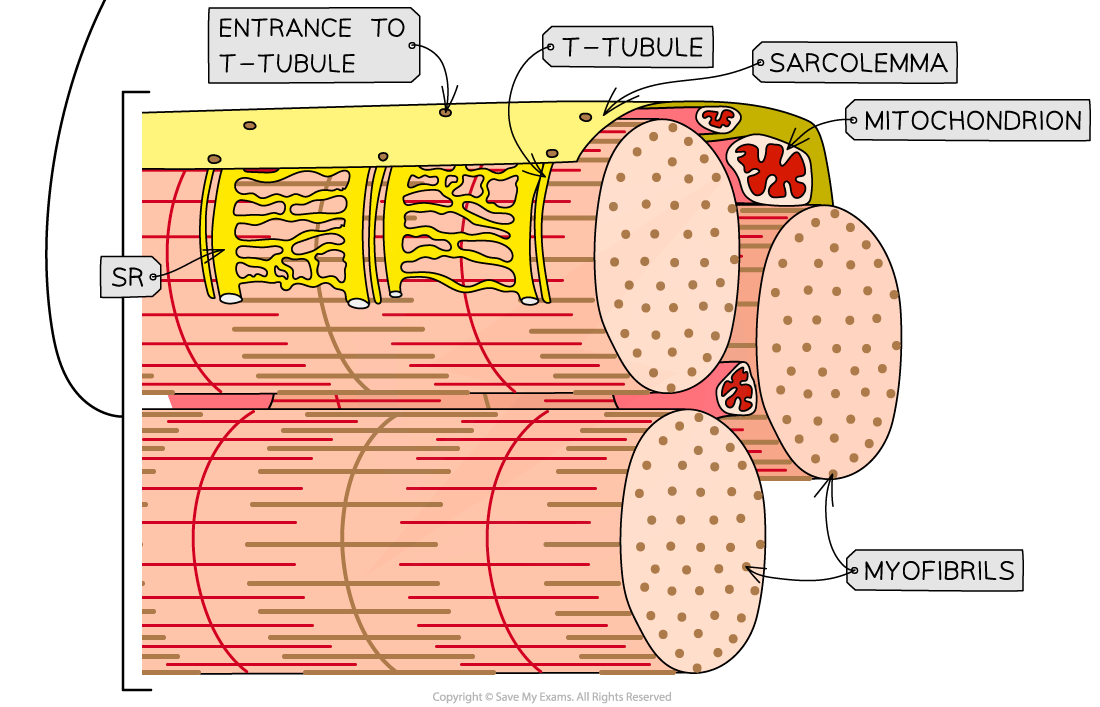
The ultrastructure of skeletal muscle and of a section of muscle fibre
Myofibrils
-
Myofibrils are located in the sarcoplasm
-
Each myofibril is made up of two types of protein filament:
- Thick filaments made of myosin
- Thin filaments made of actin
-
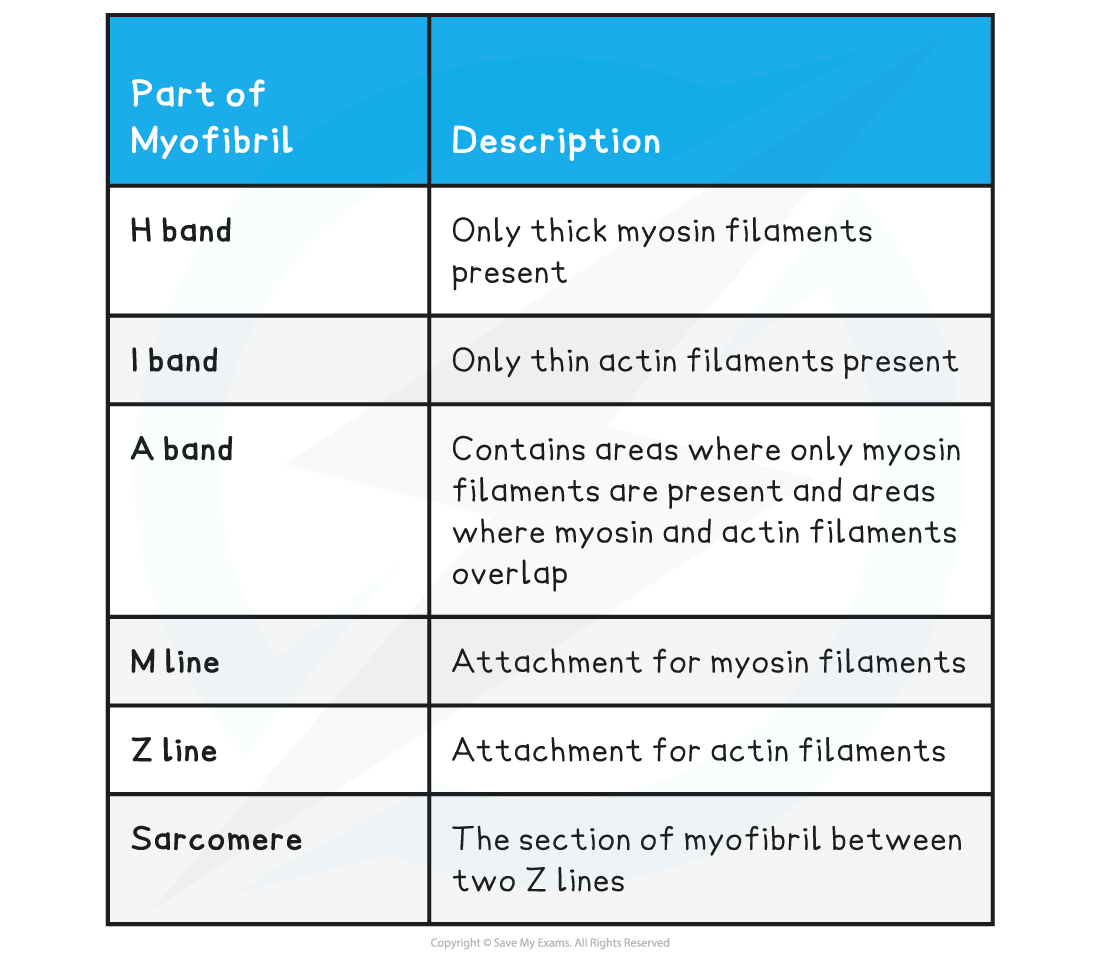
These two types of filaments are arranged in a particular order, creating different types of bands and lines
Myofibrils Parts & Descriptions Table
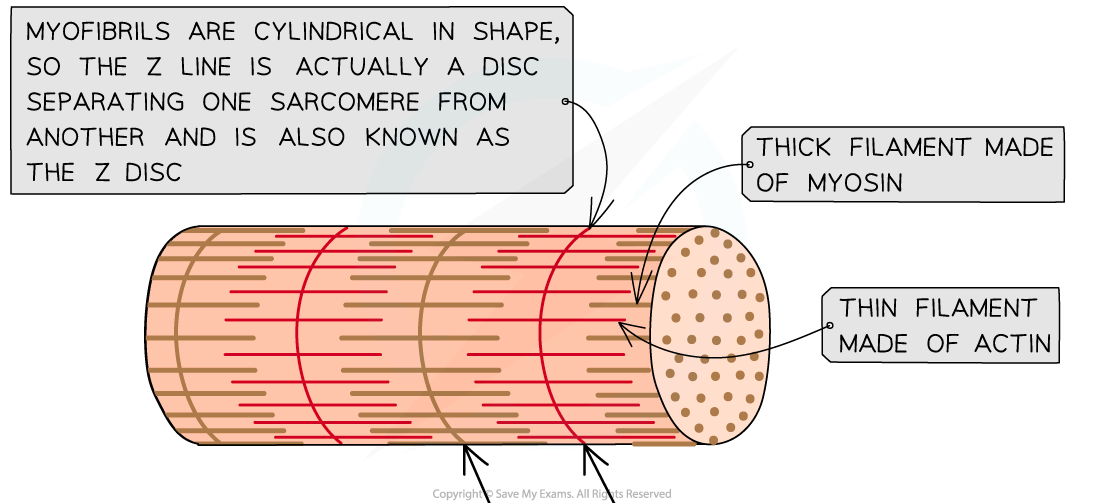
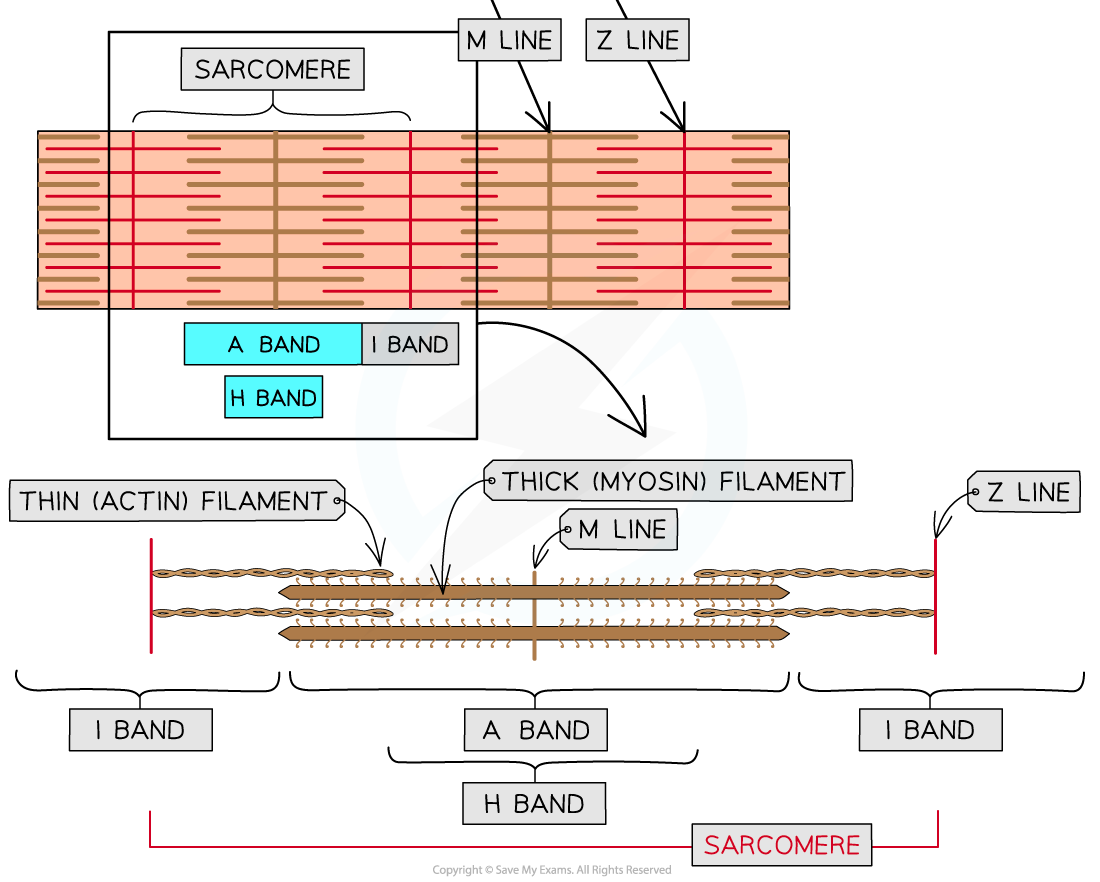
The structure of a myofibril
Fast & Slow Twitch Muscle Fibres
Spec point —
7.10
-
There are two types of muscle fibres found in muscles
- Fast twitch fibres
- Slow twitch fibres
-
Human muscles are made up of both types of muscle fibres
-
Some muscles have higher proportions of a particular fibre type due to their different properties
Fast twitch muscle fibres
-
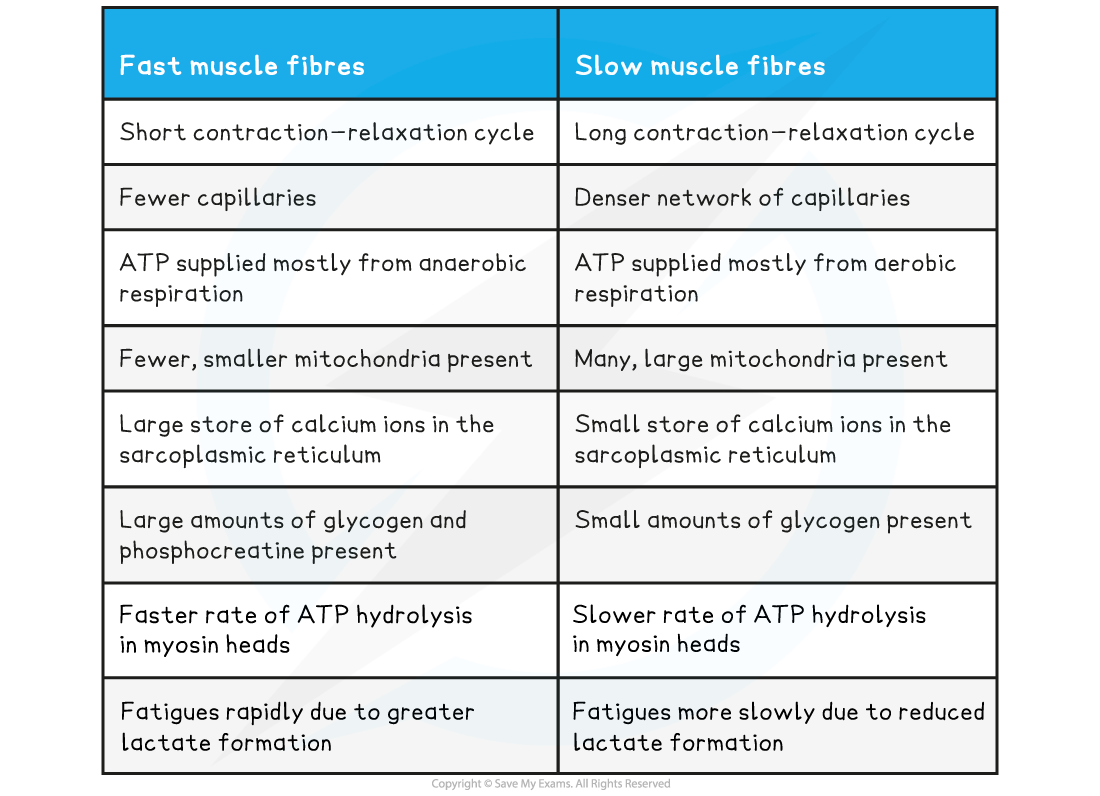
Fast twitch muscle fibres contract rapidly
- The myosin heads bind and unbind from the actin-binding sites five times faster than slow twitch muscle fibres
- Their rapid contraction-relaxation cycle means they need large amounts of calcium ions present to stimulate contraction
-
They rely on anaerobic respiration for ATP supply
-
They are suited to short bursts of high-intensity activity as they fatigue quickly due to the lactate produced from anaerobic respiration
-
These muscle fibres are often found in high proportions in the limbs of animals that flee a predator or hunt prey at high speeds
- For example, the wings of a robin and legs of a cheetah
-
There are high proportions of fast twitch muscle fibres in human eyelids
- They contract in short bursts and do not need to sustain the rapid movement
-
Fast twitch muscle fibres have fewer capillaries
- Blood containing glucose and oxygen flow through the capillaries
- This means they have quite a slow supply of oxygen and glucose for aerobic respiration
-
Low amounts of myoglobin are present in fast twitch muscle fibres
- Myoglobin is a red pigment molecule that is similar to haemoglobin
- Myoglobin functions as a store of oxygen in muscles and increases the rate of oxygen absorption from the capillaries
-
Due to this fast twitch muscle fibres appear paler in colour than slow muscle fibres
Slow twitch muscle fibres
-
Slow twitch muscle fibres contract more slowly and are suited to sustained activities like walking and perching
-
They rely on aerobic respiration for ATP
-
They fatigue less quickly due to less lactate production, making them ideal for endurance
-
These muscle fibres are often found in high proportions in the limbs of animals that migrate or stalk prey over long distances
- For example, the wings of geese and legs of wolves
-
Human back muscles have a high proportion of slow twitch muscle fibres
- These muscles have to contract for long periods of time in order to keep the skeleton erect when standing or sitting
-
Slow twitch muscle fibres have a denser network of capillaries
- Blood containing glucose and oxygen flows through the capillaries
- This means they have a short diffusion distance and a good supply of oxygen and glucose for aerobic respiration
-
High amounts of myoglobin, haemoglobin and mitochondria are present in slow twitch muscle fibres
- This increases the rate of oxygen supply, oxygen absorption and aerobic respiration
-
Due to the high amounts of red pigment, slow twitch muscle fibres appear a dark red
Fast Twitch & Slow Twitch Muscle Fibres Table
Was this revision note helpful?