Bioinformatics (Edexcel IAL Biology)
Spec point —
8.21
Bioinformatics
-
New DNA technologies such as microarrays and sequencing generate enormous quantities of data, e.g.
- Genome sequences
- Information on gene expression
- The amino acid sequence and functions of proteins
-
To analyse all of this data scientists use bioinformatics
-
Bioinformatics is an interdisciplinary science that incorporates biology with computer technology and statistics in order to collect, organise, store, and analyse biological data
-
Large databases are created containing information such as gene sequences and amino acid sequences of proteins
- The databases are available online and can perform analysis of the data selected
- Multiple scientific research groups around the world can contribute to central databases; other groups can then analyse the research and raise queries
-
There are a number of different applications of bioinformatics, e.g.
-
Gene function can be studied and compared across different species
-
The DNA sequences of different species can be compared and evolutionary relationships can be established
-
New drug candidates can be identified quickly by scanning libraries of molecules
-
Drug candidates can be tested safely; the impacts of different molecules on cells can be simulated using computer models
-
Data from microarrays and gene sequencing can be analysed to develop personalised medical treatments for individuals
-
New types of genetic testing can be developed to enable identification of genetic disease
-
Desired genes for the production of recombinant DNA can be identified, as well as determining where it is best to insert new desired genes into the genome of a genetically modified organism
- This is useful for the development of new gene therapies
-
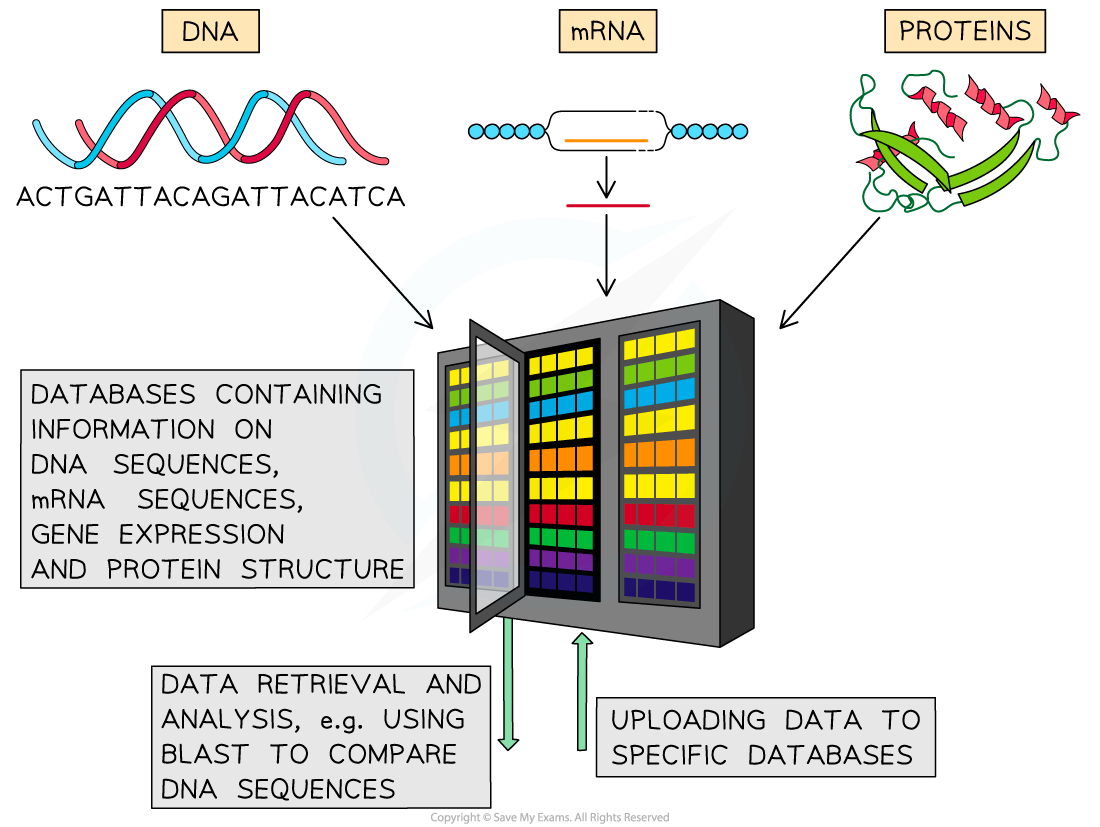
Bioinformatics enables the effective storage and analysis of biological data. Note that you do not need to know about BLAST analysis
Was this revision note helpful?